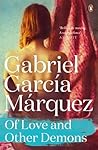
BOOK: “Of Love and Other Demons” by Gabriel García Márquez

Of Love and Other DemonsOf Love and Other Demons by Gabriel García Márquez
My rating: 5 of 5 stars

Publisher – Penguin Random House

This novel revolves around the young daughter of an aristocrat in 18th century Cartagena, Sierva Maria, who is raised by slaves, goes native, and – after being bitten by a rabid dog – is sent to a convent for exorcism. The other central character is the priest, Father Cayetano Delaura, who is dispatched to evaluate the girl and perform the exorcism. Father Delaura doesn’t initially believe the girl is possessed. Sierva Maria speaks the African tribal languages of the slaves who raised her (rather than speaking in tongues as the Nuns believe,) and she is a psychological wreck in large part because the Sisters treat her horribly, believing her to be demon infested. In the process of cleaning Sierva Maria up, tending to her wounds, and coaxing her to speak to him, the priest falls in love with the girl.

It’s a compelling story. Gabriel García Márquez opens the book with a prologue in which he proposes that it was a legend he was told by his grandmother that formed the seed of the story and the real-life discovery of human remains with extremely long hair that trigger his writing. (Sierva Maria has long hair because it was never cut because it was promised to the Saints in prayer when she was saved from choking on her umbilical cord at birth.)

Being set in the 18th century, the book features a fascinating mix of people who believe the problems of Sierva Maria can only be demon possession, an Enlightenment-influenced doctor of the view that it there are more logical explanations, and the many shades in between — epitomized by Father Delaura’s migrating views on the subject.

I’d highly recommend this book for readers of historical fiction.

View all my reviews

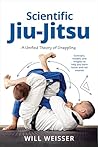
BOOK: “Scientific Jiu-jitsu” by Will Weisser

Scientific Jiu-Jitsu: A Unified Theory of Grappling (Martial Science)Scientific Jiu-Jitsu: A Unified Theory of Grappling by Will Weisser
My rating: 4 of 5 stars

Publisher Site – YMAA Publication Center

Release date: June 2, 2026

This book outlines principles of positioning, alignment, and movement used to gain advantage while grappling. It is not a technique-centric book but rather is a concept-centric one. Weisser does for Brazilian Jiu-jitsu what Jiichi Watanabe and Lindy Avakian did for Judo with their book alternatively titled The Secrets of Judo or The Art and Science of Judo. Watanabe and Avakian focused more on both technique and elementary physics than does Weisser, but there is common ground in ideas of what positions make a body strong and what movements bring vulnerability. The biggest area of divergence between Watanabe’s book and Weisser’s is simply the difference between Judo and Brazilian Jiu-jitsu. Watanabe and Avakian direct the vast majority of their attention to how one gets the opponent to the ground and relatively little on what to do when one gets there, and Weisser’s book is the other way around — i.e. primarily assuming at least one person is already on the ground.

Weisser’s book does assume that the reader has a background in Brazilian Jiu-jitsu, using terms specific to that system without necessarily providing elaboration. I say this just to point it out as (to be fair) I realized that I would have thought nothing of it if it used Japanese Jujutsu / Judo terminology in the same way. (I did have to go to Google at one point to elucidate what turned out to be a Dragonball-Z reference that went right over my head.)

Weisser’s book uses a combination of graphics, including photographs. I found it easier to see the linkage between what the author was describing in the text and what was in the photos in some cases than in others. Often, there was a single photo catching one static situation, and if the grapplers were closely entangled (as grapplers are want to be,) it was not so easy to see — even with different colored uniforms. [Note: I should point out that I was reading an ARC galley, and so that may all be sorted in the final formatting.]

As one who knows little of Brazilian Jiu-jitsu, but with some experience with other grappling systems, I found this book readable and thought-provoking. The statement of ideas is clear, and I’d recommend it for grapplers looking to engage in thinking about first principles of grappling.

View all my reviews

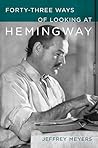
BOOK: “Forty-Three Ways of Looking at Hemingway” by Jeffrey Meyers

Forty-Three Ways of Looking at HemingwayForty-Three Ways of Looking at Hemingway by Jeffrey Meyers
My rating: 5 of 5 stars

Publisher Website – LSU Press

I enjoyed this approach to biography. Instead of telling Hemingway’s life story chronologically or even via some other form of overarching arc, Meyers gives us forty-three chapters that each shine a light on a different facet of Hemingway. In many cases, these facets are Hemingway’s relationships to other people: writers, artists, wives, and other personalities. In other cases, the facets are events or concepts, such as his suicide, war, achievements, etc.

This approach can, on occasion, lead to repetition, but I find repetition that is not overbearing to be useful in taking in key information.

If you are interested in what made Hemingway tick, I’d highly recommend that you read this book.

View all my reviews

BOOK: “The American Claimant” by Mark Twain

The American ClaimantThe American Claimant by Mark Twain
My rating: 5 of 5 stars

Free at Project Gutenberg

This is one of Twain’s lesser-known books, but it’s not for lack of Twain’s signature humor and cleverness. Like “A Connecticut Yankee in King Arthur’s Court” it shines a light (often satirically) on what it means to be American via a fish-out-of-water storyline. In this case, there is no “magic teleportation” of a character to an alternate world. Here, a progressive British aristocrat ends up in working class America, while a flighty American who dabbles in get-rich-quick schemes — Mulberry Sellers (the titular “American Claimant”) — ends up playing at being an aristocrat, but in America.

As the book highlights the difference between class-conscious Britain and egalitarian America, it shows that deep down America isn’t always as egalitarian as it projects to be. This insight is largely conveyed through the experience of “Howard Tracy” (the pseudonym of Viscount Berkeley, the progressive aristocrat who gives up his title to assume an identity in blue-collar America, only to find that it is not the utopia of equality he’d come to believe it to be.)

If you enjoy humorous stories, I’d highly recommend this book. It may take a moment to get into the story, but — ultimately — it’s an enjoyable read.

View all my reviews

BOOKS: “The Suppressed Poems of Ernest Hemingway”

The suppressed poemsThe suppressed poems by Ernest Hemingway
My rating: 4 of 5 stars

Available online – Public Domain

I read this book because my curiosity was piqued by a reference to poems Hemingway published in Der Querschnitt, a reference that was made in a biography of Hemingway I’ve been reading recently (Forty-Three Ways of Looking at Hemingway by Jeffrey Meyers.) Five of the seventeen poems in the book are from Der Querschnitt. (Ten of the poems were published in a book entitled Three Stories and Ten Poems and a couple are odds and ends.)

The Der Quershnitt pieces are bawdy by 1920’s standards, though not particularly for today. The other poems can be a bit intense, dealing in subjects like death in war (Champs D’Honneur,) suicide (Montparnasse, and a curse upon literary critics (Valentine,) but tend to be a bit more refined (excepting Valentine. which may be the least elevated of the collected poems.)

The poems include a mix of lyric, free verse, and prose poem, though all are fairly short (the longest, The Soul of Spain, fits in three pages.)

My favorite was a short lyric poem entitled The Age Demanded, which considers the paradox of the 1920’s as a progressive age, restrained. I also found T. Roosevelt to be fascinating because in the act of critiquing Teddy Roosevelt, Hemingway (wittingly or not) gives us a bit of autobiography. (i.e.“And all the legends that he started in his life // Live on and prosper, // Unhampered now by his existence.”)

I give Hemingway more credit for saying interesting things by virtue of being bold than for saying anything in a particularly interesting way, but it’s enough to make these poems worth reading.

View all my reviews

BOOK: “The Dragon King’s Daughter” Trans. by Yang Xianyi and Gladys Yang

The Dragon King's Daughter: Ten Tang Dynasty StoriesThe Dragon King’s Daughter: Ten Tang Dynasty Stories by Gladys Yang
My rating: 5 of 5 stars

Google Book Site

This thin anthology contains ten stories from varied writers of the Tang Dynasty. The stories include a mix of speculative fiction, political fiction, and love stories — some being cross-genre pieces that mix elements of more than one of these categories.

I found a wide variation in how engaging the stories were. The best of them were quite good. The Spendthrift and the Alchemist, The White Monkey, and the titular The Dragon King’s Daughter were among my favorites. Each of those stories included a supernatural element, but also a thought-provoking premise.

If you enjoy Tang Dynasty literature and would like to try some of this golden literary age’s short fiction, this book is a quick and pleasant read.

View all my reviews

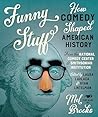
BOOKS: “Funny Stuff” ed. by Laura LaPlaca and Ryan Lintelman

Funny Stuff: How Comedy Shaped American HistoryFunny Stuff: How Comedy Shaped American History by Laura LaPlaca
My rating: 4 of 5 stars

Publisher Site — Rutgers University Press

Release Date: May 12, 2026

As the subtitle suggests, this book explores the nexus between American History and comedy across many, varied media (i.e. writing, theater, standup, improv, radio, television, movies, etc.) It’s an interesting book, but I don’t know that it has the right title. Considering the title, a reader might expect a fuller coverage of American History, drawing on whatever humorous outlets existed at the time (e.g. op-eds and satirical articles.) This book is more of a history of comedic content in the US with a substantial discussion of how comedy addressed / participated in changing views on sex, race, and sexuality and with occasional mention of how comedy was involved in other social issues, such as changing views on free speech and expression. You’re not going to learn how comedic writers addressed Smoot-Hawley or the Sinking of the Maine. (i.e. The book leads with comedic content and leans the discussion toward societal influence [rarely toward policy influence.] It does not lead with historical events and draw on appropriate comedic content.)

The book covers a lot of the same ground as Kliph Nesteroff’s The Comedians, though with quite different emphases. Nesteroff focuses on the gritty underside of comedy and the oft unseen dark side of comedians, while this book focuses on comedy as a factor in changing views on race and sex [as well as on the changing technological outlets for comedy.] Funny Stuff does spend a little more time on pre-20th century America than does Nesteroff, but not much more. Both books are heavily weighted toward the late 20th century to present. To be fair, there is much more volume of comedic output in this period. (That said, there were artists I expected coverage of, e.g. Josh Billings, that weren’t included. That’s where the book seems more like a history of comedy and its varied outlets.)

If you’re interested in the development of comedy in America, and its influence on social issues — most extensively attitudes towards race — I’d recommend this book.

View all my reviews

BOOKS: “The Activist” by Daniel Fried

The Activist: A Daoist Protest ManualThe Activist: A Daoist Protest Manual by Daniel Fried
My rating: 4 of 5 stars

Publisher Page — Prometheus Books/

Release date: March 3, 2026

Taoist philosophy has been applied to many a subject over the centuries, from war to business to governance to relationships, but this is the first time I’ve seen it applied to activism in a substantive way. The book caught my eye because I’ve long recognized the central truth behind Fried’s work, which is that the tactics and mindsets of protesters often does them no favors and may even ensure failure (if one presumes the objective to be to change behavior and attitudes on a given topic into line with the protesters’ stance.) The problem is that protesters are often angry and combative, characteristics which may keep the choir (preaching to itself) warm and feeling self-righteous, but which seldom brings in new converts from among the undecided [let alone from the opposing side.] And if you didn’t need converts to your side, you wouldn’t have to protest in the first place. Given this tendency, Taoism could be argued to be an ideal source of strategy. Taoism proposes going with the grain, not leading with a fight, and avoiding useless activity.

This book provides interesting food-for-thought about how protesters might have more impact by adopting fewer belligerent and self-serving tactics. Unfortunately, the book also has stretches of stream-of-consciousness writing that — while perhaps consistent with the Taoist love of spontaneity — can be a bit of a strain on the reader’s ability to follow. This mostly takes place in the latter chapters.

I found this book to be intriguing. I can’t say that I came away from it having answered the question of whether Taoist philosophy is reconcilable with activism on a practical level. Taoism asks one to let the natural unfold, while protest movements want to guide a society in a particular direction (notably one by definition at odds which that which has fallen into place organically.) It’s not for lack of discussion that I haven’t reached a conclusion, but rather that questions remain for me on the pragmatic level (rather than the level of theory.) That said, I found the book well worth reading, despite a few points of low readability.

View all my reviews

BOOK: “The Serious Guide to Joke Writing” by Sally Holloway

The Serious Guide to Joke Writing: How to Say Something Funny about AnythingThe Serious Guide to Joke Writing: How to Say Something Funny about Anything by Sally Holloway
My rating: 4 of 5 stars

Google Books Page

This book presents a textual version of the author’s joke writing seminar. It offers a few techniques for joke writing that are informed by the premises that: 1.) jokes exist out in the world for one to find — rather than to create; 2.) Anyone who is funny with his or her friends can be a funny joke writer, BUT not without effort. That effort comes in the form of training oneself to look at words and phrases in unconventional ways and in applying (largely mechanical) processes to coax or wheedle the jokes out of the ether. I say “largely mechanical” because there is a chapter on stream-of-consciousness joke writing, but the heart of the book is a process called joke-web building that is a step-by-step approach to finding humor wherever it may hide.

The book alternates practical and “theoretical” chapters. The “theoretical” chapters are mostly about the psychology that gets in one’s way as a joke writer and the ways around it. That is, those parts deal with the value of breaks and the need to manage anxiety. The practical chapters explain the procedures and have Q&A style troubleshooting sections in addition to a description of the process.

I found the book to be interesting and a quick read. Some of the procedures seem a bit tedious, but they do produce results. It may be possible to streamline them to one’s own situation.

View all my reviews

PLAY: “A Streetcar Named Desire” by Tennessee Williams

A Streetcar Named DesireA Streetcar Named Desire by Tennessee Williams
My rating: 5 of 5 stars

Available online – Internet Archive

I’ve never seen the play, nor the movie. Of course, this is one of those works that has so scrawled itself across pop-culture that it’s impossible to go in without some reference from it kicking around in one’s brain, be it the pained shout of “STELLA!” or character names like “Blanche DuBois” or “Stanley Kowalski.” Even the name of the plantation on which the fallen socialite sisters grew up, Belle Reve, has been lent to a prison for supernatural villains in the world of DC Comics.

At the play’s heart are two sisters raised in a wealthy Southern family. One, Stella, has adapted well to the family’s fall from grace. Stella has married a fellow who is rough around the edges (to say the least,) Stanley, but Stella is satisfied that Stanley is a dependable provider — even if he does rough her up a bit now and again. The other sister, Blanche, hasn’t coped nearly so well. Blanche lies perpetually to try to shield herself from reality — and to present a more appealing reality to others. It is when Blanche, having nowhere else to go, moves into the small New Orleans apartment of Stanley and Stella that the tension is set to form the play’s story.

I enjoyed reading this play. It’s well-paced and effectively mixes comedy and drama. It’s in character building where the play shines. The main characters are well-defined and behave quite believably within the context of each one’s neuroses and vices. The constant conflict between Blanche and Stanley drives the story.

I’d highly recommend this for readers of plays and / or of American Literature.

View all my reviews