PROMPT: Cultural Tradition

Daily writing prompt
What’s a cultural tradition from your country that you love?

I like Groundhog Day because it’s a beautiful reminder that any old pudgy rodent is as good as the smartest human / computer combination at making forecasts about the future. More than Thanksgiving, it’s the holiday that forces some humility upon us.

DAILY PHOTO: Kandy Dancers

Photograph of a plate-spinner at the Kandyan Culture Centre in Kandy, Sri Lanka.
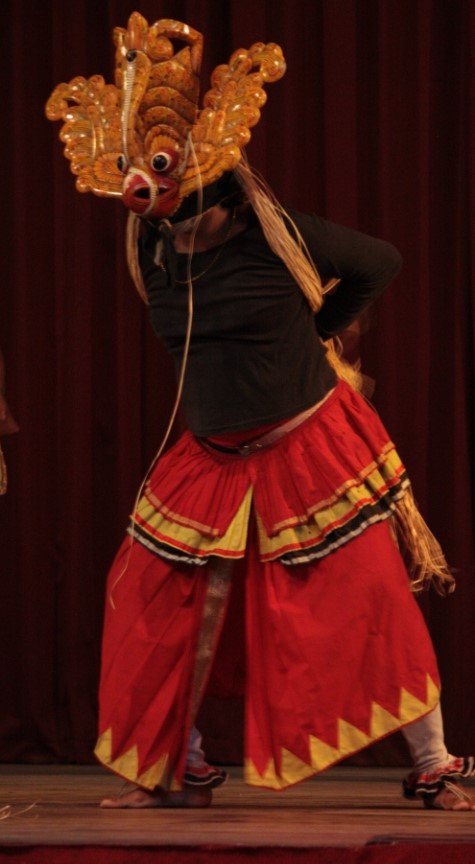
Photograph of a dancer in a Garuda mask at the Kandyan Cultural Centre in Kandy.
Photograph of a trio of dancers in aquamarine costumes at the Kandyan Cultural Centre in Kandy, Sri Lanka.
Photograph of fire-eaters at the Kandyan Cultural Center in Kandy, Sri Lanka.
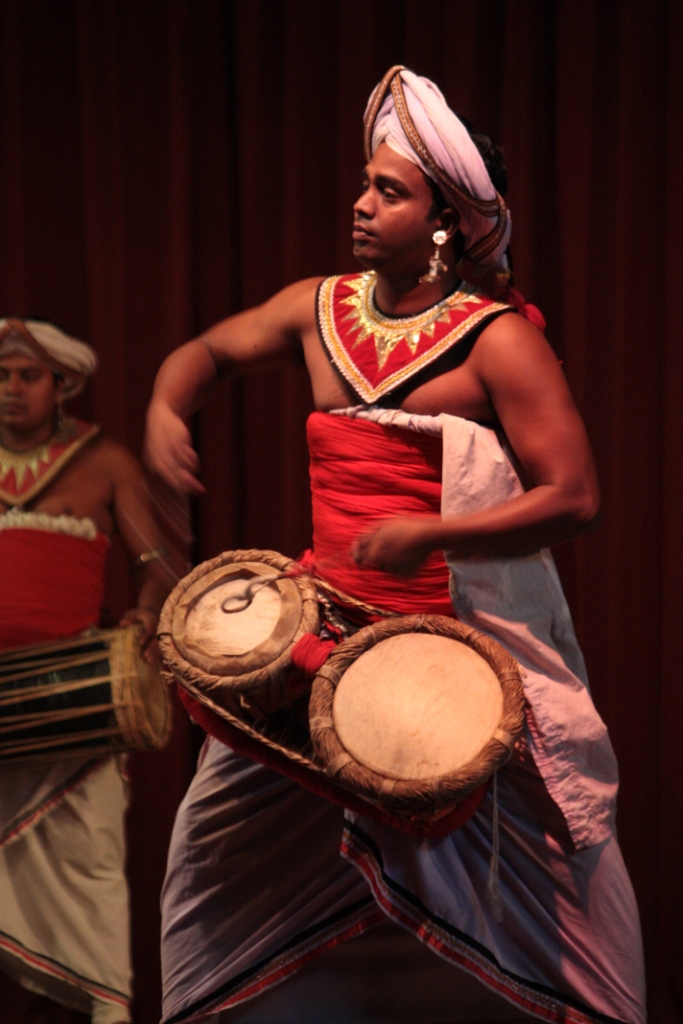
Photograph of a drummer at the Kandyan Cultural Centre in Kandy, Sri Lanka.

BOOK: “Shuhari” by Nobuo Suzuki

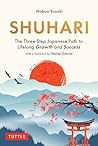
Shuhari: The Three-Step Japanese Path to Lifelong Growth and SuccessShuhari: The Three-Step Japanese Path to Lifelong Growth and Success by Nobuo Suzuki
My rating: 5 of 5 stars

Release date: August 11, 2026

I was introduced to the concept of “shuhari” as a student of Japanese martial arts, and over time I discovered it to be one of the most useful concepts for personal growth and development. Shuhari is by no means exclusive to martial arts and is applied to arts in the broadest sense — really to endeavors of any type (as is true in this book which references not only martial arts, but literary arts, graphic arts, cinematic art, and even sciences.) The idea is this: one begins by repetitively practicing what one is taught in as close to an exemplary fashion as possible (shu,) then one starts adapting the principles one has cultivated to changing and unpredictable circumstances (ha,) and finally one abandons the forms and embraces the spontaneous (ri.) In short, we follow the rules (shu,) break the rules (ha,) and abandon the rules (ri.)

Recent years have seen a flood of books on cultural life philosophies, starting and continuing with those of the Japanese culture, but venturing out into Scandinavian (Sisu and Lagom,) Goan (Susegad,) and many others. One could easily fill a shelf each with the popular books on “ikigai” or “ganbatte.” It’s kind of a surprise to see that it’s taken this long to venture into the invaluable concept of “Shuhari.” It is an idea whose time has come to go global.

In a broad sense, this is a book on learning and creativity, and I’d highly recommend it for anyone looking to reevaluate their approach to learning and / or creating.

View all my reviews

PROMPT: Cultural Tradition

Daily writing prompt
What’s a cultural tradition from another country that you wish existed in yours?

The Langar Hall (found in Punjab, Haryana, and wherever else Sikhs are found) is an excellent tradition. They are places that serve free communal meals every day. It’s not like a soup kitchen that attracts only poor, nor is it like the many institutions that make meals (implicitly or explicitly) only for one particular ingroup (e.g. members of a particular religion.)

PROMPT: Local Custom

Daily writing prompt
What’s the most interesting local custom you’ve encountered?

My wife and I once had tea in Nagaland with men who’d been cannibals in their youth, but they weren’t anymore (and — in point of fact — probably didn’t have the teeth for solid food anymore,) so I don’t think that counts.

For the most part, I don’t think of customs as being more or less interesting, just — sometimes — unexpected. I’ve noticed that most people see cultural customs as the strange behaviors other peoples do, while their own culture’s customs are largely invisible to them (i.e. “That’s just how things are done; it really couldn’t be done any other way.”) So, I guess it’s been most interesting, having returned from living abroad for more than a dozen years, noticing just how many strange and baffling things Americans do.

Slow Burn [Senryū]

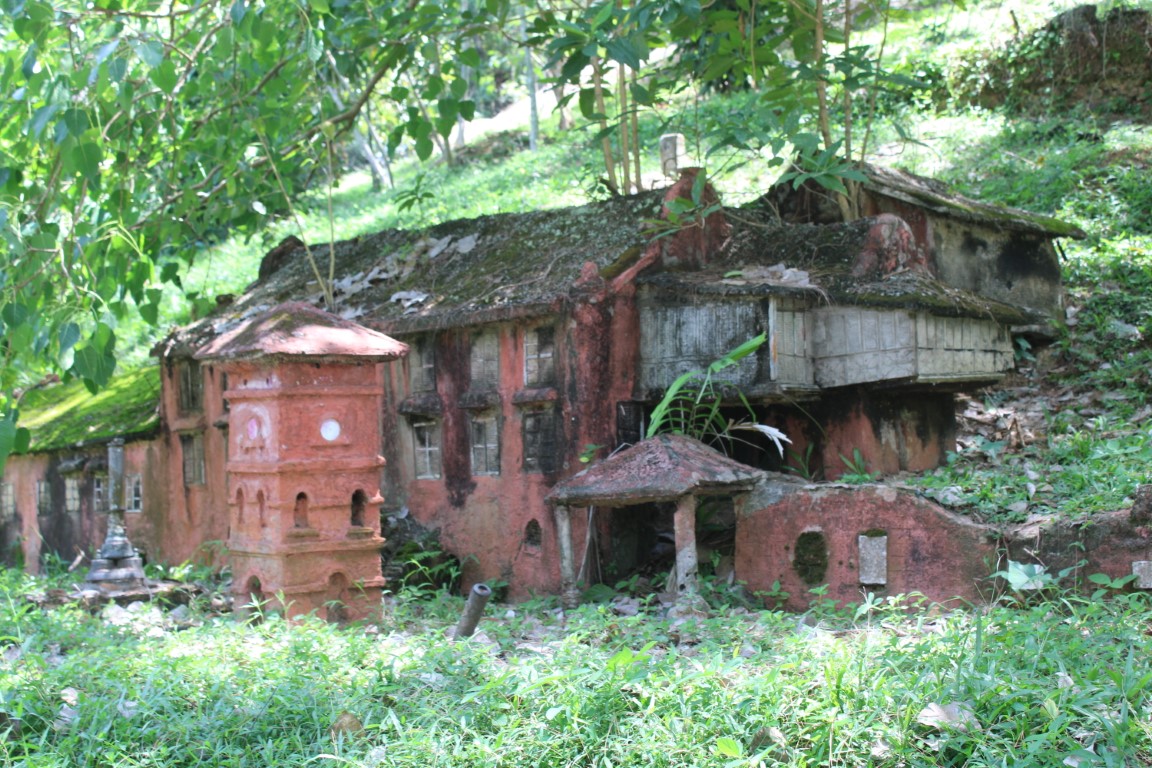
Photograph of an overgrown scale model of Dutch Square. The model is located on Bukit Cina (Chinese Hill.)
bedraggled buildings:
nature digests what it eats
ever so slowly.

Nature Overwrites Culture [Haiku]

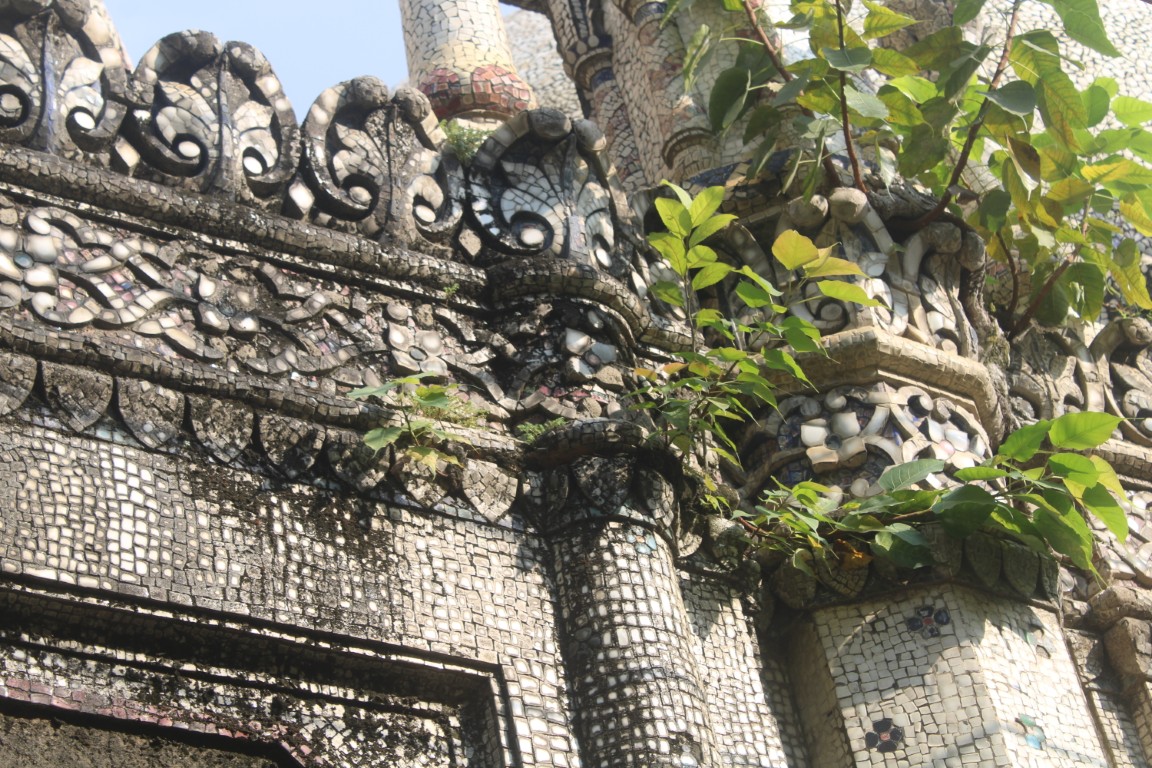
Photograph taken in Agartala at Gedu Mia's Mosque.
saplings sprout
from the ornate trim
of a once-grand mosque.

Stump Gator [Kyōka]

Photograph of a young alligator resting on a stump in the Louisiana bayou, near Slidell.
Gator rests on stump.
but my mind cannot rest.
it's not "gator"
and "stump" in the same place,
but in the same sentence.

BOOK: “The American Claimant” by Mark Twain

The American ClaimantThe American Claimant by Mark Twain
My rating: 5 of 5 stars

Free at Project Gutenberg

This is one of Twain’s lesser-known books, but it’s not for lack of Twain’s signature humor and cleverness. Like “A Connecticut Yankee in King Arthur’s Court” it shines a light (often satirically) on what it means to be American via a fish-out-of-water storyline. In this case, there is no “magic teleportation” of a character to an alternate world. Here, a progressive British aristocrat ends up in working class America, while a flighty American who dabbles in get-rich-quick schemes — Mulberry Sellers (the titular “American Claimant”) — ends up playing at being an aristocrat, but in America.

As the book highlights the difference between class-conscious Britain and egalitarian America, it shows that deep down America isn’t always as egalitarian as it projects to be. This insight is largely conveyed through the experience of “Howard Tracy” (the pseudonym of Viscount Berkeley, the progressive aristocrat who gives up his title to assume an identity in blue-collar America, only to find that it is not the utopia of equality he’d come to believe it to be.)

If you enjoy humorous stories, I’d highly recommend this book. It may take a moment to get into the story, but — ultimately — it’s an enjoyable read.

View all my reviews

Chinatown [Senryū]

through the paifang*,
you leave your city,
but you're not in China.

*A paifang (牌坊) is the gate over a street or road that denotes the bounds of a Chinatown.