PROMPT: Successful

Daily writing prompt
What’s your top tip to be successful in life?

Adjust your definition of success until you’re there. It is, after all, a completely subjective term.

BOOKS: “Know Yourself and Your Enemy” by Qixia Yu

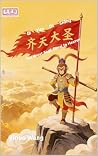
Know Yourself and Your Enemy 知己知彼百战不殆 (Bilingual Chinese Idiom Stories)Know Yourself and Your Enemy 知己知彼百战不殆 by Qixia Yu
My rating: 5 of 5 stars

Author Amazon Site

This illustrated bilingual book tells a story out of the Romance of the Three Kingdoms. It’s a popular tale of strategy in which the renowned strategist (and then Prime Minister) Zhuge Liang outfoxed the (also) renowned General Sima Yi as the latter brought a large army to the walls of the capital where Zhuge Liang was residing. The city was only weakly guarded because the bulk of forces were on campaign and they could not be recalled in time to be of service. Were it not for Zhuge Liang’s insightful stratagem, the capital would have been lost.

This is a great book for those learning Chinese for a few reasons. First, it contains pinyin and English translation. Secondly, it’s illustrated in a way that is not only aesthetically pleasing but which also helps a learner follow events – despite gaps in language understanding. Third, it’s an interesting story, and a nice break from the usual (re: dreadfully boring) beginner level reading fare. Finally, it’s a nice bite-sized chunk of writing for someone who still has to think out words and sentences. I don’t know that the author restricted themselves to any particular HSK level. It seemed to have some language beyond what was in HSK 3 / 4 readers I’ve read but is still relatively simple and straightforward in its language. Restricting to a simple level might be an issue with any historical work because there are going to be terms that are important but certainly aren’t among the most common words today (e.g. halberd.)

If you’re learning Chinese and are interested in strategy, martial arts, history, or Chinese literary classics, I’d highly recommend reading this book.

View all my reviews

PROMPT: Proverb

Daily writing prompt
Share a proverb you think is completely wrong and make your case.

“If the mountain will not come to Muhammad, then Muhammad must go to the mountain.”

Maybe Muhammad is a beach person. I think it’s just a parallel construction run amok. Everything sounds wise in parallel construction — whether it is or not. “Ask not what your country can do for you,…” “If you can’t change a diaper, the diaper will change you.” etc.

PROMPT: Word or Phrase

Daily writing prompt
What’s a word or phrase that annoys you?

Popularity contest,” as in “This isn’t going to win me any popularity contests, but…” You know what’s not popular? Popularity contests. I’ve never heard of one. What you are really saying is, “I’m about to be a jackass, and I just want you to know that I’m aware I’m being a jackass.” Just own your jackassery all ready. You can’t soften the blow of being a jackass.

Long Live Bonsai [Senryū]

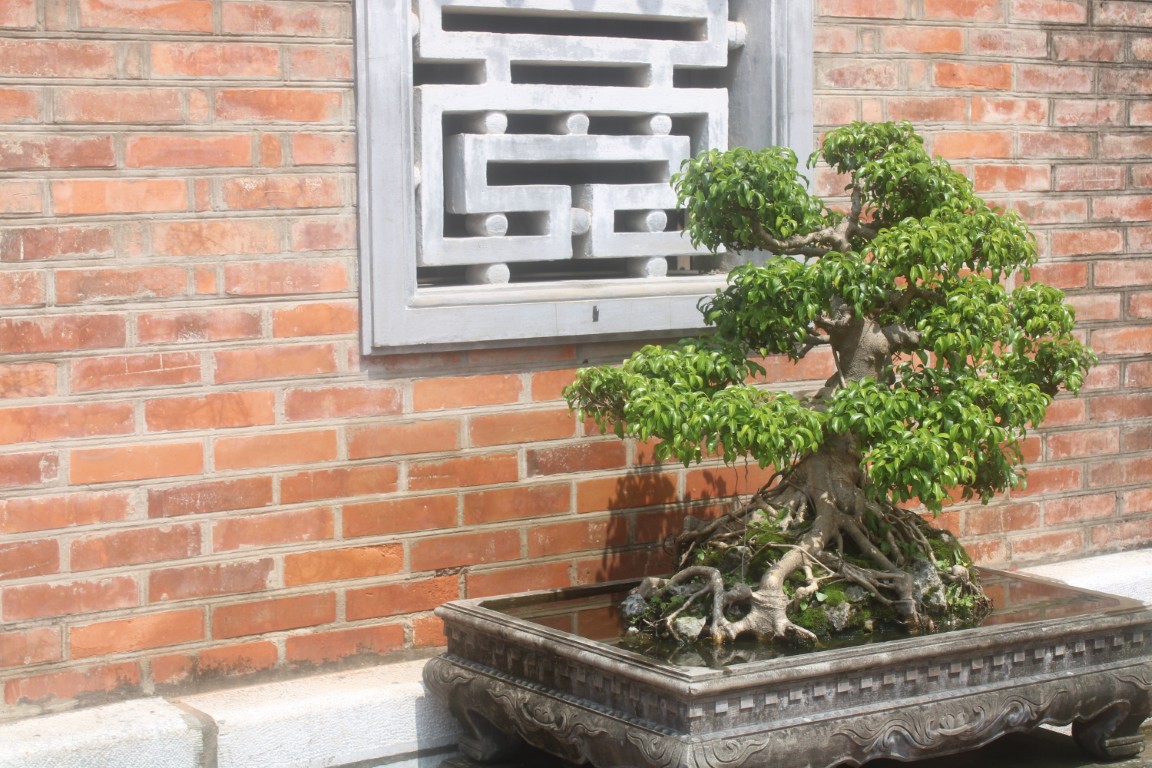
Photograph of a bonsai tree taken on the grounds of a Hanoi Temple.
the bonsai tree
isn't a BANZAI! tree,
yet looks 10,000.

NOTE: “Bonsai” [盆栽] means “potted plant.” “Banzai” [万歳] means “10,000 years,” (in the manner of “long live the king.”)

“Drinking Wine, no. 5” [饮酒·其五] by Tao Qian [陶潜] (a.k.a. Tao Yuanming [陶渊明])

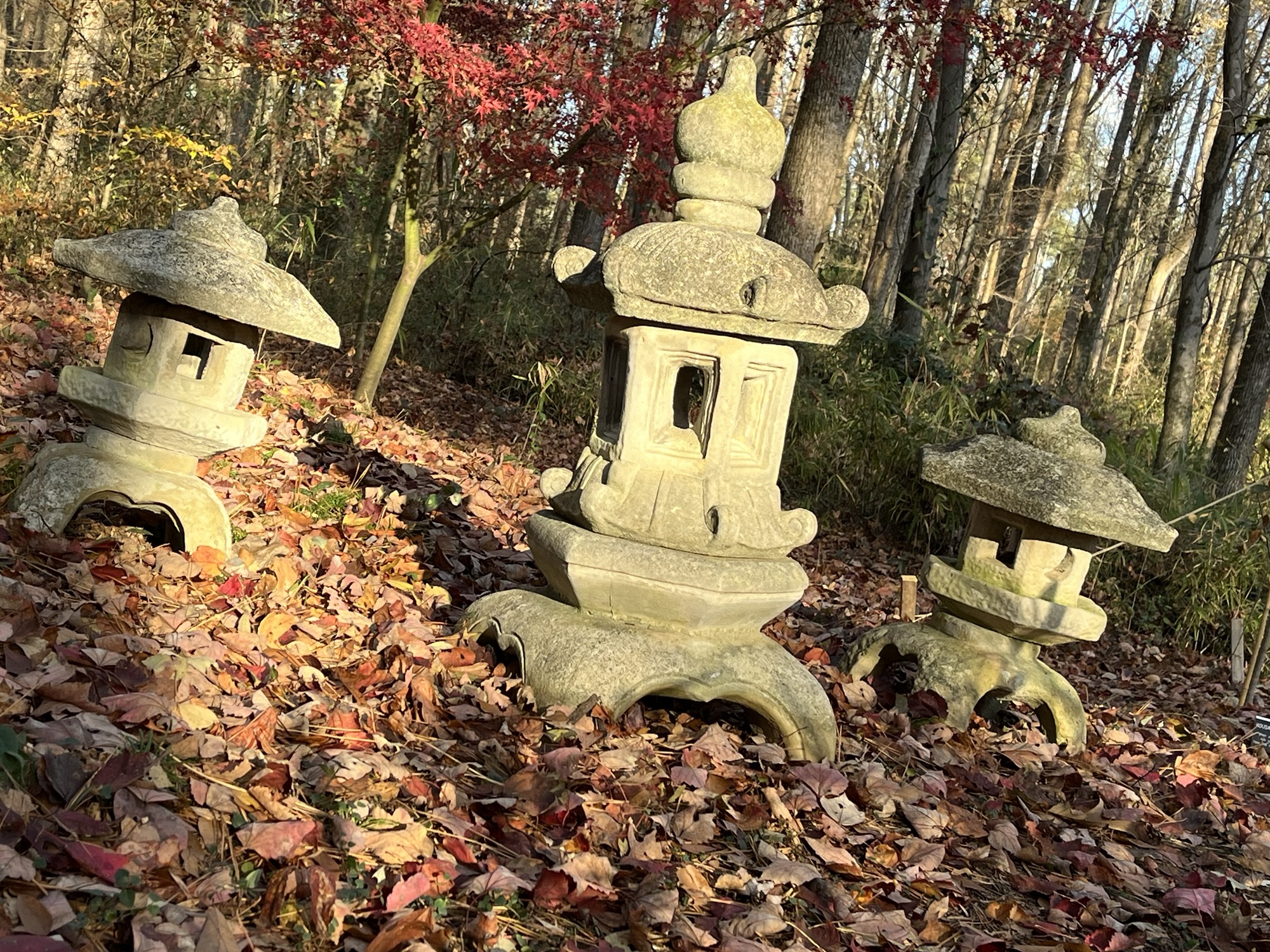
Taken in Hartwell, Georgia.
I live amid a busy town,
But traffic sounds are never heard.

How can this possibly be true?

Deep in the mind, all is remote.

Picking 'mums by the eastern fence,
I peer at distant South Mountains.
Sunset flares in garish color.
Birds flock home in lines and clusters.
The scene conveys some great meaning,
But words to express it fail me.

NOTES: “Drinking Wine, no. 5” [饮酒·其五] is one of Tao Qian’s [陶潜] “Twenty Poems on Drinking Wine” [饮酒二十首.] It is the best-known piece from the collection. The original poem in Simplified Chinese script is:

结 庐 在 人 境,
而 无 车 马 喧.
问 君 何 能 尔?
心 远 地 自 偏.
采 菊 东 篱 下,
悠 然 见 南 山.
山 气 日 夕 佳,
飞 鸟 相 与 还.
此 中 有 真 意,
欲 辨 已 忘 言.

I’ve started reading a review copy of Arthur Sze’s Transient Worlds (from Copper Canyon Press, due out April 14, 2026.) The first chapter discusses this poem and various translations of it, encouraging readers to make their own translation. This is mine. For more information about the book, see: https://www.coppercanyonpress.org/books/transient-worlds-arthur-sze/

PROMPT: Ban

Daily writing prompt
If you could permanently ban a word from general usage, which one would it be? Why?

I would replace all adverbs with a loud “HONK!”

Why do I do anything, because I think it would be funny. [Granted, only for a short time.]

Stump Gator [Kyōka]

Photograph of a young alligator resting on a stump in the Louisiana bayou, near Slidell.
Gator rests on stump.
but my mind cannot rest.
it's not "gator"
and "stump" in the same place,
but in the same sentence.

PROMPT: Creative

Daily writing prompt
How are you creative?

The answer depends upon stress.

If it’s, “How are YOU creative?” then I think the question is a little insulting and I wouldn’t dignify it with a response.

If: “How are you CREATIVE?” (then it’s missing a comma before the last word, but) I’ll just say, “Very well, thanks for asking.”

If: “How ARE you creative?” Then I’ll assume it’s as opposed to how I was creative in the past, and would reply, “Better, thanks for asking.”

If: “HOW are you creative?” The answer is, of course, “practice!”

BOOK: “The Emperor in Hell” [Book 5 of the “Journey to the West” Series] ed. by Jeff Pepper; trans. by Xiao Hui Wang

The Emperor in Hell: A Story in Simplified Chinese and Pinyin, 600 Word Vocabulary LevelThe Emperor in Hell: A Story in Simplified Chinese and Pinyin, 600 Word Vocabulary Level by Jeff Pepper
My rating: 4 of 5 stars

Publisher Site – Imagin8 Press

This is the fifth volume in a series that abridges and simplifies the classic Chinese novel, Journey to the West, so that it can be read by a language learner with about a HSK 3 grasp of Chinese. It tells the story from Chapters 10 and 11 of the original novel. Like the preceding volume, this one doesn’t deal with Sun Wu Kong (i.e. the Monkey King — protagonist of the novel overall,) and doesn’t even deal with the monk Xuanzang — the protagonist of the true story on which the novel was based.) These chapters tell a story that feels like a diversion, though it will be involved in the segue back to the actions of the main cast.

In this book, the Jing River Dragon King gets in trouble when he makes a bet with a fortune-teller. The Dragon King has to cheat to save his pride, but this runs him afoul of the Jade Emperor. The Dragon King appeals to the human Emperor, Taizong, who agrees to help. When wires get crossed, Taizong ends up in the underworld for judgement. With the help of others and with promises made, Taizong is allowed to return to earth.

It’s an interesting story and gives some insight into Chinese mythology. As is always the case with a book such as this, events of the story must be cut or rushed. Readers may vary in their views about whether the right material was cut or thinned.

I continue to enjoy this series. This book was a little more challenging to read than earlier volumes, not because the vocabulary was harder. I think it was more that contextual cues were fewer, owing to it not being so tightly tied to the overall story.

If you’re just learning to read Chinese, I’d recommend this series as an interesting story made readable to a language learner.

View all my reviews