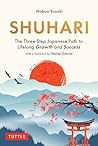
BOOK: “Shuhari” by Nobuo Suzuki

Shuhari: The Three-Step Japanese Path to Lifelong Growth and SuccessShuhari: The Three-Step Japanese Path to Lifelong Growth and Success by Nobuo Suzuki
My rating: 5 of 5 stars

Release date: August 11, 2026

I was introduced to the concept of “shuhari” as a student of Japanese martial arts, and over time I discovered it to be one of the most useful concepts for personal growth and development. Shuhari is by no means exclusive to martial arts and is applied to arts in the broadest sense — really to endeavors of any type (as is true in this book which references not only martial arts, but literary arts, graphic arts, cinematic art, and even sciences.) The idea is this: one begins by repetitively practicing what one is taught in as close to an exemplary fashion as possible (shu,) then one starts adapting the principles one has cultivated to changing and unpredictable circumstances (ha,) and finally one abandons the forms and embraces the spontaneous (ri.) In short, we follow the rules (shu,) break the rules (ha,) and abandon the rules (ri.)

Recent years have seen a flood of books on cultural life philosophies, starting and continuing with those of the Japanese culture, but venturing out into Scandinavian (Sisu and Lagom,) Goan (Susegad,) and many others. One could easily fill a shelf each with the popular books on “ikigai” or “ganbatte.” It’s kind of a surprise to see that it’s taken this long to venture into the invaluable concept of “Shuhari.” It is an idea whose time has come to go global.

In a broad sense, this is a book on learning and creativity, and I’d highly recommend it for anyone looking to reevaluate their approach to learning and / or creating.

View all my reviews

Play Mind [Common Meter]

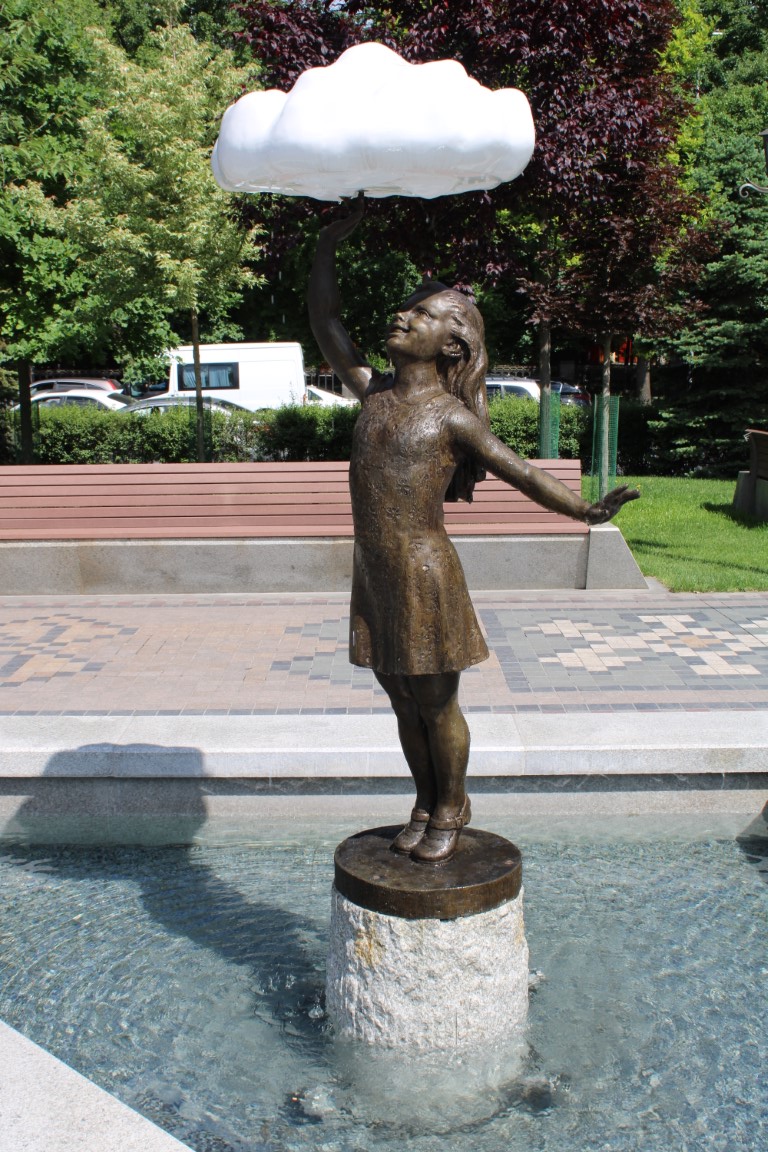
Photograph of a sculpture called "Imagination" in Vardanians' Park in Yerevan, Armenia.
What is this cloud above my head
on such a sunny day?
You may think it foreshadows rain.
I think that it brings play.

PROMPT: Differently

Daily writing prompt
What could you do differently?

Everything except fully autonomic bodily functions could be done differently. That’s the nature of human creativity.

PROMPT: Play

Daily writing prompt
Do you play in your daily life? What says “playtime” to you?

Yes. Frenetic and chaotic creativity.

PROMPT: Creative

Daily writing prompt
How are you creative?

The answer depends upon stress.

If it’s, “How are YOU creative?” then I think the question is a little insulting and I wouldn’t dignify it with a response.

If: “How are you CREATIVE?” (then it’s missing a comma before the last word, but) I’ll just say, “Very well, thanks for asking.”

If: “How ARE you creative?” Then I’ll assume it’s as opposed to how I was creative in the past, and would reply, “Better, thanks for asking.”

If: “HOW are you creative?” The answer is, of course, “practice!”

FIVE WISE LINES [November 2025]

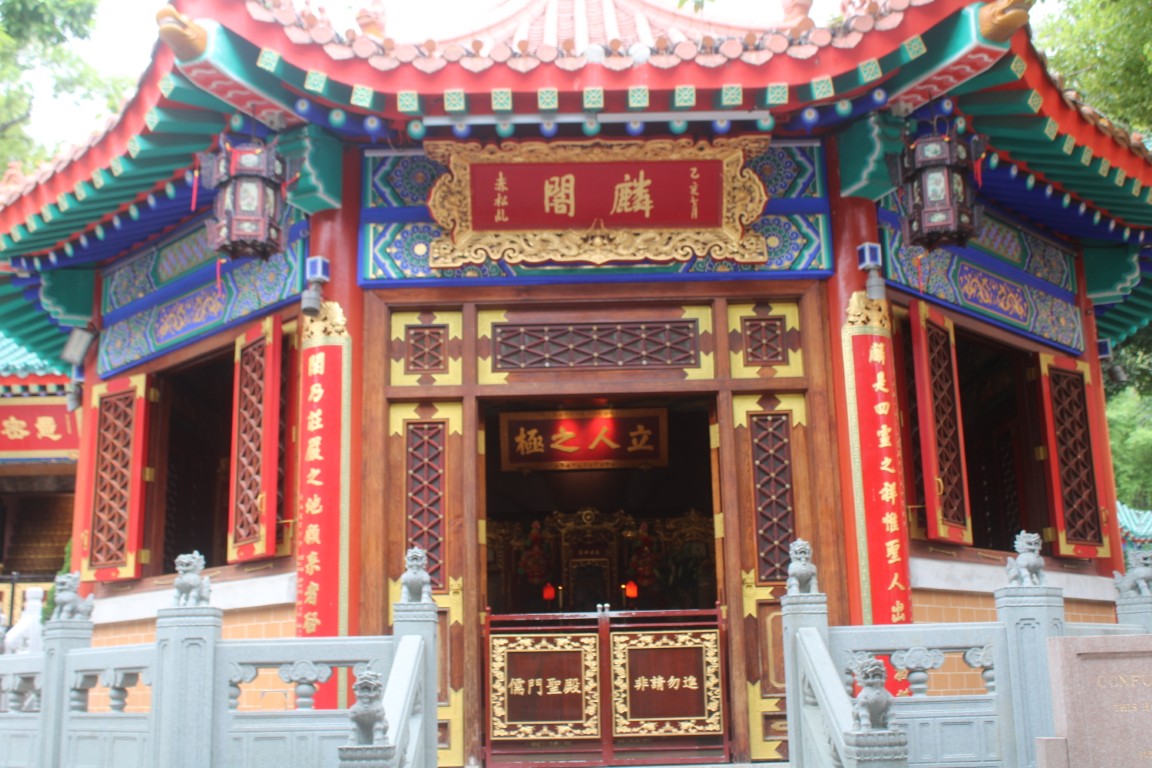
Taken at Fo Guang Shan, near Kaohsiung in Southern Taiwan.

A thing is mighty big when time
and distance cannot shrink it.

Zora Neale hurston; Tell my horse

…if you want to be elected, it is better
to be Mean than to be Funny.

hunter s. thompson; Better than sex

And whosoever shall compel thee to go a mile,
go with him twain.

jesus; Matthew 5:38-40

The only gamblers who will talk openly
are the ones who don’t make money.
The successful ones keep their mouths shut.

Kit chellel; lucky devils

To live a creative life,
we must lose our fear of being wrong.

joseph chilton pearce

Wen Fu 10 “Originality” [文赋十] by Lu Ji [陆机] [w/Audio]

Splendid thoughts arise from joined words --
Lucidity is awakened:
Luminous like adorned brocade,
Doleful as a string serenade.
But if crib suspicions aren't killed,
It'll be just one more pulp piece.
Though you may be these word's weaver--
Some ancestor, the prime conceiver.
You must be just and rise above,
Though it kills words you've grown to love.

The original lines in Simplified Chinese:

或藻思绮合,清丽千眠。
炳若缛绣,凄若繁弦。
必所拟之不殊,乃暗合乎曩篇。
虽杼轴于予怀,怵佗人之我先。
苟伤廉而愆义,亦虽爱而必捐。

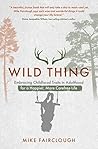
BOOKS: “Wild Thing” by Mike Fairclough

Wild Thing: Embracing Childhood Traits in Adulthood for a Happier, More Carefree LifeWild Thing: Embracing Childhood Traits in Adulthood for a Happier, More Carefree Life by Mike Fairclough
My rating: 4 of 5 stars

Publisher Site — Hay House

This short self-help guide aims to encourage adults to recapture some of the bliss-inducing traits of children. Over six chapters, it examines the virtues of play, rule-breaking behavior, imagination, resilience, gratitude, flow, daydreaming, discovery, exploration, and awe.

Each chapter, in true self-help fashion, ends with a bulleted set of practical tips and practices. The book has an Introduction and Afterward, but no other ancillary material.

I felt the book was at its strongest when the author was discussing his personal experiences. Otherwise, the book can dip into the “no-duh” plight common among self-help style books — where it seems to state the obvious without adding depth of insight.

I enjoyed reading this book. It’s a nice, short pep-talk — though it’s unlikely to leave readers with any burning revelations or new insights.

View all my reviews

“Sometimes with One I Love” by Walt Whitman

Sometimes with one I love I fill myself with
rage for fear I effuse unreturn'd love,
But now I think there is no unreturn'd love,
the pay is certain one way or another
(I loved a certain person ardently and my
love was not return'd,
Yet out of that I have written these songs).

“Art” by Herman Melville [w/ Audio]

In placid hours well-pleased we dream
Of many a brave unbodied scheme.
But form to lend, pulsed life create,
What unlike things must meet and mate:
A flame to melt -- a wind to freeze;
Sad patience -- joyous energies;
Humility -- yet pride and scorn;
Instinct and study; love and hate;
Audacity -- reverence. These must mate,
And fuse with Jacob's mystic heart,
To wrestle with the angel -- Art.