PROMPT: Self-Confidence

Daily writing prompt
What’s the best way to build self-confidence?

Going the places that scare you.

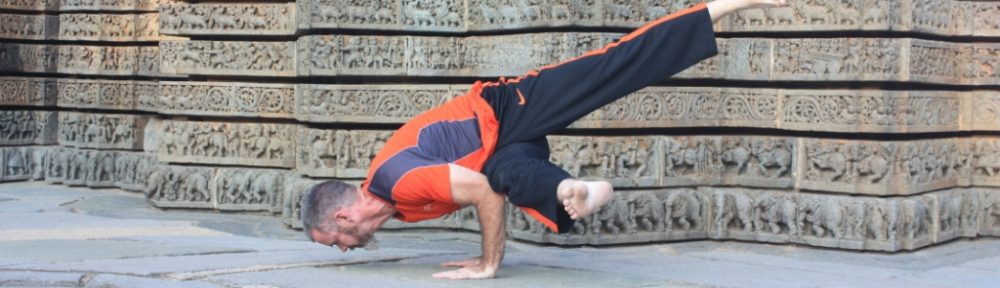
I’m fond of primitive living skills and unarmed martial arts that train against armed opponents. There’s something about stripping away all technologies that you can’t build yourself in the moment that gives one faith in one’s capability far deeper than a high GPA, a good paying job, or any of the usual markers of success in today’s world. I highly doubt any cavemen experienced Imposter Syndrome. If you managed to be alive into adulthood, you had an intuitive understanding that you were some kind of awesome. Not so in the modern world.

PROMPT: Won’t Live to Witness

Daily writing prompt
What’s something you’d love to see in the future, but know you probably won’t live to witness?

I would love to see an era in which AI and robotics frees up humans to work on the project of being better humans physically, mentally, creatively, emotionally, artistically, etc.

However, I suspect that on the way to that point there will be periods of dystopia, chaos, and quasi-Armageddon. As near as I can tell, it will involve the invention of a new form of economy (and possibly governance,) which I haven’t seen anyone discussing in the merited depths.

PROMPT: Fear and Self-Doubt

Daily writing prompt
How do you handle fear and self-doubt?

Feel it but don’t feed it. I feel whatever emotional sensation it brings with my whole attention, but don’t ruminate — i.e. don’t let the mind go into worst-case scenario building or pity partying or self-criticism. Use the sensation as an anchor for one’s awareness. This honors the source of consternation while recognizing that one’s mental (/ emotional) experience of an event is not the event, itself — i.e. that one has influence over one’s experience even when one has zero influence over the event. Gain confidence with the small emotional experiences and work toward the big ones.

This was the great gift I received in being taught sakshi bhava, the yogic practice of dispassionate witnessing.

Little Blue [Haiku]

Photograph of a blue Chicory flower, taken near Kolsay Lake in Kazakhstan.
from a gliding boat,
a little blue flower spied
as all else blurs.

PROMPT: Quote

Daily writing prompt
Do you have a quote you live your life by or think of often?

“I am an old man and have known a great many troubles, but most of them have never happened.” – Mark Twain

“There is nothing either good or bad but thinking makes it so.” – William Shakespeare, Hamlet

“What you imagine, you create.” – Siddhartha Guatama Buddha

All restatements of one key principle, that our [mental / emotional] experience of the world is an entirely separate thing from the world itself. The latter one has almost no control over, the former one can reach a state of complete control (granted through painstaking and relentless effort.)

BOOK: “Swami Kripalu’s Ladder of Yoga” by Richard Faulds

Swami Kripalu’s Ladder of YogaSwami Kripalu’s Ladder of Yoga by Richard Faulds
My rating: 4 of 5 stars

Publisher Site – Monkfish

Release Date: April 7, 2026

This book discusses the organizational structure of yoga as described by prominent 20th century yoga guru, Swami Kripalu, an approach that draws on (but distinguishes itself from) the 8-limb (Ashtanga) framework outlined by Patanjali in the Yoga Sutras. Swami Kripalu deemphasized yogic ethics (Yama and Niyama,) and put great emphasis on hierarchy among the elements of yoga — i.e. that one must pass through the lessons of some limbs before you can begin to move up to the next. (This idea is certainly taught in Patanjali’s Sutras, but not with the same emphasis — hence Kripalu’s “ladder,” rather than “limbs” — making clear that these are not independent elements but rather are completely dependent.)

The greatest strength of this book is in distinguishing concepts like dhyana (meditation) from samadhi, distinction of which is often given short shrift with simplistic soundbite-like definitions in books on yoga. The book is not the usual yoga text in that it spends a great deal of time discussing the “higher limbs” of yoga (to resort back to Patanjali’s formulation.) Faulds adds benefit by discussing his own subjective experiences, the lack of access to subjective understanding often gives even students actively training with teachers doubts about their experiences.

I should point out that the book does also spend a good deal of page count (perhaps more space than any other subject) on pranayama (breathwork,) both covering it over several chapters in the book’s midsection and then further in a couple appendices that get into the physiology of breathwork.

One nice feature is that almost all of the chapters end with sections entitled “Be a Discerning Student” and “Applying this Chapter in Practice” to help readers with practical insights into what is by and large a philosophical discussion. There are also several appendices (the most useful one to me was a discussion of the shifting understanding of the term “samadhi” over time and across disciplines.)

If you want to explore what the higher limbs are and how they are distinguished, I’d recommend this book. (As I said, it also deals with Pranayama in some detail, but that will likely offer less new insight for students and teachers of yoga who’ve received an education in [and maintain a practice of] yoga.)

View all my reviews

Nomad [Free Verse]

Photograph taken in the Parsi Temple of Baku, Azerbaijan.
One who doesn't feel 
a lot at home anywhere
Begins to feel a little
at home everywhere.

He sees not strangeness
in strangers --
No more than he sees
in himself.

Any one place is not
greater nor lesser
than anywhere else.

Lands of gold and riches
are as likely devoid of
authenticity - of soul -
as impoverished places
are dripping with it.

PROMPT: Negative Feelings

Daily writing prompt
What strategies do you use to cope with negative feelings?

Sakshi Bhavan, the dispassionate witness, giving feelings one’s full attention without allowing rumination that compounds the effect.

Not technically a strategy, but I think it’s on point.

Martian Mindscape [Free Verse]

Photograph taken at days end atop Gudibande Fort Hill in Karnataka, India.
The light of day's end
brings out the sandy
grit of the arid
landscape.

The light of day's end
matches & compounds
the color of the
desiccated vegetation.

The light of day's end
turns the world
into someplace new --
somewhere I've never
been before.

My body knows this is
nothing like Mars;
my mind does not.

River Mind [Haiku]

the river widens,
slows / stopping, in places;
so goes my mind.