Those who reached the escape velocity necessary to truly write their own stories: e.g. Drukpa Kunley, Diogenes the Cynic, Hánshān, Ikkyū, Socrates, and the various Avadhuta.
Category Archives: Taoism
PROMPT: Happiness
That it’s a worthy object of pursuit, as if it is a stable state. I think both the Taoists and the Buddhists have instructive views on the matter. In Taoism, the Yang contains the seed of Yin and one flows inexorably into the other. In this view, the rock bottom worst life has to offer is a time to rejoice because the light will follow. Whereas, when one thinks life is the best it can get, a fall will come. As for Buddhism, our happiness may reflect an illusion that we’ve momentarily achieved our desires, when desires are inherently great white whales. Aim for contentment. Experience happiness when it comes.
BOOK: “Saiweng Lost His Horse” [塞翁失马] by Qixia Yu
Saiweng Lost His Horse 塞翁失马: A Story about Life and Values by Qixia YuMy rating: 5 of 5 stars
Author Amazon Page
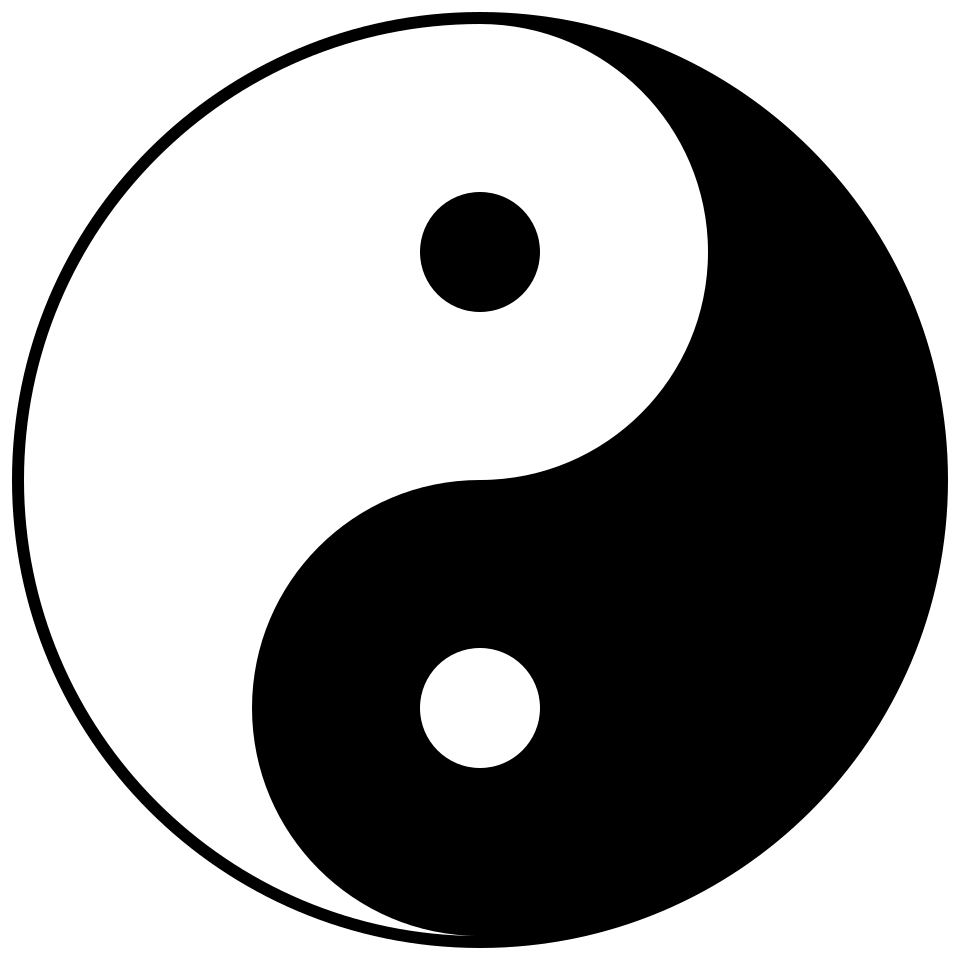
This bilingual illustrated book tells the famous Taoist story often referred to as “good news? bad news? who’s to say?” (or words to that effect.) The story, originally contained in the Huainanzi (i.e. The Book of Master Huainan,) shows a wise old farmer subjected to the ups and downs of life. The old man’s neighbors are always surprised when the farmer neither celebrates positive events or bemoans negative ones — realizing the truth contained in the taiji symbol (yin / yang symbol) that the seed of the light is always in the dark and vice versa.
The book contains text in Simplified Chinese, pinyin, and English. It also has pretty illustrations. It’s very kid’s book-like (i.e. short, illustrated, and formatted as such;) though the story, itself, is not particularly juvenile.
I was surprised when this would not open on my laptop “Kindle for PC” reader as another book in this series had. (I like to read illustrated works (and Chinese writings) that way as it’s generally easier to take in than on my phone or Kindle because the big screen is easy to see and enlarge as necessary. That said, I was quite pleased with the ease with which I could magnify the text on my Kindle device. I had none of the frustration reading it on Kindle that I frequently have had with graphic novels and such in the past.
I enjoyed reading this story and found it quite helpful to me as a Chinese language learner. I’d highly recommend it for those learning to read Chinese.
View all my reviews
BOOK: “Kindred Spirits” by Edward C. Sellner
Kindred Spirits: Thomas Merton, Jack Kerouac, and Zen by Edward C. SellnerMy rating: 5 of 5 stars
Publisher Site — Monkfish Books
Release Date: July 28,2026
This book intertwines the biographies of two prominent 2oth century American authors, Beat novelist Jack Kerouac and Trappist monk Thomas Merton. Besides the two writers’ general interest in Eastern philosophy and mysticism and the fact that they had broadly overlapping lifespans, I wouldn’t have placed them in the same basket (despite having read works by each and found both writers’ works enjoyable – though in distinct ways.) However, Sellner dives down into other points of commonality — e.g. Columbia University educated, lifelong Catholics, love of drink, ladies’ men (at some point, at least,) desire for a hermetic existence, etc. Of course, another important commonality was dying young, Kerouac at 47 and Merton at 53.
This book is a fascinating look at two authors who forever changed American perception of Zen Buddhism and Eastern philosophy more generally, though who did it through the lens of Catholicism. At its heart, however, it’s the tale of the struggles of two men to find something, something elusive yet for which they each felt a strong compulsion, something which even successes only left them hungering for more.
If you’re interested in the lives of writers, this book is an excellent read and I’d highly recommend it. Regardless of what you might feel about the connective tissue between them, both of these writers had an interesting life.
View all my reviews
PROMPT: Every Day
Be spontaneous.
The Temple That Never Closes [Haiku]
Nameless / 无名 [Lyric Poem]
DAILY PHOTO: Sik Sik Yuen Wong Tai Sin Temple
PROMPT: Invention
Velcro and Sticky Notes! We knew how to fasten things, but before then we couldn’t fasten things in a half-assed fashion. As Laozi says in the Daodejing [Ch. 40,] “Returning is the movement of Tao; yielding is the way of Tao.” So, to be able to stick and unstick at will is the highest virtue under heaven.
[NOTE: Technically, research indicates both inventions predate me, but I don’t believe ether became popular for household consumer use until my lifetime.]
Second Eyes [Free Verse]
From the dark depths
of a temple,
eyes open & blink
against the sunlight
pouring through
a narrow second set
of eyes.
What shapes form across
the way?
It's the roof of a second --
more ancient -- temple
that stands across
the street.
This monk has opened
eyes on that view a
thousand times before,
and each time has
forgotten the centuries
old neighboring temple
existed.


![Photograph taken in Hualien, Taiwan at the Hualien Temple and Dongjing Temple (花蓮寺東淨寺) [Buddhist.]](https://berniegourley.com/wp-content/uploads/2026/03/img_1218.jpg?w=300)