PROMPT: Happiness

Daily writing prompt
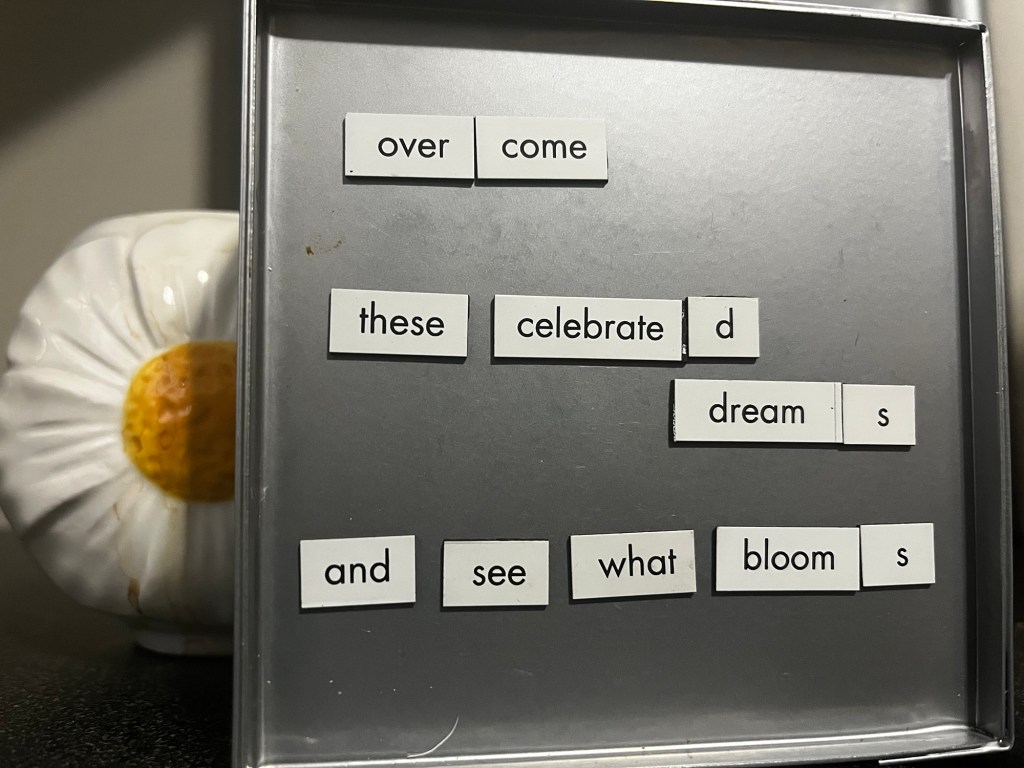
What’s a common misconception people have about happiness?

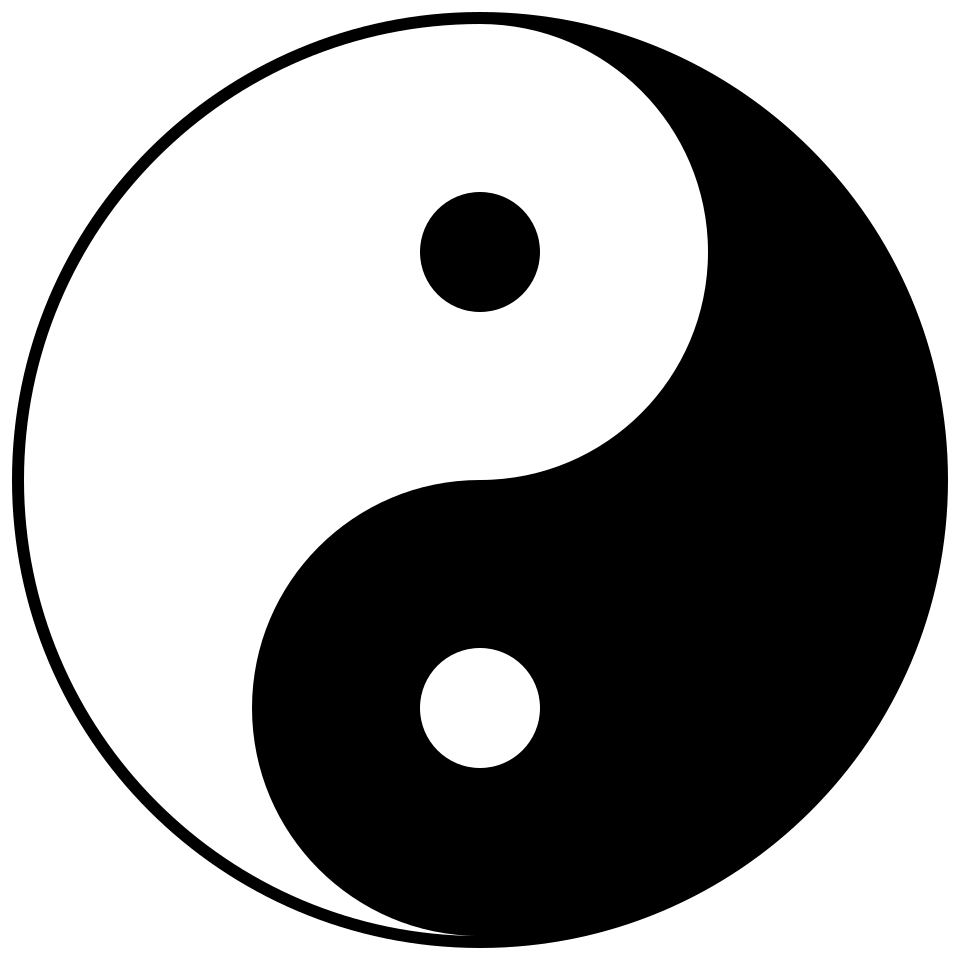
That it’s a worthy object of pursuit, as if it is a stable state. I think both the Taoists and the Buddhists have instructive views on the matter. In Taoism, the Yang contains the seed of Yin and one flows inexorably into the other. In this view, the rock bottom worst life has to offer is a time to rejoice because the light will follow. Whereas, when one thinks life is the best it can get, a fall will come. As for Buddhism, our happiness may reflect an illusion that we’ve momentarily achieved our desires, when desires are inherently great white whales. Aim for contentment. Experience happiness when it comes.

BOOK: “Saiweng Lost His Horse” [塞翁失马] by Qixia Yu

Saiweng Lost His Horse 塞翁失马: A Story about Life and Values (Bilingual Chinese Idiom Stories)Saiweng Lost His Horse 塞翁失马: A Story about Life and Values by Qixia Yu
My rating: 5 of 5 stars

Author Amazon Page

This bilingual illustrated book tells the famous Taoist story often referred to as “good news? bad news? who’s to say?” (or words to that effect.) The story, originally contained in the Huainanzi (i.e. The Book of Master Huainan,) shows a wise old farmer subjected to the ups and downs of life. The old man’s neighbors are always surprised when the farmer neither celebrates positive events or bemoans negative ones — realizing the truth contained in the taiji symbol (yin / yang symbol) that the seed of the light is always in the dark and vice versa.

The book contains text in Simplified Chinese, pinyin, and English. It also has pretty illustrations. It’s very kid’s book-like (i.e. short, illustrated, and formatted as such;) though the story, itself, is not particularly juvenile.

I was surprised when this would not open on my laptop “Kindle for PC” reader as another book in this series had. (I like to read illustrated works (and Chinese writings) that way as it’s generally easier to take in than on my phone or Kindle because the big screen is easy to see and enlarge as necessary. That said, I was quite pleased with the ease with which I could magnify the text on my Kindle device. I had none of the frustration reading it on Kindle that I frequently have had with graphic novels and such in the past.

I enjoyed reading this story and found it quite helpful to me as a Chinese language learner. I’d highly recommend it for those learning to read Chinese.

View all my reviews

PROMPT: Any Philosopher

Daily writing prompt
If you could have dinner with any philosopher, who would it be?

Diogenes the Cynic would be a hoot. Alternatively, Zhuangzi (莊子.) Obviously, my tastes run toward a philosopher that could teach me about how to be free, rather than to teach me some sort of rigorous approach to thinking. I’m stocked up on the latter, but in deficit of the former.

(I’m assuming this to be a “living or dead” question scenario. Usually, I prefer to talk to the living, but I don’t think modern academia has been good to the crazy sage philosopher. I might be able to find a Daoist hermit in a cave somewhere or maybe a Tibetan Nyönpa, but I couldn’t say what his or her name would be.)
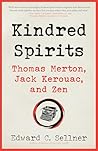
BOOK: “Kindred Spirits” by Edward C. Sellner

Kindred Spirits: Thomas Merton, Jack Kerouac, and ZenKindred Spirits: Thomas Merton, Jack Kerouac, and Zen by Edward C. Sellner
My rating: 5 of 5 stars

Publisher Site — Monkfish Books

Release Date: July 28,2026

This book intertwines the biographies of two prominent 2oth century American authors, Beat novelist Jack Kerouac and Trappist monk Thomas Merton. Besides the two writers’ general interest in Eastern philosophy and mysticism and the fact that they had broadly overlapping lifespans, I wouldn’t have placed them in the same basket (despite having read works by each and found both writers’ works enjoyable – though in distinct ways.) However, Sellner dives down into other points of commonality — e.g. Columbia University educated, lifelong Catholics, love of drink, ladies’ men (at some point, at least,) desire for a hermetic existence, etc. Of course, another important commonality was dying young, Kerouac at 47 and Merton at 53.

This book is a fascinating look at two authors who forever changed American perception of Zen Buddhism and Eastern philosophy more generally, though who did it through the lens of Catholicism. At its heart, however, it’s the tale of the struggles of two men to find something, something elusive yet for which they each felt a strong compulsion, something which even successes only left them hungering for more.

If you’re interested in the lives of writers, this book is an excellent read and I’d highly recommend it. Regardless of what you might feel about the connective tissue between them, both of these writers had an interesting life.

View all my reviews

Nameless / 无名 [Lyric Poem]

Photograph taken in Hualien, Taiwan at the Hualien Temple and Dongjing Temple (花蓮寺東淨寺) [Buddhist.]
They call me Nameless,
Well-known as fameless.
My plans are aimless.
My faults are blameless.
My chess is gameless.
My disgrace, shameless?

But my glasses are framed.
My passions are inflamed.
My wild horses are tamed,
And my arrows are aimed.
All due credit is claimed,
And nothing else remains.

PROMPT: Positive Events

Daily writing prompt
What positive events have taken place in your life over the past year?

Positive? Negative? Who’s to say? Like the Taoist farmer, I’ll withhold judgement.

Surrender [Lyric Poem]

Let the flood sweep 
one away — out
of the shallows,
into the deeps.
Don’t ever cry;
Don’t ever weep;
Just feel the speed
Carry one on.

BOOK: “Understanding Eastern Philosophy” by Ray Billington

Understanding Eastern PhilosophyUnderstanding Eastern Philosophy by Ray Billington
My rating: 4 of 5 stars

Publisher Site — Taylor & Francis

This book does a solid job for one that bites off so much in a single go. Eastern Philosophy is a large subject, and to try to outline the major premises of its varied systems and also compare them to Western / Abrahamic notions (when Western schools are sometimes no more different from Eastern schools than each side is within,) and to do so in under two-hundred pages is a daunting undertaking.

For the most part, I felt the book did a fine job of meeting its objective. A fair amount of selection and simplification is required. I will say the part describing karmic doctrine didn’t seem consistent with what I was taught and seems more in line with the early Western scholars who started writing about Eastern Philosophy but could not help but couch the subject in a Western / Abrahamic frame because it was what they knew and was invisible to them. I say this as one who is no big fan of Karmic philosophy, though for another reason (one which is also mentioned in this book.) I’ve always been told that the central idea is to do selfless acts in order to escape the karmic cycle. Billington, like others before him, states it as do “good deeds” and then he puts forth the critique that this won’t help because doing good for one’s own benefit is fraught with peril. My understanding from Sanskrit scholars is: first, Hindu philosophers were aware of this paradox from the beginning and that’s why the emphasis has always been on “selfless” acts; second, the Abrahamic bifurcation of all actions into good and evil is not so much a thing in Hindu thinking (most actions are inherently neither.) I should point out that there is a lot of internal conflict within these philosophies (e.g. differences between Buddhist and Hindu thoughts on Karma) and that Billington does elsewhere reflect on the differences between Eastern and Western thinking about good and evil.

The first two-thirds of the book is organized by schools of thought (beginning with the Indian ones and working toward Chinese / East Asian schools) and the last third deals with a series of fundamental philosophical questions.

If you want a quick outline of Eastern philosophical ideas, this book gives a good look at them, particularly if one is interested in a comparison to Western ideas. The book also spends a fair amount of time in discussion of what a religion is and how one differs from a philosophy.

View all my reviews

BOOK: “Mastering the Art of War” by Zhuge Liang & Liu Ji [Trans. & Ed. by Thomas Cleary

Mastering the Art of War: Commentaries on Sun Tzu's Classic (Shambhala Dragon Editions)Mastering the Art of War: Commentaries on Sun Tzu’s Classic by Zhuge Liang
My rating: 5 of 5 stars

Publisher Site — Shambhala

This book combines the writings of two prominent Chinese strategists, Zhuge Liang and Liu Ji. Both men came after Sunzi, author of The Art of War, and Cleary describes these two works as commentaries on the work of Sunzi.

Zhuge Liang’s piece is called The Way of the General and it collects short essays from Records of the Loyal Lord of Warriors. Like many, I first became acquainted with Zhuge Liang from his novelized personage in the Chinese classic, Romance of the Three Kingdoms, in which he is called “Kongming” and is a force to be reckoned with in service to Liu Bei of the Shu Kingdom. Zhuge Liang’s ideas are conveyed as short topical discussions, not unlike Sunzi’s work.

Liu Ji’s manual, Lessons of War, is a bit different in that the explanation of the strategy is briefer than in the works of Sunzi or Zhuge Liang, but Liu Ji always includes an exemplary story from history. This makes Liu Ji’s work a little more narrative. It is interesting to see the varied approach to conveyance of the concepts under consideration.

Because the works of Zhuge Liang and Liu Ji are thin, the book has a fair amount of padding in the form of Translator’s Introductions, both an overall Introduction and one per included work. I was happy with how these were done. They do not drone on but rather give some background that will be useful to the average reader without getting lost in the weeds.

If you’re interested in strategy, be it applicable to war or otherwise, I’d highly recommend this book.

View all my reviews

White Space [Free Verse]

I read the space
Around the poem.
It has no meaning,
But says so much.
It betrays a little secret
That no reader ever learned
Who was too concerned
With what was written,
While wholly inattentive
To
What
Was
Not.