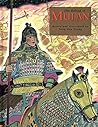
Saiweng Lost His Horse 塞翁失马: A Story about Life and Values by Qixia Yu
My rating: 5 of 5 stars
Author Amazon Page
This bilingual illustrated book tells the famous Taoist story often referred to as “good news? bad news? who’s to say?” (or words to that effect.) The story, originally contained in the Huainanzi (i.e. The Book of Master Huainan,) shows a wise old farmer subjected to the ups and downs of life. The old man’s neighbors are always surprised when the farmer neither celebrates positive events or bemoans negative ones — realizing the truth contained in the taiji symbol (yin / yang symbol) that the seed of the light is always in the dark and vice versa.
The book contains text in Simplified Chinese, pinyin, and English. It also has pretty illustrations. It’s very kid’s book-like (i.e. short, illustrated, and formatted as such;) though the story, itself, is not particularly juvenile.
I was surprised when this would not open on my laptop “Kindle for PC” reader as another book in this series had. (I like to read illustrated works (and Chinese writings) that way as it’s generally easier to take in than on my phone or Kindle because the big screen is easy to see and enlarge as necessary. That said, I was quite pleased with the ease with which I could magnify the text on my Kindle device. I had none of the frustration reading it on Kindle that I frequently have had with graphic novels and such in the past.
I enjoyed reading this story and found it quite helpful to me as a Chinese language learner. I’d highly recommend it for those learning to read Chinese.
View all my reviews