BOOK: “Kindred Spirits” by Edward C. Sellner

Kindred Spirits: Thomas Merton, Jack Kerouac, and ZenKindred Spirits: Thomas Merton, Jack Kerouac, and Zen by Edward C. Sellner
My rating: 5 of 5 stars

Publisher Site — Monkfish Books

Release Date: July 28,2026

This book intertwines the biographies of two prominent 2oth century American authors, Beat novelist Jack Kerouac and Trappist monk Thomas Merton. Besides the two writers’ general interest in Eastern philosophy and mysticism and the fact that they had broadly overlapping lifespans, I wouldn’t have placed them in the same basket (despite having read works by each and found both writers’ works enjoyable – though in distinct ways.) However, Sellner dives down into other points of commonality — e.g. Columbia University educated, lifelong Catholics, love of drink, ladies’ men (at some point, at least,) desire for a hermetic existence, etc. Of course, another important commonality was dying young, Kerouac at 47 and Merton at 53.

This book is a fascinating look at two authors who forever changed American perception of Zen Buddhism and Eastern philosophy more generally, though who did it through the lens of Catholicism. At its heart, however, it’s the tale of the struggles of two men to find something, something elusive yet for which they each felt a strong compulsion, something which even successes only left them hungering for more.

If you’re interested in the lives of writers, this book is an excellent read and I’d highly recommend it. Regardless of what you might feel about the connective tissue between them, both of these writers had an interesting life.

View all my reviews

PROMPT: First Impression

Daily writing prompt
What’s the first impression you want to give people?

My conscious mind would only tell lies about this. While I’ve long been aware that I’m an introvert, it’s only more recently come to my attention that I have resting-“get the hell away from me”-face. It’s nothing I ever purposeful cultivated, and — now, being aware of it –I’m trying to be more discerning. (But I have a lot of decades of programming to work against.)

PROMPT: No

Daily writing prompt
How often do you say “no” to things that would interfere with your goals?

I say no to all sorts of things regularly, for good or bad. I have a [sometimes] unfortunate proclivity to default to no. I move through life like an aircraft carrier, not prone to quick turns or rapid adjustment to unexpected circumstance. I need prepping for course changes and plenty of time. But it does tend to keep me on my objective.

PROMPT: Change

Daily writing prompt
What is one thing you would change about yourself?

For a long time, I’d have said that I’d like to be less introverted. However, adjusting my attitude towards introversion, managing it, and recognizing / valuing the strengths that derive from it has been one of the most enlightening and empowering processes of my life. (So, I’m keeping it.)

However, I do have an ulnar impaction in my wrist that I’d be happy to get rid of (if anyone with such powers is taking requests.)

The Labor of Shyness [Common Meter]

Turtles sun on pier foundations
at the very edge.
So that upon the merest glance
They can slip the ledge,
And sink down into the pond's depths
To hide amid the murk.
Those who aren't shy can never know
Just how hard is its work.

5 Traits Confused for Introversion

There are a number of personality traits or temporary states of mind that may be wrongly attributed to introverts. One reason for this is that introverts aren’t the most expressive of individuals, and in the absence of information people write their own stories — and when writing their own story, they tend to put themselves at the center, even if it’s a story to explain another person’s behavior. So it is that, faced with a lack of verbal or nonverbal feedback, many individuals will assume that the introvert’s behavior has something to do with them. For example, the introvert — lost in thought — who doesn’t acknowledge another person’s entry into the room may be seen assumed to be miffed or irritate, when the truth is that they were just so deeply absorbed in thought that they didn’t notice said person.


5.) Arrogance: If the introvert has a high level of self-confidence in his or her abilities in a particular domain, they may be believed to be arrogant or narcissistic, generally. I, for one, am plenty arrogant in some regards, but that doesn’t mean I’m at all arrogant about what people have assumed me to be arrogant about.

4.) People-hating: Introverts burn energy quickly in interactive, or highly stimulating, situations. That means that they aren’t going to jump on every invitation. An introvert has to manage energy with respect to activities and events where he or she has to interact with others. Choosing to stay home alone rather than go to a given party doesn’t equal hating people.

3.) Shyness: Introverts can be shy, i.e. have anxiety about being in social situations. However, the two don’t necessarily go together.  Shyness, or social anxiety, is also much less stable a condition. In other words, people can overcome social anxiety just like they overcome fear of spiders or heights. However, introversion isn’t conditioned away, generally speaking. One needs to think in terms of managing introversion rather than extinguishing it.

2.) Unintelligence: As Susan Cain discusses in her book “Quiet” this isn’t a global tendency, but it’s common enough in the Western world and America, specifically. In Taoism, it’s famously said that “He who speaks does not know, and he who knows does not speak.” But in the West, if you don’t broadcast your ideas loudly its assumed that you don’t have ideas, and — alternatively — if you are loud enough people may begin to assume you know what you’re talking about. [Which, needless to say, need not be true.]

1.) Hostility / Passive Aggressiveness / Anger: An introvert may be assumed to be giving others the “silent treatment” when — in fact — there’s no “treatment” just a love of silence.

5 Tips for Traveling Introverts

I’m living proof that introversion and love of travel are not at odds. That said, introversion is all about managing stimulating situations before they red-line to stimulation overload, and travel is packed with novel sensory experiences. There’s an art and science to getting the most out of travel as an introvert. Here are a few tips.

5.) Exploit the quiet spaces: No matter how clamorous the city one is visiting, there are  always little zones of solitude, including: places of worship as well as parks and gardens. In travel beast mode, our minds are often focused on getting photos, seeing everything there is to see, and planning our move to the next site, and one can miss opportunities to recharge.

One might not feel comfortable taking up a meditative / reflective stance at a place of worship of some sect not your own. However, if you can shed worries about being seen as a poseur-gone-native, the nice thing is that people everywhere tend to be respectful of your quietude in such places. Unfortunately, the same cannot always be said about parks and gardens, which may require scouting for a hidden enclave. In some countries, sitting on a bench in the park is taken as an invitation to engage in conversation — mostly in places that don’t see many foreigners. [Which can be great, unless one is specifically trying to turn inward for a few moments.]

4.) Meals aren’t just about nourishment: For a long time, I thought I had a pretty harsh tendency to go hypoglycemic. But I’ve come to notice that if it’s 3 o’clock in the afternoon and I haven’t eaten since breakfast and I’m hiking the Annapurna sanctuary in Nepal, I’m hungry and will let you know it, but it’s still possible to stand being around me. However, if it’s 3pm and I’ve been walking around New Delhi all day, I’m probably on the verge of going full-Hulk at the slightest provocation. [The other evidence that it’s the lack of peace and not the lack of glucose causing my problem is that a granola bar seldom makes a dent.]

Of course, a peaceful place to take a meal break isn’t always sitting right in front of one — even in big cities. It sometimes requires some thought before one is on the verge of a melt-down.

3.) Know thyself: If you are the kind who absolutely must see every site in the guidebook, you need to allow yourself extra time in a given city or village above and beyond just what is required to move from place to place. You need to factor in quiet time. In some travel destinations, solitude is built in by virtue of the locale, but in other places, it can be elusive.

Alternatively, if you are the kind who doesn’t mind missing temples 8 through 12 on the “best of” list, the whole issue becomes a bit easier.

2.) Vary your cycles: In practice this can be a challenge because of where sites are relative to other sites. However, if you can have a mix of more and less stimulating locations within a day, and then again over the course of the week, that will help a great deal.

Also, if you are a morning person and can hit the more intense sites when you have that burst of energy, that’s for the best. Alternatively, if you’re a night-owl, match your high energy periods with your high stimulation happenings.

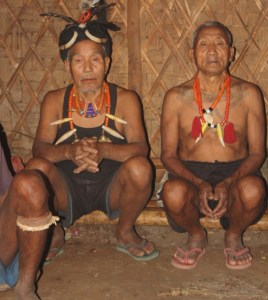
1.) Recognize the upside: Don’t believe the hype that being an introvert is all downside with respect to travel. Most discussions of this subject would focus on how helpful introversion can be in the planning process, and in anticipating problems that might derail your travel itinerary. However, let me mention another advantage that you may not have been as likely to consider. I have found that a lifetime of feeling myself an outsider has desensitized me to instances in which I am really, truly, and vastly outside my culture. So to me, sitting with ex-head hunters in Nagaland isn’t particularly more awkward than attending a party in my hometown.

An Introvert’s Poem

Please don’t take this the wrong way,
but I wish you existed fewer hours per day.
 
It’s not that I don’t like your company.
 
It’s just that I wish your dosage were smaller.
It’s not like I wish you thinner, prettier, or taller,
 
I just wish there were less of you — temporally speaking.

5 Travel Tips for the Introvert in India

Most of these tips apply to an introvert’s travels anywhere in the world — at least the densely populated parts of the world. That said, India — particularly urban India — presents a daunting degree of challenge.

This is because Indians, to generalize a bit, love sensory stimulation, and are used to a vibrant environment full of colors, sounds, and scents. There’s an old story about an Indian man clinging to a cliff. At the cliff’s edge and within reach of the rock to which the man clings, there are two things. One is a sturdy loop of gnarly tree root, and the other is a fragrant flower. As the story goes, the man snatches away the flower and blissfully plummets to his demise while enjoying the flower’s scent the entire way down.  It’s probably not a true story, but hopefully it illustrates that it’s not just my opinion that Indian tolerance for sensory stimulation is above average, and that means it can be an especially draining place for introverts.


5.) Pace yourself / build quiet time into the itinerary: Spending a full day among the bustling masses of an Indian city can be exhausting for an introvert.

For the longest time, I was under the impression that I had a disproportionately high likelihood of going hypoglycemic (i.e. using up my glucose and getting cranky.) And maybe there’s some truth to it, but I know I’m a lot easier to get along with on a nature trek having skipped lunch than I am if I skip lunch touring a city. While I need to recharge my calories periodically, I think I need to sit down in a relatively quiet place even more.

One may want to keep an eye open for restaurants and cafes that look like good refuges as one tours, because it’s not always easy to find suitable places on the internet. One may find that the cafe one planned to rest up at, the one with fantastic ratings, also has no seating and / or is a beehive of mad activity.


4.) Be aware of the locations that will bring an over-abundance of random visitors: One will find, at certain times and places, that random people will come up to: a.) take a picture with you; b.) have their child’s picture taken with you; or, c.) to practice their English (or relevant language.) It’s fantastic the first few times in a day.

This phenomena is by no means unique to India. China is legendary for having parents who want their child’s picture taken with a foreigner — and the more foreign you look (e.g. if you are a six-foot tall blonde woman) the more of these visits one is likely to experience.

As I said, even as a hardcore introvert, I enjoy these interactions in regulated doses. That’s part of what one seeks from travel, interacting with locals who aren’t in the tourism trade. For example, in Phnom Penh, Cambodia, I found these chats ( a few times a day, max) endearing and insightful.

It’s a matter of scale. The shear density of people in India can result in the situation getting out of hand. I’ve actually had lines form as though I was some sort of visiting dignitary. As in most countries, the average person isn’t super comfortable approaching strangers. However, once people see that some bold individual succeeded, they become emboldened. Eventually, all these interactions can become too much to maintain an energy level conducive to sightseeing.

Unlike sensory bombardment, this is one issue that is actually lessened in the heart of a big city. In Mumbai, Kolkata, and Bangalore, one doesn’t experience this as much. (Delhi, too. Though in Delhi one will frequently be approached, but by professional con artists. Sorry, Delhi is my least favorite part of India by a large margin.) These big cities see foreigners constantly. One will still be approached on occasion: a.) if one is in a neighborhood distant from the heart of the city where the people don’t see many foreigners, or b.) during festivals / holidays when many people come in from the villages. Villagers hit some of the same tourist spots as do foreigners.

I’ve found that the largest numbers of strangers approach in smaller cities like Aurangabad, where they don’t have a ton of expats and foreign companies compared to Bangalore or Mumbai, nor do many of the small to medium-sized cities attract massive numbers of foreign tourists in the way that a few small cities like Rishikesh and McLeod Ganj do.

Ultimately, one just has to have a polite exit strategy, which may feel a bit rude. Which brings me to…


3.) Avoiding being overwhelmed by touts: Unlike the pleasant, but potentially draining, interaction with locals, touts are just annoying. Like other places I’ve visited that have high rates of poverty and thus high rates of desperation, including parts of Latin America and China, the touts in India can be downright clingy, and will follow one for miles buzzing in one’s ear if one doesn’t handle the situation properly.

Introverts are often self-conscious of the fact that they can seem rude when they are turned inward in the presence of others. So, one may be tempted to keep saying “No thanks” to the tout who has followed you for two blocks. However, as long as one continues to acknowledge a tout, one gives hope — no matter how explicitly your words may be saying no. This thread of hope is what leads to the relentless behavior. After I discovered this, I began to say “no thank you” only once, and then to ignore the tout like he didn’t exist. It saved us both wasted effort and traveling got much easier. Two or three steps of completely ignoring a tout will achieve more than two miles of trying to explain why you neither want or need what he’s selling.


2.) Be careful where your vision goes if you zone out into your own head: The subject of eye contact comes up in almost every post I do on introversion. Probably because I’ve just recently become aware of the degree to which I under employ eye contact, and also because India has an unusual norm for eye contact. In most countries, there’s something like a one-second rule. One makes eye contact with strangers for around a second before averting one’s eyes. One may look back, but one doesn’t sustain eye contact endlessly. I don’t want  to make one think that most Indians will stare at you ceaselessly, but a few will — particularly those who don’t see or interact with foreigners often.

My point with this item is that when one zones out and stares off into the distance, one can create a number of problems for oneself, including: a.) convincing touts you are interested in a product that you aren’t, because it looks like you are staring right at it; b.) females may gain undesired attention from males, c.) males may gain unwanted attention from boyfriends or husbands.


1.) Beware of the importance of eye contact, but don’t try to keep pace with those who lock eyes.  Like traveling anywhere else, it’s important to make brief eye contact for both sociability and security. However, if you try to keep up with those who can stare the paint off a pump-handle, your energy is going to drain quickly.


I should conclude by saying that traveling is nothing one should be anxious about as an introvert, and, furthermore, introversion can have its advantages. (Not the least of which is the fact that if one has acclimatized to feeling oneself the odd man out, one is well placed to plop down in different culture.)

5 Things to Which My Introverted Self Has Been Oblivious

5.) In the absence of information, people write their own stories, and everyone gives himself the leading role in his own story.

Therefore, sitting in the corner, minding one’s own business, deep in introspection, may balloon into: “He’s giving me the silent treatment. I bet he hates me and wishes I would die.”


4.) Quietness may be interpreted as arrogance.

I was told this by a teacher in Middle School, but — at that stage in my life — that seemed an impossibility. In those days, I was self-conscious about being introverted — and I was shy, to boot. (That’s not redundant. If you think it is, I’d recommend Susan Cain’s Quiet)  Because I felt that I so blatantly lacked confidence, it seemed hard to imagine that someone would misinterpret my quietness as being over-confident and / or narcissistic. How could it not be obvious that I lacked the confidence to be arrogant, but people see a lot less than one (or they) might think they do.


3.) Miss eye contact, miss a lot.

It’s not just that one misses non-verbal communication, it’s that it might be assumed that you caught a signal when you didn’t.


2.) When you are in deep introspection, you may have total inattentional blindness, but others may not recognize that. 

You may be familiar with inattentional blindness from the gorilla – basketball pass video. It’s the fact that we can’t mentally multitask, no matter how much we might think we can. If our attention is given over to one task we may miss even the blatantly obvious. Most people don’t think this is the case, and it doesn’t feel that way. That’s because we are usually quite good as bouncing our attention between different events and stimuli. (Though never without a degradation of performance.) However, if you’re entranced in introspection, you may look like you’re giving the evil eye to the angry hoodlum at the bar, or that you’re seeing the projectile flying at your face, but maybe not.


1.) If one doesn’t outwardly express emotions, some people may not realize that you have them. 

It seems self-evident that everybody experiences fear, anger, or sadness on occasion. Some more frequently. Some less. Some wear emotions on their sleeves, some hold their cards close to the chest, and every point in between. Part of the problem is that our intuitive understanding of what it looks like to be without emotion is flawed. As is discussed in Antonio Damasio’s book Decartes’ Error, a true lack of emotion (as seen in those with damage to parts of the brain involved in emoting) may look like the inability to make a decision (i.e. paralysis by analysis,) rather than our traditional notion of Star Trek’s Spock — a perfectly rational decision maker who can’t be insulted and doesn’t get sarcasm.