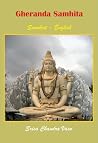
BOOK: “Gheranda Samhita” Trans by. Srisa Chandra Vasu

Gheranda SamhitaGheranda Samhita by Srisa Chandra Vasu
My rating: 4 of 5 stars

Available online – Terebess.hu

The Gheranda Samhita is said to be one of three surviving foundational texts of Hatha Yoga (along with Hatha Yoga Pradipika [HYP] and Shiva Samhita.) This is the first known edition of the Gheranda Samhita to include an English language translation. (It does retain the Sanskrit, as well.) This edition does not include commentary or elaboration (with the exception of the occasional footnote;) it’s just the shloka of the original and a translation, thereof.

The translation is clear and readable. The book does sometimes assume a basic vocabulary of terms that exist only in yoga and – therefore – do not have English language counterparts, but these can usually be easily looked up if the reader is not familiar with them. (And there is probably no good way around this because if one didn’t use the Sanskrit term one would have to give a longwinded explanation of the concept that would be painful reading for those who do have a basic yoga-related Sanskrit vocabulary (i.e. which is more likely the case for a reader of canonical texts.)

The book is arranged into seven lessons that cover Shatkarma (cleansing practices,) Asana (postures,) Mudra (“seals,”) Pratyahara (sensory withdrawal,) Pranayama (breathwork,) Dhyana (meditation,) and Samadhi (unified consciousness.) As with Hatha Yoga Pradipika [HYP] one sees cleansing practices (Shatkarma) elevated to essential elements of a practice, whereas Yama, Niyama (together the ethics of yoga) and Dharana are not afforded the status of “limbs” of practice. While there are similarities between HYP and Gheranda Samhita content there are differences as well. For example, the latter felt like it raised the importance of breathwork (pranayama) in part because it speaks of how crucial such practices are and also because it moves pranayama closer to samadhi in the progression of practice.

I’d highly recommend yoga teachers and students interested in the evolution and progression of Yoga read this text.

View all my reviews

BOOK: “Hatha Yoga Pradipika” by Swatmarama [Commentary by Muktibodhanada Saraswati]

Hatha Yoga PradipikaHatha Yoga Pradipika by Swatmarama
My rating: 5 of 5 stars

Publisher – Yoga Publications Trusk

Hatha Yoga Pradipika [HYP] is one of the foundational documents of Hatha Yoga and is said to date to the 15th century. This edition, from the Bihar School’s Yoga Publications Trust, is the most popular one (at least among those offering English language translation and commentary; Note: the original text is also included in Sanskrit.) The book offers clear and detailed commentary on each shloka. (Sometimes one commentary per shloka, but other times a few are addressed at one go, as seemed logical to the editor.)

The book’s 389 shloka are divided into four parts: asana & lifestyle (e.g. diet;) pranayama & shatkarma (cleansing practices;) mudra & bandha; and meditation & samadhi. People are sometimes surprised to find that asana (postures) are barely mentioned in Patanjali’s Sutras (and none specifically,) given how central postural yoga is to our present-day conception and practice of yoga. In HYP, we see an expanded focus upon asana, but still only to a modest level. While the text mentions that Shiva taught 84 asana, HYP discusses less than 20 (mostly grounded postures — i.e. seated and supine or prone reclined.) The second part discusses breathwork (i.e. pranayama) that will be familiar to many present-day yoga practitioners and cleansing practices (i.e. shatkarma) practiced by relatively few. Readers may find it interesting that the greatest number of shlokas are devoted to mudra and bandha, techniques often only taught in the pranayama or asana in which they are employed. The final section is on Samadhi, which is not a surprise given that it is the goal of yoga and its discussion features in all the classical yoga texts.

This edition has several ancillary features of note. First, there is an extensive introduction to set the stage for a modern-day reader. Second, there are many line drawn graphics to clarify the text. Third, there are appendices including listings of the shloka — both a Sanskrit and an English list (making it easier to find what one is looking for without wading through interspersed commentary) and a glossary of useful Sanskrit terms (Romanized.)

Not only was this book interesting for its tidbits of information about yogic technique and philosophy, it also offered insight into the evolution of yoga over time. The latter is a topic which I’ve been researching of late, and this is a crucial text for understanding the subject.

I’d highly recommend this book for students and teachers of yoga, particularly those interested in the philosophy and evolution of technique, and for understanding how Hatha Yoga is distinguished from the broader body of Yoga.

View all my reviews

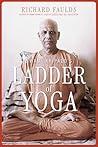
BOOK: “Swami Kripalu’s Ladder of Yoga” by Richard Faulds

Swami Kripalu’s Ladder of YogaSwami Kripalu’s Ladder of Yoga by Richard Faulds
My rating: 4 of 5 stars

Publisher Site – Monkfish

Release Date: April 7, 2026

This book discusses the organizational structure of yoga as described by prominent 20th century yoga guru, Swami Kripalu, an approach that draws on (but distinguishes itself from) the 8-limb (Ashtanga) framework outlined by Patanjali in the Yoga Sutras. Swami Kripalu deemphasized yogic ethics (Yama and Niyama,) and put great emphasis on hierarchy among the elements of yoga — i.e. that one must pass through the lessons of some limbs before you can begin to move up to the next. (This idea is certainly taught in Patanjali’s Sutras, but not with the same emphasis — hence Kripalu’s “ladder,” rather than “limbs” — making clear that these are not independent elements but rather are completely dependent.)

The greatest strength of this book is in distinguishing concepts like dhyana (meditation) from samadhi, distinction of which is often given short shrift with simplistic soundbite-like definitions in books on yoga. The book is not the usual yoga text in that it spends a great deal of time discussing the “higher limbs” of yoga (to resort back to Patanjali’s formulation.) Faulds adds benefit by discussing his own subjective experiences, the lack of access to subjective understanding often gives even students actively training with teachers doubts about their experiences.

I should point out that the book does also spend a good deal of page count (perhaps more space than any other subject) on pranayama (breathwork,) both covering it over several chapters in the book’s midsection and then further in a couple appendices that get into the physiology of breathwork.

One nice feature is that almost all of the chapters end with sections entitled “Be a Discerning Student” and “Applying this Chapter in Practice” to help readers with practical insights into what is by and large a philosophical discussion. There are also several appendices (the most useful one to me was a discussion of the shifting understanding of the term “samadhi” over time and across disciplines.)

If you want to explore what the higher limbs are and how they are distinguished, I’d recommend this book. (As I said, it also deals with Pranayama in some detail, but that will likely offer less new insight for students and teachers of yoga who’ve received an education in [and maintain a practice of] yoga.)

View all my reviews

BOOK: “Breath” by James Nestor

Breath: The New Science of a Lost ArtBreath: The New Science of a Lost Art by James Nestor
My rating: 5 of 5 stars

Author’s Book Site

In this book, James Nestor takes an immersion journalism approach to reporting on the art and science of better breathing. In addition to participating in trainings on particular breathwork (e.g. Tummo / Wim Hof, Buteyko breathing, Sudarshan Kriya, the DeRose method, etc.,) he participates in a scientific studying involving closing off his nostrils for a few weeks and then systematically nose breathing for a few more. (The first half of which he describes as torturous.) In between discussions of his own experiences, he explores both ancient breathwork teachings and the discoveries of modern science.

While there’s not really anything new in this book, it does a good job of presenting the information in a clear and readable form. In truth, it would be hard to say something both profound and new on the subject, given that yogis, tantrics, Daoists, and others have been systematically observing and altering breath for centuries to improve health, concentration, and emotional poise. Even the seemingly modern systems are by-and-large variants of the old ways (e.g. Wim Hof breathwork adapts the Tummo of Vajrayana Buddhism, DeRose worked from ancient yoga teachings, and Andrew Weil’s 4-7-8 breathing is pretty much the 1:2:2 vrtti pranayama that yogi’s have practiced for centuries.) Still, despite the basic information in the book being widely available, there remains a crisis of bad breathing and the cascade of ill-health that results, therefrom, and so it is a valuable book. (The key takeaways are: nose breathe, breathe slowly and deeply, hyperventilate only consciously and occasionally, and elongate exhalation to facilitate relaxation.)

The newest information to me, personally, was that of Chapter 7, which dealt with the role that shifting to softer, cooked foods played in humanity’s proclivity for breathing problems. Chapter 1, which deals with humankind’s unique breathing issues, also provides insight into why people have so many problems with something so fundamental to life as breathing. Nestor also presented some of the breath-relevant insights of Albert Szent-Györgyi, a Nobel-winning biochemist whose work offered some insight into the connection between electrons and both cancer and aging. So, in addition to some nice reminders and references, I did learn a thing or two as well.

This is a fine overview of breath and how to improve it for better living, and I’d recommend it for anyone looking to learn more on the subject.

View all my reviews

PROMPT: Relax

Daily writing prompt
How do you relax?

I usually don’t find it too difficult. I find reading and free writing conducive to relaxation. In cases in which I’m wound up, I move and / or exercise intensely. If I ever need to achieve relaxation expeditiously, I use Visama Vritti Pranayama or PMR (progressive muscle relaxation.)

PROMPT: Habit

What daily habit do you do that improves your quality of life?

Movement and exercise.

Kevala [Free Verse]

breath ceases
and the body is quiet
and the mind is calm

and there is nothing
no world
no throngs
no hordes
no disasters

breath returns
&
so does the world

BOOK REVIEW: The Physiology of Yoga by Andrew McGonigle & Matthew Huy

The Physiology of YogaThe Physiology of Yoga by Andrew McGonigle
My rating: 5 of 5 stars

Amazon.in Page

This is a much-needed book for two reasons. First, while there are a number of fine books on anatomy as it applies to yoga, such books focus on the musculoskeletal system, occasionally venturing into the respiratory system – re: pranayama (breathwork.) However, yoga anatomy books rarely giving an overview of the workings of the body as a whole or describe how yoga influences and is influenced by other bodily systems. This book systematically reviews not only the muscles, bones, and lungs, but offers insight into the less familiar systems, such as the lymphatic, immune, and endocrine systems. Unless you want to know more about yoga and the integumentary system (skin, hair, and nails,) this book has got you covered. The book does an excellent job of avoiding muddling science with mythological beliefs about the body, a common sin among yoga books.

Second, there are many physiology misunderstandings and mistakes that are widespread and have come to be repeatedly parroted by new generations of teachers. These range from ideas that are unsupported by scientific evidence to those that are completely in conflict with well-understood science. This book has text boxes throughout that investigate widely taught physiology myths (e.g. twists detox the liver, shoulder stands stimulate the thyroid & pineal glands, kapalbhati (forced exhalation breathing) stops the aging process, heavy sweating detoxifies the body, and various claims about specific asana / practices curing specific ailments.) These boxes review what studies have been done on each claim, and (in the absence of scientific literature) it discusses whether claims make any sense in light of well-established physiological science.

The book is clear and easy to read, and has well-drawn anatomical drawings and diagrams to help communicate the workings of the body. It also has an extensive bibliography of works referenced.

The book wasn’t perfect. I thought the last chapter, which is a collection of yoga sequences, was out of place and unnecessary, given the objectives of this book. I suspect its inclusion was solely to remind readers flipping through the book that they were reading a book about yoga as well as physiology. (The graphics and headings don’t necessarily scream yoga.) However, I think this could have been more relevantly and effectively by including more graphics throughout that show individuals engaged in yogic practices / asana, or – alternatively – focusing on the physiological aspects of the practices and sequences in the last chapter. There was also a place or two where I wasn’t sure what the authors were saying, not because they didn’t write in a clear and readable style or because what they were saying wholly conflicted with what I understood to be true, but just because there was enough ambiguity that I was left puzzled.

Overall, I’d recommend this book for yoga teachers and practitioners looking to expand their understanding of the workings of the human body, and to liberate themselves from some misinformation that has gained a following.


View all my reviews

BOOK REVIEW: Breath Taking by Michael J. Stephen

Breath Taking: What Our Lungs Teach Us about Our Origins, Ourselves, and Our FutureBreath Taking: What Our Lungs Teach Us about Our Origins, Ourselves, and Our Future by Michael J. Stephen
My rating: 5 of 5 stars

Amazon.in page

Out: January 19, 2021


This book explores the crucial role of breathing in human existence, discussing evidence of how breathing practices can contribute to healing of numerous illnesses, investigating the range of threats — from pollution to smoking to toxic dust — that can threaten our ability to breath, and examining a number of diseases that can disturb a person’s breathing. This book is primarily a popular science look at pulmonary medicine. Unlike other breath-related books that I’ve reviewed, this book is mostly about what can go wrong with our lungs and what medical science is doing to combat these threats. The story of how breathwork and changing breathing patterns can improve health and well-being is addressed, but that’s not the book’s central focus. The book uses plenty of stories (e.g. case studies) and what I call “fun facts” to keep the reading from becoming too dry or clinical for a neophyte reader.

The book consists of fifteen chapters. The first two chapters provide basic background information to help understand how the Earth happens to have the oxygen-laden air necessary for our type of life (Ch. 1) and how the lungs exploit that air in fueling our bodily activities (Ch. 2.) Chapter thee explores how breathing begins in newborn babies, explaining that the lungs are the only major organ that doesn’t start working until we are out in the world, and lung inflation doesn’t always go smoothly. The fourth chapter discusses how breathwork (including — but not limited to — yogic pranayama) has been shown to improve health for those experiencing a range of conditions, including: depression, addiction, PTSD, and pain, as well as how breath and meditational practices contribute to better health, generally.

Chapter five investigates the intersection of the respiratory and immune systems, explaining how autoimmune conditions, allergies, and asthma come to be. In chapter six, the author discusses one of the most common and widespread diseases in the world, tuberculosis (TB,) a disease which not only threatens the lives of many, but also sits dormant in a huge portion of the population.

Chapters seven through nine each deal with hazardous materials that are inhaled into the lungs. The first of these chapters is about smoking, and it focuses on the question of how nicotine acts in the body to create intense addictions – as well as what has and hasn’t worked to help people break said addiction. Chapter eight is about pollution. (As resident of a city of twelve million people, I found this to be a particularly disturbing chapter because air pollution is a hazard that is too easy to be blind to if one doesn’t suffer from respiratory problems.) Chapter nine investigates a range of breathable hazards including smoke, dust, and asbestos, and it does so through the lens of the rescue and cleanup at the World Trade Center after the dual collapse of the twin towers on 9-11, an event which released all sorts of toxic material into the air, hazards for which most responders were ill-equipped.

Chapter ten through twelve are about ailments that may or may not be linked to environmental causes like the ones mentioned in the paragraph above. The first of these is idiopathic pulmonary fibrosis, which, by definition, is a condition that arises from an unknown cause, an ailment which involves a stiffening and thickening of lung tissue (which must be thin and supple to allow gas exchange and the expansion and contraction of the breath cycle.) Chapter eleven focuses on lung cancer, which is often due to an inhaled hazard (most notably, smoking,) but not necessarily. While the other chapters of the book focus on breathing as a process by which we take in oxygen and expel carbon dioxide, chapter twelve turns to a different role played by breath, one that is crucial to the activities of our species, breath as a means to control the voice.

Chapter 13 describes the process and challenges of lung transplant. As mentioned in the discussion of pulmonary fibrosis, lung tissue is rather delicate material, and so it was no easy task to transplant it. Furthermore, because the lungs are a point at which the external world (air) contacts the body’s internal systems the challenges are even greater than for those organs that are hermetically sealed within bodily tissues.

The last two chapters focus on cystic fibrosis (CF.) Chapter fourteen explores the nature of the disease and the slow, but promising, path towards treating it. CF is a genetic condition in which the lack of a single amino acid wreaks havoc on the ability of cells to process minerals. The last chapter tells the story of two cases of CF. The first story – involving a ten-year-old whose family had to struggle against a policy that essentially locked their child out of the lung transplant list – is particularly engrossing.

As someone who practices breathwork, I found this book to be interesting and insightful. While it is heavily focused on pulmonary medicine, it does offer insights that will be beneficial to those who are not afflicted by respiratory ailments. If one wants to know more about medicine as it pertains to respiration, this is definitely an interesting and readable choice. However, even if one is infatuated with breath more generally, I believe you’ll find in this volume a great deal of beneficial food-for-thought.

View all my reviews

An App for That: Profound Yogic Practices You May Not See in Class

To the average person, yoga consists of a series of poses that stretch the muscles and strengthen the core.  In truth, often the most profound and life-altering experiences had by yoga practitioners involve only a seated or lying posture. If you practice yoga, you’re probably aware that postural practice, or asana, is just only one element of yoga, and perhaps you’ve experienced some of the other elements of yogic practice. However, it’s not always easy to access such training at the local studio.


These days there’s another way. These practices can be accessed through apps such as EKA.


Below are five powerful yogic practices that you might not find taught at your local yoga studio, but that you’ll find on EKA.


5.) Yoga Nidra: Yoga Nidra translates to “yogic sleep.” It’s a practice in which one stays in the mind-state between wakefulness and sleep, i.e. hypnagogia, for an extended period while working through a sequence of practices. Yoga nidra is extremely relaxing, but also allows one to access the subconscious in a manner similar to that of self-hypnosis. This makes the practice useful both for people who have trouble with sleep or settling into rest, but it also allows one to influence the subconscious so that one can make changes in areas where subconscious influence is strong.


For example, a person seeking to lose weight understands that they need to be careful about what they eat. However, the subconscious isn’t always on the same page as the conscious mind, and cravings for sugary or fatty foods may win the battle. In yoga nidra, we use sankalpa — a resolution, to help win the subconscious over. We also use practices like visualizations to gain insight into what is happening outside the bounds of conscious thought, and to exercise influence over it.


4.) Kaya Sthairyam: Kaya Sthairyam translates to bodily stillness, or steadiness. If you’ve done any meditation, you were probably taught to adopt a position in which you could be as still as possible throughout the practice. The reason for this is that even subtle movements can distract one, weaken one’s concentration, or have a stimulating effect. In yoga, kaya sthairyam is used to achieve a state of maximum stillness. If one wishes to increase one’s ability to concentrate for extended periods, one must build one’s capacity to remain still. That said, kaya sthairyam need not be thought of as only a prelude to meditation. The tranquility that arises from these practices make them worthwhile in their own right.


3.) Bija Mantra: In India, chanting is a very popular practice among yoga practitioners, and many have found great clarity in it. In one of my early classes teaching yoga to children, I found that as soon as the kids sat in a cross-legged pose many of the younger children spontaneously started softly reciting the gayatri mantra. That’s how intense was their association between sitting down cross-legged and chanting.


In the West, mantra chanting is less familiar. The six bija mantra, or seed mantra, are a beautiful way to introduce oneself to mantra chanting because of their simplicity. Because the bija mantra (LAM, VAM, RAM, YAM, HUM, and AUM) are all monosyllabic, easily pronounced, and are related sounds, they can be picked up quickly and easily.


2.) Witnessing Meditations: The yogic teaching that has had the most life-changing effect on me has been dispassionate witnessing. While it’s not a complex idea, it requires some explanation.


Let’s first consider what minds usually do in the face of a problem. There are two common responses that are not particularly healthy.


The first is to distract oneself from the problem. In some cases, this distraction can be an unhealthy activity — such as drug abuse, but it might also be something neutral like watching television. However, even if you distract yourself with a wholesome activity like volunteering at a soup kitchen, the problem is still there and it will have its say. If not directly, then indirectly through nightmares, indigestion, or a stress-induced illness.


The second option is obsessing. The brain tries to lessen the sting by anticipating the worst possible scenario. The trouble with this obsession is that to find our worst case scenario — we have to hang toxic labels on all possible events and invent possibilities that are so unlikely as to be nearly impossible. And having invented such dire cases, we often give them too much weight. As Mark Twain put it, “I’ve had a lot of worries in my life, most of which never happened.”  The negativity piles up and causes stress and anxiety to balloon out of control.


In dispassionate witnessing, we don’t ignore or distract ourselves, but we also don’t strap on value judgements or build worst cases. We simply recognize what we are feeling, acknowledge it, but don’t feed our anxieties.


One of the most basic witnessing practices involves watching sensations in the body. Imagine you’re doing this practice and you feel an ache in your back. If you try to ignore the sensation, the mind may turn up the intensity to get your attention.  If you obsess, you’ll soon convince yourself that this sensation is really an ache… no, a pain… no, it’s agony… oh no, could there be a tumor growing on my spine? [That may be exaggerating a bit, but you see the point.] However, if you focus your attention on the sensation without labeling it, you’ll probably find that the sensation passes. In essence, the body says, “Hmm, the brain examined this sensation and didn’t think it was anything to be concerned about, let’s move on.”


1.) Pranayama: Probably the most under-rated yogic practice is pranayama, or breathing exercises. By controlling one’s breath, one can influence one’s emotional state, one’s physiological processes, and the state of agitation in one’s mind. Breath practices are the most direct means to counteracting the stress response. However, despite constantly breathing — day in and day out — most people remain unaware of the incredible power of consciously controlling the breath.


There are a variety of types of breath exercises. There are breaths that have a stimulating effect on the body and mind, and those that have a calming effect. Scientific evidence has accumulated that there are benefits to practicing slower and deeper breathing, and pranayama offers a systematic approach to building this capacity. No matter what kind of pranayama one is doing, there is a side benefit from holding one’s focus on one point, the breath.


Pranayama is a great lead-in to meditative practices. It helps achieve a state of mind which is neither drowsy nor agitated. That said, pranayama is also beneficial on its own.


If you’re interested in exploring any of these practices, the EKA app is a great place to start.