BOOK: “Captivate” by Vanessa Van Edwards

Captivate: The Science of Succeeding with PeopleCaptivate: The Science of Succeeding with People by Vanessa Van Edwards
My rating: 4 of 5 stars

Publisher Site – Penguin

Van Edwards draws on a variety of popular social science research (others’ as well as her own) to build a soup-to-nuts guide to being more personable. The fourteen chapters of the book are organized into three parts that begin with how to spark a relationship, then how to deepen the relationship through better understanding of the other person, and finally how to sustain the relationship through behaviors that help make one more likeable. Overall, I found the book to be useful and informative, and felt it was successful as a mile-high overview of the subject.

Getting down in the weeds, however, I had some difficulties with the book. As a book that draws on varied research, it’s only as good as the research it’s relying upon at a given point, making the book a bit of a mixed bag. For example, Chapter six is based heavily Paul Ekman’s work on micro-expressions, the idea that our true feelings always leak through in tiny uncontrollable facial expressions that a careful observer can read, it is research that has not performed well under attempted validation and is now widely in doubt. This speaks to a bigger issue with the underpinnings of the book. Van Edwards’ book presents a kind of anti-thesis to another pop social science book, Malcolm Gladwell’s Talking to Strangers. Gladwell’s argument, drawing on research such as that by Timothy R. Levine, is that it’s dangerous to think one can “read” [or to use Van Edward’s term “decode”] people through communication with them because some people have highly mismatched communication styles (i.e. neither their language nor their body language are necessarily consistent with their internal feelings.) Captivate, however, takes the view that one can decode other peoples’ inner worlds.

One may wonder why I’m more in Gladwell’s camp on this issue, certainly he has gotten a lot of flack for his books over the years — including the book that I mention here. I’m certainly not arguing the Gladwell book is infallible. On the point in question, however, I’ve noticed a larger pattern that goes like this: a.) everybody is a bit unnerved because we have no insight into the subjective mental experience of anyone else. b.) because of this anxiety, many people are willing to take a white-knuckled grip on any proposed method — science or snake-oil — that suggests it can eliminate this uncertainty; c.) these methods often survive long after they’ve been dismissed by advancements in the research (or successfully gain traction, despite not being backed by any sound study.) Combine all of that with the fact that what I’ve witnessed is that people are much worse at reading minds than they usually think themselves to be (and “experts” most of all,) leads me to favor the view that it is always and everywhere an activity fraught with danger.

I recommend this book for those seeking to learn how to be more personable, with the proviso to take the book’s midsection — which deals with how to hack the minds of other people — with a heavy pinch of salt.

View all my reviews

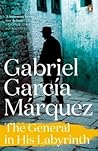
BOOK: “The General in His Labyrinth” by Gabriel García Márquez

The General in His LabyrinthThe General in His Labyrinth by Gabriel García Márquez
My rating: 5 of 5 stars

Publisher Site – Penguin

This is a work of historical fiction by Gabriel García Márquez that tells the story of the last days of Simón Bolívar as the revolutionary hero attempted to flee Latin America toward exile in Europe. (Bolívar led a big chunk of Latin America to independence from Spain and ruled over Gran Colombia — a country that included Colombia, Venezuela, Panama, and parts of other adjacent countries.) The story covers a trip up the Magdalena River from Colombia’s interior to the coast and on to Santa Marta, where his trip (and life) would end. [FYI: The title comes from words Bolívar spoke slightly before his death when he was putting together his will in which he said, “…How will I ever get out of this labyrinth?”]

There is some contention about the degree to which the book is historical fiction verses a historical account. It seems there are some fictionalized elements, but because García Márquez leans into the degree to which Bolívar was quite ill during this period the book may be more accurate in some ways than more hagiographic accounts.

The events of the story took place in 1830, and the times present an interesting contrast to our own as Bolívar travels to places that have not yet gotten the news that he is no longer President and treat his visit as one would that of a head of state.

At the book’s end there is a brief epilogue by the author as well as an extensive timeline of Bolívar’s life. The latter is quite useful because this book covers only a short period of time, though one of is great interest.

I’d highly recommend this for readers who enjoy literary fiction and / or are interested in Latin American history.

View all my reviews

BOOK: “The Emperor in Hell” [Book 5 of the “Journey to the West” Series] ed. by Jeff Pepper; trans. by Xiao Hui Wang

The Emperor in Hell: A Story in Simplified Chinese and Pinyin, 600 Word Vocabulary LevelThe Emperor in Hell: A Story in Simplified Chinese and Pinyin, 600 Word Vocabulary Level by Jeff Pepper
My rating: 4 of 5 stars

Publisher Site – Imagin8 Press

This is the fifth volume in a series that abridges and simplifies the classic Chinese novel, Journey to the West, so that it can be read by a language learner with about a HSK 3 grasp of Chinese. It tells the story from Chapters 10 and 11 of the original novel. Like the preceding volume, this one doesn’t deal with Sun Wu Kong (i.e. the Monkey King — protagonist of the novel overall,) and doesn’t even deal with the monk Xuanzang — the protagonist of the true story on which the novel was based.) These chapters tell a story that feels like a diversion, though it will be involved in the segue back to the actions of the main cast.

In this book, the Jing River Dragon King gets in trouble when he makes a bet with a fortune-teller. The Dragon King has to cheat to save his pride, but this runs him afoul of the Jade Emperor. The Dragon King appeals to the human Emperor, Taizong, who agrees to help. When wires get crossed, Taizong ends up in the underworld for judgement. With the help of others and with promises made, Taizong is allowed to return to earth.

It’s an interesting story and gives some insight into Chinese mythology. As is always the case with a book such as this, events of the story must be cut or rushed. Readers may vary in their views about whether the right material was cut or thinned.

I continue to enjoy this series. This book was a little more challenging to read than earlier volumes, not because the vocabulary was harder. I think it was more that contextual cues were fewer, owing to it not being so tightly tied to the overall story.

If you’re just learning to read Chinese, I’d recommend this series as an interesting story made readable to a language learner.

View all my reviews

BOOKS: “Funny Stuff” ed. by Laura LaPlaca and Ryan Lintelman

Funny Stuff: How Comedy Shaped American HistoryFunny Stuff: How Comedy Shaped American History by Laura LaPlaca
My rating: 4 of 5 stars

Publisher Site — Rutgers University Press

Release Date: May 12, 2026

As the subtitle suggests, this book explores the nexus between American History and comedy across many, varied media (i.e. writing, theater, standup, improv, radio, television, movies, etc.) It’s an interesting book, but I don’t know that it has the right title. Considering the title, a reader might expect a fuller coverage of American History, drawing on whatever humorous outlets existed at the time (e.g. op-eds and satirical articles.) This book is more of a history of comedic content in the US with a substantial discussion of how comedy addressed / participated in changing views on sex, race, and sexuality and with occasional mention of how comedy was involved in other social issues, such as changing views on free speech and expression. You’re not going to learn how comedic writers addressed Smoot-Hawley or the Sinking of the Maine. (i.e. The book leads with comedic content and leans the discussion toward societal influence [rarely toward policy influence.] It does not lead with historical events and draw on appropriate comedic content.)

The book covers a lot of the same ground as Kliph Nesteroff’s The Comedians, though with quite different emphases. Nesteroff focuses on the gritty underside of comedy and the oft unseen dark side of comedians, while this book focuses on comedy as a factor in changing views on race and sex [as well as on the changing technological outlets for comedy.] Funny Stuff does spend a little more time on pre-20th century America than does Nesteroff, but not much more. Both books are heavily weighted toward the late 20th century to present. To be fair, there is much more volume of comedic output in this period. (That said, there were artists I expected coverage of, e.g. Josh Billings, that weren’t included. That’s where the book seems more like a history of comedy and its varied outlets.)

If you’re interested in the development of comedy in America, and its influence on social issues — most extensively attitudes towards race — I’d recommend this book.

View all my reviews

5 Books to Read If You Want to Live

Taken on the Annapurna Sanctuary Trail in Nepal.

Over the years, I’ve read many books about survival in extreme or unexpected situations. Here are five of my favorites.

THE UNTHINKABLE by Amanda Ripley [Full Review]

What I like about this book: Ripley focuses heavily on the topic of mindset while exploring a wide range of survival situations from being stranded in a lifeboat to being in the Twin Towers on 9/11. It’s a fascinating – as well as educational – book.

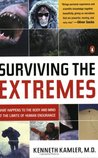
SURVIVAL AT THE EXTREMES by Kenneth Kamler [Full Review]

What I like about this book: This book focuses on surviving in all the places humans are not adapted to, places where one cannot live for long without ongoing technological support. These places include Mt. Everest (with which the author has personal experience,) the ocean, and the harshest of deserts. Kamler is a medical doctor and the book, therefore, does a good job of explaining the limits of human physiology.

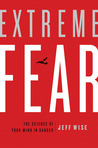
EXTREME FEAR by Jeff Wise [Full Review]

What I like about this book: Wise’s book examines how fear can work against us in challenging situations (e.g. causing one to freeze at the wrong time) and what methods have been developed to overcome such crippling or inappropriate fear responses. This book is not entirely about life-and-death survival, but it does have a lot to say that is relevant to the subject.

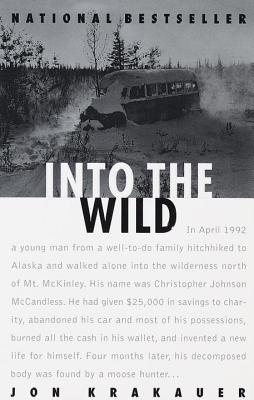
INTO THE WILD by Jon Krakauer [Full Review]

What I like about this book: This book is not like the others. There are no physical or mental techniques for survival described in it, nor discussions of physiology. Rather, it is an extremely well-written cautionary tale about a young man who goes out into the wilderness and gets in over his head. It is highly readable food-for-thought.

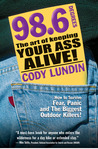
98.6 by Cody Lundin [Full Review]

What I like about this book: This is the closest thing to an actual survival manual on my list. But it’s written in conversational, folksy style that makes it easy to read, despite the daunting subject matter. As the title suggests, Lundin’s central premise is that one must keep the body burning at its appropriate temperature, or else…

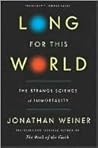
BOOK: “Long for this World” by Jonathan Weiner

Long For This World: The Strange Science of ImmortalityLong For This World: The Strange Science of Immortality by Jonathan Weiner
My rating: 4 of 5 stars

Author’s book site

This book considers the science around the question: will there come a day when human beings live forever (or at least considerably longer than we’ve achieved to date? — i.e. hundreds or thousands of years.) A secondary question, explored in the last of the book’s three parts, is should we want to?

It was a courageous decision to write this book because it focuses heavily on the ideas of one particularly controversial figure, Aubrey de Grey. And by “controversial” I don’t mean to the general public, a public which has limited understanding of the science involved, but rather a man who is controversial to many (perhaps, most) of his peers. Of course, with a Pulitzer under one’s belt, one can afford to take a few chances. (Weiner won in 1997 for The Beak of the Finch, a popular science work on evolutionary biology.) To be fair, Weiner does not present Grey’s ideas from the perspective of an acolyte. On the contrary, he is clearly skeptical and not shy about presenting the countervailing arguments put out by others in the gerontological field.

I can see several reasons why Weiner chose to focus on Aubrey de Grey. First, De Grey is an eccentric figure, and that makes for more interesting reading. Second, De Grey also takes the boldest possible stance on the topic (i.e. that there is no reason humanity won’t be able to overcome aging and death, given sufficient time and effort.) Finally, De Grey has a readily digestible roadmap for eliminating aging. De Grey identifies seven problems that must be solved, arguing that the last — i.e. defeating cancer — is the only one that will present a true challenge in the long run.

While I wasn’t converted to a belief that immortality is inevitable (and that wasn’t the book’s objective, though it may be de Gray’s,) the book does offer interesting food-for-thought, both on the scientific question of what it would take and on the philosophical question of whether we should want to.

If you’re interested in aging and mortality, I’d recommend reading this book.

View all my reviews

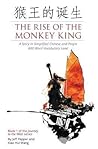
BOOKS: “Rise of the Monkey King” ed. / trans. Jeff Pepper & Xiao Hui Wang

The Rise of the Monkey King: A Story in Simplified Chinese and Pinyin, 600 Word Vocabulary Level (Chinese Edition)The Rise of the Monkey King: A Story in Simplified Chinese and Pinyin, 600 Word Vocabulary Level by Jeff Pepper
My rating: 5 of 5 stars

Publisher Site – Imagin8

This is an abridged and linguistically simplified telling of the first two chapters of Journey to the West. It contains the birth story of Sun Wukong (i.e. the Monkey King) and describes his studies with a sage in an attempt to become immortal.

As someone learning Chinese but at a point where I can only read grammatically and lexically simple content, it’s not easy to find reading material that is both fun to read and readable. The discovery of this series was a godsend. It’s hard to get more thrilling than the story of the Monkey King, and it helps that I’ve already read translations – and so have a bit of context to piece together challenging sentences and to avoid the misunderstandings that can arise when reading a new language. It’s much easier to be a disciplined reader when reading something that is neither a children’s book nor the life story of a preternaturally typical person [which is the usual adult equivalent of a beginner level reader.]

I was pleased by how this book was laid out. Often reading material for learners puts the Chinese characters (hanzi,) the Romanized phonetics (pinyin,) and the English translation all in adjacent rows. While this has its advantages, it also makes it too easy to cheat by eye saccade and not be reading as well as one thinks one is. This book does have all three elements, but it alternates paragraphs of hanzi and pinyin but then puts the translation in an unbroken format after the Mandarin. The book also has a glossary of the book’s vocabulary.

Whether you’ve already read Journey to the West or not, if you’re just learning to read Simplified Chinese, I’d highly recommend this book.

View all my reviews

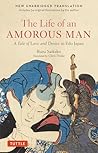
BOOK: “The Life of an Amorous Man” by Ihara Saikaku [Trans. by Chris Drake]

The Life of an Amorous Man: A Novel of Love and Desire in Old JapanThe Life of an Amorous Man: A Novel of Love and Desire in Old Japan by Ihara Saikaku
My rating: 5 of 5 stars

Publisher Site – Tuttle

On sale October 14, 2025

Original Title: 好色一代男

As the title suggests, this novel is presented as the biography of a man who is — shall we say — a horndog. Actually, it would be more correct to say that it is the story of the man’s sex life, as it begins with his sexual awakening as a boy of seven and tells stories of his relationships and dalliances throughout his life until he reaches the age of sixty and is no longer physically capable of the act. Of course, the novel does describe non-amorous life events such as the protagonist’s (i.e. Yonosuke’s) brief time as a monk and as (what in modern terms would be called) a “trust-fund kid.” Yonosuke is from a wealthy merchant family, though his inability to keep his mind on task sees him disowned for many years. So, he leads lives both rich and poor, but never without lust in his heart.

Given that the book focuses on Yonosuke’s interactions with geisha and varied sex workers, one might expect that it is a work of erotica (or even pornography.) It is neither. There is no graphic description of sexual activities and often those events are glossed over altogether. This book will be of much more interest to those interested in what life in Edo Period Japan was like, and particularly how sex work operated as a regulated industry with licit and illicit domains, than to anyone wishing to read erotica for sensual or prurient purposes.

The book has a series of illustrations (one per chapter) that were drawn by the author and appeared in the original (1682) edition. There are also poems (tanka and haiku) sprinkled in here and there, many of which were invocative in their own right.

If you are interested in historical Japan and / or its “floating world,” you’ll find this book to be an interesting read. It’s highly readable and entertaining.

View all my reviews

BOOKS: “The Meaning of Travel” by Emily Thomas

The Meaning of Travel: Philosophers AbroadThe Meaning of Travel: Philosophers Abroad by Emily Thomas
My rating: 5 of 5 stars

Publisher Site – OUP

Of late, I’ve been reflecting upon the philosophical divides that exist between travelers and others (I call them “tribals,” but they are by far the majority of people — i.e. those who either don’t travel [unless required to] or who travel only in a tourist-like fashion.) As I’ve done so, I’ve been surprised to find how limited the literature is on the subject. I was, therefore, pleased to find this book. While Thomas confirmed my preliminary findings that there isn’t much of a travel-centric subdiscipline of philosophy, she also shows that it’s not for a lack of philosophers traveling and pondering travel.

While I’ve spent considerable time thinking about a philosophy of travel, I was pleasantly surprised to discover a number of topics in Thomas’s book to which I’d hardly given any thought. These were the most personally fascinating topics because they involved such uncharted territory. They include: maps as propaganda, the importance of travel to scientific discovery, the domination of male perspective in our collective understanding of travel, and the ethics of doom travel (going to vanishing places.)

The book also advanced my understanding of subjects that I’ve often contemplated — e.g. aesthetics and travel, innate / universal ideas v. culturally-tinted ones, and the connection between minimalism and travel.

If you’re interested in philosophy, travel, and the intersect of the two, this book is definitely for you. The author takes a light approach and the book’s readability is high — i.e. while it is thought-provoking, it’s aimed at a general readership rather than a scholarly one.

View all my reviews

BOOKS: “The Last Brother” by Nathacha Appanah

The Last BrotherThe Last Brother by Nathacha Appanah
My rating: 5 of 5 stars

Publisher Site — Gray Wolf Press

When Mauritius made it onto my shortlist for upcoming travel, I needed to find an enlightening work of Mauritian literature, and this book was prominently discussed as one that might fit the bill.

The book is narrated by an old man telling a story from his boyhood. It is a poignant and riveting tale. The book’s title, The Last Brother reflects the protagonist’s (Raj’s) first tragedy, losing his two brothers in a natural disaster in Mapou, Mauritius. Raj’s family then moved south where his father got work in a prison.

Much of the book revolves around a strange historical event — the imprisonment of a large number of Jews on Mauritius during World War II. These Jews had fled Europe and were trying to make their way to Palestine but were not granted entry because of a lack of acceptable documentation. They were then sent to Mauritius where they were imprisoned in a detention camp.

The reader only sees this event through the relationship of Raj and David. Raj is taken to the prison infirmary after being beaten by his alcoholic father. There he meets David, a Jewish boy in the detention camp. It isn’t until the very end of the book that the author presents the facts of the historic event. I think this is a wise move, allowing the reader only knowledge of what the characters would know (which – as nine-year-olds – is not much.) The late reveal adds to the tension and makes some of the characters’ decisions more understandable.

The last part of the book is a little reminiscent of Huck Finn, except without Twain’s lightheartedness and with a more melancholic and tragic tone and ending, but featuring two young men on the lam for different reasons.

I found this novel to be a potent read and would highly recommend it for readers of global literature — especially if you expect to find yourself in Mauritius at some point.

View all my reviews