BOOK: “The Traveler” by Andrea Wulf

The Traveler: One Man's Quest for Humanity from the South Seas to Revolutionary ParisThe Traveler: One Man’s Quest for Humanity from the South Seas to Revolutionary Paris by Andrea Wulf
My rating: 5 of 5 stars

Author Site

Andrea Wulf once again introduces us to a person most of us have no knowledge of, but should. A few years back I read, “The Invention of Nature,” which was about the life and work of Alexander Von Humboldt. This book tells the story of the short life of George Forster, who — like von Humboldt — was a naturalist and explorer. In fact, von Humboldt considered Forster one of his mentors.

The name of this book could not be more apt. It’s not just about a man who went places, that’s a shallow definition of “traveler.” Rather, it is about one who was philosophically a traveler — i.e. one who shed biases and any pretense of superiority of his native culture over those with which he would come into contact so that his mind was ready to learn — always. George Forster traveled on Captain Cook’s second expedition, sailing through the Atlantic, across the Indian Ocean, all around Polynesia, and eventually back to England — perilously almost getting down to Antarctica in the process. George was ostensibly on the ship as assistant and draftsman to his father, Reinhold. However, George impressed more than his father, particularly through his publications after the voyage. In fact, George’s open-mindedness was all the more impressive because he got none of it from his father, who traveled about (like virtually all Westerners of that day) believing in the inherent inferiority of non-European peoples.

One reason why Forster is more obscure than his “mentee,” von Humboldt (besides the fact that von Humboldt lived / worked about twice as long) is the path of Forster’s life through the latter portion of the book. Forester’s belief in equality wasn’t limited to Pacific Islanders, he stayed true to the notion at home. He, therefore, was a supporter of the French Revolution (though he lost some taste for it in the wake of the guillotine-happy regimes that followed but still believed in the overarching goal of casting off the shackles of royalty.) Because of his support for Revolution, he was deemed a traitor by many European thinkers who had held him in the highest esteem when his support for equality was an academic abstraction (though many of them probably secretly thought him daft for believing that Tahitians [and, for that matter, women] were people, too.) At any rate, his renown plummeted, thus contributing to the fact that he’s not a household name today.

In addition to the thrill of his maritime adventures and the peril of his Revolutionary politics, there is a fair amount of family drama throughout the book. Early on said drama centers on Reinhold, but later it is the wife that cuckolds him, Therese, who takes centerstage.

I found this book highly readable. It’s not your run-of-the-mill biography of an 18th century naturalist. It’s engaging and illuminating, and I’d highly recommend it for Travelers.

View all my reviews

BOOK: “Better Than Sex” by Hunter S. Thompson

Better Than SexBetter Than Sex by Hunter S. Thompson
My rating: 5 of 5 stars

Publisher Site — Penguin

This is a collection of gonzo writings about American Politics in the 1990’s, and particularly about the 1992 election in which incumbent George H.W. Bush lost to Bill Clinton. The title comes from a quote about politics that, by the book’s end, Thompson makes clear he finds utterly discredited. It is a tale of dissatisfaction with US political leadership. Thompson’s discontentment with the Bush 41 administration (going back to the Reagan years) leads him through a brief period favoring Ross Perot (a rare third-party candidate to garner a modicum of attention or support) and ultimately on to Bill Clinton, who is always presented as the lesser of two evils and about whom Thompson has nothing particularly charitable to say about beyond, Well, at least he’s not Bush. If there’s one overarching theme that can be applied to the many disparate articles and missives, herein, it’s that if this is the best we can do as a country, we are once and truly fucked. (Little did Thompson know, American politics could – indeed – become more deeply mired in the cesspool.)

A final chapter was added when Nixon died, and it consists primarily of a harsh obituary. I imagine Thompson’s impression of Trump would be similar to that of Nixon — i.e. that he is an absolutely vile and cretinous individual, but worthy of some begrudging respect for being an evil dimwit in such an upfront manner. At least one sees something like this in his comparison between Nixon and Clinton — i.e. the idea that Clinton may not be as reprehensible, overall, but there’s something unsettling in the way Clinton masks the truth.

This is a worthwhile read because it taps into America’s perennial disgruntlement with our inability – despite a large population and many resources – to find a decent human being to run the country, but it puts all that broadly felt sentiment into funny and clever words. I’d highly recommend this book for lovers of Gonzo journalism and / or (haters of) American politics.

View all my reviews

PROMPT: Historical Event

Daily writing prompt
If you could go back and witness any historical event, which one would you pick?

I’d like to go back to see the death of Julius Caesar to learn if his final words were truly, “Et tu, Brute” or the more likely, “Oww! Stop stabbing me already!” (Vah! Noli me amplius vulnerare.)

PROMPT: History

Daily writing prompt
If you could erase one event from history, what would it be?

The Teapot Dome Scandal. Because of the way History is taught (or was in my day) I have this name indelibly etched in my brain (taking up valuable — i.e. limited — real estate) that has no significance because I have no idea what said event was. Was it about teapots? Was it about domes? Was it about both? If so, what’s a “teapot dome?” The curved part at the top? How big of a teapot related scandal could there be, really.

PROMPT: Sequel

Daily writing prompt
What’s a book you think deserves a sequel?

I think sequelization is a pox upon the literary world. I would hazard to say that anything good I’ve ever read was a standalone work. Seldom does the “resolution-to-hook” ratio lead to a satisfying, let alone illuminating, reading experience. A popular book series is far more likely to end like the television series Lost than to pull all its outstanding narrative strings together coherently.

Unless you’re talking nonfiction, in which case I would be open to another volume of The Complete History of the World at some point.

BOOK: “Ninja Weapons” by Charles V. Gruzanski

Ninja Weapons: Chain and ShurikenNinja Weapons: Chain and Shuriken by Charles V. Gruzanski
My rating: 4 of 5 stars

Online – Internet Archives

The first item to get out of the way is that this book doesn’t have a particularly apt title. The book was originally released with the more accurate (but less sexy) title, “Spike and Chain,” and then this edition came out in early 90’s when fascination with all things ninja was high. An accurate title would be “Masaki-ryu Chain Fighting Basics with Information on Throwing Blades on the Side.” But, of course, that would be a horrible, wordy, and tremendously unsexy title. Still, the bulk of the book is a description of the postures and fundamental techniques of fighting with a short weighted chain (called manriki-gusari [10-power chain] in Masaki-ryu or by the more literal kusari-fundo [chain (w/) weight,] elsewhere) and then there is a section on shuriken (throwing spikes and stars) to pad the book out into a three-digit page count needed to be a proper book back in the day.

I should point out that I don’t mean this all as a criticism. I am much more pleased with a book on Masaki-ryu weighted-chain technique than I would be with one that rambled on speculating about the vast number of weapons associated with the ninja. But it’s important to know what the book is about because if you are looking for a guide to the weapons used by ninja, you would probably find this weak sauce. First, there’s little to no mention of ninja in the text. Second, the story given for the development of the manriki-gusari is that of a gate guarding samurai, Dannoshin Toshimitsu Masaki, who didn’t want to have to sully the Imperial grounds with blood and so took up the chain as an alternative to sword fighting. Finally, while shuriken were said to be used by ninja, they were not exclusively so and the history in this book also cites Edo period samurai with developing the art.

If you are interested in Japanese weighted chain weaponry, and specifically Masaki-ryu, this is an excellent book for you. If you’re interested in throwing blades, you might be a little disappointed with how thin that part is, but it does discuss a lot of the fundamentals in a concise and practical way. If you are looking for a book on all the weapons used by ninja, this is not the one for you.

View all my reviews

BOOK: “Night Lights” by Molnár József & Péter Szilas

Night lights (Our Budapest)Night lights by Jozsef Molnar
My rating: 4 of 5 stars

Publisher – Atlantisz

Budapest was a city on the cutting edge in the 19th century. This fact is often lost to people who today see it as a city that’s doing okay getting to its feet in the wake of the Cold War, but it’s worth noting that it was a major world capital before that. This is exemplified by the fact that Budapest had the first subway train (Line No. 1., opened in May of 1896.) It’s also seen in the subject of this book, the development of streetlights and lighting of public spaces.

This pamphlet / book of 56 pages is put out by Budapest’s City Hall and includes a great many color photos of important structures, historic and modern, from around the city (all taken at night to display said lighting.) The text covers the history of Budapest’s public lighting from a 1777 decree by Maria Theresa (ruler of the Hapsburg monarchy, 1740-1780) that set the stage for the first street lighting to the post-World War II floodlighting of major sights (e.g. Parliament and the Vajdahunyad Palace.) So, the book covers the period from gaslighting (and oil lighting) through the modern electrical grid, as well as the transition between.

I’d recommend this little book for those interested in the development of cities. It’s fascinating considering what the world was like in the absence of infrastructure that we now take for granted.

View all my reviews

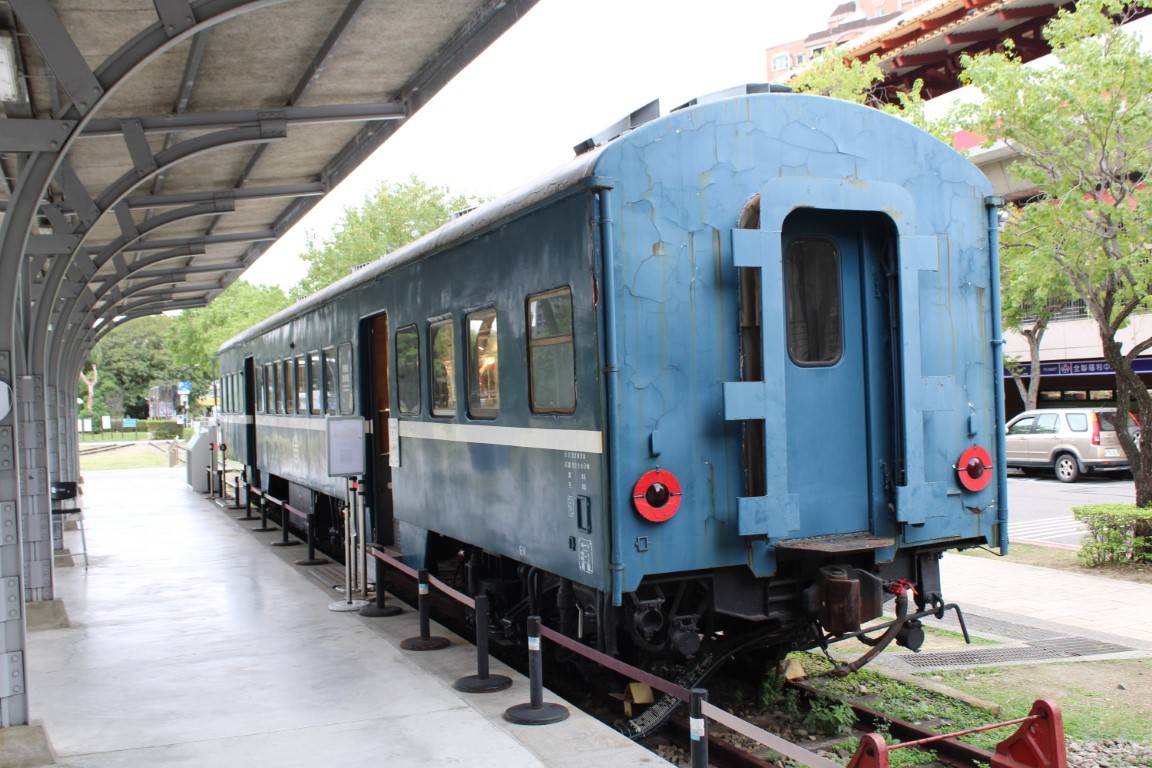
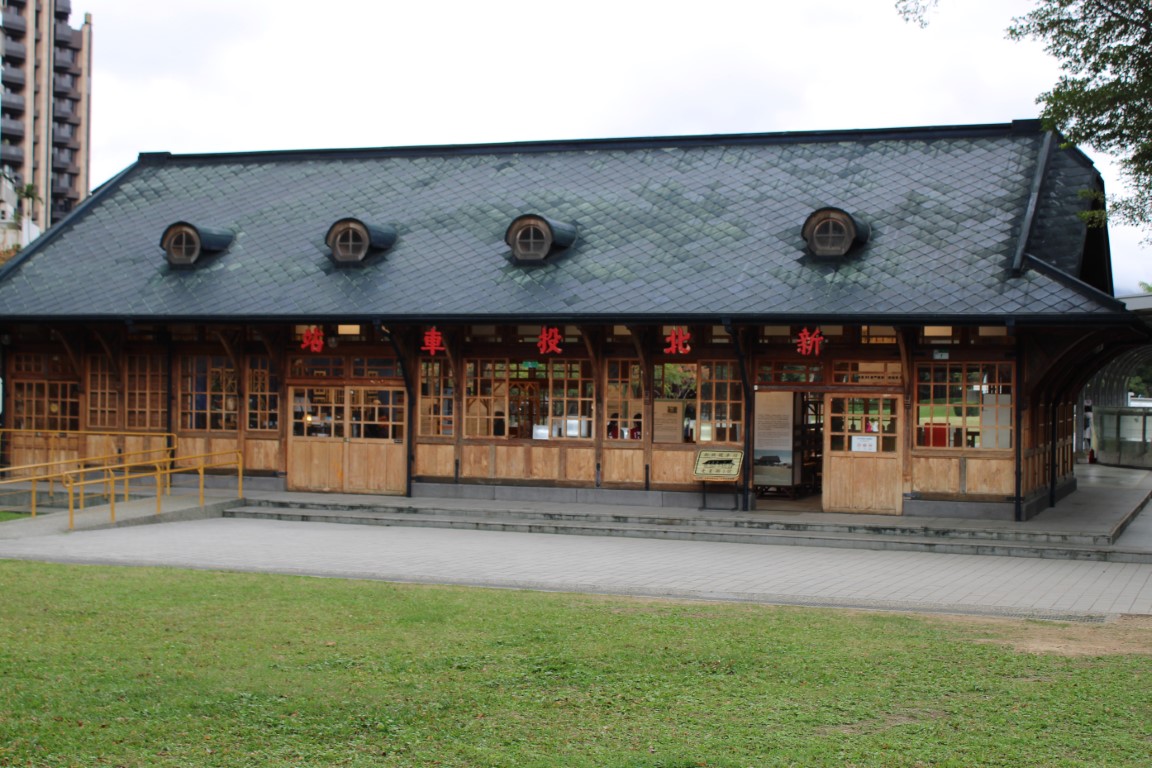
DAILY PHOTO: Xinbeitou Historic Station

Photograph of the Xinbeitou Historic Station in Beitou, Taiwan.
Photograph of an old train at Xinbeitou Historic Station in Beitou, Taiwan.

BOOK: “The Yoga Tradition of the Mysore Palace” Trans. / Ed. / Introduction by N.E. Sjoman

The Yoga Tradition Of The Mysore PalaceThe Yoga Tradition Of The Mysore Palace by N.E. Sjoman
My rating: 5 of 5 stars

Online

This book consists of a translation of The Śrītattvanidhi, a description of 122 Hatha Yoga postures (asana) that has been attributed to Krishnaraja Wodeyar III (Maharaja of Mysore – b.1794 – d. 1868,) as well as notes and commentary on the postures by the Sanskrit scholar, N.E. Sjoman, notes that serve to map said postures to their present-day counterparts. Sjoman also writes an extensive introduction that explores the evolution of the body of yogasana as we now know them, with discussion of varied sources, his research rooted in archival study in Mysore. A copy of the original The Śrītattvanidhi, (of varied readability) is included in the text.

Because India is top-heavy in terms of population and influence, outside of India yoga practitioners might be forgiven for failing to understand how important Mysore and the patronage of the Wodeyar royalty to T.T. Krishnamacharya was in the development of asana-centric yoga as we know it today. Krishnamacharya taught Pattabhi Jois (Ashtanga Vinyasa,) B.K.S. Iyengar (prop yoga,) and Indira Devi (Yogini to the stars,) among other prominent 20th century teachers. It is from these teachers onward that yoga practice would be recognizable to the average practitioner of today.

This book links the postures of The Śrītattvanidhi to the names / versions known today (typically linked by the names from B.K.S. Iyengar’s Light on Yoga.) Sjoman also maps these asana to other prominent sources like Hatha Yoga Pradipika, Gheranda Samhita, Krishnamacharya’s Yogamakaranda, Pattabhi Jois’s Yoga Mala, and Yogeshwaranand Parmahansa’s First Steps to Higher Yoga, linking them primarily through a series of indices.

If you’re interested in the evolution of yoga postures over time, I’d highly recommend this book as a quick way to get a basic grasp of the subject.

View all my reviews
BOOK: “The General in His Labyrinth” by Gabriel García Márquez

The General in His LabyrinthThe General in His Labyrinth by Gabriel García Márquez
My rating: 5 of 5 stars

Publisher Site – Penguin

This is a work of historical fiction by Gabriel García Márquez that tells the story of the last days of Simón Bolívar as the revolutionary hero attempted to flee Latin America toward exile in Europe. (Bolívar led a big chunk of Latin America to independence from Spain and ruled over Gran Colombia — a country that included Colombia, Venezuela, Panama, and parts of other adjacent countries.) The story covers a trip up the Magdalena River from Colombia’s interior to the coast and on to Santa Marta, where his trip (and life) would end. [FYI: The title comes from words Bolívar spoke slightly before his death when he was putting together his will in which he said, “…How will I ever get out of this labyrinth?”]

There is some contention about the degree to which the book is historical fiction verses a historical account. It seems there are some fictionalized elements, but because García Márquez leans into the degree to which Bolívar was quite ill during this period the book may be more accurate in some ways than more hagiographic accounts.

The events of the story took place in 1830, and the times present an interesting contrast to our own as Bolívar travels to places that have not yet gotten the news that he is no longer President and treat his visit as one would that of a head of state.

At the book’s end there is a brief epilogue by the author as well as an extensive timeline of Bolívar’s life. The latter is quite useful because this book covers only a short period of time, though one of is great interest.

I’d highly recommend this for readers who enjoy literary fiction and / or are interested in Latin American history.

View all my reviews