PROMPT: Underrated Movie

What’s the most underrated movie you’ve ever watched?

View all responses

I don’t think Galaxy Quest got a fair shake because its science-fiction / comedy / parody melange did not seem the makings of a good movie. But I think it got its cult following in later years.

PROMPT: Famous Person

If you could switch lives with a famous person for a week, who would it be and why?

View all responses

Being famous seems like it would be a drag, like it would be the worst part of being skilled at, and / or beloved for, some people-facing art. I might like to engage in some of the artistic endeavors, but only if I could pass on the fame.

PROMPT: Celebrity

Which celebrity would you love to meet, and what would you talk about?

View all responses

Anne Carson just won the Nobel Prize for Literature. Does that count as a celebrity? She’s still in the 15 minutes of fame that comes from the recent announcement. She’d be interesting to talk to about poetry.

If it does not count, I would have to say that the more clearly a celebrity would count, probably the less interested I am in talking to them. I can’t think of any A-list actors / actresses or pop stars that appeal. Maybe a few rock stars and standup comedians — e.g. Bruce Springsteen to talk about lyrics or Louis C.K. about jokes.

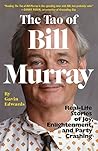
BOOK: “The Tao of Bill Murray” by Gavin Edwards

The Tao of Bill Murray: Real-Life Stories of Joy, Enlightenment, and Party CrashingThe Tao of Bill Murray: Real-Life Stories of Joy, Enlightenment, and Party Crashing by Gavin Edwards
My rating: 5 of 5 stars

Publisher site – Penguin Random House

This book lays out Bill Murray’s philosophy of life as revealed by his quirky, daring, and spontaneous approach to living. Much has been made of the influence of the mystic philosopher G.I. Gurdjieff on Murray’s thinking. This background is discussed a little in Edwards’ book, but mostly this is a book that uses anecdotes from Bill Murray’s life to make a case for a philosophy of life that involves spontaneity, generosity, service, and connection. (Furthermore, it’s not clear to what degree Gurdjieff influenced Murray’s thinking, versus Gurdjieff’s ideas appealing to Murray because of the way the comedic actor already experienced the world.)

The author organizes the book around what he calls “The Ten Principles of Bill,” a set of ideas that Edwards argues can be seen cutting across Murray’s working and non-working life (and most of the stories are from his interactions with everyday people in everyday [but often unexpected] settings, and not from Murray’s acting work.)

I found this book to be highly readable and illuminating. The stories are funny but also offer a distinct approach to experiencing the world. I’d highly recommend this book for those interested in living a more spontaneous and rewarding life, or just those who like Bill Murray.

View all my reviews

BOOK: “Born Standing Up” by Steve Martin

Born Standing Up: A Comic's LifeBorn Standing Up: A Comic’s Life by Steve Martin
My rating: 5 of 5 stars

Publisher Site – Scribener

Steve Martin opens this book, “I did stand-up comedy for eighteen years. Ten of those years were spent learning, four years were spent refining, and four were spent in wild success.” This book is about those eighteen years and the lessons learned about the comedic craft and what events drove him to it and what events drove him away.

The book is a memoir, with family drama and varied insights that come from life off (as well as on) stage. The book has pathos to temper its bathos, making an altogether more interesting and authentic read. Of course there’s humor throughout, from discussion of some of his comedic bits to humous personal stories.

I found it fascinating to learn about Martin’s philosophy of comedy. For example, his attempts to avoid punchlines to get away from the conditioned response laughs that came not necessarily from a genuine experience of mirth but because of a realization that it’s a time at which one is expected to laugh. Martin also has a unique message to tell given the nature of his comedy. It is not relatable. It’s silly — hilariously silly, but silly, just absurd and wacky. Like political comedy, one would expect a reduced size of audience willing to come along for the ride. That makes it all the more impressive to achieve what he did as a comic, because his type of work seems like it would have a smaller following than the comics who talk about family life and dating and office jobs and tax audits and their vaginas.

I enjoyed reading this book tremendously and would highly recommend it for readers with an interest in standup comedy (or those fascinated by the life cycle of celebrity.)

View all my reviews

PROMPT: Cry

Daily writing prompt
What’s the last movie that made you cry?

Tropic Thunder. Laughed myself to tears.

PROMPT: Laugh

Daily writing prompt
What makes you laugh?

Comedy… and select instances of tragedy.

PROMPT: For a Day

Daily writing prompt
If you could be someone else for a day, who would you be, and why?

Any successful standup comic. To gain a practical understanding of the downside and the struggle.

I wouldn’t care to be a billionaire because it would be just my luck that it’d be the day people wised up and the revolt began, and I could say the same thing with respect to world leaders.

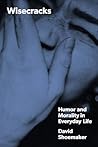
BOOK: “Wisecracks” by David Shoemaker

Wisecracks: Humor and Morality in Everyday LifeWisecracks: Humor and Morality in Everyday Life by David Shoemaker
My rating: 4 of 5 stars

Publisher Site — U of Chicago Press

In this book, a Cornell University philosopher considers questions at the intersection of morality and humor, particularly with respect to digs, burns, and other forms of wisecracking humor. Shoemaker’s view is that generally these forms of humor are not morally questionable, but even where they are they can serve a social function. The book reflects in depth upon what might make a joke morally questionable and why it is unreasonable to accept the tautological argument that wisecracks are morally wrong because they poke fun at others. In addition, the book delves into what service wisecracking humor provides as well as investigating how the pros may outweigh the cons.

I suspect most readers will not expect a laugh riot from a book put out by a philosopher, and — in this case — they would be particularly right to not do so. The book repeatedly draws on a few examples, examples which are often of the inside joke variety (i.e. not hilarious to third parties.) But if you’re reading a philosophy book to laugh, you’re in the wrong place. One would also be wrong to think one has a minefield map, showing when, where, and how to safely wisecrack, by the book’s end. The author clearly recognizes the challenge of attempts to clarify the landscape. Whether he thinks he’s succeeded in doing so, I couldn’t say, but the landscape remained messy to my mind, even having completed the book.

I found the book to present some thought-provoking ideas. My interest did wane in the book’s second half as it came to feel a bit more muddled and repetitive, but all-in-all I thought it was a book worth reading — if you’re interested in philosophy, morality, and ethics.


View all my reviews

PROMPT: Performed

Daily writing prompt
Have you ever performed on stage or given a speech?

Performed? Not yet. (Unless you count “Crowd Member Milling About [with No Lines] – #7” in an Elementary School Christmas Pageant.) Given a speech? Yes. Unless it is completely impromptu, it is nowhere near the top of my list of horrifying life events.