What’s the most annoying trope in books or movies?
The McGuffin. A thing chased for the sake of being chased. It only works because humans, like dogs, are programmed to chase certain things without a good sense of whether it’s worth it or what would happen if one ever caught it.
I would say it’s much more common for travel to inspire me to read a particular book than the other way about. I can’t think of a case in which reading a book was the prime mover in a decision to travel to a given place. But I do try to read some literature from every country or literarily active city that I visit.
No particular order: Kung Fu Hustle, Caddyshack, Matrix, Inception, John Wick 4, Airplane, Monty Python and the Holy Grail, Blazing Saddles, Hero, and Drunken Master II.
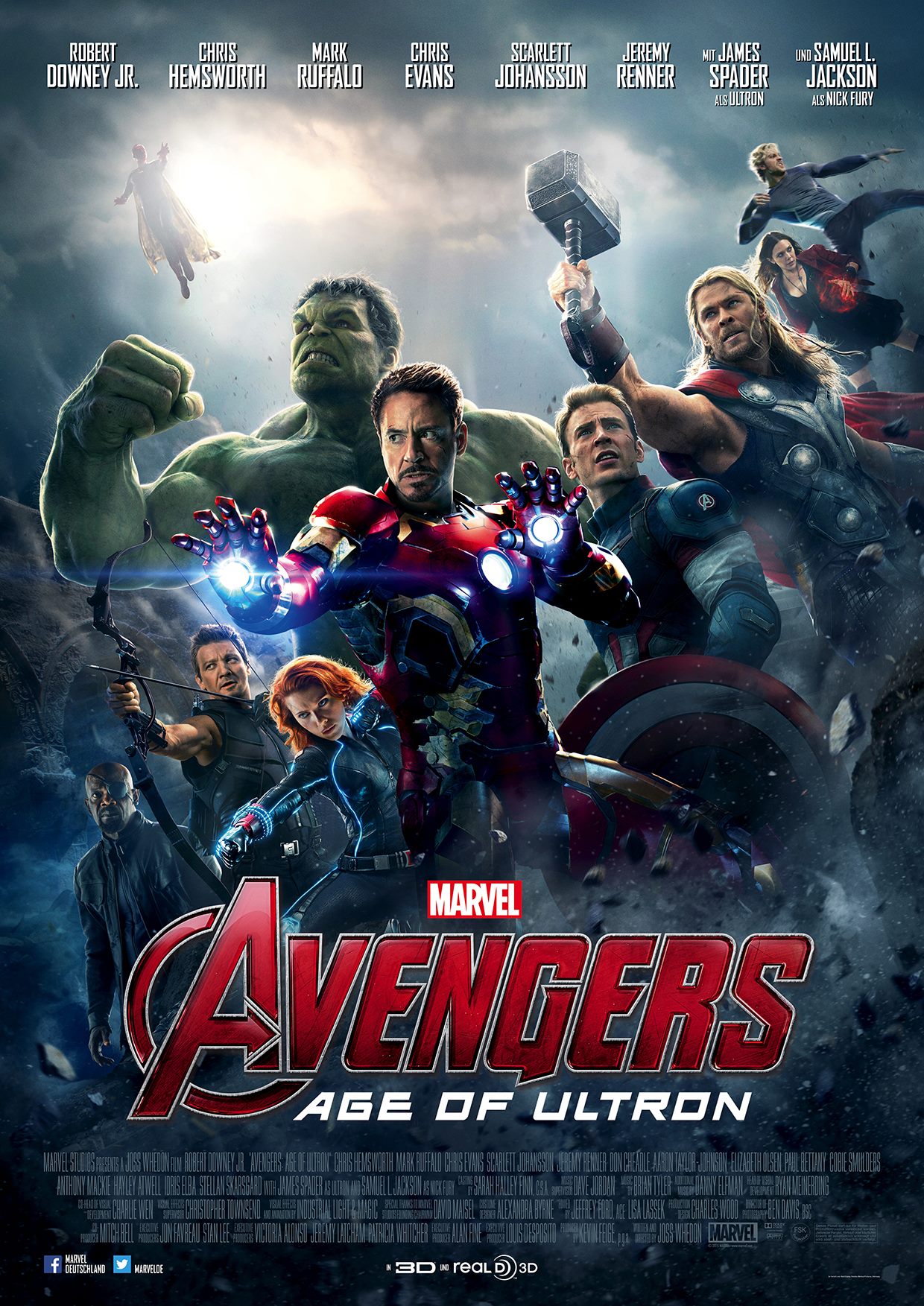
Avengers: Age of Ultron opened across India today, April 24, 2015. This film is set sometime after the events of the second films in the Captain America and Thor solo “trilogies.” We know this because Thor is on Earth and the Falcon (in a cameo) makes an offhand comment indicating that he’s spending time looking for Bucky Barnes / Winter Soldier. Furthermore, we know it because the opening scene is the Avengers working as a team to take down Baron Von Strucker’s fortress (re: Captain America 2 end-credit scene) in a fight to obtain Loki’s scepter. This scene suggests that the team has been working together for a while in taking down Hydra bases of operation globally. (Many have jokingly inquired why Steve Rogers (Cap) wouldn’t have called in his avenging friends during the events of the Winter Soldier film. This film reinforces, rather than solves, that riddle.) At any rate, that opening scene contains an awesome action sequence.
The core premise of the film will not come as a surprise to anyone who has seen the trailers for this film–not to mention the previous Marvel Cinematic Universe (MCU) films and post-credit scenes. Tony Stark (Iron Man) tries to “create a suit of armor around the world” and the program–dubbed Project “Ultron”–goes terribly awry. After Ultron comes into existence, he quickly moves to co-opt the Maximoff twins (better known as The Scarlet Witch and Quicksilver.) Because the twins have an axe to grind with Tony Stark, they willingly side with Ultron. The Scarlet Witch is instrumental in Ultron’s plan. If you haven’t seen the trailers don’t finish this sentence, but for others it will be apparent that the Scarlet Witch’s mind control is used to pit some Avengers against either themselves or others.
The tone of this film is different from the first Avengers movie. In the first film much of the tension springs from unfavorable first impressions and standoffishness. Now the characters know each other and love-hate relationships are rife–some more loving and some more loathing than others. This may make it easier to relate to what’s going on between the major characters. The strained relationships inside the team remain an important factor, and are crucial to the films going forward–most notably Captain America 3: Civil War.)
While the trailers may have led one to believe this would be a big film for Natasha Romanov (aka Black Widow) given the flashback scenes, it’s actually Clint Barton (aka Hawkeye) who has a more pivotal and revealing role in this film. (Perhaps to the chagrin of the many who wonder why he’s even on the team.) However, the evolving relationship between Romanov and Bruce Banner gets a fair amount of screen time–though the need to pack a lot into the film given the huge cast makes this drama feel a bit thin. The twins and their tormented past are also critical to the tone of the film. They hold an event from the past against Stark, but they are ethical people at their core.
The Vision is the character that has been held closest to the vest by Marvel. I won’t say much about Vision to avoid spoiling anything other than that it’s an intriguing character. I was worried that either the way this character was created or the effect he had on the story would be a disappointment, but it wasn’t.
I think James Spader did an excellent job of playing Ultron–a character that vacillates between being childlike and being a grim psychopath. (One may not get the childlike part from the trailers, but this is a brand new intelligent entity, and so it’s clever to show that.)
Like the first Avengers movie, this one has its bit of deus ex machina (bolt from the blue solutions to once insolvable problems), but it’s not the perfection of story that makes these movies engrossing. (I didn’t find it as deus ex machina as the first film–though there is at least one moment that springs to mind.)
What sells these films is: a.) the witty dialogue; b.) the stunning visuals of the action sequences; and c.) the tension between characters both friend and foe. (Probably not in the aforementioned order.) On those three items this film doesn’t disappoint.
I won’t even bother to recommend you see it, as I’m sure–like everybody else on the planet–you will.

The title of this novel about the doomed love affair of two cancer-riddled teens says a great deal, and—while lifted from Shakespeare–it’s well-chosen. The lead character is a sixteen-year-old girl named Hazel who has lungs that, as she puts it, “suck at being lungs.” She meets a boy, Augustus, at support group who is in remission, but who had a leg amputated in the process of achieving his momentary cancer-free status. Hazel takes an immediate liking to the handsome and charismatic Augustus (i.e. “Gus”), but remains standoffish because she is–to use her own words–“a grenade.” Meaning that she is going to die young, leaving her loved ones devastated. She has enough guilt about the fact that she will do this to her parents, but is unwilling to subject Gus to the same fate. Augustus, however, is an ardent and skillful wooer and eventually wears Hazel down with his winning ways and selfless acts.
This isn’t a typical read for me by a long shot. It’s written in the language of YA fiction, and it’s brutally depressing in places. Neither of the aforementioned characteristics usually draw me in. However, despite its sad subject matter, the book has a sense of humor that is essential to keep the story from crushing one’s will to continue reading. Of course, the fact that all the major young characters are dying is a cloud ever-present throughout the book. I will say it’s the most viscerally emotional novel I’ve read in some time. The only books this depressing that I’ve read recently were nonfiction works on Pol Pot era Cambodia and the Holocaust.
The strength of the book is its characters. They may be atypically intelligent, clever, and well-spoken teens, but they are intriguing, likable, and well-developed characters. Besides Hazel and Gus, there is a secondary character named Isaac who has a form of cancer that isn’t highly lethal but which does claim his eyes. Hazel and Gus are in one way polar opposites. Gus, the former star athlete, is ever concerned about his legacy, but the less ambitious Hazel believes that everyone fades into oblivion rapidly. These divergent perspectives of similarly doomed youths give one insight into the varied approaches to experiencing one’s mortality.
Another intriguing character is Peter Van Houten, a one-time American writer living in Amsterdam and the heir to a fortune off which he lives as a professional drunk. Van Houten wrote a single book about a person who dies young, which turns out to be based on his own child and is Hazel’s favorite book. Gus reads the book to please Hazel, but becomes genuinely intrigued with its ambiguous ending. Van Houten is an unpleasant character, but his book is a focal point of the storyline. The couple takes a trip to Amsterdam to try to get answers about the novel’s abrupt ending, and this experience proves to be the pivotal point in their relationship. Van Houten–jackass as he may be–does end up passing on some useful wisdom to Hazel and Gus.
I rate this book highly for being readable, captivating, and gripping. I would recommend it for those who don’t usually read YA, though the language and focus is decidedly geared toward a YA audience.
It should be noted that the film adaptation will come out this summer. For some reason they filmed it in Pittsburgh instead of the story’s real setting—and my one-time home—Indianapolis, Indiana. I’ll try not to hold this against it, too much.
Ender’s Game is the story of a boy, Ender Wiggin, whose intelligence and capacity for ruthlessness lead the military establishment to believe that he’s the last hope for mankind. The book is set in a future after the Earth has been invaded twice by an alien species called the buggers, and now the Earth is planning its own “preemptive” invasion to end the bugger threat once and for all.
The novel follows Ender’s life from his short home life as a “third”—a rare third child for which special permission must be granted—through his post-war life. (This entire timeline transpires before adulthood.) The bulk of the novel takes place in Battle School, where Ender receives his training in military tactics and strategy and spends much of his time in zero gravity war games. He rises up through the ranks quickly, as expected, but not without stirring some animus in the process. He learns strategy both through war games and through the mind-field of real world animosity by others who are jealous or feel insulted by his brilliance.
As Commander material, Ender is considered to be in the Goldilocks zone. His older brother, Peter, is too cruel; his sister, Valentine, is just too kind. (All three Wiggin children are geniuses.) Ender has the right mix to fight the buggers. His problem is that the world forces him to be ruthless and his compassionate side makes it hard to cope.
While Ender leaves home young and early in the novel, there is a subplot involving the older Wiggin children that is revealed over the course of the book—showing the reader more of the tormenting brother and the loving sister who shaped his worldview. Ender does interact with Valentine in person on a couple of occasions, but his only interaction with Peter is a brief mention of correspondence at the end of the book.
Ender is an intriguing character. He is always the outsider, by birth as a third and then through isolation in Battle School that is facilitated by the conflicted head of the Battle School, Col. Graff.
I won’t get into the ending except to say that there is a twist at the novel’s climax. I will say that the reveal of this twist felt a little anti-climactic to me. However, as the real story isn’t about fighting the buggers, but Ender’s internal struggle, this isn’t as dismaying as it might otherwise be.
One can tell that this is a series book because it climaxes and resolves relatively early, leaving a fair amount of space to set up the next book. This actually helps the twist offer some surprise because the reader sees that there are so many pages left for the novel to resolve itself.
Card does an interesting thing in making the central character stronger than everyone around him–at least until he’s introduced to his new guru, Mazer Rackham–the Commander who won the key battle of the second bugger invasion and who is alive by virtue of a relativistic trip. Ender’s superiority seems like a recipe for boredom, but it works because what we don’t know is whether Ender is stronger than everyone else pitted against him combined, and, moreover, we don’t know whether he is strong enough inside to withstand all the horridness to which he is subjected. A lot of the tension of the novel is really internal to Ender. Unlike Peter, who would revel in ruthlessness, Ender is tormented by all of the violence he must perpetrate.
I’d recommend this novel. It has its flaws, but it is quite readable and Ender’s character is intriguing from start to finish.
The movie version is coming out tomorrow. I haven’t seen it, but here is the trailer.