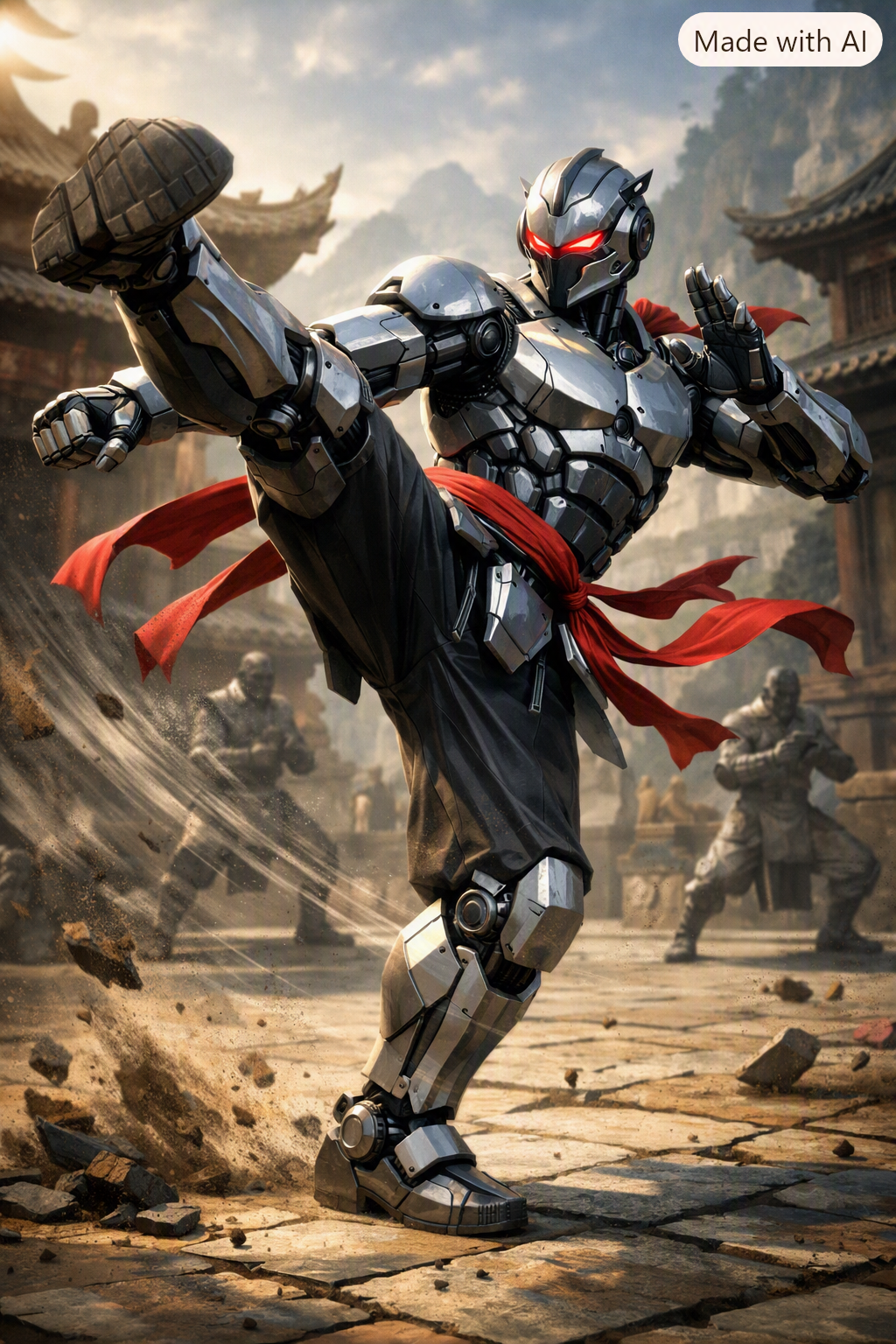
Clumsy Kung Fu robots
will become slaughter-bots
in our time.
What they lack in Zen spontaneity
and warrior ethos they will make
up for in speed, power, and
dense metal alloy.
Replaced limbs will make them more
-- not less -- capable fighters.
Will a battling robot ever wonder
How did we get here?
or
What is the point?
Or will it only wonder why it is
using its feet as impact weapons
when it has ray-guns?
(It is a little like building a typing pool
of robots... only way, way cooler.)
Tag Archives: kung fu
BOOKS: The Shaolin Workout by Shi Yan Ming
The Shaolin Workout: 28 Days to Transforming Your Body and Soul the Warrior’s Way by Yan MingMy rating: 4 of 5 stars
Amazon.in Page
This book presents an exercise regimen based on Shaolin Kung fu as taught by a prominent New York City martial arts teacher. The book moves from gentle joint articulations suitable for anyone through to movements that require some degree of flexibility and athleticism. The sequence is presented in such a way as to build on itself, adding a bit more each time until one is doing the entire sequence.
Interspersed with the descriptions of the physical exercises are meditations, mostly of a contemplative nature. The illustrations are color pictures and provide the sequences of movement, though the textual descriptions will be necessary in many cases to clarify the transitional movements. There are a number of full-page color plates that are very well shot, though mostly for aesthetic (versus educational) purposes.
The book is probably the most pep-talk laden book I’ve ever read. That said, there’s not much discussion of modifications or capacity building for individuals who are incapable of doing the full expression of the techniques.
The practices often reminded me more of yoga than of martial arts. There are many deep stretches and low positions, e.g. similar to Warrior I (Virabhadra I.) It’s true that there are punch and kick movements, but they are done in more of a range-of-motion building way than as one would in combative arts.
It is an interesting set of movements, and I’d recommend it for those who like to work with unconventional workouts and movement systems.
View all my reviews
Limerick of the Racist TV Exec
BOOK REVIEW: Shang-Chi, Vol. 1: Brothers & Sisters by Gene Luen Yang
Shang-Chi by Gene Luen Yang, Vol. 1: Brothers & Sisters by Gene Luen YangMy rating: 4 of 5 stars
Amazon.in Page
This five-issue story arc tells the tale of an intra-family battle for control of the Five Weapons Society, a kung fu dynasty that dates back at least to the Boxer Rebellion. With the patriarch deceased, sides form behind Shang-Chi, on the one hand, and Sister Hammer, on the other. While close as young children, Shang-Chi and Sister Hammer grew up separated, and could not have turned out more differently. Shang-Chi (aka. Brother Hand) has been reluctantly drawn into the conflict by virtue of his being the “chosen one,” and by having the support of Brother Sabre and (to a lesser degree) Sister Dagger. Sister Hammer has raised an army and is bent on taking over the dynasty by whatever means necessary.
So, this is one of those stories that’s not about a purely good hero against a purely evil villain, the latter needing to be completely destroyed, but rather it’s about the need for catharsis and reconciliation. But that doesn’t keep the comic from being loaded with action. We also see a protagonist who experiences a change, which is a story convention that is often jettisoned in the action genre. Shang-Chi must move past his reluctance, and embrace his role in the family.
I found this comic to be compelling and worth reading.
View all my reviews
BOOK REVIEW: Marvel-Verse: Shang-Chi by Fred Van Lente, et. al.
Marvel-Verse: Shang-Chi by Fred Van LenteMy rating: 4 of 5 stars
Amazon.in Page
This is a collection of issues involving Shang-Chi. The early issues present the “Master of Kung Fu” in cameo / secondary roles within headliner characters’ comics – notably Wolverine and Spiderman. In those early issues, Shang-Chi mostly serves as the invincible master showing quippy superheroes that their kung fu lacks vigor and precision. In the later issues, those in which Shang-Chi is the lead, he becomes more well-rounded leading man material and less of a stoic, exotic Yoda-figure. In those issues, Shang-Chi combats the elusive ninja organization called “The Hand,” as well as “Lady Deathstrike.”
There is one issue, “Shang-Chi’s Day Off,” which is written as one-liner laden low comedy. Its tone stands out as distinct from the rest of the volume, but it has a few genuinely amusing lines, and so it’s not so bad. Those who take their superheroes somewhat seriously will hate it.
This collection isn’t a bad way to gain insight into the character and his evolution over time. Don’t be thrown off by the campy and stereotyped way he’s portrayed in his 70’s Kung fu cinema iteration, it gets more balanced and sophisticated later in the volume. I read found it on Amazon Prime.
View all my reviews
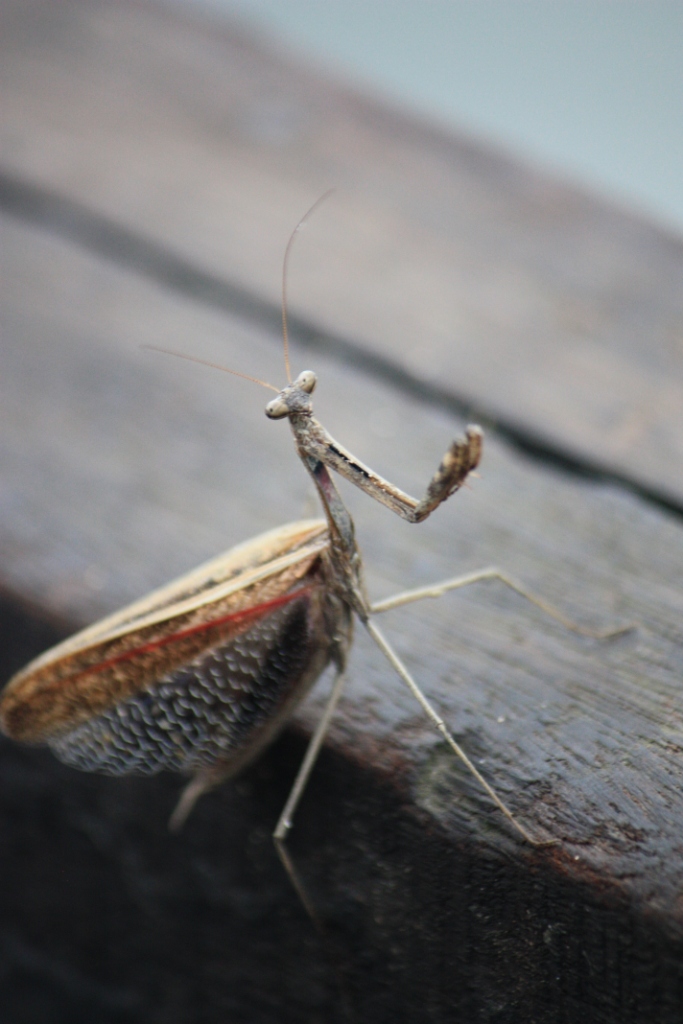
Mantis Kung Fu [Common Meter]
A mantis landed on the rail, and it put up its dukes as one might expect of madmen or drunken Irish kooks. Why would one seek out a fair fight with someone much bigger, I shook my head and started to engage in a snigger. But then it did occur to me that he couldn't stand elsewise. So, I tried to gauge his intent, and looked him in the eyes... and he stomped me in my nether bits - much to my surprise.
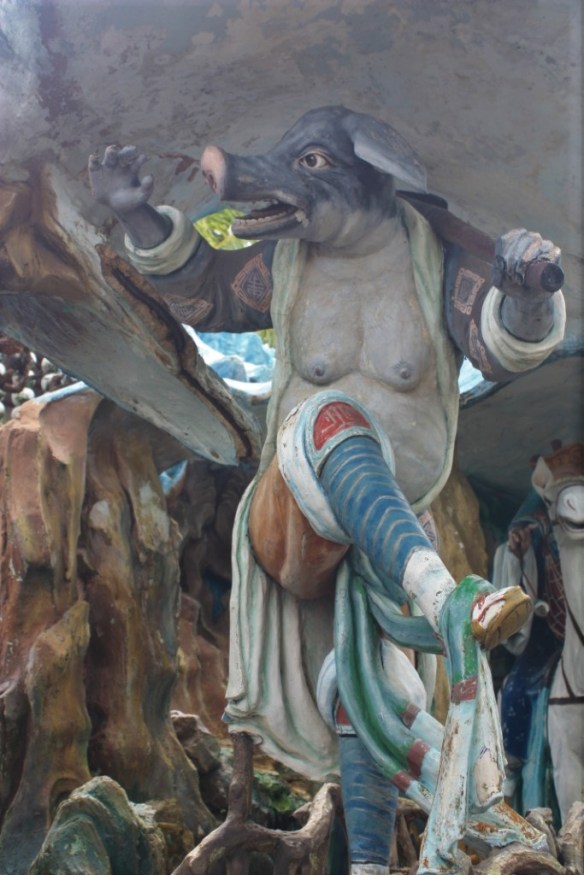
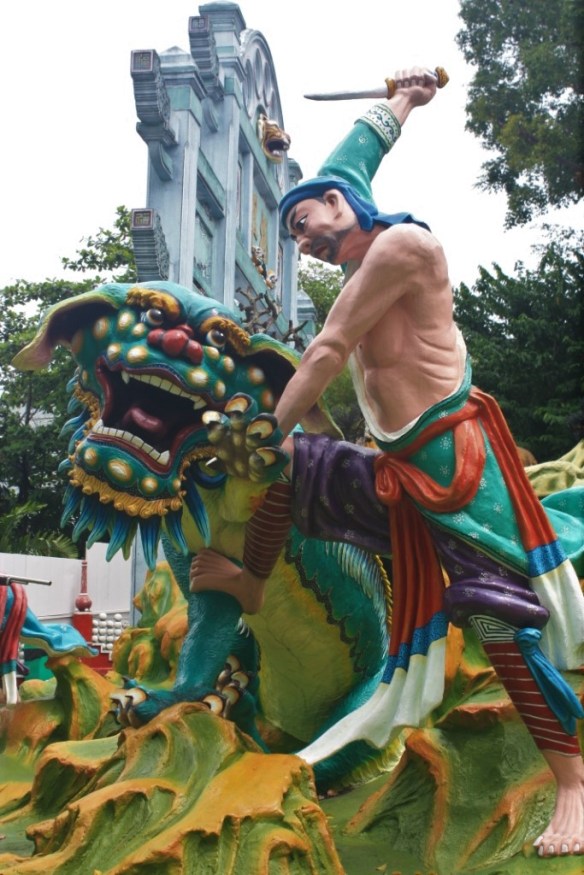
DAILY PHOTO: Animal Style Kung Fu, Haw Par Villa
5 Profound Pieces of Kung Fu Panda Wisdom (That May Seem Dumb)
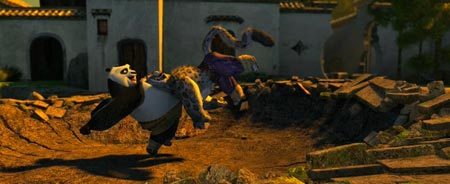
5.) Po’s Wu Wei: In his fight against Tai Lung at the end of the first film, Po takes a hard hit from his Snow Leopard nemesis, and through ripples of undulating flab returns a devastating strike that sends Tai Lung flying. While I wouldn’t recommend one try it at home as demonstrated in animated form, the idea of not resisting, but rather redirecting forces is an old school approach. It also reflects the ancient Taoist wisdom of wu wei, effortless action.
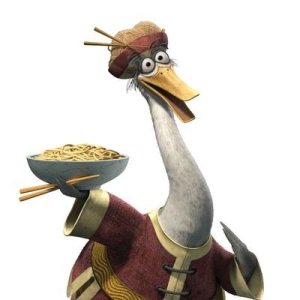
4.) “But I realized having you in Po’s life doesn’t mean less for me. It means more for Po.” In the third movie, there’s a scene in which Mr. Ping (Po’s avian dad by adoption) explains to Po’s panda dad, Li, how he came to grips with Li’s presence (which at first made Mr. Ping insecure and envious.) The lesson is to be careful in assigning a situation zero-sum status (one person’s gain requires another’s loss) without having reason to believe it reflects the reality of the situation.

3.) “There is just news. There is no good or bad.” This bit reflects an old Taoist story about a farmer and his neighbor. One day the neighbor sees the farmer has a beautiful new horse. The farmer tells the neighbor that it’s a wild horse that the farmer found at the back of his property. The neighbor says, “That’s good news.” The farmer says, “Good news? Bad news? Who’s to say?” The next day when the neighbor stops by the farmer tells him how his son got a broken arm trying to break in the wild horse. “That’s bad news,” says the neighbor. “Good news? Bad news? Who’s to say?” The next day the army comes by, conscripting young men, but the farmer’s son is not forced to go to war because the young man has a broken arm. The story goes on like that.
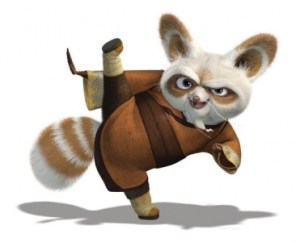
2.) “If you only do what you can do, you’ll never be more than you are.” In the third movie, after Master Shifu explains to Po how he knew that Po would fail on his first day as a teacher, the Master utters this bit of wisdom. It’s a warning to avoid loitering in one’s comfort zone.
1.) “The secret ingredient of my secret ingredient soup…. The secret ingredient is … nothing… To make something special you just have to believe it’s special.”: For some reason, people love to get attached to trappings and secret wisdom, even to the point of losing sight of what’s important.
It reminds me of a story about Dr. Herbert Benson. Benson famously wrote a book entitled, “The Relaxation Response“ about the effects of relaxation on health. Back in the sixties, students of the Maharishi Mahesh Yogi (famously, the Beatles’ guru) asked Benson to do a study of the health effects of their teacher’s system of meditation. The Maharishi taught transcendental meditation, an approach in which students focused on mentally repeating a mantra that is “given” to them personally by the teacher. (I put the word “given” in quotes because the Maharishi actually charged a significant amount of money for these mantras.) Anyhow, after much badgering, Benson agreed to do the study. One has to realize that, while today such a study would be considered quite respectable, in those days a study of the effect of meditation on health would have been akin to a study of voodoo.
So, Benson conducted the study and — lo and behold — he found that patients who practice meditation do have better recoveries and less ill effects. The Maharishi and his people now love Herbert Benson. They sing his praises. But Benson is interested in science and couldn’t care less whether any particular guru’s system of meditation is validated. So he repeats the study with all participants using the word “one” as their mantra, and he gets the same result. Subsequently, other forms of meditation are studied, and with similar outcomes. Needless to say, the transcendentalists love affair with Dr. Benson was short-lived.
POEM: Kung Fu Calumny
I have a particular set of skills.
No, not ones that pay the bills.
While Liam Neeson may kick some ass,
my skills are more in the realm of sass.
My course won’t teach you a spinning kick,
or how to head-butt to a brick.
No, nothing so stoic or taciturn,
for mine is the art of the kung fu burn.
If you wish to unleash the power of derision,
tell them their kung fu lacks vigor and precision.
If that has not the effect desired,
tell them their kung fu is sloppy and uninspired.
If you haven’t yet gotten their goat,
tell them their moves makes vomit rise to your throat.
That’s just a sampler; wisdom ain’t free.
But you can learn more for a nominal fee.
[Disclosure]
Just one thing, whatever you do.
Don’t use against anyone who knows kung fu.
(Even the old ladies who do Tai Chi in the park,
may rip you apart like a school of bull sharks.)
BOOK REVIEW: A Guide to Chinese Martial Arts by Li Tianji & Du Xilian
Guide To Chinese Martial Arts by Li Tianji
My rating: 3 of 5 stars
This is a brief guide to the martial arts of China. The bulk of the book (about 150 pages of the book’s 178 pages) tells the reader about three major branches of Chinese martial arts: Chang Quan, Tai Chi Chuan, and Shaolin Kung fu at a general level. (The book devotes space to those arts in the same order–i.e. the largest number of pages discuss Chang Quan, then Tai Chi, and the smallest number to Shaolin. This may be surprising as your average non-Kungfu practitioner is least likely to have heard of Chang Quan—by name anyway. Chang Quan is a general term that encompasses several Northern Styles—some of which might be more familiar to general readers [of martial arts books.]) The book also has a brief chapter that describes the history of martial arts in China from ancient times through the modern era, and one that talks about the many schools of martial arts of China (in no great detail because there are so many of them) as well as the various strengths and purposes of these arts.
The bulk of the illustrations are line drawings used to show typical sequences for each of the three major branches of martial art mentioned above. However, there are some black and white photographs and copies of relevant art works and documents as well.
I found this book to be interesting and informative. There’s a bit too much space devoted to describing techniques for my taste. However, I realize that I may be in the minority in that regard. I don’t believe that martial arts can be taught via books or media, and, therefore, there’s a diminishing value to detailed descriptions of technique. In this sort of book one only needs to get a feel so as to be able to see how the martial arts compare and contrast with others.
I’d recommend this book for someone who wants to learn a bit about the nature of Chinese martial arts. It may not be of much value for an expert, but for a kungfu neophyte it provides some interesting information about the history, tactics, and training methods of Chinese martial arts. It’s originally published by Foreign Languages Press in Beijing, but I don’t suspect there is any more bias than there would be if it was published by anyone else (i.e. it’s the rare martial arts book that doesn’t present the martial art under discussion as the ultimate fighting art.)