BOOKS: “The Weary Blues” by Langston Hughes

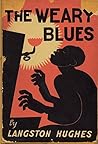
The Weary BluesThe Weary Blues by Langston Hughes
My rating: 5 of 5 stars

Available online — Lehigh University

Langston Hughes was one of the greats of 20th century American poetry, and The Weary Blues was his first collection (1926,) containing some of his most beloved (and anthologized) pieces, including: “The Negro Speaks of Rivers” and “I, too, sing America” [a.k.a. Epilogue; which plays off Whitman’s “I Hear America Singing.”] I’ve always loved how Hughes used the rhythm of repetition and the technique of standing in for the everyman (as he famously did in “The Negro Speaks of Rivers,” but in other of his poems as well.) He also had a gift for concision.

These sixty-nine poems deal in a wide range of themes including race, travel, love, etc. Music, be it Jazz or Blues, is an ever-present force in Hughes work. In addition to the aforementioned classics, among my favorite pieces from the collection are: “Winter Moon,” “March Moon,” “‘The Night is Beautiful'” [a.k.a. Poem,] “When Sue Wears Red,” “Water Front Streets,” “Long Trip,” “Seascape,” “Suicide’s Note,” “Songs to the Dark,” and “Lament for Dark Peoples.”

I’d highly recommend this collection for poetry readers.

View all my reviews

PROMPT: Changed

Daily writing prompt
What’s a piece of media (book, movie, song) that changed how you see the world?

Leaves of Grass by Walt Whitman.

Also: Quiet by Susan Cain; Water Margin by Shī Nài’ān; and Self-Reliance and Other Essays by Ralph Waldo Emerson

BOOK: “Fight Club” by Chuck Palahniuk

Fight ClubFight Club by Chuck Palahniuk
My rating: 5 of 5 stars

Publisher Site – W.W. Norton

Through a weird and wild storyline, Palahniuk offers insight into two (intertwined) crises of identity that have only grown more prominent since the book (and the David Fincher film adapted from it) came out in the late 90’s. First and foremost, there is a craving for, yet confusion about the nature of, masculinity. As men raised by women struggle to ape masculine behavior only to over-emphasize conspicuous features such as violence and aggression while missing more subtle aspects such as the instinct to protect and a grasp of responsibility, self-empowerment, and fortitude. The second identity crisis is self as consumer, wherein people start linking who they are to their consumption, and this becomes demoralizing because it’s such a hallow way of seeing oneself. (I say the crises are “intertwined” because it’s a long and painful fall to go from “protector” to “consumer-” the latter having nothing at all to feel good about.)

This is one of those books that people either find illuminating or unreadable. There is a lot in the book that is stomach-turning. For many, this will be the violence, but — for me, and I suspect many others, — it’s the “mischievous” pranks that Tyler Durden and the unnamed lead “play” as they work as waiters. Upton Sinclair once said of The Jungle that he aimed for the reader’s heart (i.e. to bring awareness to labor issues in the meat packing industry) and hit them square in the stomach (i.e. people’s main takeaway was that how their food was made was gross and needed to be corrected.) This may be a similar situation. Palahniuk, I suspect, is trying to show how these full-grown men in some ways haven’t escaped the grossest era of boyhood as they attempt to find their power in the world, but it mostly reminded me to not eat at banquets or other gatherings of rich people.

I found this to be an insightful book and would highly recommend it for anyone trying to figure out some of the oddities of the world in which we find ourselves living.

View all my reviews

BOOKS: “Four Quartets” by T. S. Eliot

Four QuartetsFour Quartets by T.S. Eliot
My rating: 5 of 5 stars

Available online

Four Quartets is a collection of four long poems by T.S. Eliot, written over several years before and during the Second World War. The poems are: “Burnt Norton,” “East Coker,” “The Dry Salvages,” and “Little Gidding.” They share a theme of metaphysical inquiry, particularly regarding time and man’s relation therewith. The book came out about five years before Eliot won the Nobel Prize for Literature, and was the last of his major poetry collections, and so it reflects a mature phase of his poetry writing.

I loved this collection, which combines food for thought with beautiful turn of phrase. As far as I could see, most of the disgruntlement with the collection had to do with Eliot’s religious / spiritual references, which offended the sensibilities of some of the most stridently atheist / agnostic individuals in the poetic community. Besides reflecting his own Christian worldview, Eliot had clearly been moved by reading the Bhagavad Gita and makes a number of references to Krishna.

Four Quartets is a pleasant read and I’d highly recommend it for poetry readers.

View all my reviews

PROMPT: Read Over

Daily writing prompt
What book could you read over and over again?

孙子兵法, i.e. “The Art of War” by Sunzi (孙子) is one that I can and have read more than twice.

I’m not a huge re-reader, but others include “Patanjali’s Yoga Sutras,” “Hamlet,” “Leaves of Grass,” and Miyamoto Musashi’s “Book of Five Rings.” Translated literature is often good for more than one read because translations vary so much.

PROMPT: Character

Daily writing prompt
If you could be a character from a book or film, who would you be? Why?

Tom Sawyer. I have zero capacity to convince anyone that whitewashing is powerful fun. It’s a skill I envy.

BOOK: Transient Worlds by Arthur Sze

Transient Worlds: On Translating PoetryTransient Worlds: On Translating Poetry by Arthur Sze
My rating: 5 of 5 stars

Publisher Site — Copper Canyon

Release Date: April 14, 2026

Just as people are fond of saying, “the book is always better than the movie,” there is an idea — widely accepted as truism — that goes, “a translation can never be as good as its source poem.” I don’t buy either of those views, but there’s certainly truth to the notion that a poetic translation can never perfectly echo style, tone, sound quality, and meaning at once. Each language is unique, and the more different two languages are the more one has to make decisions about what one will emulate and what one will craft. It’s also true that any translation will represent a drift away from the culture of the original (which is not identical to being worse.) In short, any poetry translation that seeks to be good had better be a work of art unto itself.

The current US Poet Laureate (as of this writing,) Arthur Sze, has written a book to help readers intelligently navigate the troubled waters of poetic translation. Sze certainly has insight, having not only translated Chinese poems himself, but also being Professor Emeritus at the Institute of American Indian Arts, he has multiple cultural lenses with which to view poetry.

This book consists of fifteen chapters exploring poems and poetry excerpts from around the globe — and their translations. The twelve diverse source languages include: Chinese, Navajo, French, Ancient Greek, Hebrew, Danish, and Russian. The original poets include Tao Qian, Guillaume Apollinaire, Homer, Kobayashi Issa, Pablo Neruda, Marina Tsvetaeva, Aime Cesaire, Najwan Darwish, and Mirabai. Many of the chapters include multiple translations, offering the reader a means to see how different translators take to the task. Others offer only a single translation but turn their attention to specific considerations of translation. In one case, there is an interview with the translator. I enjoyed this varied approach to the exploring the topic. It made for a book with zero monotony and many facets.

If you are a poet or a poetry reader who enjoys reading poetry from varied languages or source languages, I’d highly recommend this book.

View all my reviews

BOOK: “Collected Sonnets” by Edna St. Vincent Millay

Collected SonnetsCollected Sonnets by Edna St. Vincent Millay
My rating: 5 of 5 stars

Publisher site – HarperCollins

NOTE: The version that I read was the earlier edition containing 161 sonnets, it did not include the sonnets from Mine the Harvest.

My earliest remembered exposure to the work of Edna St. Vincent Millay was to a couple of her more anthologized sonnets (included herein:) “I, being born a woman and distressed” and “What lips my lips have kissed, and where, and why.” I found those poems free of the sappy sentimentality that I’d often associated with the form, and that was what attracted to me to this collection, a collection which I’m happy to say shares the same tone, a tone that leans edgy and irreverent. (At least for its day.) One sees this from the opening poem, “Thou art not lovelier than lilacs, no,” which pays homage to Shakespeare’s Sonnet 130 (i.e. “My mistress’ eyes are nothing like the sun,”) the poem which began the war on hyperbole in love poetry.

Millay’s collection is not all love poetry (though it is largely so.) It does also deal in nature and includes a few epitaphs (including for the likes of mankind, [see: Sonnet cxliv.]) Millay does work in both the Petrarchan and English / Shakespearean sonnet forms.

I’d highly recommend this collection for poetry readers, particularly those who like sonnets.

View all my reviews

BOOK: “Wildness” by Lydia Willsky-Ciollo

Wildness: Henry David Thoreau and the Making of an American TheologyWildness: Henry David Thoreau and the Making of an American Theology by Lydia Willsky-Ciollo
My rating: 4 of 5 stars

Publisher — University of Notre Dame Press

Release Date: March 1, 2026

Willsky-Ciollo argues in this book that Thoreau built a uniquely American theology with nature at its core, a theology that didn’t just draw on Greco-Roman philosophy and Abrahamic religion (as other schools of thought have) but also on Indian ideas of both the South Asian and Native American varieties. (The book speaks more extensively to the latter.)

For a scholarly work, this book is readable and doesn’t require jargon proficiency or any special academic background. I can’t say I found it compelling to think of Thoreau’s teachings as a theology (rather than a philosophy, or a strain of Transcendentalism.) That said, to someone outside the field, I don’t think that is a particularly interesting question, given that scholarly disciplines are inherently subjectively defined and prone to mutability. What’s more important to me is that I did gain numerous insights from this book, particularly regarding Thoreau’s unfinished final work Wild Fruits (which is discussed in some detail,) and Thoreau’s views on American Indians and their influence on his worldview.

If you’re interested in Thoreau, and looking for some insight that one might not gain from reading his most well-known works, this is a book well worth reading.

View all my reviews

BOOK: “Forty-Three Ways of Looking at Hemingway” by Jeffrey Meyers

Forty-Three Ways of Looking at HemingwayForty-Three Ways of Looking at Hemingway by Jeffrey Meyers
My rating: 5 of 5 stars

Publisher Website – LSU Press

I enjoyed this approach to biography. Instead of telling Hemingway’s life story chronologically or even via some other form of overarching arc, Meyers gives us forty-three chapters that each shine a light on a different facet of Hemingway. In many cases, these facets are Hemingway’s relationships to other people: writers, artists, wives, and other personalities. In other cases, the facets are events or concepts, such as his suicide, war, achievements, etc.

This approach can, on occasion, lead to repetition, but I find repetition that is not overbearing to be useful in taking in key information.

If you are interested in what made Hemingway tick, I’d highly recommend that you read this book.

View all my reviews