PROMPT: Read More

Daily writing prompt
Which book have you read more than any other?

孙子兵法 (i.e. Sun Tzu’s “Art of War“) or Hamlet, perhaps. It would have to be something short, important, and that bore new fruit upon revisit.

But, in truth, it’s not a score I’ve kept. I just know there are few books I’ve re-read, and exceedingly few that I’ve read more than twice. There are too many good books to get stuck on any of them without great cause.

BOOKS: “Know Yourself and Your Enemy” by Qixia Yu

Know Yourself and Your Enemy 知己知彼百战不殆 (Bilingual Chinese Idiom Stories)Know Yourself and Your Enemy 知己知彼百战不殆 by Qixia Yu
My rating: 5 of 5 stars

Author Amazon Site

This illustrated bilingual book tells a story out of the Romance of the Three Kingdoms. It’s a popular tale of strategy in which the renowned strategist (and then Prime Minister) Zhuge Liang outfoxed the (also) renowned General Sima Yi as the latter brought a large army to the walls of the capital where Zhuge Liang was residing. The city was only weakly guarded because the bulk of forces were on campaign and they could not be recalled in time to be of service. Were it not for Zhuge Liang’s insightful stratagem, the capital would have been lost.

This is a great book for those learning Chinese for a few reasons. First, it contains pinyin and English translation. Secondly, it’s illustrated in a way that is not only aesthetically pleasing but which also helps a learner follow events – despite gaps in language understanding. Third, it’s an interesting story, and a nice break from the usual (re: dreadfully boring) beginner level reading fare. Finally, it’s a nice bite-sized chunk of writing for someone who still has to think out words and sentences. I don’t know that the author restricted themselves to any particular HSK level. It seemed to have some language beyond what was in HSK 3 / 4 readers I’ve read but is still relatively simple and straightforward in its language. Restricting to a simple level might be an issue with any historical work because there are going to be terms that are important but certainly aren’t among the most common words today (e.g. halberd.)

If you’re learning Chinese and are interested in strategy, martial arts, history, or Chinese literary classics, I’d highly recommend reading this book.

View all my reviews

PROMPT: Read Over

Daily writing prompt
What book could you read over and over again?

孙子兵法, i.e. “The Art of War” by Sunzi (孙子) is one that I can and have read more than twice.

I’m not a huge re-reader, but others include “Patanjali’s Yoga Sutras,” “Hamlet,” “Leaves of Grass,” and Miyamoto Musashi’s “Book of Five Rings.” Translated literature is often good for more than one read because translations vary so much.

PROMPT: Negative Feelings

Daily writing prompt
What strategies do you use to cope with negative feelings?

Sakshi Bhavan, the dispassionate witness, giving feelings one’s full attention without allowing rumination that compounds the effect.

Not technically a strategy, but I think it’s on point.

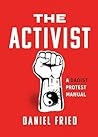
BOOKS: “The Activist” by Daniel Fried

The Activist: A Daoist Protest ManualThe Activist: A Daoist Protest Manual by Daniel Fried
My rating: 4 of 5 stars

Publisher Page — Prometheus Books/

Release date: March 3, 2026

Taoist philosophy has been applied to many a subject over the centuries, from war to business to governance to relationships, but this is the first time I’ve seen it applied to activism in a substantive way. The book caught my eye because I’ve long recognized the central truth behind Fried’s work, which is that the tactics and mindsets of protesters often does them no favors and may even ensure failure (if one presumes the objective to be to change behavior and attitudes on a given topic into line with the protesters’ stance.) The problem is that protesters are often angry and combative, characteristics which may keep the choir (preaching to itself) warm and feeling self-righteous, but which seldom brings in new converts from among the undecided [let alone from the opposing side.] And if you didn’t need converts to your side, you wouldn’t have to protest in the first place. Given this tendency, Taoism could be argued to be an ideal source of strategy. Taoism proposes going with the grain, not leading with a fight, and avoiding useless activity.

This book provides interesting food-for-thought about how protesters might have more impact by adopting fewer belligerent and self-serving tactics. Unfortunately, the book also has stretches of stream-of-consciousness writing that — while perhaps consistent with the Taoist love of spontaneity — can be a bit of a strain on the reader’s ability to follow. This mostly takes place in the latter chapters.

I found this book to be intriguing. I can’t say that I came away from it having answered the question of whether Taoist philosophy is reconcilable with activism on a practical level. Taoism asks one to let the natural unfold, while protest movements want to guide a society in a particular direction (notably one by definition at odds which that which has fallen into place organically.) It’s not for lack of discussion that I haven’t reached a conclusion, but rather that questions remain for me on the pragmatic level (rather than the level of theory.) That said, I found the book well worth reading, despite a few points of low readability.

View all my reviews

BOOK REVIEW: “War is a Racket” by Smedley D. Butler

War is a Racket: The Antiwar Classic by America's Most Decorated SoldierWar is a Racket: The Antiwar Classic by America’s Most Decorated Soldier by Smedley D. Butler
My rating: 5 of 5 stars

PDF available online

This impassioned essay is a call for a more restrained — some would call it isolationist — application of military force. Regardless of how one might feel about the isolationist stance, you’ll likely be moved by the essay’s central premise that we have too much war because it’s profitable — not profitable for those who fight and die in wars but for businessmen and politicians.

Butler, a US Marine Corps General, was a fascinating character — a two-time Congressional Medal of Honor recipient who served in the Philippines, Tianjin (during the Boxer Rebellion,) at various places across Central America and the Caribbean, and in the First World War in Europe. He was also a whistleblower about a plot to unseat FDR. Butler writes in a conversational style that exudes a commanding presence.

I’d highly recommend this essay for its critical insights by one of the most impressive Marine Corp officers of all time.

View all my reviews

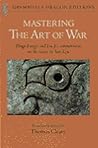
BOOK: “Mastering the Art of War” by Zhuge Liang & Liu Ji [Trans. & Ed. by Thomas Cleary

Mastering the Art of War: Commentaries on Sun Tzu's Classic (Shambhala Dragon Editions)Mastering the Art of War: Commentaries on Sun Tzu’s Classic by Zhuge Liang
My rating: 5 of 5 stars

Publisher Site — Shambhala

This book combines the writings of two prominent Chinese strategists, Zhuge Liang and Liu Ji. Both men came after Sunzi, author of The Art of War, and Cleary describes these two works as commentaries on the work of Sunzi.

Zhuge Liang’s piece is called The Way of the General and it collects short essays from Records of the Loyal Lord of Warriors. Like many, I first became acquainted with Zhuge Liang from his novelized personage in the Chinese classic, Romance of the Three Kingdoms, in which he is called “Kongming” and is a force to be reckoned with in service to Liu Bei of the Shu Kingdom. Zhuge Liang’s ideas are conveyed as short topical discussions, not unlike Sunzi’s work.

Liu Ji’s manual, Lessons of War, is a bit different in that the explanation of the strategy is briefer than in the works of Sunzi or Zhuge Liang, but Liu Ji always includes an exemplary story from history. This makes Liu Ji’s work a little more narrative. It is interesting to see the varied approach to conveyance of the concepts under consideration.

Because the works of Zhuge Liang and Liu Ji are thin, the book has a fair amount of padding in the form of Translator’s Introductions, both an overall Introduction and one per included work. I was happy with how these were done. They do not drone on but rather give some background that will be useful to the average reader without getting lost in the weeds.

If you’re interested in strategy, be it applicable to war or otherwise, I’d highly recommend this book.

View all my reviews

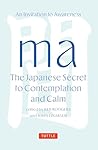
BOOK: “Ma” ed. by Ken Rodgers & John Einarsen

Ma: The Japanese Secret to Contemplation and Calm: An Invitation to AwarenessMa: The Japanese Secret to Contemplation and Calm: An Invitation to Awareness by Ken Rodgers
My rating: 5 of 5 stars

Publisher Site – Tuttle

Release date: October 27, 2025

My introduction to the concept of ma came as a young martial arts student, where it was thought of as distancing, but not distancing in a static sense — rather in a way that incorporated timing as well [so, more of an interval in space-time.] I would later hear the term applied to domains such as joke telling in which perfection of pause could be as critical to a laugh as the words that comprised the joke. This book expanded my understanding to numerous realms I’d never much considered before such as architecture, photography, and gardening. (Incidentally, this book does contain a chapter addressing the martial arts aspect of ma, though not the comedic ramifications of the concept.)

I haven’t seen any other books that focus entirely on this concept. Ma is often mentioned in books on Japanese philosophy and aesthetics but rarely with such depth and singular attention. If there are other books that drill down into the concept in this way, I doubt they are as readable as this one (that is, I suspect such a book would be intensely philosophic and scholarly.) So, this book seems to have a solid niche.

There were a couple chapters that took my thinking on the subject to entirely new places. One was on ma in the domain of virtual reality. This raised interesting metaphysical considerations. Another was about the Heart Sutra and how the translations used have led to longstanding misunderstandings of that work.

If you are interested in art and or philosophy, I’d highly recommend this book.

View all my reviews

FIVE WISE LINES [January 2025]

“Reality is that which, when you stop believing in it, does not go away.”

Philip k. dick

“The Wu and the Yue peoples hate each other. But in the same boat in a storm, they work together like left and right hands.”

SunZi in The ART of War

“Travel changes you. As you move through this life and this world you change things slightly, you leave marks behind, however small. And in return, life – and travel – leaves marks on you. Most of the time, those marks – on your body or on your heart – are beautiful. Often, though, they hurt.”

anthony bourdain

What allows great kings and generals to win, more frequently than ordinary men, is foreknowledge.
Foreknowledge cannot be attained by spirits or deduced or calculated.”

Sunzi in The ART of war

“Only those who risk going too far can possibly find out how far one can go.”

T. S. Eliot

BOOKS: 孙子兵法 [Sunzi’s Art of War] by Sunzi

孙子兵法白话全译孙子兵法白话全译 by 史哲 文
My rating: 5 of 5 stars

Available online – YellowBridge

In thirteen short chapters, Sunzi lays out a masterclass in strategy. One sees in Sunzi’s work the mark of a Taoist mindset, seeing it in the book’s emphasis on engaging in warfare only when necessary, doing things the easy way whenever possible, and never letting one’s ego write checks one isn’t able to cash in lives.

There is good reason that this is one of the world’s most well-known (if not the most well-known) treatise on warfare. Far from being complicated and technical, this guide is full of pithy teachings such as: “War is the way of deception.” “No country ever benefited from a long war.” “Defeating the enemy without fighting is supreme excellence.” “To be undefeated lies in oneself, to be victorious lies in the enemy.” “Know the enemy and yourself and victory is assured; know heaven and earth and victory is complete.” (And these teachings are even more concise in the original Chinese.)

In addition to basics like leadership, maneuver, and terrain, the book devotes chapters to both the use of fire and spies in warfare. (One’s level of understanding is central to strategic victory throughout Sunzi’s teachings.)

I’d highly recommend this book for anyone interested in strategy, martial arts, or other strategic pursuits. The book may be ancient, but it’s not obsolete by any means.

View all my reviews