FIVE WISE LINES [October 2025]

Gwalior Fort on Gopachal Hill in Gwalior, Madhya Pradesh, India

I had better never see a book
than to be warped by its attraction clean out of my own orbit,
and made a satellite instead of a system.

ralph waldo emerson; The american scholar

Free should the scholar be, — free and brave.

Ralph waldo emerson; The American Scholar

If you think adventure is dangerous, try routine, it is lethal.

Paulo coelho

What you’re supposed to do when you
don’t like a thing is change it.
If you can’t change it,
change the way you think about it.
Don’t complain.

Maya angelou

No man ever steps in the same river twice,
for it’s not the same river
and he’s not the same man.

Heraclitus

PLAY: “A Streetcar Named Desire” by Tennessee Williams

A Streetcar Named DesireA Streetcar Named Desire by Tennessee Williams
My rating: 5 of 5 stars

Available online – Internet Archive

I’ve never seen the play, nor the movie. Of course, this is one of those works that has so scrawled itself across pop-culture that it’s impossible to go in without some reference from it kicking around in one’s brain, be it the pained shout of “STELLA!” or character names like “Blanche DuBois” or “Stanley Kowalski.” Even the name of the plantation on which the fallen socialite sisters grew up, Belle Reve, has been lent to a prison for supernatural villains in the world of DC Comics.

At the play’s heart are two sisters raised in a wealthy Southern family. One, Stella, has adapted well to the family’s fall from grace. Stella has married a fellow who is rough around the edges (to say the least,) Stanley, but Stella is satisfied that Stanley is a dependable provider — even if he does rough her up a bit now and again. The other sister, Blanche, hasn’t coped nearly so well. Blanche lies perpetually to try to shield herself from reality — and to present a more appealing reality to others. It is when Blanche, having nowhere else to go, moves into the small New Orleans apartment of Stanley and Stella that the tension is set to form the play’s story.

I enjoyed reading this play. It’s well-paced and effectively mixes comedy and drama. It’s in character building where the play shines. The main characters are well-defined and behave quite believably within the context of each one’s neuroses and vices. The constant conflict between Blanche and Stanley drives the story.

I’d highly recommend this for readers of plays and / or of American Literature.

View all my reviews

BOOK: “The Virtues of the Table” by Julian Baggini

The Virtues of the Table: How to Eat and ThinkThe Virtues of the Table: How to Eat and Think by Julian Baggini
My rating: 4 of 5 stars

Publisher Site – Granta

This book examines the nexus of food and philosophy, from the ethics of butchery to the virtue of authenticity to whether hedonism is a necessary component of eating philosophically. Much of the book challenges or debates conventional wisdoms such as whether local foods are inherently better, whether dining is always and everywhere a social activity (or should be,) and whether organic is always preferable. The book covers a wide variety of topics including: mindfulness, gratitude, skepticism, fasting, willpower, spontaneity, technology, etc.

The book offers many ideas for reflection though sometimes it felt like it rambled on for more than the issue in question necessitated.

Each chapter ends with a discussion of a particular food and its preparation as thought relevant by the author. This is a nice grounding mechanism for discussion that tends otherwise to be cerebral and philosophic.

I’d recommend this book for anyone interested in thinking more about food and its intersection with philosophy of life.

View all my reviews
BOOKS: “John Brown” by W.E.B. Du Bois

John BrownJohn Brown by W.E.B. Du Bois
My rating: 5 of 5 stars

Available free online at Project Gutenberg

“John Brown’s Raid on Harpers Ferry” is one of those historic events like the “Teapot Dome Scandal” that American kids have to memorize a rote fact about to regurgitate on an American History test a couple times during their scholastic lives, never to be thought of much again, forever a familiar name lacking all depth of understanding. (At least that’s how it was in my day.) Unlike the Teapot Dome Scandal, which I suspect is not learned about in detail because it was somewhat complex and boring, I think the minimalist coverage of John Brown might reflect a bit of national embarrassment. For Brown’s tale is not complicated, and it’s certainly not boring. Brown thought slavery was an abomination, and he devoted his life to freeing slaves by whatever means he could, which culminated in a raid on an arsenal at Harper’s Ferry, West Virgina, at the convergence of the Potomac and Shenandoah Rivers, a raid intended to liberate weapons to the cause of arming freed slaves and other abolitionist fighters.

It’s a shame that more is not learned about John Brown because he was such a fascinating and principled individual, and in a sense his story isn’t just an embarrassing tale of a sparse few virtuous people against a mainstream that was — at best — indifferent to slavery. But there is a potential for pride in the fact that Brown and those who fought with him were able to see slavery for what it was and to stand strong against that mainstream, to make the fight of the oppressed their fight and — in the case of Brown and others — to pay the ultimate price in the conduct of that fight.

W.E.B. Du Bois’ biography of John Brown came out in 1909 and may not be written in the novel-esque style that a writer today would write it, but it is well-written and readable. Du Bois’ book is a full biography of Brown, if focused on his abolitionist aspect. Du Bois tells a little of Brown’s backstory and of his work life and then explores his experiences fighting in Kansas. However, this book does really shine in its account of the Harpers Ferry Raid and its aftermath.

Readers interested in American History or the biographies of virtuous individuals are urged to read this account of the life of John Brown.

View all my reviews

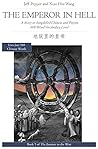
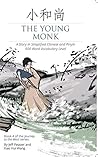
BOOK: “Trouble in Heaven” [Vol. 2 “Journey to the West” (西游记) Series] ed. by Jeff Pepper / trans. by Xiao Hui Wang

Trouble in Heaven: A Story in Simplified Chinese and Pinyin, 600 Word Vocabulary Level (Journey to the West in Simplified Chinese)Trouble in Heaven: A Story in Simplified Chinese and Pinyin, 600 Word Vocabulary Level by Jeff Pepper
My rating: 5 of 5 stars

Publisher Site – Imagin8

This is an abridged and linguistically simplified telling of the story of chapters three and four of the Chinese classic novel, Journey to the West. It is written and organized for learners of Chinese who would like to start reading in Chinese.

The events covered in this volume are Monkey King’s (a.k.a. Sun Wukong’s) acquisition of weapons for himself and his companions, his discovery that his name is on the registry of the underworld (and, thus, he’s not as immortal as he’d believed at the end of Vol. 1,) his ascension to heaven where he is given the job of stable manager (a life and job he is happy with until his discovery that it is the lowest level job in heaven,) and his skirmishes with the forces of heaven when he takes on the title “Great Sage Equal to Heaven.”

The story is conveyed in Simplified Chinese script, and has pinyin interspersed at the paragraph level. I like this arrangement because one has access to the pinyin as needed, but it’s not immediately adjacent (as it is with many starter readers,) such that it’s not possible to “cheat” by seeing the pinyin in one’s peripheral vision. It also offers an English language telling of the story, but after the entirety of the Chinese. The book also has three glossaries that collectively define all the terms used in the book. The first contains all the proper nouns, the second is all the basic words, and the last is all the words that are a little outside the most basic reading level. (The latter are also footnoted throughout the text.)

I’m enjoying this series. It’s a gripping story, it’s arranged in a way that encourages one read by the Chinese characters alone, and it is readable by the most beginning level student. That’s a combination that isn’t readily found. I’d highly recommend this series for those learning to read Chinese.


View all my reviews

BOOKS; “Rental Person Who Does Nothing” by Shoji Morimoto

Rental Person Who Does NothingRental Person Who Does Nothing by Shoji Morimoto
My rating: 5 of 5 stars

Publisher Site — Harper Collins

This quirky little book is the memoir of a man who formed a business lending himself out as “rental person who does nothing.” At the time the book came out, Morimoto did this without charging his “customers” anything except travel expenses and any food and beverages consumed as part of the activity in question. [As I understand it, he eventually began charging a per session fee ($85 USD at the time of the 2022 BBC piece on him that I watched.)] The book does discuss Morimoto’s thoughts about how to charge (i.e. hourly or per session,) how much to charge, whether to find a different financing model (e.g. sponsorship or patronage,) and why he ultimately rejected them all (at least for a time.) In fact, the whole penultimate chapter (ch. 4) is about the economics of his business.

The most interesting aspect of the book is the psychological insight on offer. The first question that arises is why people would use a stranger for these activities, and not a friend. One might jump to the conclusion that the people who use his service have no friends, but this is generally wrong. There are a number of reasons why people who have friends use his service. First, many times friends can’t just sit and listen empathetically, but rather they have to try to solve the problem. This can be irritating because it is often dismissive of the challenges confronting the other person. But also, as Morimoto points out, it also creates a hierarchy (a top dog) in what would otherwise be a co-equal relationship. A fascinating second factor pointed out by the author is that adults, unlike children, rarely have general-purpose friends. Adults, instead, have contextual friends. So, if one wants to engage in an activity that is outside the domain of one’s contextual (work, bar, hobby, etc.) friendship, it might not be easy. There are many other psychological insights relating to what people ask him to do, the issue of reciprocity, and what Morimoto defines as “doing nothing” for the purposes of this business.

I found this quick and simple book to be packed with insights into human nature, and I’d highly recommend it for readers interested in what makes people tick.

View all my reviews

BOOK REVIEW: “War is a Racket” by Smedley D. Butler

War is a Racket: The Antiwar Classic by America's Most Decorated SoldierWar is a Racket: The Antiwar Classic by America’s Most Decorated Soldier by Smedley D. Butler
My rating: 5 of 5 stars

PDF available online

This impassioned essay is a call for a more restrained — some would call it isolationist — application of military force. Regardless of how one might feel about the isolationist stance, you’ll likely be moved by the essay’s central premise that we have too much war because it’s profitable — not profitable for those who fight and die in wars but for businessmen and politicians.

Butler, a US Marine Corps General, was a fascinating character — a two-time Congressional Medal of Honor recipient who served in the Philippines, Tianjin (during the Boxer Rebellion,) at various places across Central America and the Caribbean, and in the First World War in Europe. He was also a whistleblower about a plot to unseat FDR. Butler writes in a conversational style that exudes a commanding presence.

I’d highly recommend this essay for its critical insights by one of the most impressive Marine Corp officers of all time.

View all my reviews

BOOK: “Mastering the Art of War” by Zhuge Liang & Liu Ji [Trans. & Ed. by Thomas Cleary

Mastering the Art of War: Commentaries on Sun Tzu's Classic (Shambhala Dragon Editions)Mastering the Art of War: Commentaries on Sun Tzu’s Classic by Zhuge Liang
My rating: 5 of 5 stars

Publisher Site — Shambhala

This book combines the writings of two prominent Chinese strategists, Zhuge Liang and Liu Ji. Both men came after Sunzi, author of The Art of War, and Cleary describes these two works as commentaries on the work of Sunzi.

Zhuge Liang’s piece is called The Way of the General and it collects short essays from Records of the Loyal Lord of Warriors. Like many, I first became acquainted with Zhuge Liang from his novelized personage in the Chinese classic, Romance of the Three Kingdoms, in which he is called “Kongming” and is a force to be reckoned with in service to Liu Bei of the Shu Kingdom. Zhuge Liang’s ideas are conveyed as short topical discussions, not unlike Sunzi’s work.

Liu Ji’s manual, Lessons of War, is a bit different in that the explanation of the strategy is briefer than in the works of Sunzi or Zhuge Liang, but Liu Ji always includes an exemplary story from history. This makes Liu Ji’s work a little more narrative. It is interesting to see the varied approach to conveyance of the concepts under consideration.

Because the works of Zhuge Liang and Liu Ji are thin, the book has a fair amount of padding in the form of Translator’s Introductions, both an overall Introduction and one per included work. I was happy with how these were done. They do not drone on but rather give some background that will be useful to the average reader without getting lost in the weeds.

If you’re interested in strategy, be it applicable to war or otherwise, I’d highly recommend this book.

View all my reviews

PROMPT: Topics

Daily writing prompt
Which topics would you like to be more informed about?

I’d like to know more about the capabilities and limitations of AI, a rabbit-hole that I have only recently stumbled upon, but which I am tumbling down hard. Particularly, how to best use it for language acquisition as I am currently learning Chinese and would like to increase my literacy so I can open myself up to a whole new world of books.

I’m also curious about pratfalls and physical comedy all of a sudden.

5 Books to Read If You Want to Live

Taken on the Annapurna Sanctuary Trail in Nepal.

Over the years, I’ve read many books about survival in extreme or unexpected situations. Here are five of my favorites.

THE UNTHINKABLE by Amanda Ripley [Full Review]

What I like about this book: Ripley focuses heavily on the topic of mindset while exploring a wide range of survival situations from being stranded in a lifeboat to being in the Twin Towers on 9/11. It’s a fascinating – as well as educational – book.

SURVIVAL AT THE EXTREMES by Kenneth Kamler [Full Review]

What I like about this book: This book focuses on surviving in all the places humans are not adapted to, places where one cannot live for long without ongoing technological support. These places include Mt. Everest (with which the author has personal experience,) the ocean, and the harshest of deserts. Kamler is a medical doctor and the book, therefore, does a good job of explaining the limits of human physiology.

EXTREME FEAR by Jeff Wise [Full Review]

What I like about this book: Wise’s book examines how fear can work against us in challenging situations (e.g. causing one to freeze at the wrong time) and what methods have been developed to overcome such crippling or inappropriate fear responses. This book is not entirely about life-and-death survival, but it does have a lot to say that is relevant to the subject.

INTO THE WILD by Jon Krakauer [Full Review]

What I like about this book: This book is not like the others. There are no physical or mental techniques for survival described in it, nor discussions of physiology. Rather, it is an extremely well-written cautionary tale about a young man who goes out into the wilderness and gets in over his head. It is highly readable food-for-thought.

98.6 by Cody Lundin [Full Review]

What I like about this book: This is the closest thing to an actual survival manual on my list. But it’s written in conversational, folksy style that makes it easy to read, despite the daunting subject matter. As the title suggests, Lundin’s central premise is that one must keep the body burning at its appropriate temperature, or else…