How does your mindset affect your financial success?
Nonlinearly. First, positively with increasing marginality. Then, with decreasing marginality. And, finally, negatively.

How does your mindset affect your financial success?
Nonlinearly. First, positively with increasing marginality. Then, with decreasing marginality. And, finally, negatively.
I can’t claim I’ve ever done as well as Peter Minuit (buying Manhattan for $24) or Thomas Jefferson (picking up the Louisiana Territory at $0.04 / acre,) or the USG (acquiring Alaska for $0.02 / acre.)
I once bought a nice stick (which still have,) but it was not a tremendous bargain.
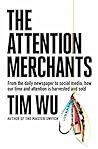 The Attention Merchants: The Epic Scramble to Get Inside Our Heads by Tim Wu
I’ll preface my comment by saying this kind of thinking is fraught with peril. The law of unintended consequences makes knowing whether one’s counterfactual would produce the intended results impossible.
For example, in the US (and some other countries of the developed world,) there has been a proclivity to run up massive debt — both budget and trade. In the US, servicing debt has passed defense spending and (given current trends) will surpass entitlements to become the largest component of the Federal deficit. I am among those who think this will probably end catastrophically, given the complete lack of effort to correct the situation. (Jaw-jacking and firing civil servants whose salaries make up a pittance in comparison to interest payments — while building yet more debt-inducing budgets — has [unsurprisingly] not proved useful.)
So, this is definitely a trend I wish didn’t exist, but almost certainly the American and world economies would not be as well off to date as they are had this trend been kept in check, and it’s possible something might be figured out that allows a softer landing than I presently expect. The old man lost his horse. Good news? Bad news? Who’s to say?
I think cell phones will be replaced by cheap cyborg implants that fulfill the same myriad functions and more. Just as we were convinced that we were being given a great benefit with social media, when — in fact — we were just handing over our attention and data on the cheap. This time we’ll be signing away a great deal more — we’ll be meat puppets for the billionaires, carrying out consumption function programming as ignorantly blissful as Cypher from The Matrix. Welcome to the Cyber-Sheep economy. BAHaaaaah.
Proviso: People (me included) are shite at forecasting. We call broken clocks “genius” based on those two times a day they are right, but forecasting genius is just selection bias plus Mrs. Cleo pseudo-psychic tactics (be vague, sound specific.) Also, remember we are always one nuclear winter away from flint knapping being the prevailing mode of technology.
I don’t know and I kind of hate the term “loyal” applied to commercial and / or attention capturing domains. There can’t be any reasonable expectation that someone who bought your product once (either in cash or attention) owes you their attention and / or dollars in the future. If the answer is anything else than do your best work EVERY. SINGLE. TIME, then I think we’ve jumped the shark as a species.
I would love to see an era in which AI and robotics frees up humans to work on the project of being better humans physically, mentally, creatively, emotionally, artistically, etc.
However, I suspect that on the way to that point there will be periods of dystopia, chaos, and quasi-Armageddon. As near as I can tell, it will involve the invention of a new form of economy (and possibly governance,) which I haven’t seen anyone discussing in the merited depths.
Absolutely. The IKEA Nesting Instinct has run amok, and Consumer is a definitionally discontented state of being.
Personally, I hate that I know what a duvet is.
Anything but myself. Unfortunately, that seems to be the main mode of social discourse in the world. People mostly want to hear enough about me that they feel justified in telling me more about them. I’m an ideas guy: philosophy, science, literature, technology, economy, international affairs, etc. (Also, travel, but that only works with travelers — a tiny segment of the population.)
The substance of financial crises. Not to mention Quantum Mechanics and Calculus. Really, there’s virtually nothing that most people do understand. Have you met most people? They’re kind of dim.
But seriously, the thing that has been striking me lately is how often zero-sum thinking is applied to non-zero-sum games. Put simply, people often believe they are in a situation in which every gain by someone else corresponds to a loss for them, when that is often not the case. Manipulation to convince people otherwise is in full swing. People are being led to believe they have to worry if others are complimented or are doing well because it reflects poorly on them, when — in fact — it does not (necessarily.)


 Tiger Riding for Beginners