How does your mindset affect your financial success?
Nonlinearly. First, positively with increasing marginality. Then, with decreasing marginality. And, finally, negatively.

How does your mindset affect your financial success?
Nonlinearly. First, positively with increasing marginality. Then, with decreasing marginality. And, finally, negatively.
I can’t claim I’ve ever done as well as Peter Minuit (buying Manhattan for $24) or Thomas Jefferson (picking up the Louisiana Territory at $0.04 / acre,) or the USG (acquiring Alaska for $0.02 / acre.)
I once bought a nice stick (which still have,) but it was not a tremendous bargain.
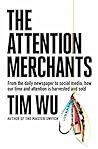 The Attention Merchants: The Epic Scramble to Get Inside Our Heads by Tim Wu
I think cell phones will be replaced by cheap cyborg implants that fulfill the same myriad functions and more. Just as we were convinced that we were being given a great benefit with social media, when — in fact — we were just handing over our attention and data on the cheap. This time we’ll be signing away a great deal more — we’ll be meat puppets for the billionaires, carrying out consumption function programming as ignorantly blissful as Cypher from The Matrix. Welcome to the Cyber-Sheep economy. BAHaaaaah.
Proviso: People (me included) are shite at forecasting. We call broken clocks “genius” based on those two times a day they are right, but forecasting genius is just selection bias plus Mrs. Cleo pseudo-psychic tactics (be vague, sound specific.) Also, remember we are always one nuclear winter away from flint knapping being the prevailing mode of technology.
I don’t know and I kind of hate the term “loyal” applied to commercial and / or attention capturing domains. There can’t be any reasonable expectation that someone who bought your product once (either in cash or attention) owes you their attention and / or dollars in the future. If the answer is anything else than do your best work EVERY. SINGLE. TIME, then I think we’ve jumped the shark as a species.
Absolutely. The IKEA Nesting Instinct has run amok, and Consumer is a definitionally discontented state of being.
Personally, I hate that I know what a duvet is.

I use my own system of criticism that inverts the usual scale, meaning that getting a zero (turds) is quite good (and increasingly rare,) and — unlike stars — if you ever reach a five-turd rating you are truly the worst. It saves time in conveying my thoughts on all sorts of things.
Try to live your life:

The substance of financial crises. Not to mention Quantum Mechanics and Calculus. Really, there’s virtually nothing that most people do understand. Have you met most people? They’re kind of dim.
But seriously, the thing that has been striking me lately is how often zero-sum thinking is applied to non-zero-sum games. Put simply, people often believe they are in a situation in which every gain by someone else corresponds to a loss for them, when that is often not the case. Manipulation to convince people otherwise is in full swing. People are being led to believe they have to worry if others are complimented or are doing well because it reflects poorly on them, when — in fact — it does not (necessarily.)
First, use what you’ve got to put food in your face. If there’s left over, acquire suitable shelter. If there’s some left, buy a book.

I heard the last gasp and wheeze
    of Industry's fatal disease.
 Why would we need any workers?
    We don't need factories!
 We'll grow it all from nanobots
    in a closet where you please.
 There'll be a 3-D printer, printing
     printers endlessly.
 You won't hear another mention
     of Industrial Disease.
 The question is not how or where
     to make it, that'll be a breeze.
 The question on economist's minds...
     that strains their expertise.
 Is how will slobs who have no jobs
     pay for their indices?


