BOOKS: “The Meaning of Travel” by Emily Thomas

The Meaning of Travel: Philosophers AbroadThe Meaning of Travel: Philosophers Abroad by Emily Thomas
My rating: 5 of 5 stars

Publisher Site – OUP

Of late, I’ve been reflecting upon the philosophical divides that exist between travelers and others (I call them “tribals,” but they are by far the majority of people — i.e. those who either don’t travel [unless required to] or who travel only in a tourist-like fashion.) As I’ve done so, I’ve been surprised to find how limited the literature is on the subject. I was, therefore, pleased to find this book. While Thomas confirmed my preliminary findings that there isn’t much of a travel-centric subdiscipline of philosophy, she also shows that it’s not for a lack of philosophers traveling and pondering travel.

While I’ve spent considerable time thinking about a philosophy of travel, I was pleasantly surprised to discover a number of topics in Thomas’s book to which I’d hardly given any thought. These were the most personally fascinating topics because they involved such uncharted territory. They include: maps as propaganda, the importance of travel to scientific discovery, the domination of male perspective in our collective understanding of travel, and the ethics of doom travel (going to vanishing places.)

The book also advanced my understanding of subjects that I’ve often contemplated — e.g. aesthetics and travel, innate / universal ideas v. culturally-tinted ones, and the connection between minimalism and travel.

If you’re interested in philosophy, travel, and the intersect of the two, this book is definitely for you. The author takes a light approach and the book’s readability is high — i.e. while it is thought-provoking, it’s aimed at a general readership rather than a scholarly one.

View all my reviews

BOOKS: “Wild Thing” by Mike Fairclough

Wild Thing: Embracing Childhood Traits in Adulthood for a Happier, More Carefree LifeWild Thing: Embracing Childhood Traits in Adulthood for a Happier, More Carefree Life by Mike Fairclough
My rating: 4 of 5 stars

Publisher Site — Hay House

This short self-help guide aims to encourage adults to recapture some of the bliss-inducing traits of children. Over six chapters, it examines the virtues of play, rule-breaking behavior, imagination, resilience, gratitude, flow, daydreaming, discovery, exploration, and awe.

Each chapter, in true self-help fashion, ends with a bulleted set of practical tips and practices. The book has an Introduction and Afterward, but no other ancillary material.

I felt the book was at its strongest when the author was discussing his personal experiences. Otherwise, the book can dip into the “no-duh” plight common among self-help style books — where it seems to state the obvious without adding depth of insight.

I enjoyed reading this book. It’s a nice, short pep-talk — though it’s unlikely to leave readers with any burning revelations or new insights.

View all my reviews

BOOKS: “A Short Stay in Hell” by Steven L. Peck

A Short Stay in HellA Short Stay in Hell by Steven L. Peck
My rating: 5 of 5 stars

Publisher Site: Strange Violin Editions

If you enjoy books like Joseph Heller’s Catch-22 or Douglas Adams’ The Hitchhiker’s Guide to the Galaxy this book will probably be right up your alley. It may not be as unrelentingly (and hilariously) absurd as H2G2, but it’s clever, amusing, and thought-provoking.

The premise is that a devout Christian finds himself in hell because it turns out that Zoroastrianism was actually the one true religion. Fortunately, Zoroastrian hell is neither as grim nor (perhaps, ironically) as fire & brimstone-oriented as the Biblical version, but it is tedious, demoralizing, and — while it might not last forever –it lasts long enough to seem like forever.

Jorge Luis Borges fans (such as myself) will find a nod to his work in the shape of said hell.

I’d highly recommend this book for readers of irreverent and humorous literary fiction. It’s funny. It’s clever. And it’s a quick read.

View all my reviews

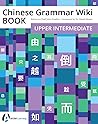
BOOKS: “Chinese Grammar Wiki BOOK: Intermediate” ed. by John Pasden, et. al.

Chinese Grammar Wiki BOOK: IntermediateChinese Grammar Wiki BOOK: Intermediate by John Pasden
My rating: 5 of 5 stars

Publisher Site – AllSet

I’ve found this series helpful in offering a basic guide to grammar for learning Mandarin through Simplified Characters and pinyin. It provides plenty of examples and is not dense with explanation and elaboration but rather focuses on the core principles as well as demonstrations of common pitfalls. It covers the B1 grammar points which is a designation used by, but not original to, the series. (As far as I can tell, it’s a European standard that has been applied across languages to organize the concepts one should be able to express at a given level of language learning.

This is the second book of the series that I’ve worked through (the third if one counts the “Just the Basics” level which is a subset of the Beginner level book,) and I intend to continue on to the “Upper Intermediate” guide.

This may not be the series you want if you’re a linguist looking for nuanced insight into Chinese grammar, but it’s excellent for your average language learner. [It also seems to be quite affordable compared to many competing grammar books and series.]

View all my reviews

BOOKS: “Sightseeing” by Rattawut Lapcharoensap

SightseeingSightseeing by Rattawut Lapcharoensap
My rating: 5 of 5 stars

Publisher Site – Atlantic

This collection of seven short stories offers insight into Thailand and its culture, but the stories are also gripping and clever. It’s a rare thing for stories to so engage with issues such as poverty, class, the refugee experience, the human experience, and foreignness and to still be highly entertaining.

Farangs is about the interaction of Thais and foreigners in the form of a love triangle featuring a Thai protagonist, a Western girl, and the girl’s erstwhile (also foreign) boyfriend.

At the Cafe Lovely is about two brothers, the older of whom takes the younger brother to a “cafe” that is more of a bar with built-in brothel. The story shows the seedy side of Bangkok, but also the bond between brothers.

Draft Day is about two friends, one from a wealthy family and the other not, who have to go to the draft lottery to determine whether they will have to serve in the military or not. This story is potent observation on social justice.

Sightseeing is about a mother and son’s last trip before the mother loses her vision.

Priscilla and the Cambodians is about a Cambodian girl who, in a rough-and-tumble manner, befriends two geeky Thai boys. The story explores the woes of being poor outsiders in a world that cares neither for the poor, nor for outsiders.

Don’t Let Me Die in this Place is about an old American man who moves in with his son and the son’s Thai wife and their children in Bangkok after the man has suffered a stroke and is in recovery. It’s about the old man’s struggle to adapt to a very different life while at the same time coping with not being able to take care of himself.

Cockfighter is the longest and also probably the most visceral of the stories. It centers on a teenaged girl whose father is the titular “Cockfighter” and whose mother makes hand-sewn bras. It’s an intensely psychological work of fiction with some hilarious moments, as well.

I’d highly recommend this collection for all readers of short fiction. I chose it as my travel literature for Thailand (I read a work [or works] of literature from all countries I visit,) but I don’t think one has to have a particular interest in Thailand to find the stories fascinating and profound.

View all my reviews

BOOKS: “Wen-Tzu” Trans. by Thomas Cleary

Wen-TzuWen-Tzu by Lao-Tzu
My rating: 5 of 5 stars

Publisher Site – Shambhala

This work is presented as “further thoughts of Laozi [老子].” Readers of the Dàodé jīng [道德经] will recognize many a familiar statement of that work, but this book is much more extensive and detailed. I say “presented as” because scholars no longer believe this was a product of Laozi and his lifetime (if such an individual ever existed.) For one thing, the book seems more syncretic than the Dàodé jīng, that is to say there are points at which it sounds strikingly Confucian — rather than purely Taoist.

As with the Dàodé jīng the Wénzǐ [文子] covers a lot of ground from metaphysics to individual ethics to political philosophy, but this book has more room to sprawl on each subject.

As with other Cleary translations, it’s a pretty readable translation.

I’d recommend it for readers interested in Chinese Philosophy.

View all my reviews

BOOKS: “The Last Brother” by Nathacha Appanah

The Last BrotherThe Last Brother by Nathacha Appanah
My rating: 5 of 5 stars

Publisher Site — Gray Wolf Press

When Mauritius made it onto my shortlist for upcoming travel, I needed to find an enlightening work of Mauritian literature, and this book was prominently discussed as one that might fit the bill.

The book is narrated by an old man telling a story from his boyhood. It is a poignant and riveting tale. The book’s title, The Last Brother reflects the protagonist’s (Raj’s) first tragedy, losing his two brothers in a natural disaster in Mapou, Mauritius. Raj’s family then moved south where his father got work in a prison.

Much of the book revolves around a strange historical event — the imprisonment of a large number of Jews on Mauritius during World War II. These Jews had fled Europe and were trying to make their way to Palestine but were not granted entry because of a lack of acceptable documentation. They were then sent to Mauritius where they were imprisoned in a detention camp.

The reader only sees this event through the relationship of Raj and David. Raj is taken to the prison infirmary after being beaten by his alcoholic father. There he meets David, a Jewish boy in the detention camp. It isn’t until the very end of the book that the author presents the facts of the historic event. I think this is a wise move, allowing the reader only knowledge of what the characters would know (which – as nine-year-olds – is not much.) The late reveal adds to the tension and makes some of the characters’ decisions more understandable.

The last part of the book is a little reminiscent of Huck Finn, except without Twain’s lightheartedness and with a more melancholic and tragic tone and ending, but featuring two young men on the lam for different reasons.

I found this novel to be a potent read and would highly recommend it for readers of global literature — especially if you expect to find yourself in Mauritius at some point.

View all my reviews

BOOKS: “The Cultural Revolution: A Very Short Introduction” by Richard Curt Kraus

The Cultural Revolution: A Very Short IntroductionThe Cultural Revolution: A Very Short Introduction by Richard Curt Kraus
My rating: 4 of 5 stars

Publisher Site – OUP

The decade-long Cultural Revolution in China is generally looked upon as a bleak time and place to be alive. This brief guide reflects on the political, economic, and cultural dimensions of Mao’s attempt to root out capitalist and middle-class influence from Chinese society. The book also reflects upon other events in China during the period (e.g. detente) and how they related to the Cultural Revolution. It also explores how China came out of the Cultural Revolution.

The author makes efforts to be diplomatic and evenhanded about the event. Some readers will find this beneficial to their purposes and may even see the occasional glimmer of a bright side to a dismal period in human history. However, one should not expect to gain any visceral insight into the sadness and chaos of the era. While there was discussion of not only the end of the Cultural Revolution but what China’s continued path looked like, it didn’t get much into whether there was a long shadow to the revolution and what that shadow might look like.

I found the book informative though there were dimensions into which I would have liked to gain more insight (e.g. it doesn’t go much into the influence on religion, nor on more peripheral arts,) but that’s the challenge of such a concise guide. Also, the author is of a political science background, and this informs what elements are given more or less discussion.

View all my reviews

PROMPT: Reread

Daily writing prompt
What book could you read over and over again?

If plays count as books, then most of Shakespeare’s plays. I’ve already reread a number of them (e.g. Hamlet, Macbeth, Merchant of Venice, and A Midsummer Night’s Dream.)

I’ve read Whitman’s Leaves of Grass, a couple times in full (and segments of it many times over) and expect to get to it again. I’ve read Voltaire’s Candide a couple times.

I could definitely see rereading Journey to the West, Water Margin, and Romance of the Three Kingdoms, but at this point I’m hoping my Mandarin will get good enough to read them in Simplified Chinese.

I’ve read a number of nonfiction texts multiple times — e.g. Sunzi’s Art of War, Miyamoto Musashi’s Book of Five Rings, Laozi’s Dao De Jing, and Emerson’s Selected Essays.

I’m generally not a fan of rereading books because there is so much awesome stuff out there to be read a first time. For all the reading I’ve done, there is still a massive number of classics that I have yet to touch. Usually there has to be a good reason for a reread, e.g. a new translation that promises to be improved / simplified, the book is just so potent as to still have lessons packed in after the first read, it’s a challenging read and the first go leaves a lot on the table, or — like The Little Prince — its enjoyment-to-time investment ratio is high.

BOOKS: “Attack on Titan, Vol. 1” by Hajime Isayama

Attack on Titan, Vol. 1Attack on Titan, Vol. 1 by Hajime Isayama
My rating: 5 of 5 stars

Publisher Site – Kodansha

A bit like Starship Troopers in that it features a group of youths drawn into military service to defend humanity from an existential threat, this series revolves around humanity besieged by giants. This introductory volume opens many questions that it leaves to be answered, such as: what are the Titans? Where do they come from? Can humanity survive them?

What this opening volume does a good job of is building a cast of characters one can connect with, as well as showing how humanity has been losing ground to its mammoth enemies. The reader enters this conflict in the middle, humanity living in walled cities that periodically come under attack, and that not only sets a tone but builds engagement with the story.

I found this volume intriguing and would highly recommend it for comic book readers. Note: the book is formatted in manga style and thus reads backwards from the perspective of an English language book reader.

View all my reviews