BOOK: “Mathematical Finance: A Very Short Introduction” by Mark H. A. Davis

Mathematical Finance: A Very Short Introduction (Very Short Introductions)Mathematical Finance: A Very Short Introduction by Mark H.A. Davis
My rating: 4 of 5 stars

Publisher Site – OUP

This is Oxford University Press’s Very Short Introduction to the field of the “Quants,” individuals who apply mathematics to questions of how to value financial assets and assess risks. The book begins by laying out how banking and financial markets work, then discusses how interest rates are determined, and then explores the quantification of various risks faced by lenders. The book finishes by discussing how the 2008 financial crisis impacted the field and how it operates in the wake of that event. (The 2008 crisis was described in an intriguing fashion in the book and movie The Big Short. It basically resulted from deceptive grading of mortgage-backed securities such that investors who thought they had the ultimate default-proof asset in fact had assets that not only could collapse, but — in fact — were bound to.)

Even though this book is a concise introduction, it shouldn’t be confused for a simple guide. It is not only mathematically intense but also jargon dense. It’s not a complete waste for someone without any advanced mathematics and / or economics / finance background to read, but there will be large patches that will likely be lost on one. (And if you’re not at all used to reading scholarly writing, it may be excessively daunting.)

If you want a quick guide to the field of quantitative finance, and you have an understanding of the mathematical notation used in calculus and statistics, I’d recommend this book. If you are interested in the topic but aren’t at all mathematical, you might start elsewhere (the aforementioned, The Big Short, might be a good place.)

View all my reviews

BOOK: “Understanding Eastern Philosophy” by Ray Billington

Understanding Eastern PhilosophyUnderstanding Eastern Philosophy by Ray Billington
My rating: 4 of 5 stars

Publisher Site — Taylor & Francis

This book does a solid job for one that bites off so much in a single go. Eastern Philosophy is a large subject, and to try to outline the major premises of its varied systems and also compare them to Western / Abrahamic notions (when Western schools are sometimes no more different from Eastern schools than each side is within,) and to do so in under two-hundred pages is a daunting undertaking.

For the most part, I felt the book did a fine job of meeting its objective. A fair amount of selection and simplification is required. I will say the part describing karmic doctrine didn’t seem consistent with what I was taught and seems more in line with the early Western scholars who started writing about Eastern Philosophy but could not help but couch the subject in a Western / Abrahamic frame because it was what they knew and was invisible to them. I say this as one who is no big fan of Karmic philosophy, though for another reason (one which is also mentioned in this book.) I’ve always been told that the central idea is to do selfless acts in order to escape the karmic cycle. Billington, like others before him, states it as do “good deeds” and then he puts forth the critique that this won’t help because doing good for one’s own benefit is fraught with peril. My understanding from Sanskrit scholars is: first, Hindu philosophers were aware of this paradox from the beginning and that’s why the emphasis has always been on “selfless” acts; second, the Abrahamic bifurcation of all actions into good and evil is not so much a thing in Hindu thinking (most actions are inherently neither.) I should point out that there is a lot of internal conflict within these philosophies (e.g. differences between Buddhist and Hindu thoughts on Karma) and that Billington does elsewhere reflect on the differences between Eastern and Western thinking about good and evil.

The first two-thirds of the book is organized by schools of thought (beginning with the Indian ones and working toward Chinese / East Asian schools) and the last third deals with a series of fundamental philosophical questions.

If you want a quick outline of Eastern philosophical ideas, this book gives a good look at them, particularly if one is interested in a comparison to Western ideas. The book also spends a fair amount of time in discussion of what a religion is and how one differs from a philosophy.

View all my reviews

BOOKS: “Funny Stuff” ed. by Laura LaPlaca and Ryan Lintelman

Funny Stuff: How Comedy Shaped American HistoryFunny Stuff: How Comedy Shaped American History by Laura LaPlaca
My rating: 4 of 5 stars

Publisher Site — Rutgers University Press

Release Date: May 12, 2026

As the subtitle suggests, this book explores the nexus between American History and comedy across many, varied media (i.e. writing, theater, standup, improv, radio, television, movies, etc.) It’s an interesting book, but I don’t know that it has the right title. Considering the title, a reader might expect a fuller coverage of American History, drawing on whatever humorous outlets existed at the time (e.g. op-eds and satirical articles.) This book is more of a history of comedic content in the US with a substantial discussion of how comedy addressed / participated in changing views on sex, race, and sexuality and with occasional mention of how comedy was involved in other social issues, such as changing views on free speech and expression. You’re not going to learn how comedic writers addressed Smoot-Hawley or the Sinking of the Maine. (i.e. The book leads with comedic content and leans the discussion toward societal influence [rarely toward policy influence.] It does not lead with historical events and draw on appropriate comedic content.)

The book covers a lot of the same ground as Kliph Nesteroff’s The Comedians, though with quite different emphases. Nesteroff focuses on the gritty underside of comedy and the oft unseen dark side of comedians, while this book focuses on comedy as a factor in changing views on race and sex [as well as on the changing technological outlets for comedy.] Funny Stuff does spend a little more time on pre-20th century America than does Nesteroff, but not much more. Both books are heavily weighted toward the late 20th century to present. To be fair, there is much more volume of comedic output in this period. (That said, there were artists I expected coverage of, e.g. Josh Billings, that weren’t included. That’s where the book seems more like a history of comedy and its varied outlets.)

If you’re interested in the development of comedy in America, and its influence on social issues — most extensively attitudes towards race — I’d recommend this book.

View all my reviews

BOOKS: “The Activist” by Daniel Fried

The Activist: A Daoist Protest ManualThe Activist: A Daoist Protest Manual by Daniel Fried
My rating: 4 of 5 stars

Publisher Page — Prometheus Books/

Release date: March 3, 2026

Taoist philosophy has been applied to many a subject over the centuries, from war to business to governance to relationships, but this is the first time I’ve seen it applied to activism in a substantive way. The book caught my eye because I’ve long recognized the central truth behind Fried’s work, which is that the tactics and mindsets of protesters often does them no favors and may even ensure failure (if one presumes the objective to be to change behavior and attitudes on a given topic into line with the protesters’ stance.) The problem is that protesters are often angry and combative, characteristics which may keep the choir (preaching to itself) warm and feeling self-righteous, but which seldom brings in new converts from among the undecided [let alone from the opposing side.] And if you didn’t need converts to your side, you wouldn’t have to protest in the first place. Given this tendency, Taoism could be argued to be an ideal source of strategy. Taoism proposes going with the grain, not leading with a fight, and avoiding useless activity.

This book provides interesting food-for-thought about how protesters might have more impact by adopting fewer belligerent and self-serving tactics. Unfortunately, the book also has stretches of stream-of-consciousness writing that — while perhaps consistent with the Taoist love of spontaneity — can be a bit of a strain on the reader’s ability to follow. This mostly takes place in the latter chapters.

I found this book to be intriguing. I can’t say that I came away from it having answered the question of whether Taoist philosophy is reconcilable with activism on a practical level. Taoism asks one to let the natural unfold, while protest movements want to guide a society in a particular direction (notably one by definition at odds which that which has fallen into place organically.) It’s not for lack of discussion that I haven’t reached a conclusion, but rather that questions remain for me on the pragmatic level (rather than the level of theory.) That said, I found the book well worth reading, despite a few points of low readability.

View all my reviews

PROMPT: Book

Daily writing prompt
What book are you reading right now?

Forty-Three Ways of Looking at Hemingway by Jeffrey Meyer; a biography of Ernest Hemingway that is written in an interesting and creative way. Rather than a chronological telling of life events, the book relates Hemingway’s life to a series of other individuals and events.

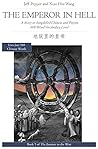
BOOK: “The Young Monk” [Vol. 4 of the “Journey to the West” Series] ed. by Jeff Pepper / trans. by Xiao Hui Wang

The Young Monk: A Story in Simplified Chinese and Pinyin, 600 Word Vocabulary (Journey to the West Book 4)The Young Monk: A Story in Simplified Chinese and Pinyin, 600 Word Vocabulary by Jeff Pepper
My rating: 5 of 5 stars

Publisher Site — Imagin8

This book, Volume 4 of the Journey to the West series, takes a turn from the books thus far. While the first three volumes (Ch. 1-7) focus on Sun Wukong, the Monkey King, this volume leaves him under the mountain where the last volume left him, and — instead — focuses on the origin story of Xuanzang — the monk who is sent by the Buddha to India to get scriptures in the original book — based on the real-world monk who did travel to India to complete the selection of Buddhist scriptures available to Chinese Buddhists.

The monk’s story might not sound like it would be as thrilling as that of the superpowered immortal monkey, but it’s a gripping tale. The story begins before Xuanzang is born and ends in his eighteenth year. So, before he is assigned to travel West to get scriptures.

As I’ve said in earlier reviews, I really like the approach of this series. It has Simplified Chinese script, pinyin, an English translation, and a full glossary of terms used, and it’s organized so as to facilitate reading by a language learner.

I continue to recommend this series for language learners who need a linguistically simplified text to be able to read.

View all my reviews
BOOK: “The Serious Guide to Joke Writing” by Sally Holloway

The Serious Guide to Joke Writing: How to Say Something Funny about AnythingThe Serious Guide to Joke Writing: How to Say Something Funny about Anything by Sally Holloway
My rating: 4 of 5 stars

Google Books Page

This book presents a textual version of the author’s joke writing seminar. It offers a few techniques for joke writing that are informed by the premises that: 1.) jokes exist out in the world for one to find — rather than to create; 2.) Anyone who is funny with his or her friends can be a funny joke writer, BUT not without effort. That effort comes in the form of training oneself to look at words and phrases in unconventional ways and in applying (largely mechanical) processes to coax or wheedle the jokes out of the ether. I say “largely mechanical” because there is a chapter on stream-of-consciousness joke writing, but the heart of the book is a process called joke-web building that is a step-by-step approach to finding humor wherever it may hide.

The book alternates practical and “theoretical” chapters. The “theoretical” chapters are mostly about the psychology that gets in one’s way as a joke writer and the ways around it. That is, those parts deal with the value of breaks and the need to manage anxiety. The practical chapters explain the procedures and have Q&A style troubleshooting sections in addition to a description of the process.

I found the book to be interesting and a quick read. Some of the procedures seem a bit tedious, but they do produce results. It may be possible to streamline them to one’s own situation.

View all my reviews

BOOK: “The Jefferson Bible” by Thomas Jefferson

The Jefferson Bible: The Life and Morals of Jesus of NazarethThe Jefferson Bible: The Life and Morals of Jesus of Nazareth by Thomas Jefferson
My rating: 5 of 5 stars

PDF available online [Public Domain]

Thomas Jefferson (yes, the same one who wrote the Declaration of Independence) produced this book by cutting and pasting excerpts from the Gospels so as to produce a distillation of who he believed Jesus was and what Jesus’s essential teachings were. It mixes parables and other New Testament teachings with biographical description.

There is an introduction which offers the reader more specific insight into Jefferson’s thinking than can be gleaned merely from what he includes and what he trims. The Introduction also discusses the similarities and differences between Christian philosophy and that of the Jews, the Greeks, and the Romans.

If you’re looking for a condensed version of the New Testament, I’d highly recommend this book. Jefferson was obviously a sharp guy who looked at the Bible from the perspective of Enlightenment-era thinking.

View all my reviews

BOOK: “Islands in the Stream” by Ernest Hemingway

Islands in the StreamIslands in the Stream by Ernest Hemingway
My rating: 5 of 5 stars

Publisher Site – Simon & Schuster

This novel was actually published almost a decade after Hemingway’s death. It was found among his papers, a complete — but rough — draft.

The book’s protagonist is Thomas Hudson, a divorced painter living alone in the Caribbean. The story is told in three parts. In the first, Hudson’s solitary existence is brightened by a visit from his three sons (one from one ex- and the other two from a second.) The second part is the story of a prolonged bender in Cuba. The final section follows Hudson and his crew as they track the survivors of a sunken German U-boat as said Germans try to island-hop their way to safety. The three sections are each quite different in tone. The last part reads like genre fiction (i.e. commercial fiction,) while the former two are character driven literary fiction (but of quite different tones.)

The book is mostly about loss and grief and the varied ways with which it is dealt, and the process through which the griever proceeds.

I enjoyed this book. While, like a life, it may be a bit messy, I found it compelling. I’d recommend it for those who enjoy Hemingway.

View all my reviews

BOOK: “This and That” by Ryōkan [trans. by Stan Ziobro and John Slater]

This and That: Selected Short Poems of Zen Master RyokanThis and That: Selected Short Poems of Zen Master Ryokan by Ryōkan
My rating: 5 of 5 stars

Publisher Site — Monkfish Books

Release Date: March 24, 2026

This is a new selection of Ryōkan’s short poetry (haiku, tanka, and Chinese-Style poems) as translated by Stan Ziobro and John Slater. Ryōkan was a Buddhist monk who lived across the late 18th / early 19th century. These translations are evocative and present the sometimes whimsical and sometimes haunting work of Ryōkan well. While the forms are just three, i.e. haiku, tanka, and kanshi [Japanese Poetry in the Chinese Style,] the style varies, some being imagist and some being more philosophical. Being a monk, Ryōkan’s work is heavily influenced by a Buddhist worldview, as well as by philosophies that interacted with Buddhism — e.g. Taoism.

While I usually have no basis to judge a translation as translation and am left to reflect on it purely as stand-alone verse, in this case, I have enough experience reading translations of Ryōkan to have a feel for his work. I immediately recognized some of Ryōkan’s more famous poems: e.g. the one’s translated in this book as, “Poems? no way // when you see that my // poems aren’t poems // then we can talk poetry” or “Left behind by thief // bright moon // in my window” Yet, at the same time, I felt the translators left some of their own imprint on the poems, and their influence / voice resonated with me.

The book does have front matter to set the stage for readers, and there is a “Notes” section that includes useful background on the poems. I found this ancillary matter useful, but not excessively verbose or intrusive.

If you enjoy Japanese poetry or Buddhist influenced poetry, I’d highly recommend this selection.

View all my reviews