BOOK: “Stories and Myths of Eight Immortals” Trans. by Li Yanjia and Nathaniel Hu

Stories and Myths of Eight ImmortalsStories and Myths of Eight Immortals by Anonymous
My rating: 3 of 5 stars

Available online – Internet Archives

This is a fine collection of stories about the adventures of the Eight Immortals (mostly as individuals, but with a few stories that feature the whole group.) There are twenty-eight chapters, but a few less than that of stories because the first chapter is an introduction to the Eight Immortals, and there are a couple of chapters at the end that discuss the origins of cultural artifacts associated with the Eight Immortals.

The stories are pulled from varied sources. I would give the stories a five, but this edition is loaded with grammatical mistakes — to the point of being distracting and unpleasant to read. It reads not like a present-day Google Translate translation, but rather as if it was being spoken by someone with an uneven (remedial to elegant) grasp of English. [Not everywhere, but enough to be problematic.]

The stories themselves are engaging, often have moral, and are quick reads (mostly a page, a few more than three pages.)

If you can tolerate reading through patches of bad grammar, this is not a bad collection of stories and information about the Eight Immortals, but if it’s too much to stomach, you might want to look elsewhere. The stories themselves are widely available, though not necessarily in English and, if so, not necessarily collected into a single volume. With editing, this would be an excellent collection of stories.

View all my reviews

CHINA LIMERICK

There was an old man from China
who thought he was having angina,
but it was the Kung Pao --
with peppercorns for WOW! --
that gave heartburn to the old man of China.
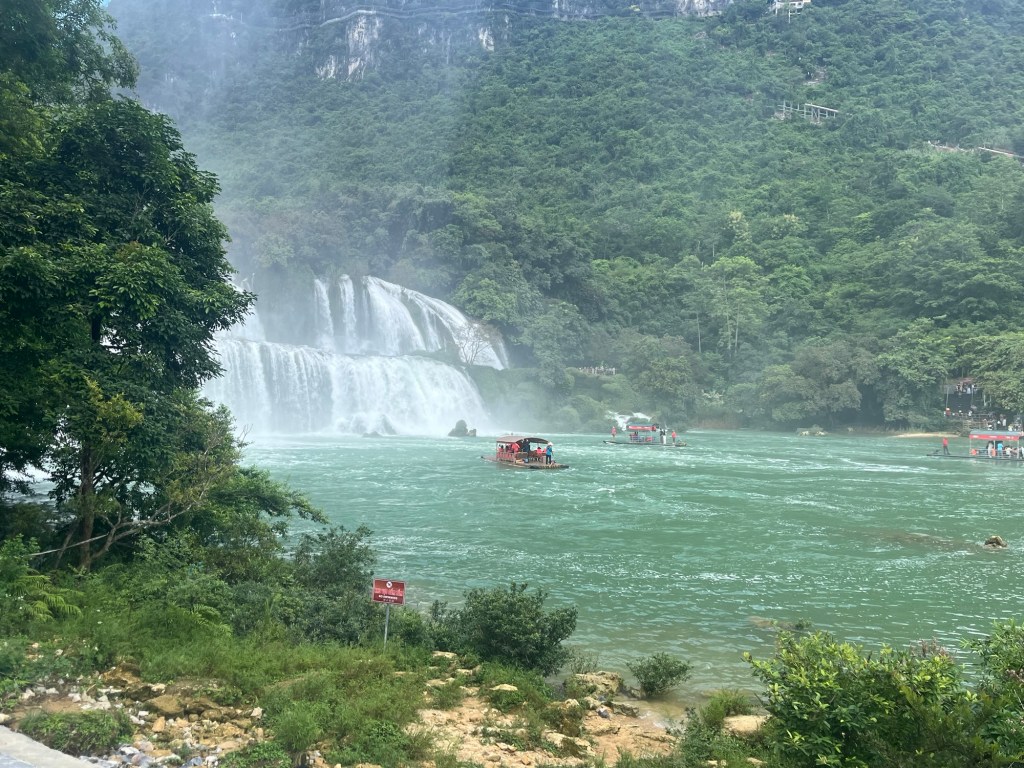
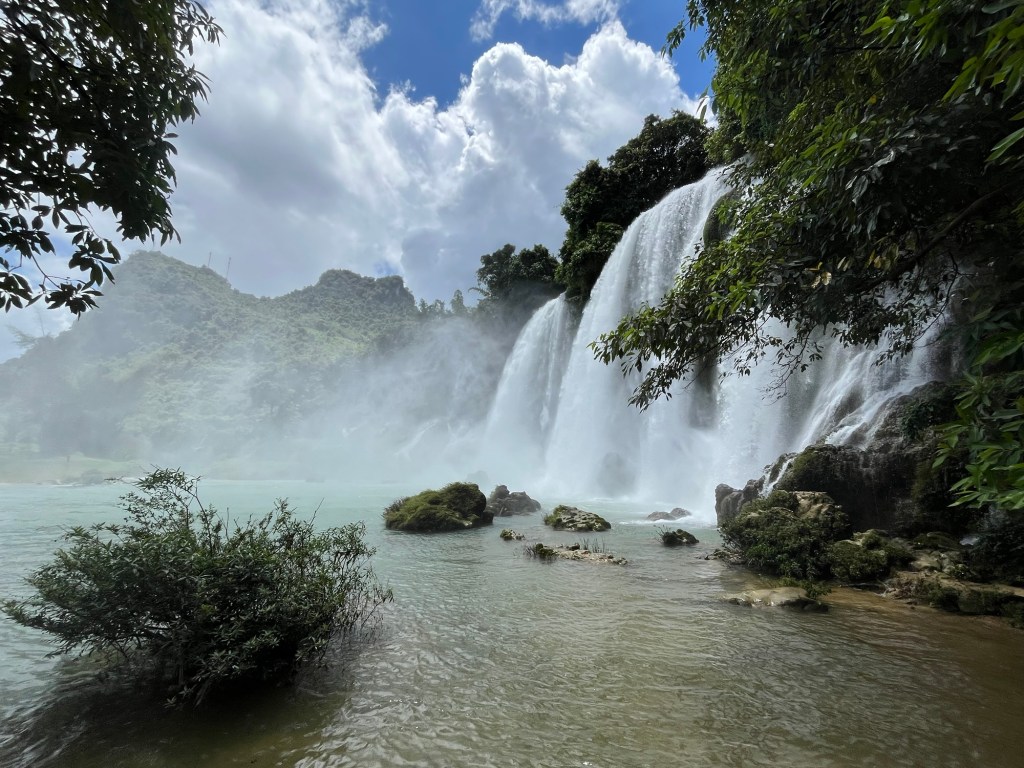
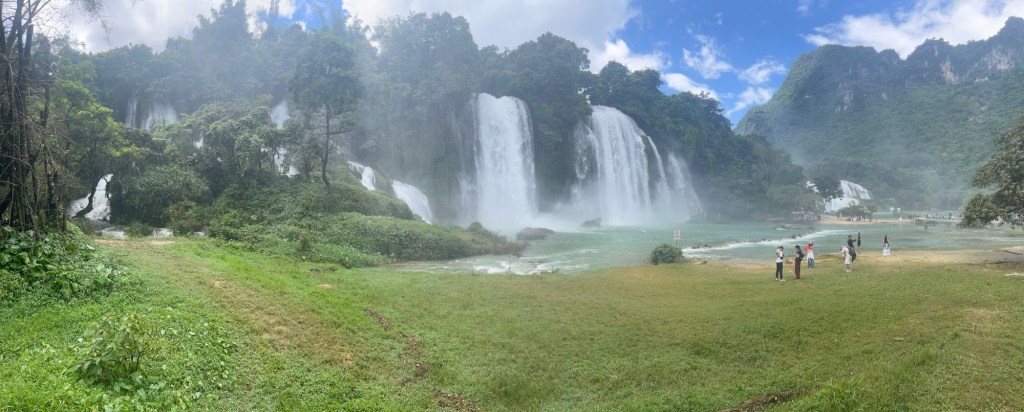
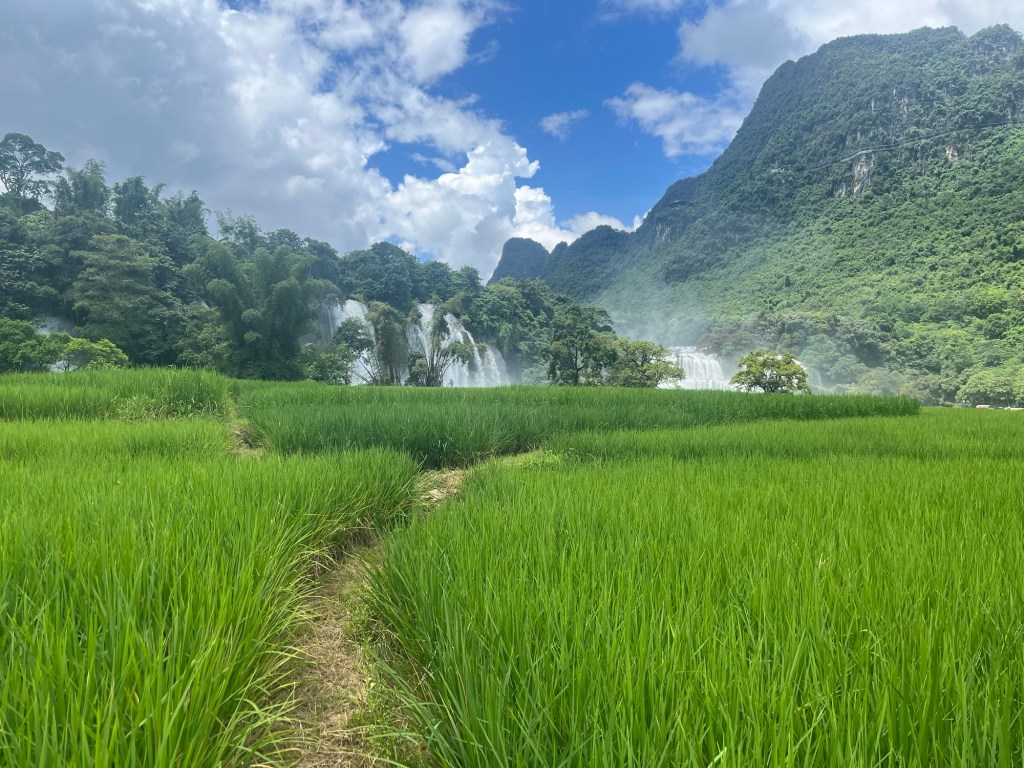
DAILY PHOTO: Ban Gioc Waterfall

BOOKS: “A Journey to Inner Peace and Joy” by Zhang Jianfeng [Trans. by Tony Blishen]

A Journey to Inner Peace and Joy: Tracing Contemporary Chinese Hermits by Zhang Jianfeng (2015-04-07)A Journey to Inner Peace and Joy: Tracing Contemporary Chinese Hermits by Zhang Jianfeng by Unknown Author
My rating: 5 of 5 stars

Publisher Site

In 1993, Bill Porter (a.k.a. Red Pine) came out with a book called “Road to Heaven” that documented his experiences meeting with hermits in rural China. For many, both in and certainly out of China, the continued existence of this lifestyle might have come as a surprise. This book follows up over twenty years later, showing that Buddhists and Daoist hermits are still alive and well in the mountains of interior China.

The book not only offers beautiful descriptions of the lands where these men and women live, but also insight into their mindsets and how they live such minimalist lives. It’s a light and compelling look at individuals like those one might read of in “Outlaws of the Marsh,” only living in the present day (though living lives not unlike their historical counterparts did more than a thousand years ago.)

The book offers many color photos of the hermits and the landscapes in which they live.

I’d highly recommend this book for anyone interested in the way of reclusive existence.

View all my reviews

BOOKS: “HK24” by The Hong Kong Writers Circle

HK24: Twenty-Four Hours of Hong Kong Stories (Hong Kong Writers Circle Anthology Book 13)HK24: Twenty-Four Hours of Hong Kong Stories by Stewart McKay
My rating: 4 of 5 stars

Publisher Site – Hong Kong Writers Circle

This collection of twenty short stories is connected by the theme of events taking place in a single day in Hong Kong. Besides this commonality of setting, there is no other connective tissue between the stories. Tonally, the pieces range from hilarious to tragic. There are suspenseful genre fiction stories as well as realist literary fiction (i.e. telling the story of work-a-day characters engaged in events of everyday life.)

I found “Mummy, Daddy, Angry Birds” by Carsten John and “Rent” by Sharon Tang to be the best humor pieces, and “Egrets” (Paul Clinton Corrigan,) “Help Yourself” (Edmund Price,) and “Joss” (Dimple Shah) to be the most thrilling and intriguing dramatic pieces. All the stories were well-crafted, but some did stand out more than others. A few of those realist pieces that explored “mundane” expat life in Hong Kong made for engaging and distinctive reading. And Hong Kong is uniquely situated for tales of an urban shaman or a Triad shooting.

This is the thirteenth volume of a series put out by the Hong Kong Writers Circle. Each volume has a different theme (besides being Hong Kong connected.) Hong Kong is one of those places that is authentically itself, not to be confused with anywhere else, and that offers a great opportunity to build fascinating tales that could only take place there. [I found it interesting that “should I stay or should I go” was a repeated theme across multiple stories.]

I picked this book up as a piece of travel literature for an upcoming visit to Hong Kong (I make sure to read a work of literature from every country I visit — provided I can find anything translated.) I’d highly recommend this book for readers interested in short fiction with that distinctive Hong Kong flavor. I intend to look into other volumes in the series, myself.

View all my reviews

“From China” by Amy Lowell [w/ Audio]

   I thought: 
The moon,
Shining upon the many steps of the palace before me,
Shines also upon the chequered rice-fields
Of my native land.
And my tears fell
Like white rice grains
At my feet.

BOOKS: “Wen-Tzu” Trans. by Thomas Cleary

Wen-TzuWen-Tzu by Lao-Tzu
My rating: 5 of 5 stars

Publisher Site – Shambhala

This work is presented as “further thoughts of Laozi [老子].” Readers of the Dàodé jīng [道德经] will recognize many a familiar statement of that work, but this book is much more extensive and detailed. I say “presented as” because scholars no longer believe this was a product of Laozi and his lifetime (if such an individual ever existed.) For one thing, the book seems more syncretic than the Dàodé jīng, that is to say there are points at which it sounds strikingly Confucian — rather than purely Taoist.

As with the Dàodé jīng the Wénzǐ [文子] covers a lot of ground from metaphysics to individual ethics to political philosophy, but this book has more room to sprawl on each subject.

As with other Cleary translations, it’s a pretty readable translation.

I’d recommend it for readers interested in Chinese Philosophy.

View all my reviews

“Wang Chuan Village After Rain” [积雨辋川庄作] by Wang Wei [王维]

Smoke slowly rises from sodden woods;
Millet 's steamed to feed the fieldhands;
Egrets fly over foggy paddies;
Hidden birds sing from lush tree stand.
Mountain hikers study hibiscus,
Under dewy pines chew sunflower seeds,
Give mat space to any old traveler.
Gull and I: wary of each other's deeds.

Original Poem in Simplified Chinese:

积雨空林烟火迟, 蒸藜炊黍饷东菑。
漠漠水田飞白鹭, 阴阴夏木啭黄鹂。
山中习静观朝槿, 松下清斋折露葵。
野老与人争席罢, 海鸥何事更相疑?

BOOKS: “The Cultural Revolution: A Very Short Introduction” by Richard Curt Kraus

The Cultural Revolution: A Very Short IntroductionThe Cultural Revolution: A Very Short Introduction by Richard Curt Kraus
My rating: 4 of 5 stars

Publisher Site – OUP

The decade-long Cultural Revolution in China is generally looked upon as a bleak time and place to be alive. This brief guide reflects on the political, economic, and cultural dimensions of Mao’s attempt to root out capitalist and middle-class influence from Chinese society. The book also reflects upon other events in China during the period (e.g. detente) and how they related to the Cultural Revolution. It also explores how China came out of the Cultural Revolution.

The author makes efforts to be diplomatic and evenhanded about the event. Some readers will find this beneficial to their purposes and may even see the occasional glimmer of a bright side to a dismal period in human history. However, one should not expect to gain any visceral insight into the sadness and chaos of the era. While there was discussion of not only the end of the Cultural Revolution but what China’s continued path looked like, it didn’t get much into whether there was a long shadow to the revolution and what that shadow might look like.

I found the book informative though there were dimensions into which I would have liked to gain more insight (e.g. it doesn’t go much into the influence on religion, nor on more peripheral arts,) but that’s the challenge of such a concise guide. Also, the author is of a political science background, and this informs what elements are given more or less discussion.

View all my reviews

BOOKS: “The Life of Hiuen-Tsiang” by Hui-li [trans. by Samuel Beal]

The Life of Hiuen-TsiangThe Life of Hiuen-Tsiang by Hui-li
My rating: 4 of 5 stars

Available free online through the Indian Gov’t

Those familiar with Chinese Literature (or smash-hit video games) will be acquainted with the tale of Sun Wu Kong, the Monkey King. The central event of the novel Journey to the West is a Chinese Buddhist monk traveling to India to gather a complete set of the Buddhist canon. In the novel (and video game, Black Myth: WuKong,) the monk’s name is Tang Sanzang (in translations – and movie / television – he’s sometimes called Tripitaka, which is actually the name of the Pali Canon — the original Buddhist books, themselves.) In real life there was also such a monk, and his name was Xuanzang (玄奘, Romanized as Hiuen-Tsiang in an earlier system,) and this book describes his travels to, through, and back from India.

It turns out the monk was not escorted by a god-tier mythical creature and his two superpowered compatriots (i.e. Pigsy and Sandy.) For this reason, the actual Xuanzang occasionally got threatened, robbed, and was once almost killed by riverine pirates. This book is a travelogue of Xuanzang’s journeys through China, Central Asia, [present-day] Afghanistan and Pakistan, and throughout India.

Needless to say, this book isn’t as taut and thrilling as the fictional account with its gods and monsters, but – for those with historical and geographic interests – it’s not without appeal. It does have extensive description of Xuanzang’s visits with various monks and royalty that is dry reading as well as discussions of where Xuanzang’s collection stood at any given point, but there are a few intense events and harrowing moments.

If you’re interested in Buddhist history, you may want to give this book a look.

View all my reviews