BOOK: “Seven Animal Postures” by Jeogun [Trans. by Dowon]

Seven Animal PosturesSeven Animal Postures by Jeogun
My rating: 4 of 5 stars

Publisher Information – Sunmudo Daegeumgangmun Foundation

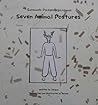
I bought this book in the gift shop of Golgulsa Temple [i.e. Stone Buddha Temple,] in the countryside outside of Gyeongju, South Korea. Golgulsa is a fascinating place. It’s sort of the Shaolin Temple of Korea, teaching martial arts and qigong (energy work) alongside meditation and Buddhist philosophy. The Korean Buddhist martial art is called Sunmudo, and I’d never heard of it before traveling to Korea.

At any rate, this book is a 35-page guide to a set of qigong practices known as the “Seven Animal Postures” (or Yeongdongipgwan.) It’s a set of exercises that are similar to qigong practices like the Eight Pieces Brocade, and not greatly dissimilar to yogasana (i.e. yoga’s postural practices.) [FYI: The animals of these exercises are Tiger, Dragon, Deer, Monkey, Bear, Turtle, and Crane.]

The book offers a little bit of background on Sunmudo and the benefits of it, but is mostly a guide to the movement, breath, and postural details of these seven exercises. It has line drawings to help elaborate upon the text. My only gripe would be that the paper the book is printed on to make it more visually interesting has blocks of darker color that make it a little harder to read than is necessary.

If you are interested in qigong or yogic practices that are a bit more off the beaten path, you may find this one interesting.

View all my reviews

BOOK REVIEW: “New Story of the Stone” by Jianren Wu [Trans. by Liz Evans Weber]

New Story of the Stone: An Early Chinese Science Fiction NovelNew Story of the Stone: An Early Chinese Science Fiction Novel by Jianren Wu
My rating: 5 of 5 stars

Publisher Site – Columbia University Press

This book is presented as a sequel to the Chinese literary classic (alternatively) known as Dream of the Red Chamber or Story of the Stone. The central character is a scholarly traveler by the name of Baoyu. The first part of the book is set in China around the time of the Boxer Rebellion, an event that features in the story. Throughout this portion, the book reads like historical fiction. However, Baoyu’s travels eventually bring him to a hidden realm, a technologically advanced utopia within China. It is here where Baoyu’s adventures get fantastical and otherworldly, and the book ventures into the domain of Science Fiction.

The setting of the book reminds me a little of Marvel’s Wakanda from Black Panther. Perhaps both instances of worldbuilding were motivated by the humiliated colonists’ fantasy of being more advanced than those who pull the strings for once, or of showing their (respective) lands to be places of “crouching tigers and hidden dragons” (i.e. where great talents exist but remain unseen.) (Note: While China wasn’t on-the-whole colonized by a Western country, its interaction with England and other Western nations left it forced to accept terms unfavorable and undesirable to China (not to mention the outright colonized enclaves such as Hong Kong and Macau.) While the publisher has emphasized the science fiction aspect of this work, it is an anticolonial work through and through. The book can come across as xenophobic and nationalistic in places, but this only reminds the reader of how such positions might be arrived at under the boot of foreign influence.

The book is readable though philosophical and is well worth reading for those interested in developing a deeper insight into Chinese perspectives.

View all my reviews

BOOKS: “A Horse’s Tale” by Mark Twain

A Horse's TaleA Horse’s Tale by Mark Twain
My rating: 4 of 5 stars

Project Gutenberg Page

Among the lesser-known works of Twain, A Horse’s Tale mixes an epistolary by a military officer at a remote outpost with dialogues between animals of the post (principally the protagonist, a horse called Soldier Boy.) The principal subject of the epistolary is a precocious girl who lives at the outpost and who is adored by all as the one soft, sweet creature in a world of warfighting men and their animals. The conversations between animals offer the most amusing portion of this book, largely for the fun being poked at humanity’s expense.

In its best moments, this novella is intensely touching or hilarious. However, it does suffer from inconsistency of pacing and tone.

If you enjoy Mark Twain’s humor and storytelling, this novella is well worth reading. If you’re primarily a reader of present-day genre / commercial fiction, it probably won’t be your thing.

View all my reviews

BOOKS: “Live Like a Philosopher” by Massimo Pigliucci, Gregory Lopez, and Meredith Alexander Kunz

Live Like A Philosopher: What the Ancient Greeks and Romans Can Teach Us About Living a Happy LifeLive Like A Philosopher: What the Ancient Greeks and Romans Can Teach Us About Living a Happy Life by Gregory Lopez
My rating: 4 of 5 stars

Publisher Site — Hachette / Headline Press

This book is for a person in the market for a philosophy of life, but who only knows that they want a system rooted in Ancient Greece. While the coauthors are all Stoics, the book explores twelve additional philosophies and gives each roughly equal consideration. In addition to the expected systems, such as Epicureanism, Stoicism, Platonism, and Skepticism, there are also several lesser known or defunct philosophies such as Cyrenaic hedonism, Cynicism, Pyrrhonism, and Megarianism.

The book is organized into four parts. The first examines schools that value pleasure (Cyrenaicism and Epicureanism,) the next investigates schools that focus on virtue and character (Aristotelian Peripatetics, Stoicism, Cynicism, and Political Platonism,) the penultimate focuses on systems encouraging doubt or caution in knowledge (Socratic philosophy, Academic Skepticism, Sophism, and Pyrrhonism,) and the last set are posed as questionable candidates for a life philosophy (i.e. those of the Pythagoreans, Megarians, and Neoplatonists.) The last three schools are questioned on various grounds, including: is enough known about what its practitioners believed, did they live their philosophy or just ruminate on it, and could the system be considered a full-fledged philosophy (as opposed to a stance on a specific issue or issues.)

The book is presented in self-help fashion, with each chapter ending in a set of exercises designed to help the reader build practical understanding of each school. The goal of these exercises (as comes together in an appendix) is to help the reader determine which philosophy is best suited to their disposition and inclinations.

I enjoyed this book. The authors use stories to convey ideas and the book’s readability is kept inviting to general readers. If you’re interested in better understanding Greek schools of philosophy, I’d recommend the book as quick and easy way to get a better grasp.

View all my reviews

BOOKS: “Swimming” by Roger Deakin

Swimming: Vintage MinisSwimming: Vintage Minis by Roger Deakin
My rating: 5 of 5 stars

Publisher Site – Vintage Minis

This book contains a collection of excerpts from the book Waterlog by Roger Deakin. It’s one volume from a series of short books that contain essays, stories, poems, or book excerpts that is put out by Penguin under the imprint “Vintage Minis.” The book describes the author’s experiences of wild swimming throughout Britain. The description of nature and of the exhilarating experience of wild swimming are beautifully composed, and it’s an all-around pleasant read.

If you’re interested in wild swimming, I’d recommend this book.

View all my reviews

BOOKS: “The Meaning of Travel” by Emily Thomas

The Meaning of Travel: Philosophers AbroadThe Meaning of Travel: Philosophers Abroad by Emily Thomas
My rating: 5 of 5 stars

Publisher Site – OUP

Of late, I’ve been reflecting upon the philosophical divides that exist between travelers and others (I call them “tribals,” but they are by far the majority of people — i.e. those who either don’t travel [unless required to] or who travel only in a tourist-like fashion.) As I’ve done so, I’ve been surprised to find how limited the literature is on the subject. I was, therefore, pleased to find this book. While Thomas confirmed my preliminary findings that there isn’t much of a travel-centric subdiscipline of philosophy, she also shows that it’s not for a lack of philosophers traveling and pondering travel.

While I’ve spent considerable time thinking about a philosophy of travel, I was pleasantly surprised to discover a number of topics in Thomas’s book to which I’d hardly given any thought. These were the most personally fascinating topics because they involved such uncharted territory. They include: maps as propaganda, the importance of travel to scientific discovery, the domination of male perspective in our collective understanding of travel, and the ethics of doom travel (going to vanishing places.)

The book also advanced my understanding of subjects that I’ve often contemplated — e.g. aesthetics and travel, innate / universal ideas v. culturally-tinted ones, and the connection between minimalism and travel.

If you’re interested in philosophy, travel, and the intersect of the two, this book is definitely for you. The author takes a light approach and the book’s readability is high — i.e. while it is thought-provoking, it’s aimed at a general readership rather than a scholarly one.

View all my reviews

BOOKS: “A Short Stay in Hell” by Steven L. Peck

A Short Stay in HellA Short Stay in Hell by Steven L. Peck
My rating: 5 of 5 stars

Publisher Site: Strange Violin Editions

If you enjoy books like Joseph Heller’s Catch-22 or Douglas Adams’ The Hitchhiker’s Guide to the Galaxy this book will probably be right up your alley. It may not be as unrelentingly (and hilariously) absurd as H2G2, but it’s clever, amusing, and thought-provoking.

The premise is that a devout Christian finds himself in hell because it turns out that Zoroastrianism was actually the one true religion. Fortunately, Zoroastrian hell is neither as grim nor (perhaps, ironically) as fire & brimstone-oriented as the Biblical version, but it is tedious, demoralizing, and — while it might not last forever –it lasts long enough to seem like forever.

Jorge Luis Borges fans (such as myself) will find a nod to his work in the shape of said hell.

I’d highly recommend this book for readers of irreverent and humorous literary fiction. It’s funny. It’s clever. And it’s a quick read.

View all my reviews

BOOKS: “Sightseeing” by Rattawut Lapcharoensap

SightseeingSightseeing by Rattawut Lapcharoensap
My rating: 5 of 5 stars

Publisher Site – Atlantic

This collection of seven short stories offers insight into Thailand and its culture, but the stories are also gripping and clever. It’s a rare thing for stories to so engage with issues such as poverty, class, the refugee experience, the human experience, and foreignness and to still be highly entertaining.

Farangs is about the interaction of Thais and foreigners in the form of a love triangle featuring a Thai protagonist, a Western girl, and the girl’s erstwhile (also foreign) boyfriend.

At the Cafe Lovely is about two brothers, the older of whom takes the younger brother to a “cafe” that is more of a bar with built-in brothel. The story shows the seedy side of Bangkok, but also the bond between brothers.

Draft Day is about two friends, one from a wealthy family and the other not, who have to go to the draft lottery to determine whether they will have to serve in the military or not. This story is potent observation on social justice.

Sightseeing is about a mother and son’s last trip before the mother loses her vision.

Priscilla and the Cambodians is about a Cambodian girl who, in a rough-and-tumble manner, befriends two geeky Thai boys. The story explores the woes of being poor outsiders in a world that cares neither for the poor, nor for outsiders.

Don’t Let Me Die in this Place is about an old American man who moves in with his son and the son’s Thai wife and their children in Bangkok after the man has suffered a stroke and is in recovery. It’s about the old man’s struggle to adapt to a very different life while at the same time coping with not being able to take care of himself.

Cockfighter is the longest and also probably the most visceral of the stories. It centers on a teenaged girl whose father is the titular “Cockfighter” and whose mother makes hand-sewn bras. It’s an intensely psychological work of fiction with some hilarious moments, as well.

I’d highly recommend this collection for all readers of short fiction. I chose it as my travel literature for Thailand (I read a work [or works] of literature from all countries I visit,) but I don’t think one has to have a particular interest in Thailand to find the stories fascinating and profound.

View all my reviews

BOOKS: “The Cultural Revolution: A Very Short Introduction” by Richard Curt Kraus

The Cultural Revolution: A Very Short IntroductionThe Cultural Revolution: A Very Short Introduction by Richard Curt Kraus
My rating: 4 of 5 stars

Publisher Site – OUP

The decade-long Cultural Revolution in China is generally looked upon as a bleak time and place to be alive. This brief guide reflects on the political, economic, and cultural dimensions of Mao’s attempt to root out capitalist and middle-class influence from Chinese society. The book also reflects upon other events in China during the period (e.g. detente) and how they related to the Cultural Revolution. It also explores how China came out of the Cultural Revolution.

The author makes efforts to be diplomatic and evenhanded about the event. Some readers will find this beneficial to their purposes and may even see the occasional glimmer of a bright side to a dismal period in human history. However, one should not expect to gain any visceral insight into the sadness and chaos of the era. While there was discussion of not only the end of the Cultural Revolution but what China’s continued path looked like, it didn’t get much into whether there was a long shadow to the revolution and what that shadow might look like.

I found the book informative though there were dimensions into which I would have liked to gain more insight (e.g. it doesn’t go much into the influence on religion, nor on more peripheral arts,) but that’s the challenge of such a concise guide. Also, the author is of a political science background, and this informs what elements are given more or less discussion.

View all my reviews

BOOK REVIEW: “Becoming Ghost” by Cathy Linh Che

Becoming Ghost: PoetryBecoming Ghost: Poetry by Cathy Linh Che
My rating: 5 of 5 stars

Publisher Site – Simon & Schuster

This collection is built around the surreal emotionality of the author’s parents having both lived through the war in Vietnam and also having served as extras in the film, Apocalypse Now. [For those unfamiliar, Apocalypse Now was a Francis Ford Copp0la film based loosely (and partially) on Joseph Conrad’s novel,Heart of Darkness. The film follows a military officer sent upriver to assassinate a rogue Special Operations colonel during the Vietnam War, and shows the war from various perspectives as the would-be assassin travels through the country to complete his mission.]

At times, the poems read like a poem-shaped biography, but that’s not all there is to the book. There are points that imagery and language are used to shoot beyond a mere telling of events, in order to create emotional resonance with the core strangeness of living through a traumatic event only to portray a background individual (someone like one’s own past self) in a fictional retelling of events based on those through which one lived.

The poetic forms vary somewhat, though all within the modern, free verse style. Most notably, the author uses the golden shovel approach of Terrence Hayes extensively.

This collection grabbed me both with its clever language and its thought-provoking central premise. I’d highly recommend it for readers of poetry.

View all my reviews