BOOK: “The Life of an Amorous Man” by Ihara Saikaku [Trans. by Chris Drake]

The Life of an Amorous Man: A Novel of Love and Desire in Old JapanThe Life of an Amorous Man: A Novel of Love and Desire in Old Japan by Ihara Saikaku
My rating: 5 of 5 stars

Publisher Site – Tuttle

On sale October 14, 2025

Original Title: 好色一代男

As the title suggests, this novel is presented as the biography of a man who is — shall we say — a horndog. Actually, it would be more correct to say that it is the story of the man’s sex life, as it begins with his sexual awakening as a boy of seven and tells stories of his relationships and dalliances throughout his life until he reaches the age of sixty and is no longer physically capable of the act. Of course, the novel does describe non-amorous life events such as the protagonist’s (i.e. Yonosuke’s) brief time as a monk and as (what in modern terms would be called) a “trust-fund kid.” Yonosuke is from a wealthy merchant family, though his inability to keep his mind on task sees him disowned for many years. So, he leads lives both rich and poor, but never without lust in his heart.

Given that the book focuses on Yonosuke’s interactions with geisha and varied sex workers, one might expect that it is a work of erotica (or even pornography.) It is neither. There is no graphic description of sexual activities and often those events are glossed over altogether. This book will be of much more interest to those interested in what life in Edo Period Japan was like, and particularly how sex work operated as a regulated industry with licit and illicit domains, than to anyone wishing to read erotica for sensual or prurient purposes.

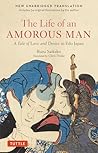
The book has a series of illustrations (one per chapter) that were drawn by the author and appeared in the original (1682) edition. There are also poems (tanka and haiku) sprinkled in here and there, many of which were invocative in their own right.

If you are interested in historical Japan and / or its “floating world,” you’ll find this book to be an interesting read. It’s highly readable and entertaining.

View all my reviews

BOOK: “The Adventures of Tom Sawyer” by Mark Twain

The Adventures of Tom SawyerThe Adventures of Tom Sawyer by Mark Twain
My rating: 5 of 5 stars

Available Online – Project Gutenberg

This is Twain’s best-known and probably most beloved work — though arguably neither his best nor most impactful piece. It tells the tale of a mischievous but warmhearted boy, Tom Sawyer, and a series of formative events in Sawyer’s youth from learning how to trick other kids into doing his chores to being trapped deep in a cave with his sweetheart. While there is a plot throughline involving the closest thing the novel has to a villain, Injun Joe, for the most part the story is episodic. That’s for the best because if too much weight were placed on that throughline, it’s resolution would feel flat. As it is, we see Sawyer and his friends, particularly Huck Finn, subjected to trials and challenges (often of their own making) that present moral dilemmas and the need to steel themselves for the occasion.

It’s often been said that this book isn’t as powerful or influential as its sequel, Adventures of Huckleberry Finn, which this book sets up nicely I should point out. It is probably true that Huck Finn is more profound. That said, Tom Sawyer could be said to be a cleaner read in that Huck Finn gets a bit muddled, particularly toward its end.

I’d highly recommend this book for all readers.

View all my reviews

BOOK: “Seven Animal Postures” by Jeogun [Trans. by Dowon]

Seven Animal PosturesSeven Animal Postures by Jeogun
My rating: 4 of 5 stars

Publisher Information – Sunmudo Daegeumgangmun Foundation

I bought this book in the gift shop of Golgulsa Temple [i.e. Stone Buddha Temple,] in the countryside outside of Gyeongju, South Korea. Golgulsa is a fascinating place. It’s sort of the Shaolin Temple of Korea, teaching martial arts and qigong (energy work) alongside meditation and Buddhist philosophy. The Korean Buddhist martial art is called Sunmudo, and I’d never heard of it before traveling to Korea.

At any rate, this book is a 35-page guide to a set of qigong practices known as the “Seven Animal Postures” (or Yeongdongipgwan.) It’s a set of exercises that are similar to qigong practices like the Eight Pieces Brocade, and not greatly dissimilar to yogasana (i.e. yoga’s postural practices.) [FYI: The animals of these exercises are Tiger, Dragon, Deer, Monkey, Bear, Turtle, and Crane.]

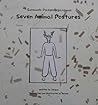
The book offers a little bit of background on Sunmudo and the benefits of it, but is mostly a guide to the movement, breath, and postural details of these seven exercises. It has line drawings to help elaborate upon the text. My only gripe would be that the paper the book is printed on to make it more visually interesting has blocks of darker color that make it a little harder to read than is necessary.

If you are interested in qigong or yogic practices that are a bit more off the beaten path, you may find this one interesting.

View all my reviews

BOOK REVIEW: “New Story of the Stone” by Jianren Wu [Trans. by Liz Evans Weber]

New Story of the Stone: An Early Chinese Science Fiction NovelNew Story of the Stone: An Early Chinese Science Fiction Novel by Jianren Wu
My rating: 5 of 5 stars

Publisher Site – Columbia University Press

This book is presented as a sequel to the Chinese literary classic (alternatively) known as Dream of the Red Chamber or Story of the Stone. The central character is a scholarly traveler by the name of Baoyu. The first part of the book is set in China around the time of the Boxer Rebellion, an event that features in the story. Throughout this portion, the book reads like historical fiction. However, Baoyu’s travels eventually bring him to a hidden realm, a technologically advanced utopia within China. It is here where Baoyu’s adventures get fantastical and otherworldly, and the book ventures into the domain of Science Fiction.

The setting of the book reminds me a little of Marvel’s Wakanda from Black Panther. Perhaps both instances of worldbuilding were motivated by the humiliated colonists’ fantasy of being more advanced than those who pull the strings for once, or of showing their (respective) lands to be places of “crouching tigers and hidden dragons” (i.e. where great talents exist but remain unseen.) (Note: While China wasn’t on-the-whole colonized by a Western country, its interaction with England and other Western nations left it forced to accept terms unfavorable and undesirable to China (not to mention the outright colonized enclaves such as Hong Kong and Macau.) While the publisher has emphasized the science fiction aspect of this work, it is an anticolonial work through and through. The book can come across as xenophobic and nationalistic in places, but this only reminds the reader of how such positions might be arrived at under the boot of foreign influence.

The book is readable though philosophical and is well worth reading for those interested in developing a deeper insight into Chinese perspectives.

View all my reviews

BOOK: “White Teeth, Red Blood” by Various

White Teeth, Red Blood: Selected Vampiric VersesWhite Teeth, Red Blood: Selected Vampiric Verses by Lord Byron
My rating: 5 of 5 stars

Publisher Site – Pushkin Press

This anthology gathers poetry with at least a vaguely vampiric theme. About half of the poets fit into the category of well-known to a general readership (e.g. Goethe, Byron, Coleridge, Tennyson, Yeats, Dickinson, Kipling, Baudelaire, Millay, etc.) and the others will be less familiar to most readers — either by virtue of being modern poets or having a body of work that didn’t age as well, on the whole. Even the pieces from familiar poets don’t tend to be among those artists’ most anthologized works by virtue of the specialized theme of the selection. Most of the pieces are older works, but there are modern poems included as well, and it follows that most of the works are rhymed / metered, with free verse mostly seen among the newest poems.

The twenty-nine poems in the anthology are arranged between three sections. The first is the longest part, taking up about 3/4th of the book, and consists of nine poems (including a few excerpts of book-length narrative poems,) all of long format. The second section includes eleven shorter poems (between one and a few pages long,) and the last section contains nine poems, most of which are quite short (as short as a quatrain.)

There is a brief introduction by Claire Kohda, but otherwise there is no ancillary matter. That was fine by me. There is no padding, and — even though there are fewer than thirty poems — the poems fill out the book because so many of them are long pieces or excerpts.

I enjoyed this book and its varied selection of poems. While I read poetry extensively and have read my share of vampire fiction, this was the first work I can remember reading at their intersect. This meant that, for me, there was a good amount of unfamiliar material (despite there being relatively few recent poems.) If you’re in the same boat, you’ll probably enjoy this anthology.

View all my reviews

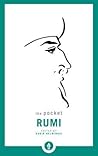
BOOK: “The Pocket Rumi” ed. / trans. by Kabir Helminski

The Pocket Rumi (Shambhala Pocket Library)The Pocket Rumi by Jalal ad-Din Muhammad ar-Rumi
My rating: 4 of 5 stars

Publisher Site – Shambhala

This is a selection of writings (mostly poetry) of Rumi (formal name: Jalāl al-Dīn Muḥammad Rūmī.) Rumi was a mystic of Sufi Islam, and so the poems tend toward the devotional — though with more reference to the experience of intoxication than one might expect from a 13th century Islamic poet.

This selection consists of three sections organized by poetic form, each section progressively longer than the preceding one. The first section is ruba’i, the second is ghazals, and the last is from Rumi’s Mathnawi.

The “Pocket” of the book’s title and series is figurative as the paperback is too big of both format and thickness for any pocket I own, personally, but the point is that it’s a quick read at only about 200 pages of (mostly) poetry [meaning white space abounds.]

I enjoyed reading this selection. I can’t say how true to message the translations are as I have no knowledge of Persian. I can point out that the translators opted to abandon form in favor of free verse. Hopefully, this gave them the freedom of movement to approach the message and tone of the originals.

If you are interested in a short, readable English translation of Rumi’s poetry, this book offers a fine place to start.

View all my reviews

BOOK: “Masala Lab” by Krish Ashok

Masala Lab : The Science of Indian CookingMasala Lab : The Science of Indian Cooking by Krish Ashok
My rating: 4 of 5 stars

Publisher Site – Penguin

Many books have come out in recent years that explore the intersection of science and cooking, but this is one of the few that I’ve seen take on the sub-theme of science’s role in a particular cuisine — in this case Indian. Indian food, while broad and diverse itself, does present a unique palette of considerations. Few cuisines can make claims to the same level of complexity as Indian with all its spices and such. Also, Indian food tends to use heat to a different extent / in different ways than other cuisines, which is partly why, while Indian food is as tasty as food gets, aesthetically it tends toward a visually unappealing gloopy-gloppyness.

Ashok examines what applied heat does to food and why, how flavors are balanced and enhanced and why, what acids do and why they are essential, what value added is gained by pressure cookers and other specialty equipment, and how an experimental approach can be taken in lieu of a recipe book? The book takes a few controversial stances, such as in favor of sodium bicarbonate and MSG, but to a large extent is a straightforward discussion of how science informs culinary technique and ingredients.

The author maintains a light and readable tone throughout the book. I’d recommend this book for readers interested in the intersect of science and food, doubly so if one has a particular interest in Indian food.

View all my reviews

BOOKS: “HK24” by The Hong Kong Writers Circle

HK24: Twenty-Four Hours of Hong Kong Stories (Hong Kong Writers Circle Anthology Book 13)HK24: Twenty-Four Hours of Hong Kong Stories by Stewart McKay
My rating: 4 of 5 stars

Publisher Site – Hong Kong Writers Circle

This collection of twenty short stories is connected by the theme of events taking place in a single day in Hong Kong. Besides this commonality of setting, there is no other connective tissue between the stories. Tonally, the pieces range from hilarious to tragic. There are suspenseful genre fiction stories as well as realist literary fiction (i.e. telling the story of work-a-day characters engaged in events of everyday life.)

I found “Mummy, Daddy, Angry Birds” by Carsten John and “Rent” by Sharon Tang to be the best humor pieces, and “Egrets” (Paul Clinton Corrigan,) “Help Yourself” (Edmund Price,) and “Joss” (Dimple Shah) to be the most thrilling and intriguing dramatic pieces. All the stories were well-crafted, but some did stand out more than others. A few of those realist pieces that explored “mundane” expat life in Hong Kong made for engaging and distinctive reading. And Hong Kong is uniquely situated for tales of an urban shaman or a Triad shooting.

This is the thirteenth volume of a series put out by the Hong Kong Writers Circle. Each volume has a different theme (besides being Hong Kong connected.) Hong Kong is one of those places that is authentically itself, not to be confused with anywhere else, and that offers a great opportunity to build fascinating tales that could only take place there. [I found it interesting that “should I stay or should I go” was a repeated theme across multiple stories.]

I picked this book up as a piece of travel literature for an upcoming visit to Hong Kong (I make sure to read a work of literature from every country I visit — provided I can find anything translated.) I’d highly recommend this book for readers interested in short fiction with that distinctive Hong Kong flavor. I intend to look into other volumes in the series, myself.

View all my reviews

BOOK: “Kim Jiyoung, Born 1982” by Cho Nam-Joo

Kim Jiyoung, Born 1982Kim Jiyoung, Born 1982 by Cho Nam-Joo
My rating: 4 of 5 stars

Publisher Site – Simon & Schuster / Scribner

This fictitious biography explores the tribulations of being a woman in modern-day South Korea. It tells the tale of the titular lead from birth through a middle-aged motherhood. It discusses issues ranging from disappointment at having girl children to feelings of anxiety in a world laden with horny boys to the subtle sexism of the modern workplace.


The book blurb calls this book “riveting, original, and uncompromising.” I’ll give it “uncompromising,” and I have insufficient experience with the book’s “peers” to challenge the “original” claim, but I do have to call BS on the “riveting” bit. In fairness, the point of the book seems to be to offer a brutally typical life experience — not the novel-shaped extremes of a rollercoaster existence. The fact that the book is not riveting doesn’t make it unimportant or unworthy of reading. However, this is not the book one should pick up expecting to read on the edge of one’s seat. It’s well-crafted literary fiction with an important message, but “compelling” is not an appropriate descriptor. The book suffers from a progressive increase in drag as one reads onward.

Still, I’d recommend it for readers of literary fiction interested in varied cultural experiences. It’s a quick read with fine character development.

View all my reviews

PROMPT: Book from Childhood

Do you remember your favorite book from childhood?

Green Eggs and Ham is the earliest children’s book that made an impression — mostly for its catchy lyricism. Robinson Crusoe was the first story that resonated.