PROMPT: Principles

What principles define how you live?

Before traveling, empty my cup. Before returning home, empty my cup.

Collect experiences, not geegaws.

Wishing for the world to be some other way is a grand waste of time.

If there is a river flowing toward where I want to be, surrender to it.

See humor everywhere, especially in myself.

Be content with who I am at the moment, while struggling to be a better version in future editions.

Strive to find the non-adversarial path.

Keep looking until I see what is beautiful in all things and creatures.

Don’t attempt to construct anyone else’s list of principles to live by.

Feel the sensations that arise without letting the mind amplify them out of proportion.

Seek only simple pleasures, enjoy them fully, and then move on.

Wabi Sabi [Haiku]

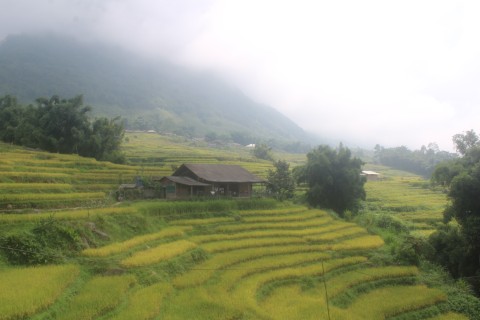
Mường Hoa Valley, Sa Pa, Vietnam; An old farmhouse on the rice terraces.
rustic farmhouse,
weatherbeaten & askew:
no answer to knocks.

Wen Fu 11 “Banal & Sublime” [文赋十一] by Lu Ji [陆机] [w/ Audio]

Some shoots and stalks stand out --
Taller than the masses.
Their form eludes pursuit,
Sound slips through, like gases.
Great lines are always disjunct:
Don't weave with mid'ling lyrics.
They're pent up and peerless:
Chop them? A win that's pyrrhic.
Jade flecks make mountains shimmer,
Pearly waters enchant.
The thicket mustn't be clipped
If Kingfisher's glory, grant.
Stitched words end under snow,
Work the weft, steady and slow.

The original in Simplified Chinese is:

或苕发颖竖,离众绝致。
形不可逐,响难为系。
块孤立而特峙,非常音之所纬。
心牢落而无偶,意徘徊而不能揥。
石韫玉而山辉,水怀珠而川媚。
彼榛楛之勿翦,亦蒙荣于集翠。
缀下里于白雪,吾亦济夫所伟。

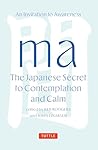
BOOK: “Ma” ed. by Ken Rodgers & John Einarsen

Ma: The Japanese Secret to Contemplation and Calm: An Invitation to AwarenessMa: The Japanese Secret to Contemplation and Calm: An Invitation to Awareness by Ken Rodgers
My rating: 5 of 5 stars

Publisher Site – Tuttle

Release date: October 27, 2025

My introduction to the concept of ma came as a young martial arts student, where it was thought of as distancing, but not distancing in a static sense — rather in a way that incorporated timing as well [so, more of an interval in space-time.] I would later hear the term applied to domains such as joke telling in which perfection of pause could be as critical to a laugh as the words that comprised the joke. This book expanded my understanding to numerous realms I’d never much considered before such as architecture, photography, and gardening. (Incidentally, this book does contain a chapter addressing the martial arts aspect of ma, though not the comedic ramifications of the concept.)

I haven’t seen any other books that focus entirely on this concept. Ma is often mentioned in books on Japanese philosophy and aesthetics but rarely with such depth and singular attention. If there are other books that drill down into the concept in this way, I doubt they are as readable as this one (that is, I suspect such a book would be intensely philosophic and scholarly.) So, this book seems to have a solid niche.

There were a couple chapters that took my thinking on the subject to entirely new places. One was on ma in the domain of virtual reality. This raised interesting metaphysical considerations. Another was about the Heart Sutra and how the translations used have led to longstanding misunderstandings of that work.

If you are interested in art and or philosophy, I’d highly recommend this book.

View all my reviews

White Space [Free Verse]

I read the space
Around the poem.
It has no meaning,
But says so much.
It betrays a little secret
That no reader ever learned
Who was too concerned
With what was written,
While wholly inattentive
To
What
Was
Not.

FIVE WISE LINES [July 2025]

There is no revenge so complete as forgiveness.

Josh billings

Everything in the universe is a jug
filled to the brim with wisdom and beauty.

Rumi, Masnavi

Poetry is what gets lost in translation.

Robert frost

“Travel and tell no one, live a true love story and tell no one,
live happily and tell no one, people ruin beautiful things.”

Kahlil gibran

Not all those who wander are lost.

J.r.r. Tolkien, The lord of the rings

“The earth has many keys” (1775) by Emily Dickinson [w/ Audio]

The earth has many keys,
Where melody is not
Is the unknown peninsula.
Beauty is nature's fact.

But witness for her land,
And witness for her sea,
The cricket is her utmost
Of elegy to me.

BOOKS: “The Meaning of Travel” by Emily Thomas

The Meaning of Travel: Philosophers AbroadThe Meaning of Travel: Philosophers Abroad by Emily Thomas
My rating: 5 of 5 stars

Publisher Site – OUP

Of late, I’ve been reflecting upon the philosophical divides that exist between travelers and others (I call them “tribals,” but they are by far the majority of people — i.e. those who either don’t travel [unless required to] or who travel only in a tourist-like fashion.) As I’ve done so, I’ve been surprised to find how limited the literature is on the subject. I was, therefore, pleased to find this book. While Thomas confirmed my preliminary findings that there isn’t much of a travel-centric subdiscipline of philosophy, she also shows that it’s not for a lack of philosophers traveling and pondering travel.

While I’ve spent considerable time thinking about a philosophy of travel, I was pleasantly surprised to discover a number of topics in Thomas’s book to which I’d hardly given any thought. These were the most personally fascinating topics because they involved such uncharted territory. They include: maps as propaganda, the importance of travel to scientific discovery, the domination of male perspective in our collective understanding of travel, and the ethics of doom travel (going to vanishing places.)

The book also advanced my understanding of subjects that I’ve often contemplated — e.g. aesthetics and travel, innate / universal ideas v. culturally-tinted ones, and the connection between minimalism and travel.

If you’re interested in philosophy, travel, and the intersect of the two, this book is definitely for you. The author takes a light approach and the book’s readability is high — i.e. while it is thought-provoking, it’s aimed at a general readership rather than a scholarly one.

View all my reviews

Wen Fu 1: “Poetic Experience” [文賦一] by Lu Ji [陆机] [w/ Audio]

The poet stands in the Center
And stares into deep mysteries.
He's nourished by reading Classics
And tombs of the men in Histories.
He sighs as four seasons pass by
And thinks upon ten-thousand things.
He's saddened by Autumn's leaf drop
And gladdened by the tender Spring.
He feels Winter's frost on his heart,
Though his mind may be up in a cloud.
And when he sings of ancestors'
Heroic deeds, he belts the song aloud.
He combs through great literature
Just as he roams the forest wild,
But in search of a "natural" --
Shown in elegant phrase and style.
And it's just such thoughts and feelings
That set my brush and mind wheeling.

The Original Chinese:

佇中區以玄覽,頤情志於典墳。
遵四時以嘆逝,瞻萬物而思紛。
悲落葉於勁秋,喜柔條於芳春,
心懍懍以懷霜,志眇眇而臨雲。
詠世德之駿烈,誦先人之清芬。
游文章之林府,嘉麗藻之彬彬。
慨投篇而援筆,聊宣之乎斯文。

“The Lilly” by William Blake [w/ Audio]

The modest Rose puts forth a thorn,
The humble Sheep a threat’ning horn;
While the Lilly white shall in Love delight,
Nor a thorn, nor a threat, stain her beauty bright.