
BOOKS: “Poems, 1965-1975” by Seamus Heaney

Seamus Heaney: Poems 1965 1975Seamus Heaney: Poems 1965 1975 by Seamus Heaney
My rating: 5 of 5 stars

Publisher Site – McMillan FSG

This book gathers the poetry of the four Seamus Heaney collections that come out during the titularly referenced decade. This is his early work, his first four published collections, and includes: Death of a Naturalist, Door into the Dark, Wintering Out, and North.

I enjoy reading Heaney’s work. His poems tend to have a country influence and have a physicality that give them heft. Though in the latter half of the collection, there is increasing political influence — i.e. regarding the issue of Northern Ireland. Heaney’s poems often remind me of those of Robert Frost, though Heaney wrote much more free verse. Heaney had a love of words that some will adore while others find it distracting for the frequent visits to the dictionary with arcane words.

I’d recommend this collection for all poetry readers — especially if you love Frost (particularly for content, not form,) you’ll really enjoy the poems of Seamus Heaney.

View all my reviews

PROMPT: Never Finished

Daily writing prompt
What’s a book you never finished but still think about?

Jame Joyce’s Ulysses. Beautiful language but damn near unreadable as a novel.

“Thou Strainest Through the Mountain Fern” (A Fragment) by William Wordsworth [w/ Audio]

Thou strainest through the mountain fern,
A most exiguously thin
Burn.
For all thy foam, for all thy din,
Thee shall the pallid lake inurn,
With well-a-day for Mr. Swin-
Burne!
Take then this quarto in thy fin
And, O thou stoker huge and stern,
The whole affair, outside and in,
Burn!
But save the true poetic kin,
The works of Mr. Robert Burn'
And William Wordsworth upon Tin-
Tern!

“Song” by James Joyce [w/ Audio]

My love is in a light attire
Among the apple trees,
Where the gay winds do most desire
To run in companies.

There, where the gay winds stay to woo
The young leaves as they pass,
My love goes slowly, bending to
Her shadow on the grass.

And where the sky’s a pale blue cup
Over the laughing land,
My love goes lightly, holding up
Her dress with dainty hand.

“The Fish” by William Butler Yeats [w/ Audio]

Although you hide in the ebb and flow
Of the pale tide when the moon has set,
The people of coming days will know
About the casting out of my net,
And how you have leaped times out of mind
Over the little silver cords,
And think that you were hard and unkind,
And blame you with many bitter words.

“Wanderers” by Walter de la Mare [w/ Audio]

Wide are the meadows of night, 
And daisies are shinng there,
Tossing their lovely dews,
Lustrous and fair;

And through these sweet fields go,
Wanderers amid the stars --
Venus, Mercury, Uranus, Neptune,
Saturn, Jupiter, Mars.

'Tired in their silver, they move,
And circling, whisper and say,
Fair are the blossoming meads of delight
Through which we stray.

Note: the word “shinng” seems to be spelled that way in all sources. I don’t know whether it was a typo, dialectic, or a heterodox spelling.

Sonnet 53 by William Shakespeare [w/ Audio]

What is your substance, whereof are you made,
That millions of strange shadows on you tend?
Since every one hath, every one, one shade,
And you, but one, can every shadow lend.
Describe Adonis, and the counterfeit
Is poorly imitated after you;
On Helen's cheek all art of beauty set,
And you in Grecian tires are painted new.
Speak of the spring and foison of the year:
The one doth shadow of your beauty show,
The other as your bounty doth appear;
And you in every blessèd shape we know.
In all external grace you have some part,
But you like none, none you, for constant heart.

“Daybreak” by John Donne [w/ Audio]

STAY, O sweet, and do not rise!
The light that shines comes from thine eyes;
The day breaks not: it is my heart,
Because that you and I must part.
Stay! or else my joys will die
And perish in their infancy.

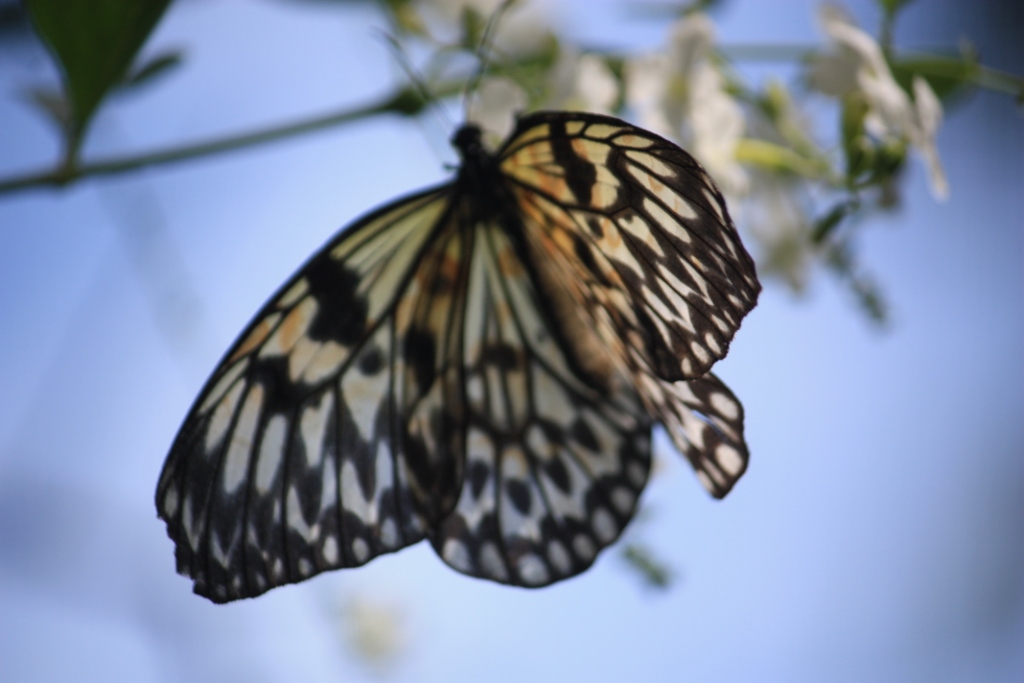
“To a Butterfly” by William Wordsworth [w/ Audio]

Stay near me—do not take thy flight!
A little longer stay in sight!
Much converse do I find in Thee,
Historian of my Infancy!
Float near me; do not yet depart!
Dead times revive in thee:
Thou bring'st, gay Creature as thou art!
A solemn image to my heart,
My Father's Family!

Oh! pleasant, pleasant were the days,
The time, when in our childish plays
My sister Emmeline and I
Together chased the Butterfly!
A very hunter did I rush
Upon the prey:—with leaps and springs
I follow'd on from brake to bush;
But She, God love her! feared to brush
The dust from off its wings.

“Quantum Mutata” by Oscar Wilde [w/ Audio]

There was a time in Europe long ago,
When no man died for freedom anywhere,
But England's lion leaping from its lair
Laid hands on the oppressor! it was so
While England could a great Republic show.
Witness the men of Piedmont, chiefest care
Of Cromwell, when with impotent despair
The Pontiff in his painted portico
Trembled before our stern embassadors.
How comes it then that from such high estate
We have thus fallen, save that Luxury
With barren merchandise piles up the gate
Where nobler thoughts and deeds should enter by:
Else might we still be Milton's heritors.