Wetlands Cattle [Haiku]

cattle graze:
each step sinking deeper —
lured by lush green.

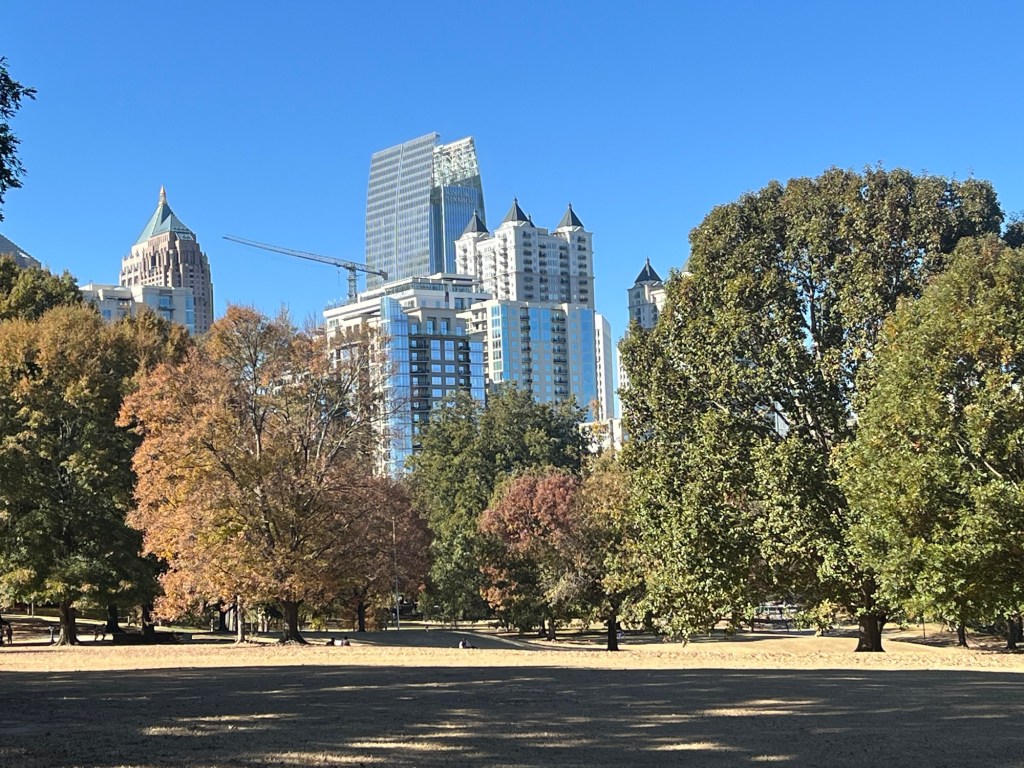
DAILY PHOTO: Trees & Towers, Piedmont Park

PROMPT: Live Anywhere

Daily writing prompt
If you could live anywhere in the world, where would it be?

Someplace inexpensive, with beaches and hikeable hilly / mountainous terrain within a reasonable distance, and where beer prices are not disproportionately high vis-a-vis the general cost of living. FYI — I call the latter the “stick-up-the-bum” index because if beer prices are relatively high, it usually means they are heavily sin-taxed (it’s not an expensive product to make,) and so disproportionately high beer prices suggest the society is trying to micromanage personal behavior. I may or may not want a beer (I’ll want one,) but I prefer to live in a society with a live-and-let-live mentality. Candidates exist in Southeast Asia, Latin America, and the Central Asia / Caucus region.
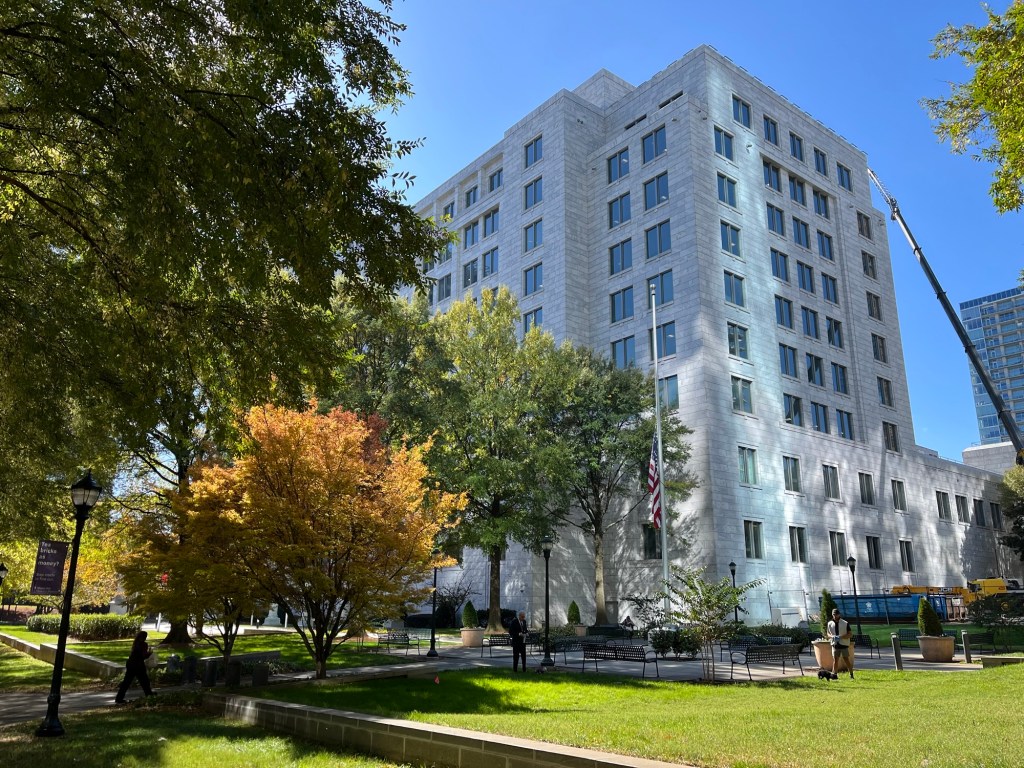
DAILY PHOTO: Atlanta Federal Reserve on an Autumn Day

A Space Between [Free Verse]

The space between

this & that,

us & them,

then & now,

now & later.

The pregnant pause —
a pause without cause —

Just senseless nothing
in between.

Autumn Rain [Haiku]

wet yellow leaves
stick to the sidewalk
after Autumn rain.
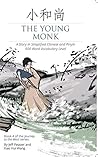
BOOK: “The Young Monk” [Vol. 4 of the “Journey to the West” Series] ed. by Jeff Pepper / trans. by Xiao Hui Wang

The Young Monk: A Story in Simplified Chinese and Pinyin, 600 Word Vocabulary (Journey to the West Book 4)The Young Monk: A Story in Simplified Chinese and Pinyin, 600 Word Vocabulary by Jeff Pepper
My rating: 5 of 5 stars

Publisher Site — Imagin8

This book, Volume 4 of the Journey to the West series, takes a turn from the books thus far. While the first three volumes (Ch. 1-7) focus on Sun Wukong, the Monkey King, this volume leaves him under the mountain where the last volume left him, and — instead — focuses on the origin story of Xuanzang — the monk who is sent by the Buddha to India to get scriptures in the original book — based on the real-world monk who did travel to India to complete the selection of Buddhist scriptures available to Chinese Buddhists.

The monk’s story might not sound like it would be as thrilling as that of the superpowered immortal monkey, but it’s a gripping tale. The story begins before Xuanzang is born and ends in his eighteenth year. So, before he is assigned to travel West to get scriptures.

As I’ve said in earlier reviews, I really like the approach of this series. It has Simplified Chinese script, pinyin, an English translation, and a full glossary of terms used, and it’s organized so as to facilitate reading by a language learner.

I continue to recommend this series for language learners who need a linguistically simplified text to be able to read.

View all my reviews

PROMPT: Coolest Thing

Daily writing prompt
What’s the coolest thing you’ve ever found (and kept)?

I once found a $100 bill half frozen into the snow on a random stretch of sidewalk in a not-so-great neighborhood. It’s only now occurring to me that it was literally the coolest thing I’ve ever found because it was encased in ice and snow. I acknowledge it’s not so “cool” in the colloquial sense of the word.
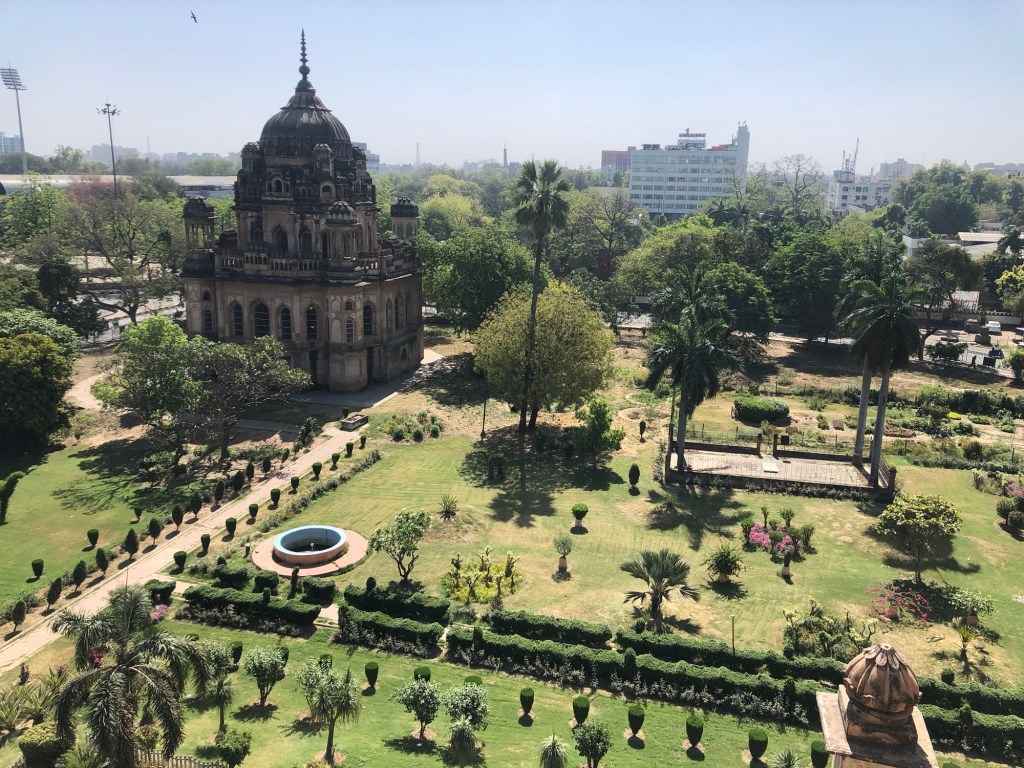
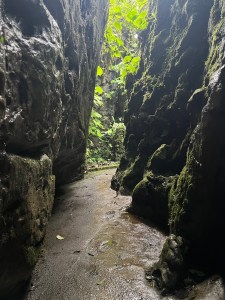
DAILY PHOTO: View from the Tomb of Saadat Ali Khan

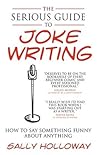
BOOK: “The Serious Guide to Joke Writing” by Sally Holloway

The Serious Guide to Joke Writing: How to Say Something Funny about AnythingThe Serious Guide to Joke Writing: How to Say Something Funny about Anything by Sally Holloway
My rating: 4 of 5 stars

Google Books Page

This book presents a textual version of the author’s joke writing seminar. It offers a few techniques for joke writing that are informed by the premises that: 1.) jokes exist out in the world for one to find — rather than to create; 2.) Anyone who is funny with his or her friends can be a funny joke writer, BUT not without effort. That effort comes in the form of training oneself to look at words and phrases in unconventional ways and in applying (largely mechanical) processes to coax or wheedle the jokes out of the ether. I say “largely mechanical” because there is a chapter on stream-of-consciousness joke writing, but the heart of the book is a process called joke-web building that is a step-by-step approach to finding humor wherever it may hide.

The book alternates practical and “theoretical” chapters. The “theoretical” chapters are mostly about the psychology that gets in one’s way as a joke writer and the ways around it. That is, those parts deal with the value of breaks and the need to manage anxiety. The practical chapters explain the procedures and have Q&A style troubleshooting sections in addition to a description of the process.

I found the book to be interesting and a quick read. Some of the procedures seem a bit tedious, but they do produce results. It may be possible to streamline them to one’s own situation.

View all my reviews