BOOK: “This and That” by Ryōkan [trans. by Stan Ziobro and John Slater]

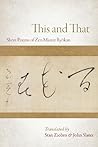
This and That: Selected Short Poems of Zen Master RyokanThis and That: Selected Short Poems of Zen Master Ryokan by Ryōkan
My rating: 5 of 5 stars

Publisher Site — Monkfish Books

Release Date: March 24, 2026

This is a new selection of Ryōkan’s short poetry (haiku, tanka, and Chinese-Style poems) as translated by Stan Ziobro and John Slater. Ryōkan was a Buddhist monk who lived across the late 18th / early 19th century. These translations are evocative and present the sometimes whimsical and sometimes haunting work of Ryōkan well. While the forms are just three, i.e. haiku, tanka, and kanshi [Japanese Poetry in the Chinese Style,] the style varies, some being imagist and some being more philosophical. Being a monk, Ryōkan’s work is heavily influenced by a Buddhist worldview, as well as by philosophies that interacted with Buddhism — e.g. Taoism.

While I usually have no basis to judge a translation as translation and am left to reflect on it purely as stand-alone verse, in this case, I have enough experience reading translations of Ryōkan to have a feel for his work. I immediately recognized some of Ryōkan’s more famous poems: e.g. the one’s translated in this book as, “Poems? no way // when you see that my // poems aren’t poems // then we can talk poetry” or “Left behind by thief // bright moon // in my window” Yet, at the same time, I felt the translators left some of their own imprint on the poems, and their influence / voice resonated with me.

The book does have front matter to set the stage for readers, and there is a “Notes” section that includes useful background on the poems. I found this ancillary matter useful, but not excessively verbose or intrusive.

If you enjoy Japanese poetry or Buddhist influenced poetry, I’d highly recommend this selection.

View all my reviews

BOOK: “The Ruins” by Ye Hui [Trans. by Dong Li]

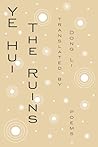
The Ruins: PoemsThe Ruins: Poems by Hui Ye
My rating: 5 of 5 stars

Publisher Site — Deep Vellum

This is a Chinese-English bilingual edition of Ye Hui’s first poetry collection. The poems use stark imagery with occasional instances of philosophizing and surreal statements to create a vivid and provocative set of poems.

As I’m learning Chinese, it was nice to have the original poems in Simplified Chinese script next to the English translations. While I’m not up to a reading level sufficient to taking on Modern Poetry (any poetry for that matter,) it was useful to peruse the Chinese text. I did appreciate how much vibrance the author wrings out of a relatively simple vocabulary.

I’d highly recommend this collection for poetry readers.

View all my reviews

BOOK: “Tell My Horse” by Zora Neale Hurston

Tell My Horse: Voodoo and Life in Haiti and JamaicaTell My Horse: Voodoo and Life in Haiti and Jamaica by Zora Neale Hurston
My rating: 5 of 5 stars

Author’s Book Site — Zora Neale Hurston Trust

This is a beautifully written and fascinating look at Jamaica, Haiti, Voodoo, Zombies, and the sinews that run between them. The first half of the book reads largely like a travelogue of, and introduction to, Jamaica and Haiti, respectively. In this half, Voodoo is only mentioned here and there as an aside. There is much more discussion of culture, race, and politics, notably the disheartening politics of Haiti. (I should point out for those unfamiliar with Harlem Renaissance figures, this book dates to the 1930’s — so current affairs are not addressed, but — unfortunately — Haiti has a long history of troubles.) The second half of the book delves much more intensely into Voodoo and the supernormal happenings broadly connected to it. Hurston’s exploration is neither as a tried-and-true believer, nor as a hardcore sceptic; rather she takes a more journalistic objectivity.

The language of this book is splendid, and Hurston produces many a quotable line. It is true that the subject matter, Voodoo, is extremely compelling, but this book is more than just a collection of tales of magic, superstition, and the weird. It also offers depth of insight into the cultures of these countries and their peoples. Hurston frequently mentions the differences between classes on the matter of Voodoo, the upper-class rejecting it as mere superstition and the lower classes often engaging with it as a way of life.

I’d highly recommend this book, not only for those interested in learning more about Caribbean Voodoo practices, but also for travelers with an intense curiosity about culture.

View all my reviews

BOOK: “The Immortal Peaches” [Vol. 3 of “Journey to the West”] Ed. by Jeff Pepper / Trans. by Xiao Hui Wang

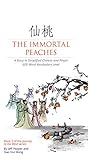
The Immortal Peaches: A Story in Simplified Chinese and Pinyin, 600 Word Vocabulary (Journey to the West Book 3)The Immortal Peaches: A Story in Simplified Chinese and Pinyin, 600 Word Vocabulary by Jeff Pepper
My rating: 5 of 5 stars

Publisher Site – Imagin8

This is the third volume in this Journey to the West series aimed at language learners. It covers Chapters 5, 6, and 7 of the book, which includes events from Sun Wukong’s return to heaven acknowledged with the title “Great Sage Equal to Heaven” through the conflicts that result from his lack of control and decorum to Buddha’s bet with Monkey King.

I’ve enjoyed this series. The pinyin is interspersed with an abridged and linguistically simplified Chinese telling of the story on a paragraph basis, and the English translation is at the end. This allows one relatively quick access to the pinyin without continually cheating by stray glance. Also, one can determine whether one wants to read the English translation before or after reading the Chinese, as is appropriate to one’s level and language learning strategy. The book also has a glossary of all the Chinese words it uses, and the words beyond the most basic (beyond HSK3, or so) are footnoted. (I read on kindle, so looking up translations of any words is as quick as highlighting them.)

This is a great language learning tool, featuring one of Chinese literature’s most engrossing stories. I’d highly recommend it for those learning Mandarin Chinese with Simplified script.

View all my reviews

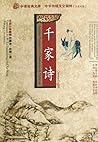
BOOK: “Golden Treasury of Quatrains and Octaves” [i.e. 千家诗] Trans. by Xu Yuanchong and Xu Ming

Golden Treasury of Quatrains & OctavesGolden Treasury of Quatrains & Octaves by Xu. Yuanchong (translator)
My rating: 5 of 5 stars

Publisher Site — China Translation Corp

This is the bilingual (Chinese-English) edition of an anthology of Tang and Song Dynasty poems commonly known in Chinese as 千家诗 (it has a much longer formal title,) which was jointly translated by Xu Yuanchong and Xu Ming (no relation.) The book is organized into four parts by the form of poem: 7-character line quatrains, 7-character line octaves, 5-character line quatrains, and 5-character line octaves. The anthology includes poems by Li Bai, Du Fu, Wang Wei, Meng Haoran, Jia Dao, Ouyang Xiu, Yang Wanli, Su Shi, and many other important Tang and Song poets — from Emperors to Hermits. That said, while the aforementioned Chinese title suggests there are works of a thousand poets involved, that’s an exaggeration. (And that’s probably all the better. While this was the golden age of Chinese poetry, going that wide into surviving poetry might involve hitting the dregs.)

Each entry has a title, byline, the poem in Simplified Chinese script and pinyin (Romanized phonetic script,) an English language translation, notes in Chinese, and a line or two of commentary in English. All but the seven-character line octaves take up just one page per poem. (Seven-character line octaves take two pages per poem.)

This is a great anthology. There’s an introduction to give insight into what approach the translators took. They stuck to rhyming verse to emulate the originals in form, but more can be learned from the introduction.

I’d highly recommend this anthology for poetry readers.

View all my reviews

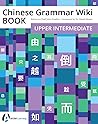
BOOK: “Chinese Grammar Wiki BOOK: Upper Intermediate” ed. by John Pasden

Chinese Grammar Wiki BOOK: Upper IntermediateChinese Grammar Wiki BOOK: Upper Intermediate by John Pasden
My rating: 5 of 5 stars

Publisher Site — AllSet Learning

This is the third and final book in this series. It’s a straightforward grammar that’s easy to use and well-organized. The book contains basic rules in a concise format, examples, and any exceptions or points of confusion that may exist. With examples, it presents the Hanzi (Chinese characters,) pinyin (Romanized phonetic script,) and English translation adjacently. (This is a feature that I don’t like in readers, but which I find useful in a grammar.)

If you’re trying to learn the basics of Mandarin Chinese in Simplified Script, this is a useful series. I can’t speak to how good it is or isn’t for someone who intends to take the HSK tests, but for my purposes it was just what I needed with not much more (no extraneous information or complications.)

View all my reviews

FIVE WISE LINES [October 2025]

Gwalior Fort on Gopachal Hill in Gwalior, Madhya Pradesh, India

I had better never see a book
than to be warped by its attraction clean out of my own orbit,
and made a satellite instead of a system.

ralph waldo emerson; The american scholar

Free should the scholar be, — free and brave.

Ralph waldo emerson; The American Scholar

If you think adventure is dangerous, try routine, it is lethal.

Paulo coelho

What you’re supposed to do when you
don’t like a thing is change it.
If you can’t change it,
change the way you think about it.
Don’t complain.

Maya angelou

No man ever steps in the same river twice,
for it’s not the same river
and he’s not the same man.

Heraclitus

PLAY: “A Streetcar Named Desire” by Tennessee Williams

A Streetcar Named DesireA Streetcar Named Desire by Tennessee Williams
My rating: 5 of 5 stars

Available online – Internet Archive

I’ve never seen the play, nor the movie. Of course, this is one of those works that has so scrawled itself across pop-culture that it’s impossible to go in without some reference from it kicking around in one’s brain, be it the pained shout of “STELLA!” or character names like “Blanche DuBois” or “Stanley Kowalski.” Even the name of the plantation on which the fallen socialite sisters grew up, Belle Reve, has been lent to a prison for supernatural villains in the world of DC Comics.

At the play’s heart are two sisters raised in a wealthy Southern family. One, Stella, has adapted well to the family’s fall from grace. Stella has married a fellow who is rough around the edges (to say the least,) Stanley, but Stella is satisfied that Stanley is a dependable provider — even if he does rough her up a bit now and again. The other sister, Blanche, hasn’t coped nearly so well. Blanche lies perpetually to try to shield herself from reality — and to present a more appealing reality to others. It is when Blanche, having nowhere else to go, moves into the small New Orleans apartment of Stanley and Stella that the tension is set to form the play’s story.

I enjoyed reading this play. It’s well-paced and effectively mixes comedy and drama. It’s in character building where the play shines. The main characters are well-defined and behave quite believably within the context of each one’s neuroses and vices. The constant conflict between Blanche and Stanley drives the story.

I’d highly recommend this for readers of plays and / or of American Literature.

View all my reviews

BOOK: “The Virtues of the Table” by Julian Baggini

The Virtues of the Table: How to Eat and ThinkThe Virtues of the Table: How to Eat and Think by Julian Baggini
My rating: 4 of 5 stars

Publisher Site – Granta

This book examines the nexus of food and philosophy, from the ethics of butchery to the virtue of authenticity to whether hedonism is a necessary component of eating philosophically. Much of the book challenges or debates conventional wisdoms such as whether local foods are inherently better, whether dining is always and everywhere a social activity (or should be,) and whether organic is always preferable. The book covers a wide variety of topics including: mindfulness, gratitude, skepticism, fasting, willpower, spontaneity, technology, etc.

The book offers many ideas for reflection though sometimes it felt like it rambled on for more than the issue in question necessitated.

Each chapter ends with a discussion of a particular food and its preparation as thought relevant by the author. This is a nice grounding mechanism for discussion that tends otherwise to be cerebral and philosophic.

I’d recommend this book for anyone interested in thinking more about food and its intersection with philosophy of life.

View all my reviews

BOOKS: “John Brown” by W.E.B. Du Bois

John BrownJohn Brown by W.E.B. Du Bois
My rating: 5 of 5 stars

Available free online at Project Gutenberg

“John Brown’s Raid on Harpers Ferry” is one of those historic events like the “Teapot Dome Scandal” that American kids have to memorize a rote fact about to regurgitate on an American History test a couple times during their scholastic lives, never to be thought of much again, forever a familiar name lacking all depth of understanding. (At least that’s how it was in my day.) Unlike the Teapot Dome Scandal, which I suspect is not learned about in detail because it was somewhat complex and boring, I think the minimalist coverage of John Brown might reflect a bit of national embarrassment. For Brown’s tale is not complicated, and it’s certainly not boring. Brown thought slavery was an abomination, and he devoted his life to freeing slaves by whatever means he could, which culminated in a raid on an arsenal at Harper’s Ferry, West Virgina, at the convergence of the Potomac and Shenandoah Rivers, a raid intended to liberate weapons to the cause of arming freed slaves and other abolitionist fighters.

It’s a shame that more is not learned about John Brown because he was such a fascinating and principled individual, and in a sense his story isn’t just an embarrassing tale of a sparse few virtuous people against a mainstream that was — at best — indifferent to slavery. But there is a potential for pride in the fact that Brown and those who fought with him were able to see slavery for what it was and to stand strong against that mainstream, to make the fight of the oppressed their fight and — in the case of Brown and others — to pay the ultimate price in the conduct of that fight.

W.E.B. Du Bois’ biography of John Brown came out in 1909 and may not be written in the novel-esque style that a writer today would write it, but it is well-written and readable. Du Bois’ book is a full biography of Brown, if focused on his abolitionist aspect. Du Bois tells a little of Brown’s backstory and of his work life and then explores his experiences fighting in Kansas. However, this book does really shine in its account of the Harpers Ferry Raid and its aftermath.

Readers interested in American History or the biographies of virtuous individuals are urged to read this account of the life of John Brown.

View all my reviews