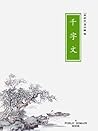
BOOKS: 千字文 [Thousand Character Essay] by 周兴嗣 [Zhou Xingsi]

千字文千字文 by 周兴嗣
My rating: 4 of 5 stars

A version with English commentary can be found at the IFA Gallery

This short work, consisting of just one-thousand characters, is first and foremost a teaching tool for children. While it presents a thousand of the most important Chinese characters, it also delivers lessons on history, ethics, philosophy, and culture by way of short sayings.

It’s arranged into 250 4-character phrases (125 sentences) and reads as a lyric poem, though because it dates to the Sixth Century, the degree to which the rhyme scheme holds varies depending upon the which spoken language one speaks (e.g. Mandarin, Cantonese, or Hakka.)

There have been different versions of this work over the centuries.

This is a much beloved work of literature among Chinese, though its sayings do not necessarily hold up as well as works like Sunzi’s Art of War or Laozi’s Daodejing. Some do, but most are much less relevant than when written.

As someone learning Chinese, I’d highly recommend this work as a way to expose oneself to language while gaining insight into Chinese culture.

View all my reviews
Lanterns [Kyōka]

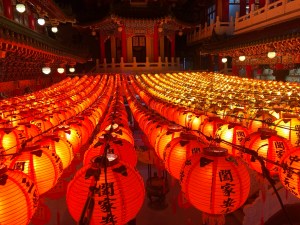
rows of lanterns —
a jack-o-lantern patch —
lights the temple
on a dark, rainy night;
rain splats on a tin roof.

BOOKS: “Wen-Tzu” Trans. by Thomas Cleary

Wen-TzuWen-Tzu by Lao-Tzu
My rating: 5 of 5 stars

Publisher Site – Shambhala

This work is presented as “further thoughts of Laozi [老子].” Readers of the Dàodé jīng [道德经] will recognize many a familiar statement of that work, but this book is much more extensive and detailed. I say “presented as” because scholars no longer believe this was a product of Laozi and his lifetime (if such an individual ever existed.) For one thing, the book seems more syncretic than the Dàodé jīng, that is to say there are points at which it sounds strikingly Confucian — rather than purely Taoist.

As with the Dàodé jīng the Wénzǐ [文子] covers a lot of ground from metaphysics to individual ethics to political philosophy, but this book has more room to sprawl on each subject.

As with other Cleary translations, it’s a pretty readable translation.

I’d recommend it for readers interested in Chinese Philosophy.

View all my reviews

“Wang Chuan Village After Rain” [积雨辋川庄作] by Wang Wei [王维]

Smoke slowly rises from sodden woods;
Millet 's steamed to feed the fieldhands;
Egrets fly over foggy paddies;
Hidden birds sing from lush tree stand.
Mountain hikers study hibiscus,
Under dewy pines chew sunflower seeds,
Give mat space to any old traveler.
Gull and I: wary of each other's deeds.

Original Poem in Simplified Chinese:

积雨空林烟火迟, 蒸藜炊黍饷东菑。
漠漠水田飞白鹭, 阴阴夏木啭黄鹂。
山中习静观朝槿, 松下清斋折露葵。
野老与人争席罢, 海鸥何事更相疑?

BOOKS: “The Cultural Revolution: A Very Short Introduction” by Richard Curt Kraus

The Cultural Revolution: A Very Short IntroductionThe Cultural Revolution: A Very Short Introduction by Richard Curt Kraus
My rating: 4 of 5 stars

Publisher Site – OUP

The decade-long Cultural Revolution in China is generally looked upon as a bleak time and place to be alive. This brief guide reflects on the political, economic, and cultural dimensions of Mao’s attempt to root out capitalist and middle-class influence from Chinese society. The book also reflects upon other events in China during the period (e.g. detente) and how they related to the Cultural Revolution. It also explores how China came out of the Cultural Revolution.

The author makes efforts to be diplomatic and evenhanded about the event. Some readers will find this beneficial to their purposes and may even see the occasional glimmer of a bright side to a dismal period in human history. However, one should not expect to gain any visceral insight into the sadness and chaos of the era. While there was discussion of not only the end of the Cultural Revolution but what China’s continued path looked like, it didn’t get much into whether there was a long shadow to the revolution and what that shadow might look like.

I found the book informative though there were dimensions into which I would have liked to gain more insight (e.g. it doesn’t go much into the influence on religion, nor on more peripheral arts,) but that’s the challenge of such a concise guide. Also, the author is of a political science background, and this informs what elements are given more or less discussion.

View all my reviews

BOOKS: “The Life of Hiuen-Tsiang” by Hui-li [trans. by Samuel Beal]

The Life of Hiuen-TsiangThe Life of Hiuen-Tsiang by Hui-li
My rating: 4 of 5 stars

Available free online through the Indian Gov’t

Those familiar with Chinese Literature (or smash-hit video games) will be acquainted with the tale of Sun Wu Kong, the Monkey King. The central event of the novel Journey to the West is a Chinese Buddhist monk traveling to India to gather a complete set of the Buddhist canon. In the novel (and video game, Black Myth: WuKong,) the monk’s name is Tang Sanzang (in translations – and movie / television – he’s sometimes called Tripitaka, which is actually the name of the Pali Canon — the original Buddhist books, themselves.) In real life there was also such a monk, and his name was Xuanzang (玄奘, Romanized as Hiuen-Tsiang in an earlier system,) and this book describes his travels to, through, and back from India.

It turns out the monk was not escorted by a god-tier mythical creature and his two superpowered compatriots (i.e. Pigsy and Sandy.) For this reason, the actual Xuanzang occasionally got threatened, robbed, and was once almost killed by riverine pirates. This book is a travelogue of Xuanzang’s journeys through China, Central Asia, [present-day] Afghanistan and Pakistan, and throughout India.

Needless to say, this book isn’t as taut and thrilling as the fictional account with its gods and monsters, but – for those with historical and geographic interests – it’s not without appeal. It does have extensive description of Xuanzang’s visits with various monks and royalty that is dry reading as well as discussions of where Xuanzang’s collection stood at any given point, but there are a few intense events and harrowing moments.

If you’re interested in Buddhist history, you may want to give this book a look.

View all my reviews

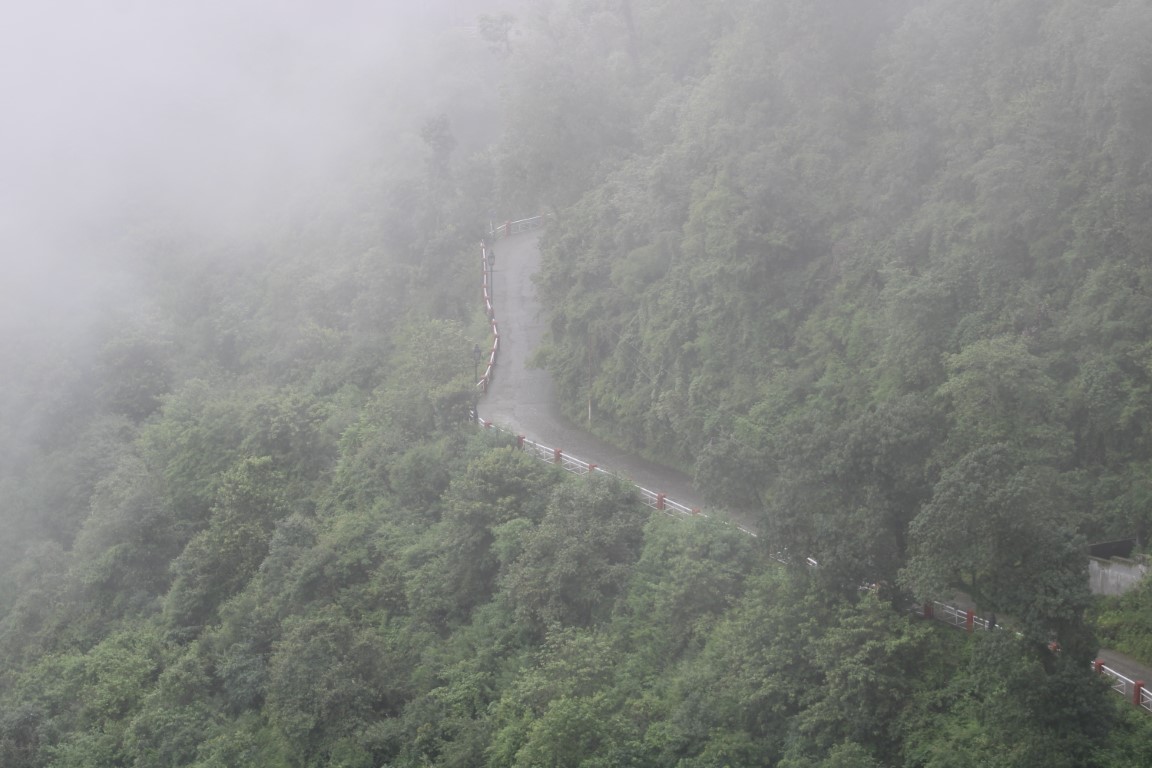
DAILY PHOTO: A Hazy Day in Xian

Image

BOOKS: 孙子兵法 [Sunzi’s Art of War] by Sunzi

孙子兵法白话全译孙子兵法白话全译 by 史哲 文
My rating: 5 of 5 stars

Available online – YellowBridge

In thirteen short chapters, Sunzi lays out a masterclass in strategy. One sees in Sunzi’s work the mark of a Taoist mindset, seeing it in the book’s emphasis on engaging in warfare only when necessary, doing things the easy way whenever possible, and never letting one’s ego write checks one isn’t able to cash in lives.

There is good reason that this is one of the world’s most well-known (if not the most well-known) treatise on warfare. Far from being complicated and technical, this guide is full of pithy teachings such as: “War is the way of deception.” “No country ever benefited from a long war.” “Defeating the enemy without fighting is supreme excellence.” “To be undefeated lies in oneself, to be victorious lies in the enemy.” “Know the enemy and yourself and victory is assured; know heaven and earth and victory is complete.” (And these teachings are even more concise in the original Chinese.)

In addition to basics like leadership, maneuver, and terrain, the book devotes chapters to both the use of fire and spies in warfare. (One’s level of understanding is central to strategic victory throughout Sunzi’s teachings.)

I’d highly recommend this book for anyone interested in strategy, martial arts, or other strategic pursuits. The book may be ancient, but it’s not obsolete by any means.

View all my reviews

BOOKS: “Buddha Jumps Over the Wall” by Ying Chang Compestine

Buddha Jumps over the Wall, and Other Curiously Named Classic Chinese Dishes: A Graphic Cookbook—26 Recipes & StoriesBuddha Jumps over the Wall, and Other Curiously Named Classic Chinese Dishes: A Graphic Cookbook—26 Recipes & Stories by Ying Chang Compestine
My rating: 5 of 5 stars

Publisher’s Site – Chronicle Books

Cookbooks don’t get more interesting than this. As the title suggests, the author selected dishes that have colorful names (and often histories or folklore to match) and presents lessons in culinary history as well as teaching the reader how to make each dish. The graphic novel format conveys these stories compactly and with a bit of added liveliness. The graphic novel approach is also used to “demonstrate” the preparation process — in lieu of photographs.

In addition to the twenty-six recipes (5 appetizers, 16 main course, and 5 desserts,) the book has five appendices and some front matter to both help readers who are entirely new to Chinese cooking as well as those who’d like a bit more depth of culinary cultural insight. (I should point out that the book looks at Chinese food broadly, including items like Chop Suey and Fortune Cookies that developed outside of China, and either don’t exist within China or have subsequently been introduced from foreign lands.)

If you are interested in learning to cook Chinese food, or are interested in Chinese culinary history and culture, I’d highly recommend this book.

View all my reviews

DAILY PHOTO: Drum Tower [鼓楼] of Beijing