“The Bumblebee” by James Whitcomb Riley [w/ Audio]

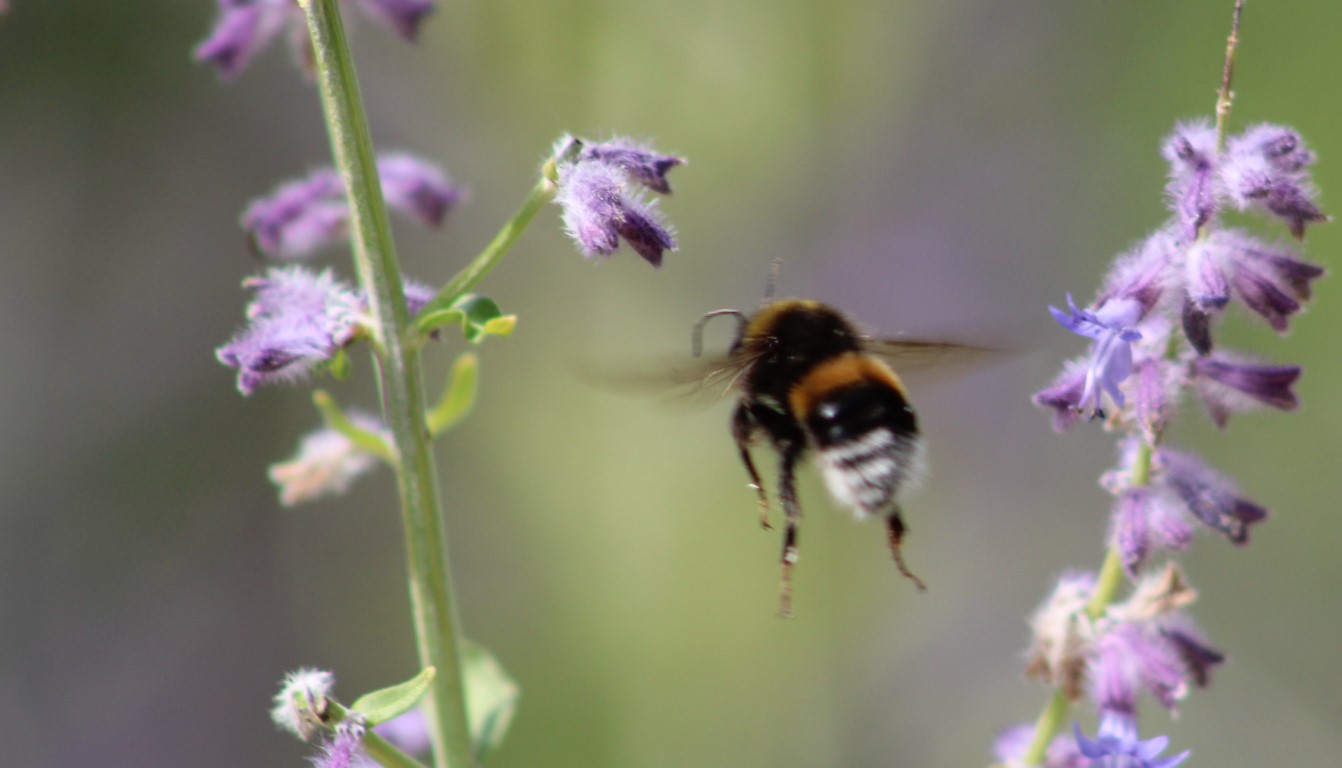
You better not fool with a Bumblebee!--
Ef you don't think they can sting -- you'll see!
They're lazy to look at, an' kind o' go
Buzzin' an' bummin' aroun' so slow,
An' ac' so slouchy an' all fagged out,
Danglin' their legs as they drone about
The hollyhawks 'at they can't climb in
'Ithout ist a-tumble-un out ag'in!
Wunst I watched one climb clean 'way
In a jimson-blossom, I did, one day,--
An' I ist grabbed it -- an' nen let go--
An' "Ooh-ooh! Honey! I told ye so!"
Says The Raggedy Man; an' he ist run
An' pullt out the stinger, an' don't laugh none,
An' says: "They has be'n folks, I guess,
'At thought I wuz prejudust, more or less, --
Yit I still muntain 'at a Bumblebee
Wears out his welcome too quick fer me!"

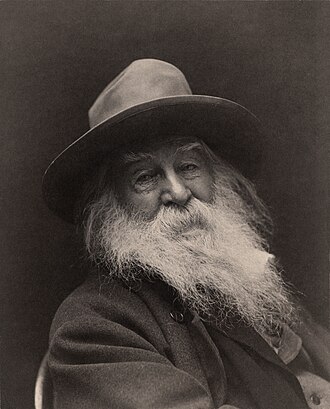
“Are you the new person drawn toward me?” by Walt Whitman [w/ Audio]

Are you the new person drawn toward me?
To begin with, take warning, I am surely far
different from what you suppose;
Do you suppose you will find in me your
ideal?
Do you think it so easy to have me become
your lover?
Do you think the friendship of me would
be unalloy'd satisfaction?
Do you think I am trusty and faithful?
Do you see no further than this facade,
this smooth and tolerant manner of me?
Do you suppose yourself advancing on real
ground toward a real heroic man?
Have you no thought, O dreamer, that is
may be all maya, illusion?

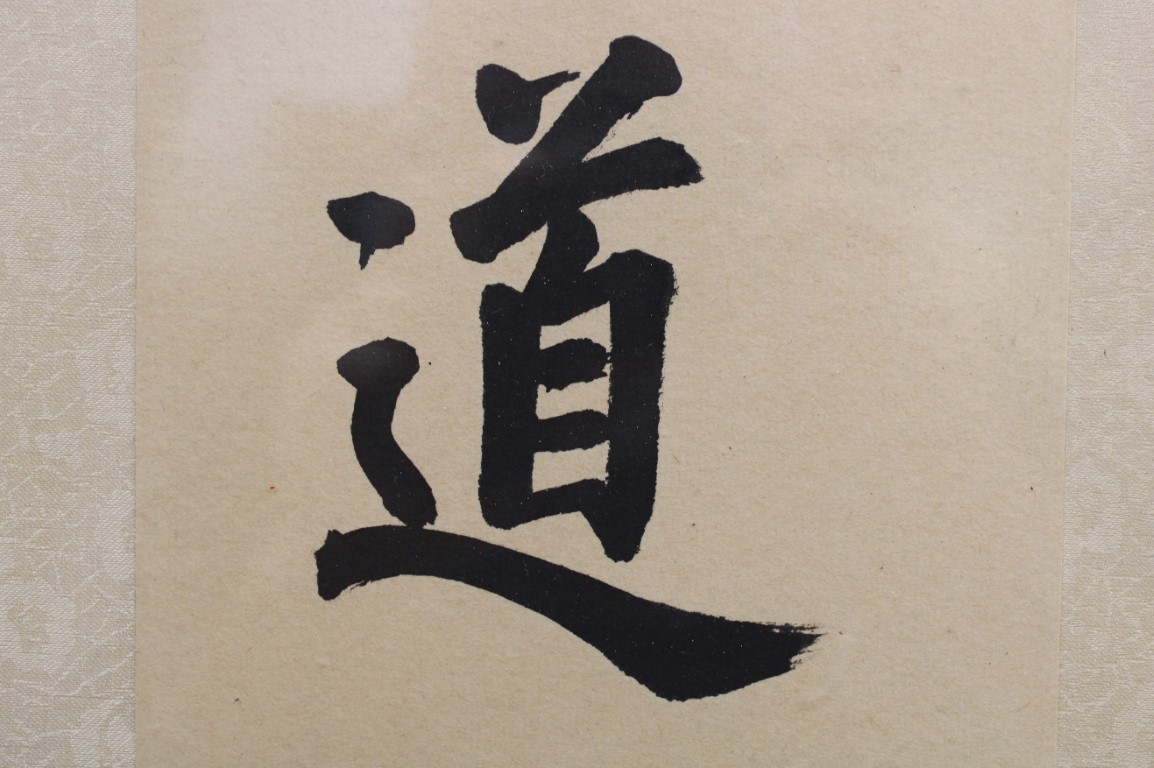
BOOKS: 道德经 by 老子 [a.k.a. Daodejing by Laozi]

老子道德经校释(简体中文版): 中华传世珍藏古典文库 (Chinese Edition)老子道德经校释(简体中文版): 中华传世珍藏古典文库 by 王弼
My rating: 5 of 5 stars

Available in Traditional & Simplified Chinese [w/ multiple translations] at YellowBridge

Packed into the 81 brief chapters of this book is the core Taoist philosophy on life, human relationships, governance, and war. Most often, it offers a wisdom that turns conventional wisdom on its head, advocating for inaction over action, less over more, simplicity over complication, and for recognizing the usefulness of what isn’t.

Some of the book’s central ideas are captured in these quotes:

上善若水。水善利万物而不争. “The greatest good is like water. It benefits all without fighting.” [Ch. 8]
金玉满堂,莫之能守 “A house full of jade and gold cannot be guarded.” [Ch. 9]
知人者智,自知者明。胜人者有力,自胜者强。“He who knows others is smart; he who knows himself is enlightened. He who conquers others has power; he who conquers himself is mighty.” [Ch. 33]
柔胜刚,弱胜强。“Softness overcomes hardness; weakness overcomes strength.” [Ch. 36]
道常无为而无不为。“The Dao is constant inaction, yet nothing is left undone.” [Ch. 37]
善者,吾善之;不善者,吾亦善之;德善。“The good, I treat well; the bad, I also treat well. Yeah Virtue!” [Ch. 49]
知者不言,言者不知。“He who knows does not speak; he who speaks does not know.” [Ch. 56]
千里之行,始于足下。“The journey of a thousand li (“miles”) begins with a single step.” [Ch. 64]
天之道,不争而善胜 “The way of heaven is to win without fighting.” [Ch. 73]
信言不美,美言不信。“True words aren’t pleasing; pleasing words aren’t true.” [Ch. 81]

I think this is one of those works that should be read and reread. It may help rewire your brain in useful ways.

View all my reviews

“Nuns Fret Not at Thier Convent’s Narrow Room” by William Wordsworth [w/ Audio]

Nuns fret not at their convent's narrow room;
And hermits are contented with their cells;
And students with their pensive citadels;
Maids at the wheel, the weaver at his loom,
Sit blithe and happy; bees that soar for bloom,
High as the highest Peak of Furness-fells,
Will murmur by the hour in foxglove bells:
In truth the prison, into which we doom
Ourselves, no prison is: and hence for me,
In sundry moods, 'twas pastime to be bound
Within the Sonnet's scanty plot of ground;
Pleased if some Souls (for such there needs must be)
Who have felt the weight of too much liberty,
Should find brief solace there, as I have found.

BOOKS: “Strange Tales from a Chinese Studio” by Pu Songling [Trans. by John Minford]

Strange Tales from a Chinese StudioStrange Tales from a Chinese Studio by Pu Songling
My rating: 5 of 5 stars

Publisher Site – Penguin

This is a collection of short stories, almost entirely speculative fiction, dating from the Qing Dynasty (specifically, the late 1600’s to early 17oo’s.) Ghosts, folkloric creatures, and Taoist magic all feature prominently in the stories. The stories average about five pages, but with a wide deviation from stories scarcely longer than today’s micro-fiction to extensive pieces. The Penguin edition collects 104 out of a much larger collection of stories.

The best of these stories are clever and highly engaging, and there are many such tales. Being from Qing Dynasty China, the stories offer a perspective different from one’s typical horror and fantasy short stories. Many of the stories prominently feature eroticism, but not graphically so.

As for the weakness of the volume, even though it selects only a portion of Pu Songling’s original, there are many stories that blend together, failing to distinguish themselves. This is most notable among the fox-spirit stories, of which there are just so many. [A number of them are fantastically unique, but others are just variations on the same.] So, the book can seem a bit repetitive in that sense. However, before you get to the point where you feel you can’t read one more fox-spirit story, you’re quite likely to read a tale that blows your mind.

I greatly enjoyed many of the stories herein. Perhaps, the volume could have benefited from further abridgement, but it’s well worth the read.

View all my reviews

“Before I got my eye put out –” (336) by Emily Dickinson [w/ Audio]

Before I got my eye put out --
I liked as well to see
As other creatures, that have eyes --
And know no other way --

But were it told to me, Today,
That I might have the Sky
For mine, I tell you that my Heart
Would split, for size of me --

The Meadows -- mine --
The Mountains -- mine --
All Forests -- Stintless stars --
As much of noon, as I could take --
Between my finite eyes --

The Motions of the Dipping Birds --
The Morning's Amber Road --
For mine -- to look at when I liked,
The news would strike me dead --

So safer -- guess -- with just my soul
Opon the window pane
Where other creatures put their eyes --
Incautious -- of the Sun --

“Yes, I have a thousand tongues” by Stephen Crane [w/ Audio]

Yes, I have a thousand tongues,
And nine and ninety-nine lie.
Though I strive to use the one,
It will make no melody at my will,
But is dead in my mouth.

“Under the Trees…” by Ikkyū [w/ Audio]

Under the trees, among the rocks, a thatched hut:
verses and sacred commentaries live there together.
I'll burn the books I carry in my bag,
but how can I forget the verses written in my gut?

Translation by Kazuaki Tanahashi and David Schneider in Essential Zen (1994) HarperSanFrancisco.

“Mezzo Cammin” by Henry Wadsworth Longfellow [w/ Audio]

Half of my life is gone, and I have let
The years slip from me and have not
fulfilled
The aspiration of my youth, to build
Some tower of song with lofty parapet.
Not indolence, nor pleasure, nor the fret
Of restless passions that would not be
stilled,
But sorrow, and a care that almost killed,
Kept me from what I may accomplish yet;
Though, half-way up the hill, I see the Past
Lying beneath me with its sounds and
sights, --
A city in the twilight dim and vast,
With smoking roofs, soft bells, and
gleaming lights, --
And hear above me on the autumnal blast
The cataract of Death far thundering
from the heights.

BOOKS: “Essential Zen” ed. by Kazuaki Tanahashi & David Schneider

Essential ZenEssential Zen by Kazuaki Tanahashi
My rating: 5 of 5 stars

Google Books Page

This is a collection of short writings (poems, koans, and prose excerpts) on Zen Buddhism arranged into loosely themed sections. The writings tend toward the artistic, creative, and metaphorical, with relatively few straightforward descriptions of technique or philosophy. The writings range from those of Chinese and Japanese monks who lived hundreds of years ago to present-day poets and Zen practitioners. Among the more frequently drawn from sources are: Hanshan, Ikkyu, Dogen, Ryokan, Hakuin, Gary Snyder, Robert Aitken, Seung Sahn, John Daido Loori, Thich Nhat Hanh, and Peter Levitt. But there are many others, including some who have only a single piece included.

There’s a substantial “Notes” section that gives source, translation, and — in some cases — background information. Most of the translations (both Japanese and Chinese) are by the editors, Kazuaki Tanahashi and David Schneider. There are illustrations, but they are all ensō (circular brush paintings) and related forms.

This is a highly readable and insightful collection of short writings, and I’d highly recommend it for individuals interested in Zen or Eastern Philosophy more generally.

View all my reviews