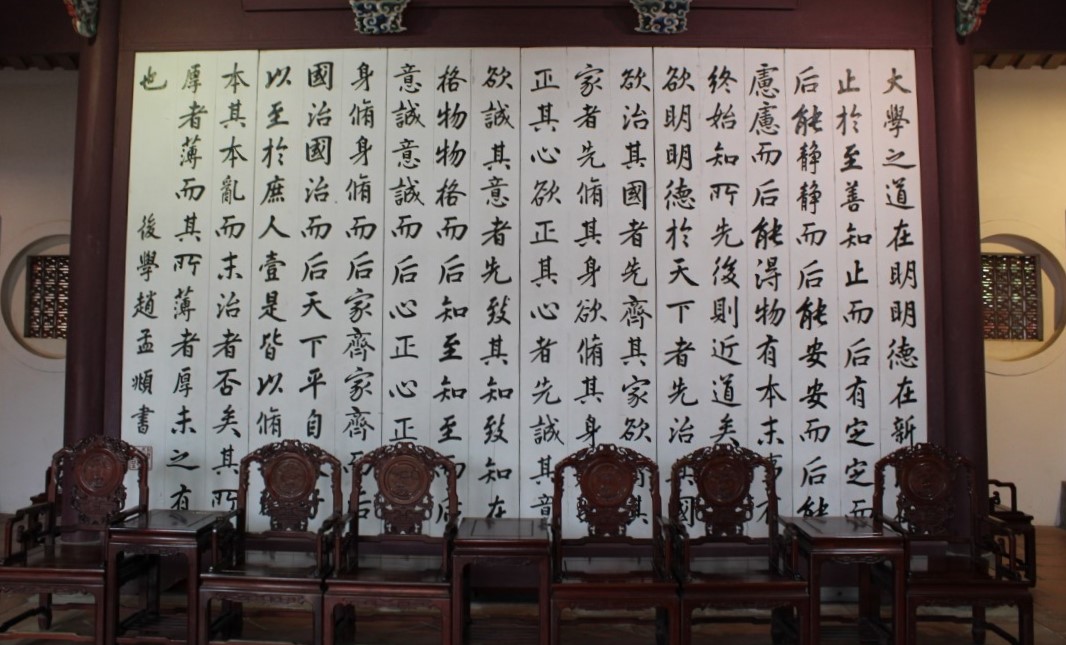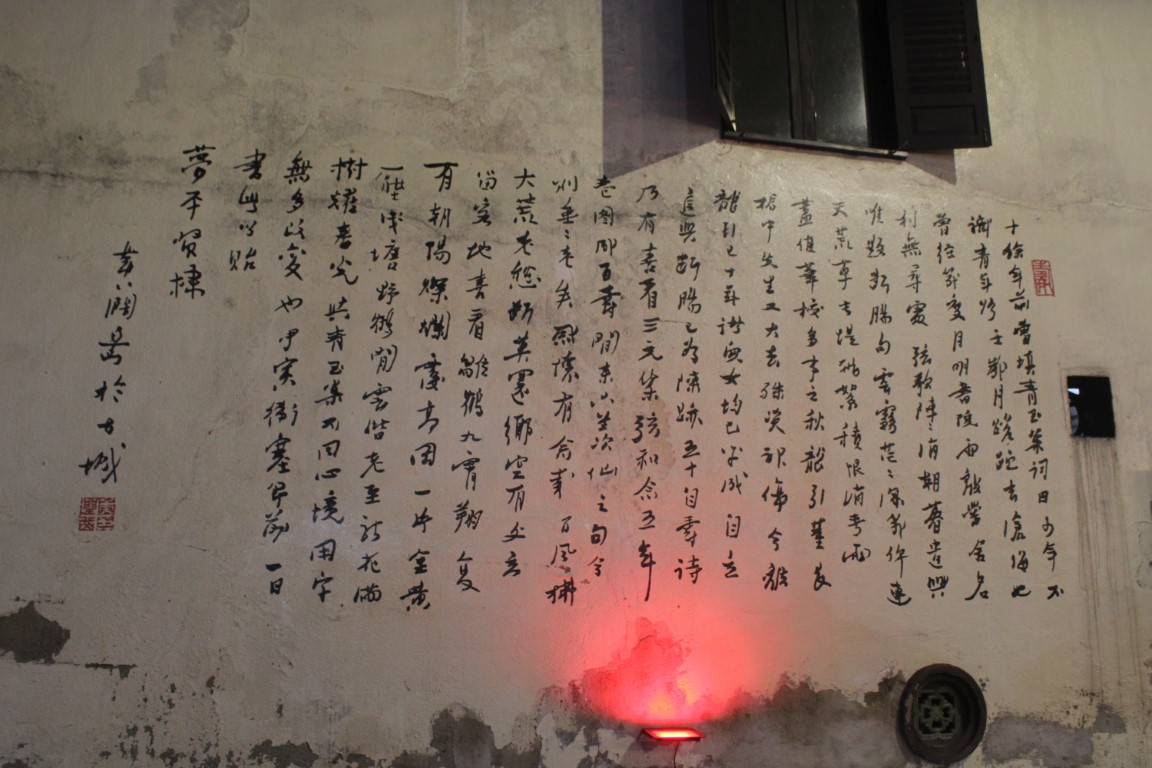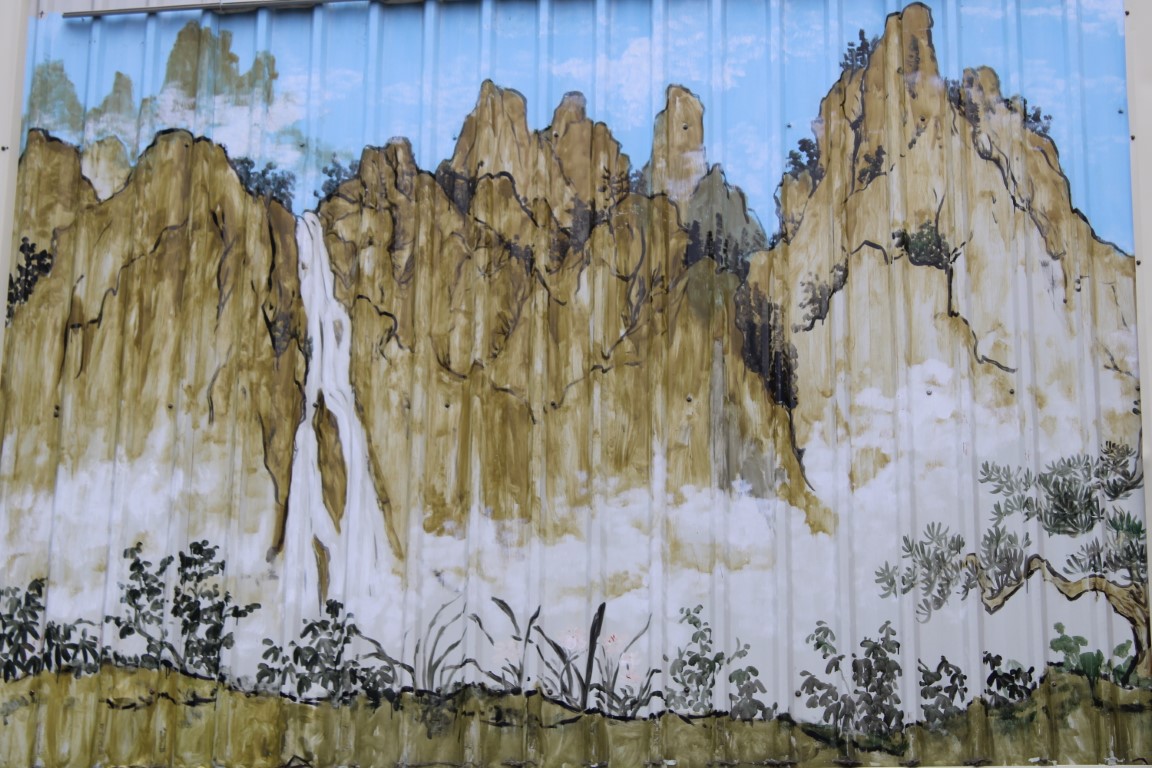
I see the writing on the wall,
and find it untrustworthy
because of all the stories
of valiant warriors
framed for treason
with forged poems
scrawled on tavern walls.
And of the virtuous men
who did write rancorous poems,
but did so while blackout drunk.
And I wonder whether the words
I am seeing are forged or written
under the influence
of intoxicants,
or -- possibly -- they are the truth.
But I cannot read them,
so I find them irrelevant,
though they may convey
crucial information,
such as:
- the existence of a vampire infestation, or
- the presence of cholera in the town well.
So, I can see the writing on the wall,
but I find it neither trustworthy
nor relevant --
(though my life may depend
on its contents.)
Tag Archives: writing
“They shut me up in Prose–” (445) by Emily Dickinson [w/ Audio]
They shut me up in Prose --
As when a little Girl
They put me in the Closet --
Because they liked me "still" --
Still! Could themself have peeped --
And seen my Brain -- go round --
They might as wise have lodged a Bird
For Treason -- in the Pound --
Himself has but to will
And easy as a Star
Look down opon Captivity --
And laugh -- No more have I --
PROMPT: Hobby or Pastime
I don’t collect favorites. I like reading, hiking, writing, swimming, playing, exercise, traveling, cooking… each in its due time for its due time.
PROMPT: Relax
I usually don’t find it too difficult. I find reading and free writing conducive to relaxation. In cases in which I’m wound up, I move and / or exercise intensely. If I ever need to achieve relaxation expeditiously, I use Visama Vritti Pranayama or PMR (progressive muscle relaxation.)
PROMPT: Blog – Change
If I’m being entirely honest, everything that’s come out of this enterprise has been of selfish motive — even those activities that seem like they have broader purpose. For example, I started book reviewing because: a.) I found it disheartening how many books I read that I had virtually no recollection of a couple years down the line, and b.) because, while I felt I knew good writing when I read it, I couldn’t really say what it was that made it good or bad without taking a more analytical look into the matter. (And I was pretty sure good writing wouldn’t come to me osmotically — merely by reading good writing — if I didn’t understand why it was good writing.)
I started recording classic poems to get a better sense of the sound quality of well-crafted poetry (and to become more comfortable with the sound of my own voice.)
I guess the honest answer is that I hope to be smarter and more capable as a result of the practice. It is continuing education, a fostering of the Beginner’s Mind.
“Ancient” [Poetry Style #5] by Sikong Tu [w/ Audio]
Immortals ride truth
With lotus in hand,
As chaos unfolds
Unlogged above land.
Moonrise in the East
As good winds are fanned.
Hill shrine in blue night,
Bell rings clear and grand.
The god is now gone
Beyond border lands
Huangdi* is not there
Great Age to wasteland.
NOTE: The late Tang Dynasty poet, Sikong Tu (a.k.a. Ssŭ-k‘ung T‘u,) wrote an ars poetica entitled Twenty-Four Styles of Poetry. It presents twenty-four poems that are each in a different tone, reflecting varied concepts from Taoist philosophy and aesthetics. Above is a crude translation of the fifth of the twenty-four poems. This poem’s Chinese title is 高古 (Gāo Gǔ,) and it was translated as “Height – Antiquity” by Herbert Giles.
*Huangdi is a name for the Yellow Emperor that is more syllabically friendly than “Yellow Emperor.” In a great oversimplification for the sake of speed and alignment of context, the Yellow Emperor was China’s King Arthur — a mythical leader of great virtue and heroism. The Tang emperors tried to trace lineages back to the Yellow Emperor, but such imagined linkages to the perfect leader are hard to maintain when an Emperor like Xuanzong crashes the ship of state.
PROMPT: Bothered
The second half of the question is quicker and simpler to answer. Things bother me because I — through conditioning and petty impulses — allow them to bother me. I neither blame external circumstances, nor accept that said externalities can be responsible for my state of mind. I could remain unbothered by the things that bother me, with enough work to break engrained patterns. I should also note that I could choose to be bothered by a great many happenings that don’t bother or offend me in the slightest.
As for what bothers me, the list — sadly — remains many. That said, I don’t think it’s wise to broadcast the things that get under one’s skin out into the universe. Just like I wouldn’t announce if I had a gimpy knee or a weak jaw to a general audience that might include those who wish me ill. It just seems strategically unwise.
“Untitled” [Pronunciation Poem] by Anonymous* [w/ Audio]
I take it you already know
Of tough and bough and cough and dough.
Others may stumble, but not you,
On hiccough, thorough, lough and through.
Well done! And now you wish, perhaps,
To learn of less familiar traps.
Beware of heard, a dreadful word
That looks like beard and sounds like bird.
And dead -- it's said like bed, not bead.
For goodness sake, don't call it deed!
Watch out for meat and great and threat.
They rhyme with suite and straight and debt.
A moth is not a moth in mother,
Nor both in bother, broth in brother,
And here is not a match for there,
Nor dear and fear for pear and bear.
And then there's dose and rose and lose
Just look them up -- and goose and choose.
And cork and work and card and ward.
And font and front and word and sword.
And do and go, then thwart and cart.
Come, come I've hardly made a start.
A dreadful language? Man alive,
I'd mastered it when I was five!
* This poem has come to be attributed to a T.S. Watt with a date of 1954. However, the broad divergence of titles and lack of other publication information suggest the alternate possibility that attribution was invented after the fact and has just been mindlessly copied across the internet. I don’t wish to cheat T.S. Watt, if he or she was an actual person who wrote this clever poem, but I also don’t wish to contribute to the spread of false information that happens regularly across the internet. Hence, this note.
BOOKS: “Chinese Grammar Wiki BOOK: Just the Basics” ed. by John Pasden
Chinese Grammar Wiki BOOK: Just the Basics by John PasdenMy rating: 5 of 5 stars
Publisher Website
This is the first in a series of books that present the rules and structure of grammar for Mandarin Chinese along with examples. As the subtitle suggests, it covers only the rudiments of sentence structure as well as the most elementary ways of expressing existence, possession, location, number, and a few other basic grammatic functions, as well as teaching the reader how to count and express time and date.
The examples are all presented in characters, pinyin [w/ tone markers,] and the English translation. The explanations are straightforward, and the examples offer basic and useful sentences and phrases.
I found this book to be beneficial, and have obtained the next volume, which expands upon the basics. The book presents a simple and painless approach to Chinese grammar. I’d recommend this book for any fellow neophytes just learning Chinese.
View all my reviews
“Sympathy” by Paul Laurence Dunbar [w/ Audio]
I know what the caged bird feels, alas!
When the sun is bright on the upland slopes;
When the wind stirs soft through the springing grass,
And the river flows like a stream of glass;
When the first bird sings and the first bud opes,
And the faint perfume from its chalice steals --
I know what the caged bird feels!
I know why the caged bird beats his wing
Till its blood is red on the cruel bars;
For he must fly back to his perch and cling
When he fain would be on the bough a-swing;
And a pain still throbs in the old, old scars
And they pulse again with a keener sting --
I know why he beats his wing!
I know why the caged bird sings, ah me,
When his wing is bruised and his bosom sore, --
When he beats his bars and he would be free;
It is not a carol of joy or glee,
But a prayer that he sends from his heart's deep core,
But a plea, that upward to Heaven he flings --
I know why the caged bird sings!