Tree Flight [Free Verse]

On a hike,
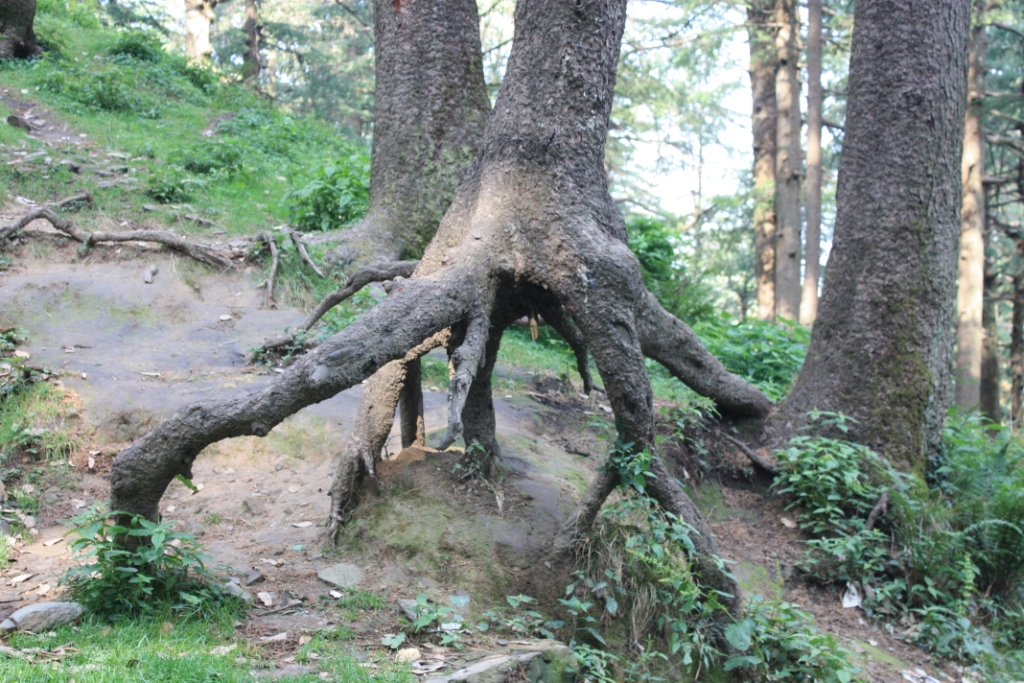
I come upon a tree
Raised up on its roots,
As if in mid-stride --
A long, cartoonish stride
That stretches across the trail.

But the tree doesn't stir --
No matter how quietly I wait;
No matter how long I wait.

Oh, how I wish to catch the tree
As it flees.

BOOKS: “Wen-Tzu” Trans. by Thomas Cleary

Wen-TzuWen-Tzu by Lao-Tzu
My rating: 5 of 5 stars

Publisher Site – Shambhala

This work is presented as “further thoughts of Laozi [老子].” Readers of the Dàodé jīng [道德经] will recognize many a familiar statement of that work, but this book is much more extensive and detailed. I say “presented as” because scholars no longer believe this was a product of Laozi and his lifetime (if such an individual ever existed.) For one thing, the book seems more syncretic than the Dàodé jīng, that is to say there are points at which it sounds strikingly Confucian — rather than purely Taoist.

As with the Dàodé jīng the Wénzǐ [文子] covers a lot of ground from metaphysics to individual ethics to political philosophy, but this book has more room to sprawl on each subject.

As with other Cleary translations, it’s a pretty readable translation.

I’d recommend it for readers interested in Chinese Philosophy.

View all my reviews

PROMPT: Decision

Daily writing prompt
Describe a decision you made in the past that helped you learn or grow.

To surrender to my ignorance. If one can never know exactly what game one is playing, it becomes much easier to avoid getting worked up about whether one is playing it right or whether one will “win” or not.

Evolution [Free Verse]

Anywhere copies are made, 
but copies aren't exact,
selection will take place.

Some erroneous copies will
be more beloved than others.
Some errors will propagate.
Some errors will die out.

Thus is language,
thus is chemistry,
and thus is life.

Raising Chaos [Free Verse]

Raise chaos:
That's the job of intelligent life,
to make nice & orderly things
so they can crack and shatter
and eventually end up pulverized
to dust --
A fine, granular dust that will blow
across the universe.

First, the bowl must be made:
Some potter must shape and glaze
and fire it with care,
Turning sandwiches into art...
and waste heat --
entropy slow and fast.

All so someone can crack or chip it
(with ease and lack of intention,)
starting it on a path to being sand
grains a world away.

The Cave [Free Verse]

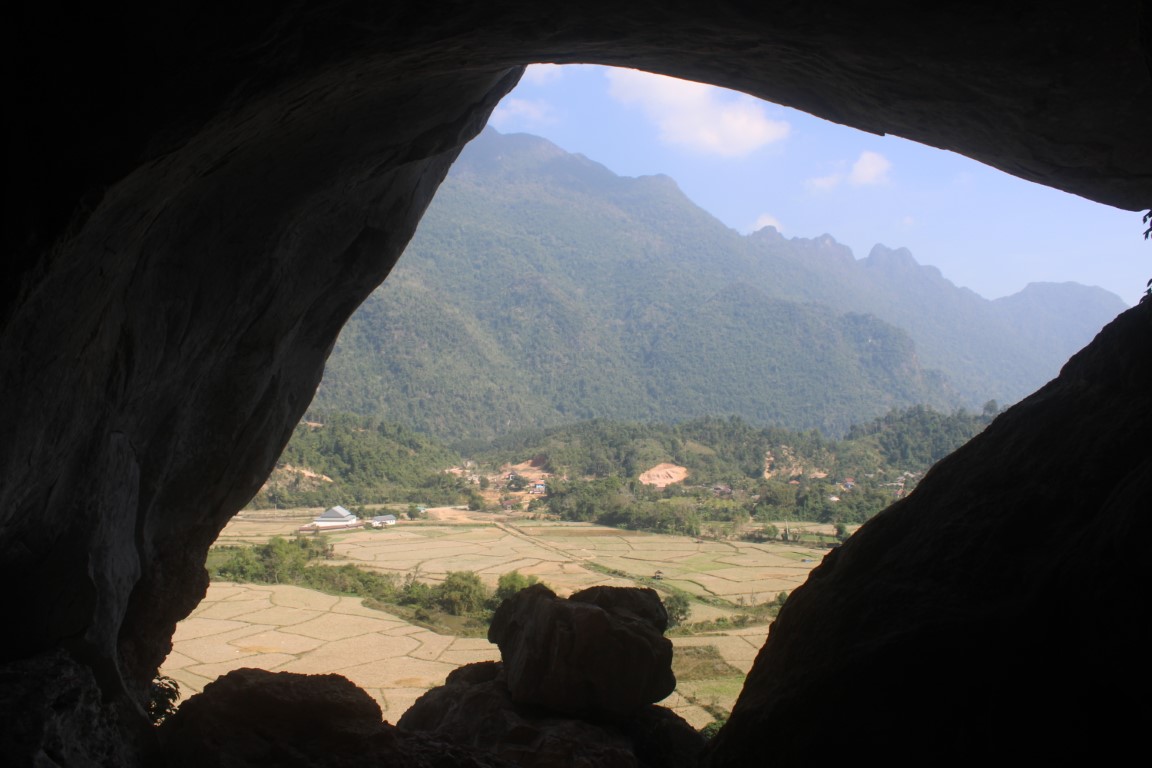
Jagged window 
on the world:
All light and sound
deadened,
but from one opening --
The cave mouth.

From behind
nothing stirs,
nothing glows,
shadows are subsumed
by shadow.

Eyes and mind
frame the cave mouth,
making the mind
a cave within a cave:
layered silence
layered remoteness,
and all input of a single,
common source.

How many caves deep might
this thing go?

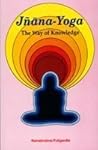
BOOKS: “Jñāna-Yoga: The Way of Knowledge” by Ramakrishna Puligandla

Jnana-Yoga--The Way of KnowledgeJnana-Yoga–The Way of Knowledge by Ramakrishna Puligandla
My rating: 5 of 5 stars

Google Books Page

This is one of the most useful books I’ve read on the topic of Jñāna-yoga — the approach to yogic philosophy employed by the studious / inquisitive (in contrast to Bhakti-Yoga [the yoga of those for whom faith and devotion works] and Karma-Yoga [the yoga for those for whom a course of self-less action appeals.]) There are Jñāna-yogic Hindu sects and Buddhism — in general — can be thought of as a school of Jñāna-yoga. The author draws from the teachings of both, principally Sankara for Hindu thinking and Nagarjuna for the Buddhist approach.

A word of warning, the author is a scholarly philosopher, and so — while not as unreadable as many works of academic philosophy — it will be a slog for those who are not used to reading scholarly writing.

That said, Puligandla does a fine job of laying out what he views as the central tenets of Jñāna-yoga in a concise fashion and reviewing them at the end. This is not to say I would agree with all that he proposes, herein. In particular, his Chapter 3 conclusions about consciousness are insufficiently justified to be considered core principles of Jñāna-yoga (in my view.) Of course, the beauty of Jñāna-yoga is that it not only doesn’t insist upon coming to the same conclusions, it generates explanations as to how it’s perfectly possible / reasonable to come to different conclusions (see “The Principle of Superimposition,” herein.) Furthermore, since the author is reporting the ideas of Sankara and Nagarjuna, I can’t really hold these ideas against him.

If you’re interested in Jñāna-yoga, and can handle scholarly prose, I’d highly recommend this book.

View all my reviews

Melting Clocks [Free Verse]

Waking to a world in which
Space & Time misbehave:

Shapes slump,
Even melting into pools,
Oozing to flatness, then
Over the edge and
Into nowhere.

Time moves in riverine fashion:
Rushing in the chokepoints
And lazing in the wide plains.
Though still flowing
Inexorably and unidirectionally.

The illusion tries
To reveal itself,
But who can understand...

“A Dream Within a Dream” by Edgar Allan Poe [w/ Audio]

Take this kiss upon the brow!
And, in parting from you now,
Thus much let me avow --
You are not wrong, who deem
That my days have been a dream;
Yet if hope has flown away
In a night, or in a day,
In a vision, or in none,
Is it therefore the less gone?
All that we see or seem
Is but a dream within a dream.

I stand amid the roar
Of a surf-tormented shore,
And I hold within my hand
Grains of the golden sand --
How few! yet how they creep
Through my fingers to the deep,
While I weep -- while I weep!
O God! Can I not grasp
Them with a tighter clasp?
O God! can I not save
One from the pitiless wave?
Is all that we see or seem
But a dream within a dream?

Unity [Free Verse]

Many particles to the atom,
Many atoms to the molecule,
Many molecules to the cell,
Many cells to the tissue,
Many tissues to the organ,
Many organs to the system,
Many systems to the organism...

And so it goes,

The many always viewable as
a larger ONE.