BOOKS: “The Meaning of Travel” by Emily Thomas

The Meaning of Travel: Philosophers AbroadThe Meaning of Travel: Philosophers Abroad by Emily Thomas
My rating: 5 of 5 stars

Publisher Site – OUP

Of late, I’ve been reflecting upon the philosophical divides that exist between travelers and others (I call them “tribals,” but they are by far the majority of people — i.e. those who either don’t travel [unless required to] or who travel only in a tourist-like fashion.) As I’ve done so, I’ve been surprised to find how limited the literature is on the subject. I was, therefore, pleased to find this book. While Thomas confirmed my preliminary findings that there isn’t much of a travel-centric subdiscipline of philosophy, she also shows that it’s not for a lack of philosophers traveling and pondering travel.

While I’ve spent considerable time thinking about a philosophy of travel, I was pleasantly surprised to discover a number of topics in Thomas’s book to which I’d hardly given any thought. These were the most personally fascinating topics because they involved such uncharted territory. They include: maps as propaganda, the importance of travel to scientific discovery, the domination of male perspective in our collective understanding of travel, and the ethics of doom travel (going to vanishing places.)

The book also advanced my understanding of subjects that I’ve often contemplated — e.g. aesthetics and travel, innate / universal ideas v. culturally-tinted ones, and the connection between minimalism and travel.

If you’re interested in philosophy, travel, and the intersect of the two, this book is definitely for you. The author takes a light approach and the book’s readability is high — i.e. while it is thought-provoking, it’s aimed at a general readership rather than a scholarly one.

View all my reviews

BOOKS: “A Short Stay in Hell” by Steven L. Peck

A Short Stay in HellA Short Stay in Hell by Steven L. Peck
My rating: 5 of 5 stars

Publisher Site: Strange Violin Editions

If you enjoy books like Joseph Heller’s Catch-22 or Douglas Adams’ The Hitchhiker’s Guide to the Galaxy this book will probably be right up your alley. It may not be as unrelentingly (and hilariously) absurd as H2G2, but it’s clever, amusing, and thought-provoking.

The premise is that a devout Christian finds himself in hell because it turns out that Zoroastrianism was actually the one true religion. Fortunately, Zoroastrian hell is neither as grim nor (perhaps, ironically) as fire & brimstone-oriented as the Biblical version, but it is tedious, demoralizing, and — while it might not last forever –it lasts long enough to seem like forever.

Jorge Luis Borges fans (such as myself) will find a nod to his work in the shape of said hell.

I’d highly recommend this book for readers of irreverent and humorous literary fiction. It’s funny. It’s clever. And it’s a quick read.

View all my reviews

BOOKS: “Sightseeing” by Rattawut Lapcharoensap

SightseeingSightseeing by Rattawut Lapcharoensap
My rating: 5 of 5 stars

Publisher Site – Atlantic

This collection of seven short stories offers insight into Thailand and its culture, but the stories are also gripping and clever. It’s a rare thing for stories to so engage with issues such as poverty, class, the refugee experience, the human experience, and foreignness and to still be highly entertaining.

Farangs is about the interaction of Thais and foreigners in the form of a love triangle featuring a Thai protagonist, a Western girl, and the girl’s erstwhile (also foreign) boyfriend.

At the Cafe Lovely is about two brothers, the older of whom takes the younger brother to a “cafe” that is more of a bar with built-in brothel. The story shows the seedy side of Bangkok, but also the bond between brothers.

Draft Day is about two friends, one from a wealthy family and the other not, who have to go to the draft lottery to determine whether they will have to serve in the military or not. This story is potent observation on social justice.

Sightseeing is about a mother and son’s last trip before the mother loses her vision.

Priscilla and the Cambodians is about a Cambodian girl who, in a rough-and-tumble manner, befriends two geeky Thai boys. The story explores the woes of being poor outsiders in a world that cares neither for the poor, nor for outsiders.

Don’t Let Me Die in this Place is about an old American man who moves in with his son and the son’s Thai wife and their children in Bangkok after the man has suffered a stroke and is in recovery. It’s about the old man’s struggle to adapt to a very different life while at the same time coping with not being able to take care of himself.

Cockfighter is the longest and also probably the most visceral of the stories. It centers on a teenaged girl whose father is the titular “Cockfighter” and whose mother makes hand-sewn bras. It’s an intensely psychological work of fiction with some hilarious moments, as well.

I’d highly recommend this collection for all readers of short fiction. I chose it as my travel literature for Thailand (I read a work [or works] of literature from all countries I visit,) but I don’t think one has to have a particular interest in Thailand to find the stories fascinating and profound.

View all my reviews

BOOKS: “The Cultural Revolution: A Very Short Introduction” by Richard Curt Kraus

The Cultural Revolution: A Very Short IntroductionThe Cultural Revolution: A Very Short Introduction by Richard Curt Kraus
My rating: 4 of 5 stars

Publisher Site – OUP

The decade-long Cultural Revolution in China is generally looked upon as a bleak time and place to be alive. This brief guide reflects on the political, economic, and cultural dimensions of Mao’s attempt to root out capitalist and middle-class influence from Chinese society. The book also reflects upon other events in China during the period (e.g. detente) and how they related to the Cultural Revolution. It also explores how China came out of the Cultural Revolution.

The author makes efforts to be diplomatic and evenhanded about the event. Some readers will find this beneficial to their purposes and may even see the occasional glimmer of a bright side to a dismal period in human history. However, one should not expect to gain any visceral insight into the sadness and chaos of the era. While there was discussion of not only the end of the Cultural Revolution but what China’s continued path looked like, it didn’t get much into whether there was a long shadow to the revolution and what that shadow might look like.

I found the book informative though there were dimensions into which I would have liked to gain more insight (e.g. it doesn’t go much into the influence on religion, nor on more peripheral arts,) but that’s the challenge of such a concise guide. Also, the author is of a political science background, and this informs what elements are given more or less discussion.

View all my reviews

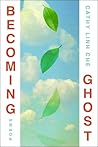
BOOK REVIEW: “Becoming Ghost” by Cathy Linh Che

Becoming Ghost: PoetryBecoming Ghost: Poetry by Cathy Linh Che
My rating: 5 of 5 stars

Publisher Site – Simon & Schuster

This collection is built around the surreal emotionality of the author’s parents having both lived through the war in Vietnam and also having served as extras in the film, Apocalypse Now. [For those unfamiliar, Apocalypse Now was a Francis Ford Copp0la film based loosely (and partially) on Joseph Conrad’s novel,Heart of Darkness. The film follows a military officer sent upriver to assassinate a rogue Special Operations colonel during the Vietnam War, and shows the war from various perspectives as the would-be assassin travels through the country to complete his mission.]

At times, the poems read like a poem-shaped biography, but that’s not all there is to the book. There are points that imagery and language are used to shoot beyond a mere telling of events, in order to create emotional resonance with the core strangeness of living through a traumatic event only to portray a background individual (someone like one’s own past self) in a fictional retelling of events based on those through which one lived.

The poetic forms vary somewhat, though all within the modern, free verse style. Most notably, the author uses the golden shovel approach of Terrence Hayes extensively.

This collection grabbed me both with its clever language and its thought-provoking central premise. I’d highly recommend it for readers of poetry.

View all my reviews

BOOKS: “Troublesome Words” by Bill Bryson

Bryson's Dictionary of Troublesome Words: A Writer's Guide to Getting It RightBryson’s Dictionary of Troublesome Words: A Writer’s Guide to Getting It Right by Bill Bryson
My rating: 5 of 5 stars

Publisher Site – Penguin Books

This is a guide to English words (and loanwords) that challenge even professional writers. It’s organized as a dictionary, and – in fact – the earliest edition of the book was entitled The Penguin Dictionary of Troublesome Words. However, the entries are far from mere definitions, and typically include examples of grammatical, stylistic, or spelling offenses, examples that are sometimes humorous (as are Bryson’s explanations.)

The most common classes of troublesome words are those that are redundant (or otherwise fail to add information) and pairs or groups of words that are frequently confused because of similar spellings or close — but not identical — meanings. That said, there are many other varieties of linguistic challenges confronted by the book, such as spelling mistakes and migrating meanings.

The book is dated. For some readers, that will make the book obsolete, but students of language may find it’s even more useful in showing the evolution of the language. This can be seen with respect to migrating meanings, words whose meanings started out being one thing but against the efforts of grammarians and other linguistic guardians were dragged into an alternate meaning by the force of mass usage. There are some instances where Bryson advises one to honor the original meaning and other cases where he points out that the ship has sailed and to just go with the flow. I’m sure these positions would shift if this book were to be updated again. (Originally written in the 1980’s, the book was revised and update in the early 2000’s, but language has continued to shift in these 20+ years.) In several cases words for which he suggests we stick to the original meaning have now completed their slide. (And many of the words he tells us to accept the changed meaning of are now so far past that original meaning that few readers will be aware the word ever meant something different.)

That being said, the book isn’t completely obsolete. As mentioned above, one of the most common classes of offenses are redundant and meaningless words, and these are almost all still relevant to writers today.

Bill Bryson has a unique relationship to the language, being both British and American, and one nice feature of the book is that he points out differences in spelling and usage that exist between the two countries.

There is an appendix discussing proper punctuation, a bibliography, and a glossary of linguistic terms.

If you’re reading this out of an interest in language, I’d recommend it. It’s light and humorous. However, if you’re in the market for a reference guide, you can surely find a more up to date (if less humorous) guide.

View all my reviews

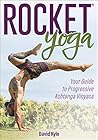
BOOK: “Rocket Yoga” by David Kyle

Rocket® Yoga: Your Guide to Progressive Ashtanga VinyasaRocket® Yoga: Your Guide to Progressive Ashtanga Vinyasa by David Kyle
My rating: 5 of 5 stars

Publisher Site – Human Kinetics

This book provides an overview of Rocket Yoga, which is newcomer to yoga’s ranks that adapts from the Ashtanga Vinyasa school of Pattabhi Jois. The objective of Rocket is to make the practice more adaptable, both in terms of being suitable for a broad range of students and for individual students to adapt the practice in ways that would fit their objectives, strengths, and limitations. There are also adjustments made in the sequence to streamline the flow.

For those unfamiliar with Ashtanga Vinyasa, it is a fixed form flow style. Fixed form means that at a given level one is repeating the same sequence the same way every session until one bumps up to the next level. This offers great advantages for building fitness, muscle memory, and connection to the practice, but many find it tedious and the threat of burnout is ever-present. Rocket attempts to keep the benefits of fixed form practice but to mitigate the burnout factor by having three sequences that can be interspersed in one’s practice, as well as by allowing more room for individual variation. Ashtanga Vinyasa is also often perceived as daunting because as a flow form it involves a lot of vigorous transitional movement and also because even some of the preliminary series asana (postures) are challenging for your average practitioner. While Ashtanga Vinyasa generally allows for modification, Rocket leans into this a bit more. (That said, the Rocket system also has ways to step up the challenge as well.)

As with many system-centric yoga books, much of the book is description of the asana (postures) that make up the system as well as elaboration on how they are sequenced. However, the book does open with philosophical and historical background and ends with discussion of how the practice might be adapted (e.g. there is a section for pregnancy.)

The book has a lot of color photographs that are clear and well captured (if of limited perspective.)

If you are an Ashtanga Vinyasa practitioner (or perspective practitioner) and are curious about how the basic concept might be adjusted to mitigate potential burnout or make the system more flexible, I’d recommend giving this book a look.

View all my reviews

BOOKS: “The Habsburg Empire: A Very Short Introduction” by Martyn Rady

The Habsburg Empire: A Very Short IntroductionThe Habsburg Empire: A Very Short Introduction by Martyn Rady
My rating: 5 of 5 stars

Publisher Site – OUP

“Habsburg” is one of those names recognized as a big deal, but if one isn’t a history buff one might know nothing – or near nothing – about them. For many, the Habsburg Empire is synonymous with Austro-Hungary, but – in its heyday – the Empire controlled territory as far-flung as the Philippines and Mexico through marriages with the Iberian Peninsula royals. This guide hits the highlights of the Habsburgs from their 11th century beginnings to their demise in the wake of World War I.

Rady drops a lot of fun facts in this book in order to make it more than the dry retelling of war and marriage that often make up histories. Because this is a concise guide, these fun facts aren’t necessarily elegantly introduced, but sometimes appear to be tucked in willy-nilly, as with the sentence:

“Franz Ferdinand, besides being a maniacal huntsman who bagged an estimated 270,000 creatures (mostly partridges, but including two elephants), was convinced that the Habsburg Empire depended for survival on its comprehensive reorganization.”

What does the clause about being an avid hunter have to do with the discussion at hand? Absolutely nothing as far as I can tell, but it does capture one’s attention.

I feel I came away from this book with a better understanding of the Habsburgs, as well as with a few fascinating tidbits stuck in my brain — such as about the strangely long jaw bones of inbred royals. If you know nothing about the Habsburgs, but would like to, I’d highly recommend this book.

View all my reviews

BOOKS: “Literary Theory: A Very Short Introduction” by Jonathan Culler

Literary Theory: A Very Short IntroductionLiterary Theory: A Very Short Introduction by Jonathan D. Culler
My rating: 4 of 5 stars

Publisher site – OUP

This brief guide tries to bring some clarity to the question of what literary theory is, a question which is a great deal more convoluted that it is in science (or even the social sciences) where the scientific method shapes our understanding of the term. Often when one hears about literary theory it’s in the context of Marxists, Feminists, or Psychoanalysts, and one might be forgiven for wondering whether those scholars don’t have a discipline of their own (not to mention how much can a Marxist – for example – illuminate The Little Prince or the poetry of Li Bai.)

I thought the book was well-arranged to shed as much light on the topic as possible. Of its nine chapters, the first two explore competing ideas of what constitutes “theory” and “literature,” respectively. There is a chapter (Ch.3) that distinguishes the field from the overlapping discipline of cultural studies. The remaining six chapters cover topical components of the field, including: language / meaning, rhetoric / poetics, story, performative language, identity, ethics, and aesthetics.

This book does a good job of offering some clarity and has a sense of humor as it does so (notably through satirical cartoons that illustrate the book.) If you’re looking for a layman’s guide to the subject, this one is readable and insightful.

View all my reviews

BOOKS: “Practical Taoism” ed. / trans. by Thomas Cleary

Practical TaoismPractical Taoism by Thomas Cleary
My rating: 4 of 5 stars

Publisher Site – Shambhala

Like a number of Eastern systems, Taoism is thought of in many different ways by many different people, and a few of those ways are fairly “out there.” To some, it is a philosophy. To others, it is a religion. To still others, it is a style of magic. By “practical Taoism” Cleary is suggesting that the many varied sources from which he drew snippets, assembling them together to make a coherent whole, reflect some of the more down-to-earth philosophy of “inner alchemy.” [Not to be confused with the “alchemy” in which lead is turned to gold, but sharing the central idea that methods exist to convert a low-quality entity into a high-quality one, but in the case of inner alchemy these methods are breathwork, meditation, and movement techniques that improve one’s vitality as a human being.]

The good news is that Cleary does collect a group of ideas that seem less arcane and cryptic than the average Taoist inner alchemy manual content (or, at least, they are translated so as to seem so.) The bad news is that the average Taoist inner alchemy manual was apparently pretty darn arcane and cryptic, such that even this selection isn’t exactly clear as a limpid stream. Some parts of it are straightforward, but one still has some work to do to make sense of what the original authors were trying to get across. [Some readers will enjoy that more than others.]

Presumably owing to the attempt to simplify through selection and translation, the book isn’t annotated, nor does it feature much ancillary material besides a relatively lengthy introduction to setup the reader with a contextual backdrop. So, there is not a lot of help to clarify ideas that are murky. (I do recognize the translator’s challenge in that there is only so much he can do to try to clarify ideas without imposing upon the authors’ intensions.)

I enjoyed, and learned from, this book — even if I didn’t always feel I was reading a “practical” guide to self-betterment.

View all my reviews