Chinatown [Senryū]

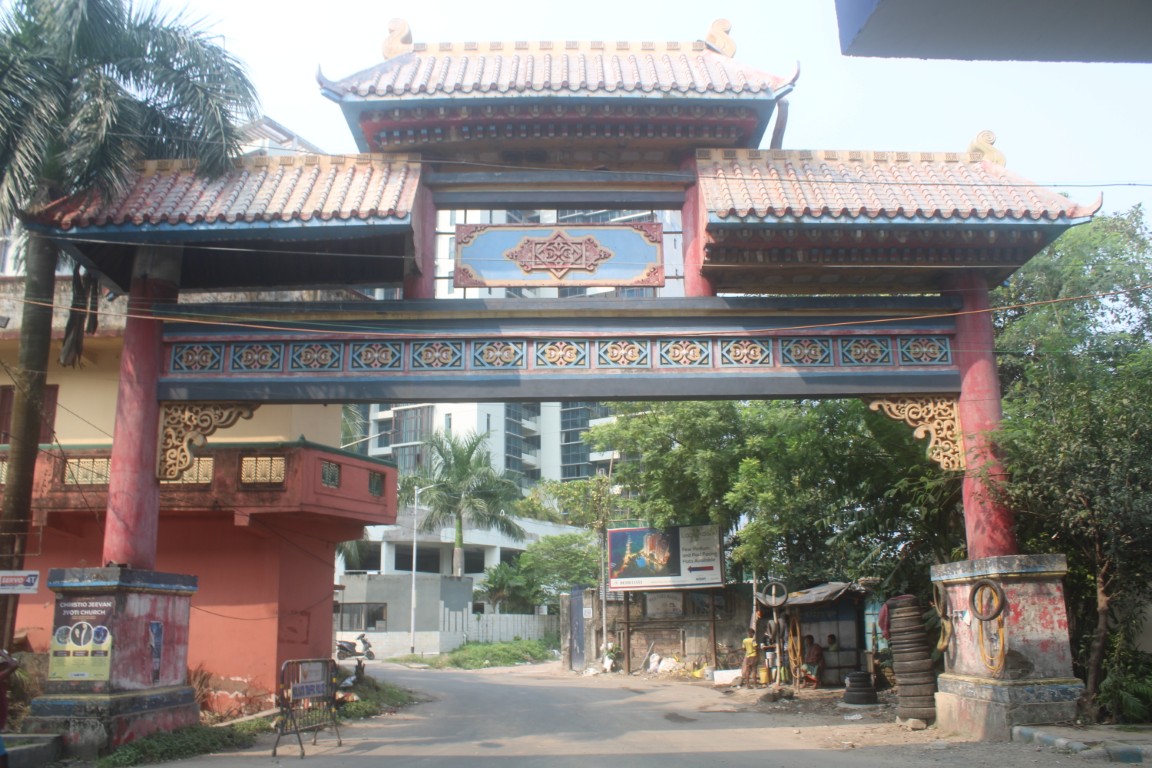
through the paifang*,
you leave your city,
but you're not in China.

*A paifang (牌坊) is the gate over a street or road that denotes the bounds of a Chinatown.

PROMPT: Cultural Heritage

What aspects of your cultural heritage are you most proud of or interested in?

I’m not sure whether this prompt is directed toward the culture of my ancestors (Irish) or the culture in which I was raised (American.) If it is the former, then the answer is certainly the great literary and poetic talent that was born of the culture (i.e. Yeats, Wilde, Shaw, Heaney, Beckett, Joyce, etc.) But if it is the latter, then it is certainly the great literary and poetic talent that was born of the culture (i.e. Whitman, Poe, Hemingway, Hughes, Twain, Dickinson, Faulkner, etc.)

PROMPT: Traveled from Home

Daily writing prompt
Share a story about the furthest you’ve ever traveled from home.

”Home” and “away” lost all meaning long ago, becoming a false dichotomy. “Furthest” is likely presumed to mean the most distant in space, but that is not always the greatest mental distance. Sometimes a place changes while you were away, and that shift through time becomes the most jarring distance.

BOOK: “How to be an Alien” by George Mikes

How to Be an Alien: A Handbook for Beginners and Advanced PupilsHow to Be an Alien: A Handbook for Beginners and Advanced Pupils by George Mikes
My rating: 5 of 5 stars

Publisher Site – Penguin

This book is hilarious… unless you’re British — in which case it probably reads like a swift kick in the crotch. Well, if you’re from continental Europe, many of the comparisons with Britian are no more favorable to Europe and are just as comically searing. But if you’re American, it’s a laugh riot. Well, except for when it delivers reminders of the absurdity of xenophobia, triggering realizations that one’s own country is in the midst of a crisis of that malady. However, the book is not primarily a rebuke of xenophobia, but rather an accounting of what immigrants to Britain find strange and unwieldy about their new country.

George Mikes, born Mikes György, was a journalist and humorist of Hungarian birth who lived most of his life in England, and it’s this experience that the author draws upon to describe of what immigrants to Britain must accustom themselves.

Among Mikes’ prolific body of writings, there are a number that take this form — humor disguised as a how-to guide. The first one that I read was How to Be God, which was his last such book. The book under review was his first and continues to be the most popular.

I’d highly recommend this book for humor readers… unless you’re British… or European… or are experiencing dread over the Pheonix-like rebirth of xenophobia in the world. If there’s any one left after that who reads in English, this is the book for you.

View all my reviews

PROMPT: Traditions

Daily writing prompt
What traditions have you not kept that your parents had?

All of them. As a traveler, I am more an anthropologist of traditions than a practitioner of them.

PROMPT: Comfort Food

Daily writing prompt
What’s your go-to comfort food?

It depends on where I am. I recently discovered that my Busan comfort food is “Hotteok with seeds.” In Central Asia, it’s tandoor bread — by whatever name it’s called in the local tongue. In Tblisi, it’s khinkali. In Peru, a lomo saltado is a beautiful thing. Chicago is the only place I’ll eat a hotdog, but I do love one there.

As a traveler, I find it’s important to not get attached to any one thing. If you crave a bagel, you’re great if you’re in New York or Tel Aviv, but if you insist on one in Hyderabad, it will be a sad experience. But, by the same token, if you order Chicken Biryani in Des Moines, expect to be underwhelmed (or — if not — to pay an exorbitant amount, either way it’s depressing.)

Probably the single most widespread comfort food would be whatever the local dumpling is, be it called mo-mo, khinkali, pierogi, dim sum, etc. All quite unique, but with an underlying familiarity.

So, in the immortal words of (the apparently quite slutty) Crosby, Stills, Nash, and Young, “If you can’t be with the one you love… love the one you’re with.”

BOOK REVIEW: “New Story of the Stone” by Jianren Wu [Trans. by Liz Evans Weber]

New Story of the Stone: An Early Chinese Science Fiction NovelNew Story of the Stone: An Early Chinese Science Fiction Novel by Jianren Wu
My rating: 5 of 5 stars

Publisher Site – Columbia University Press

This book is presented as a sequel to the Chinese literary classic (alternatively) known as Dream of the Red Chamber or Story of the Stone. The central character is a scholarly traveler by the name of Baoyu. The first part of the book is set in China around the time of the Boxer Rebellion, an event that features in the story. Throughout this portion, the book reads like historical fiction. However, Baoyu’s travels eventually bring him to a hidden realm, a technologically advanced utopia within China. It is here where Baoyu’s adventures get fantastical and otherworldly, and the book ventures into the domain of Science Fiction.

The setting of the book reminds me a little of Marvel’s Wakanda from Black Panther. Perhaps both instances of worldbuilding were motivated by the humiliated colonists’ fantasy of being more advanced than those who pull the strings for once, or of showing their (respective) lands to be places of “crouching tigers and hidden dragons” (i.e. where great talents exist but remain unseen.) (Note: While China wasn’t on-the-whole colonized by a Western country, its interaction with England and other Western nations left it forced to accept terms unfavorable and undesirable to China (not to mention the outright colonized enclaves such as Hong Kong and Macau.) While the publisher has emphasized the science fiction aspect of this work, it is an anticolonial work through and through. The book can come across as xenophobic and nationalistic in places, but this only reminds the reader of how such positions might be arrived at under the boot of foreign influence.

The book is readable though philosophical and is well worth reading for those interested in developing a deeper insight into Chinese perspectives.

View all my reviews

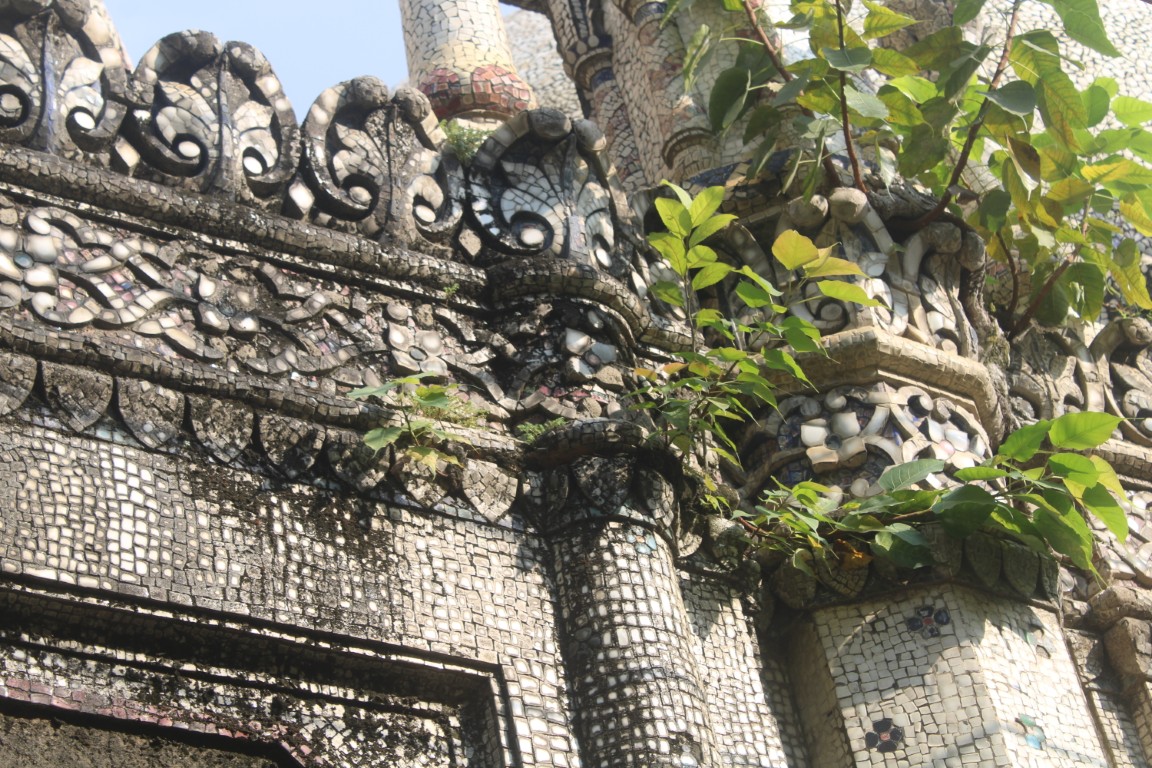
DAILY PHOTO: Scenes from Incheon Chinatown

BOOKS: “Violence: A Very Short Introduction” by Philip Dwyer

Violence: A Very Short Introduction (Very Short Introductions)Violence: A Very Short Introduction by Philip Dwyer
My rating: 4 of 5 stars

Publisher Site – Oxford University Press

This is a brief overview of various types of violence, starting with the question of what counts as violence. The book explores violent acts carried out by individuals, mobs, movements, governments, and religions. It reflects upon how the nature of violence has changed over the centuries while hinting at potential reasons for said changes (along with counterarguments.)

This book raised some provocative questions, such as: Why would people go to watch executions? Does Steven Pinker’s hypothesis that humanity is becoming less violent hold water? [Pinker made this argument in his book The Better Angels of Our Nature, but it has been refuted on number of grounds — definitional, methodological, etc. Though Dwyer only briefly touches on Pinker’s book and its critics in this book and a detailed critique will require looking elsewhere.] How (and why) do violent tendencies vary across cultures. And, when and how did governments end up with a monopoly on legitimate use of force.

I found this book interesting and informative and would recommend it for those looking for answers as to why and how our species is so violent.

View all my reviews

BOOKS: 千字文 [Thousand Character Essay] by 周兴嗣 [Zhou Xingsi]

千字文千字文 by 周兴嗣
My rating: 4 of 5 stars

A version with English commentary can be found at the IFA Gallery

This short work, consisting of just one-thousand characters, is first and foremost a teaching tool for children. While it presents a thousand of the most important Chinese characters, it also delivers lessons on history, ethics, philosophy, and culture by way of short sayings.

It’s arranged into 250 4-character phrases (125 sentences) and reads as a lyric poem, though because it dates to the Sixth Century, the degree to which the rhyme scheme holds varies depending upon the which spoken language one speaks (e.g. Mandarin, Cantonese, or Hakka.)

There have been different versions of this work over the centuries.

This is a much beloved work of literature among Chinese, though its sayings do not necessarily hold up as well as works like Sunzi’s Art of War or Laozi’s Daodejing. Some do, but most are much less relevant than when written.

As someone learning Chinese, I’d highly recommend this work as a way to expose oneself to language while gaining insight into Chinese culture.

View all my reviews