BOOKS: “The Last Brother” by Nathacha Appanah

The Last BrotherThe Last Brother by Nathacha Appanah
My rating: 5 of 5 stars

Publisher Site — Gray Wolf Press

When Mauritius made it onto my shortlist for upcoming travel, I needed to find an enlightening work of Mauritian literature, and this book was prominently discussed as one that might fit the bill.

The book is narrated by an old man telling a story from his boyhood. It is a poignant and riveting tale. The book’s title, The Last Brother reflects the protagonist’s (Raj’s) first tragedy, losing his two brothers in a natural disaster in Mapou, Mauritius. Raj’s family then moved south where his father got work in a prison.

Much of the book revolves around a strange historical event — the imprisonment of a large number of Jews on Mauritius during World War II. These Jews had fled Europe and were trying to make their way to Palestine but were not granted entry because of a lack of acceptable documentation. They were then sent to Mauritius where they were imprisoned in a detention camp.

The reader only sees this event through the relationship of Raj and David. Raj is taken to the prison infirmary after being beaten by his alcoholic father. There he meets David, a Jewish boy in the detention camp. It isn’t until the very end of the book that the author presents the facts of the historic event. I think this is a wise move, allowing the reader only knowledge of what the characters would know (which – as nine-year-olds – is not much.) The late reveal adds to the tension and makes some of the characters’ decisions more understandable.

The last part of the book is a little reminiscent of Huck Finn, except without Twain’s lightheartedness and with a more melancholic and tragic tone and ending, but featuring two young men on the lam for different reasons.

I found this novel to be a potent read and would highly recommend it for readers of global literature — especially if you expect to find yourself in Mauritius at some point.

View all my reviews

BOOKS: “The Cultural Revolution: A Very Short Introduction” by Richard Curt Kraus

The Cultural Revolution: A Very Short IntroductionThe Cultural Revolution: A Very Short Introduction by Richard Curt Kraus
My rating: 4 of 5 stars

Publisher Site – OUP

The decade-long Cultural Revolution in China is generally looked upon as a bleak time and place to be alive. This brief guide reflects on the political, economic, and cultural dimensions of Mao’s attempt to root out capitalist and middle-class influence from Chinese society. The book also reflects upon other events in China during the period (e.g. detente) and how they related to the Cultural Revolution. It also explores how China came out of the Cultural Revolution.

The author makes efforts to be diplomatic and evenhanded about the event. Some readers will find this beneficial to their purposes and may even see the occasional glimmer of a bright side to a dismal period in human history. However, one should not expect to gain any visceral insight into the sadness and chaos of the era. While there was discussion of not only the end of the Cultural Revolution but what China’s continued path looked like, it didn’t get much into whether there was a long shadow to the revolution and what that shadow might look like.

I found the book informative though there were dimensions into which I would have liked to gain more insight (e.g. it doesn’t go much into the influence on religion, nor on more peripheral arts,) but that’s the challenge of such a concise guide. Also, the author is of a political science background, and this informs what elements are given more or less discussion.

View all my reviews

BOOKS: “The Life of Hiuen-Tsiang” by Hui-li [trans. by Samuel Beal]

The Life of Hiuen-TsiangThe Life of Hiuen-Tsiang by Hui-li
My rating: 4 of 5 stars

Available free online through the Indian Gov’t

Those familiar with Chinese Literature (or smash-hit video games) will be acquainted with the tale of Sun Wu Kong, the Monkey King. The central event of the novel Journey to the West is a Chinese Buddhist monk traveling to India to gather a complete set of the Buddhist canon. In the novel (and video game, Black Myth: WuKong,) the monk’s name is Tang Sanzang (in translations – and movie / television – he’s sometimes called Tripitaka, which is actually the name of the Pali Canon — the original Buddhist books, themselves.) In real life there was also such a monk, and his name was Xuanzang (玄奘, Romanized as Hiuen-Tsiang in an earlier system,) and this book describes his travels to, through, and back from India.

It turns out the monk was not escorted by a god-tier mythical creature and his two superpowered compatriots (i.e. Pigsy and Sandy.) For this reason, the actual Xuanzang occasionally got threatened, robbed, and was once almost killed by riverine pirates. This book is a travelogue of Xuanzang’s journeys through China, Central Asia, [present-day] Afghanistan and Pakistan, and throughout India.

Needless to say, this book isn’t as taut and thrilling as the fictional account with its gods and monsters, but – for those with historical and geographic interests – it’s not without appeal. It does have extensive description of Xuanzang’s visits with various monks and royalty that is dry reading as well as discussions of where Xuanzang’s collection stood at any given point, but there are a few intense events and harrowing moments.

If you’re interested in Buddhist history, you may want to give this book a look.

View all my reviews

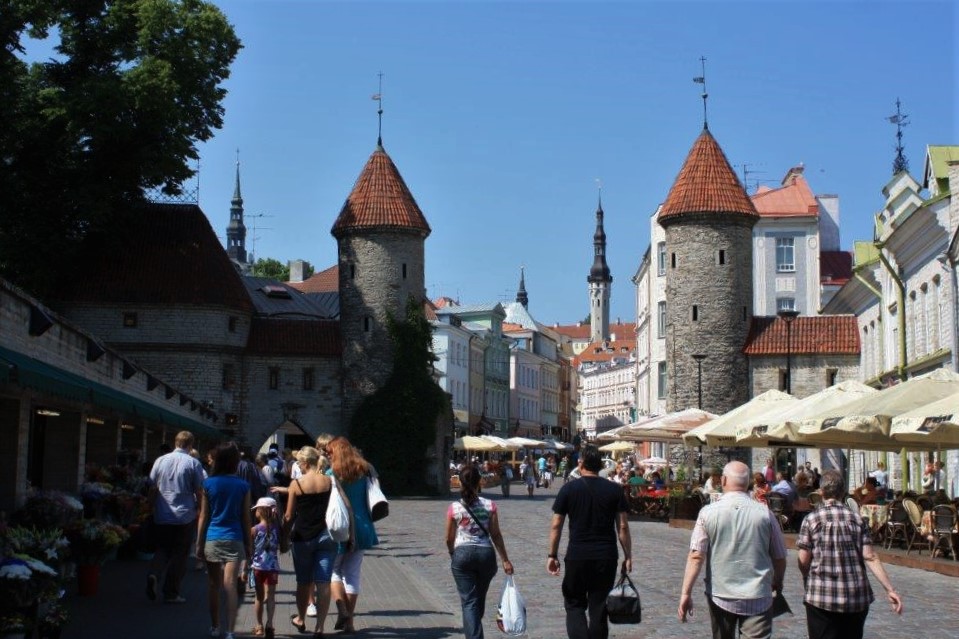
In an Ancient Town [Free Verse]

Tourists walk an ancient town,
Hoping a residue of its past
Will cling to them...

But not too much:
Not the plagues,
Not the torture,
Not the petty monarchs
& aristocrats,

Just some romantic notion.

BOOKS: “A Carpet Ride to Khiva” by Christopher Aslan Alexander

A Carpet Ride to Khiva: Seven Years on the Silk RoadA Carpet Ride to Khiva: Seven Years on the Silk Road by Chris Aslan
My rating: 5 of 5 stars

Publisher Site – ICON Books

“Travel-centric memoir” is how I’d classify this book, but it’s one of those books that isn’t easily categorized. The author cleverly interweaves explorations of Uzbek history and culture with his own story of living in the Uzbek city of Khiva for seven years as an NGO worker and traditional crafts entrepreneur. The side voyages into history and culture not only support the readers’ contextual understanding of the author’s story but also make for a fascinating journey of understanding of the locale. Uzbekistan has had many lives, from beating heart of the Silk Road to forgotten backwater of the Soviet Union, and these many lives have shaped what Uzbekistan is, and what it’s becoming.

I should point out that Uzbekistan has apparently made a hard shift since the days described in this book (late 90’s early 2000’s, i.e. fairly early in the wake of independence from the Soviet Union.) I mention this to avoid discouraging travelers through discussion of the author’s experiences. [I, myself, am planning a trip in the near future.] I’m sure that Uzbekistan continues to have deep-seated problems, but it seems to be making great efforts to be tourist-friendly these days. Which is not to say that the individuals were ever unfriendly to travelers. The author describes an Uzbek people who are warm-hearted, welcoming, and helpful. But when the author was there it was also on the list of the biggest human rights violators, corruption was ubiquitous, and tourism was almost non-existent. In fact, the penultimate chapter of the book describes the author’s experience of a visa denied, ping-ponged deportations, and a life sharply diverted by corruption.

The final chapter is intensely compelling and describes the author’s (late 2000’s) visit to Afghanistan to help apply the lessons he learned in Uzbekistan to building a rug weaving operation in that war-torn country (allowing women to make some money, an activity disallowed by the Taliban before and since.)

This is a fascinating book, and I’d highly recommend it for travelers and those interested this lesser-known part of the world. Even the descriptions of silk production, rug weaving, and natural dyes (topics that I expected wouldn’t resonate with me) were interesting and engaging.

View all my reviews

BOOKS: “The Habsburg Empire: A Very Short Introduction” by Martyn Rady

The Habsburg Empire: A Very Short IntroductionThe Habsburg Empire: A Very Short Introduction by Martyn Rady
My rating: 5 of 5 stars

Publisher Site – OUP

“Habsburg” is one of those names recognized as a big deal, but if one isn’t a history buff one might know nothing – or near nothing – about them. For many, the Habsburg Empire is synonymous with Austro-Hungary, but – in its heyday – the Empire controlled territory as far-flung as the Philippines and Mexico through marriages with the Iberian Peninsula royals. This guide hits the highlights of the Habsburgs from their 11th century beginnings to their demise in the wake of World War I.

Rady drops a lot of fun facts in this book in order to make it more than the dry retelling of war and marriage that often make up histories. Because this is a concise guide, these fun facts aren’t necessarily elegantly introduced, but sometimes appear to be tucked in willy-nilly, as with the sentence:

“Franz Ferdinand, besides being a maniacal huntsman who bagged an estimated 270,000 creatures (mostly partridges, but including two elephants), was convinced that the Habsburg Empire depended for survival on its comprehensive reorganization.”

What does the clause about being an avid hunter have to do with the discussion at hand? Absolutely nothing as far as I can tell, but it does capture one’s attention.

I feel I came away from this book with a better understanding of the Habsburgs, as well as with a few fascinating tidbits stuck in my brain — such as about the strangely long jaw bones of inbred royals. If you know nothing about the Habsburgs, but would like to, I’d highly recommend this book.

View all my reviews

BOOKS: “Magic: A Very Short Introduction” by Owen Davies

Magic: A Very Short IntroductionMagic: A Very Short Introduction by Owen Davies
My rating: 5 of 5 stars

Publisher Site – OUP

The first thing that a potential reader should be aware of is that this book isn’t about stage magic or sleight of hand, and that form of magic — in which all parties are aware that techniques are being used to exploit perceptual limitations so as to create the illusion of a supernatural occurrence — doesn’t even really come up as an aside. This book is about magic that (at least some) people believe is a demonstration of actual supernatural happenings in the world.

The book looks at the topic largely from a historical viewpoint; though special emphasis is given to the relationship between religion and magic, in both its congruous and adversarial aspects. That said, for the most part, it’s not arranged historically but rather topically. It does have one chapter on historical perspectives (ch. 3) and one that addresses the ways and degrees to which magical thinking still exists in the modern world (ch. 6.) But it also has chapters on the anthropology of magic (ch.1,) the shifting landscape of thinking about what magic actually is (given that it’s clearly something to many people but isn’t likely the actual exploitation of loopholes in the laws governing the physical world that believers feel it to be — ch. 3,) the role of language in magic (ch. 4,) and the practices of magic (ch. 5.)

The book does focus heavily on the Abrahamic world (Judeo-Christian-Islamic) and its Janus-faced relation to magic over time, but not exclusively so. It brings in African, Chinese, Caribbean, and Native American traditions here and there as well.

I found this book interesting and thought-provoking and would highly recommend it for anyone looking to gain a better insight into how humanity has thought about magic over time and how those beliefs have aligned – or conflicted with – religious beliefs and practices.

View all my reviews

BOOKS: “Confucianism: A Very Short Introduction” by Daniel K. Gardner

Confucianism: A Very Short Introduction (Very Short Introductions)Confucianism: A Very Short Introduction by Daniel K. Gardner
My rating: 5 of 5 stars

Publisher Site – OUP

This is a brief guide to Confucianism from the early life of Confucius (孔子 -Kǒngzǐ) to the ups and downs the philosophy experienced in the twentieth century. It has chapters exploring the system’s thinking with respect to personal development as well as with respect to governance and also discusses how later thinkers (most notably Mencius and Xunzi) expanded on Confucius’s ideas — but also created schisms. The book examines the laudable elements of the philosophy such as its sanction of benevolence among leaders, but also its less laudable elements such as its unenlightened views on women and what they are capable of [and, of course, the many ideas in between that could be seen in varied lights.)

As with other books in this series, it has a few graphics as well as a bibliography and further reading section.

I found this book to be readable, well-organized, and of a level appropriate for its intended purpose. I’d highly recommend it for individuals looking for a concise introduction to Confucianism.

View all my reviews

BOOKS: 三字经 by 王应麟 [“Three Character Classic” by Wang Yinglin]

三字经三字经 by 章炳麟
My rating: 5 of 5 stars

Available online — Project Gutenberg

This is a Confucian primer written in lines of three characters. It’s a children’s book in the sense that it’s aimed at children, but not necessarily with respect to being presented in a manner most conducive to childhood learning. (While it’s concise, the material isn’t presented in an interesting or memorable form. i.e. It’s intended for brute force rote memorization.)

The book consists of five sections, ranging between twenty-four and one hundred and six lines (72 to 318 characters per chapter.) The first introduces Confucian virtues. The second offers a broad overview of classics of Chinese philosophy. The third section lists the dynasties of China. The penultimate section describes ideal behavior from a Confucian perspective. The last, and briefest, section is largely a pep talk on studying hard.

As someone learning Mandarin Chinese, it’s interesting to see how sentences are formed in this sparse format, and this text offers insight into Chinese history and philosophy, in addition to providing a good early reader.

If you are interested in learning elementary Confucianism or you’re learning Chinese and looking for short and simple texts for reading, I’d recommend one look into the Three Character Classic.

View all my reviews

BOOKS: “The Romance of the Three Kingdoms” by Luo Guanzhong

Three Kingdoms (4-Volume Boxed Set)Three Kingdoms by Luo Guanzhong
My rating: 5 of 5 stars

Publisher Website – Penguin

The edition that I read was the Penguin abridged version that fits this sprawling epic into a single volume of a little over 600 pages. This is one of the four Great Classics of Chinese literature (along with Journey to the West, Water Margin, and Dream of the Red Chamber.) It offers a fictionalized telling of a period of Chinese history featuring a three-way civil war, especially centered upon the Han attempt to maintain its Imperial line against challengers, a fight that would ultimately end in the reunification under the Jin.

I’ve loved reading the Chinese classics. While this book and Water Margin feature massive ensembles of characters and could become clunky and cumbersome to read, they don’t because stories are told in intense battle-sized chunks and with a profound capacity to build character hooks that maintain clarity despite so many characters.

I would break this book up into three parts. The first (and by far the bulk of the story) focuses on a trio of great warriors that form a kind of blood-brother pact: Xuande, Guan Yu, and Zhang Fei. Under Xuande’s leadership, these men fight to keep the Han imperial line intact. (It’s fair to say it could also be seen as focusing on the opposition to these men, notably Cao Cao.) The next bit continues the action as the masterful strategist, Kong Ming, tries to keep the wheels rolling on Xuande’s army after the dramatic deaths of the aforementioned trio, and finally there is a section in which it is as though all the great warriors are gone, resulting in an inevitable reunification as there are no longer those who can fight insurmountable odds. As I describe it, it might seem anticlimactic, but it is far so, but I would count it a tragedy.

To me, this book read more like historical fiction than did Water Margin, the latter (also excellent) is almost like fantasy: its characters are so much larger than life as to be veritably superhuman. That said, this novel does feature some magic, but the characters feel much more life-sized — if not without a measure of grandiosity.

I’d highly recommend this book for readers of historical fiction. It’s highly engaging and readable, despite being long and of epic of proportions.

View all my reviews