FIVE WISE LINES [November 2025]

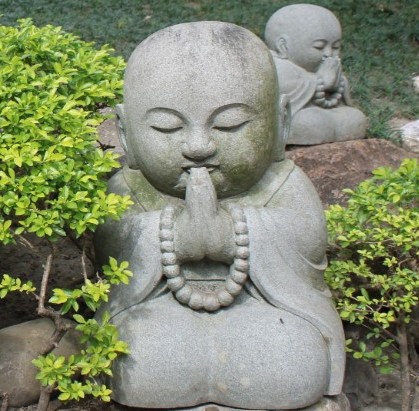
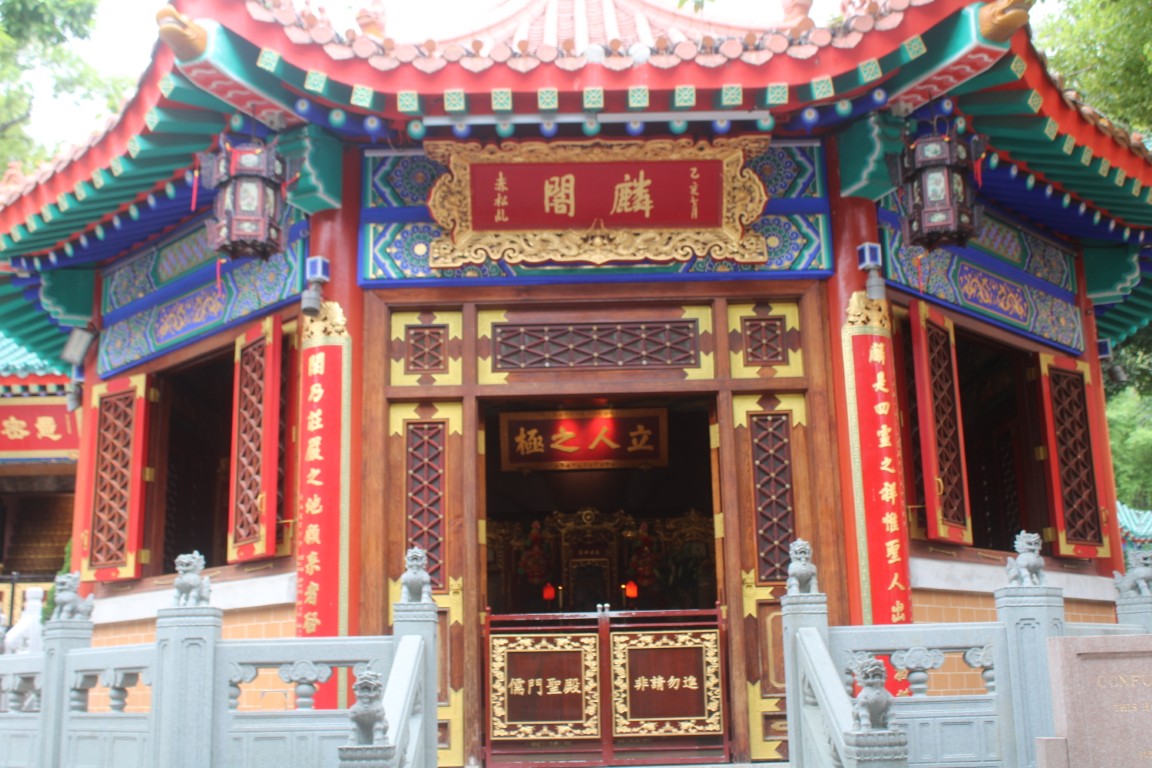
Taken at Fo Guang Shan, near Kaohsiung in Southern Taiwan.

A thing is mighty big when time
and distance cannot shrink it.

Zora Neale hurston; Tell my horse

…if you want to be elected, it is better
to be Mean than to be Funny.

hunter s. thompson; Better than sex

And whosoever shall compel thee to go a mile,
go with him twain.

jesus; Matthew 5:38-40

The only gamblers who will talk openly
are the ones who don’t make money.
The successful ones keep their mouths shut.

Kit chellel; lucky devils

To live a creative life,
we must lose our fear of being wrong.

joseph chilton pearce

Wen Fu 10 “Originality” [文赋十] by Lu Ji [陆机] [w/Audio]

Splendid thoughts arise from joined words --
Lucidity is awakened:
Luminous like adorned brocade,
Doleful as a string serenade.
But if crib suspicions aren't killed,
It'll be just one more pulp piece.
Though you may be these word's weaver--
Some ancestor, the prime conceiver.
You must be just and rise above,
Though it kills words you've grown to love.

The original lines in Simplified Chinese:

或藻思绮合,清丽千眠。
炳若缛绣,凄若繁弦。
必所拟之不殊,乃暗合乎曩篇。
虽杼轴于予怀,怵佗人之我先。
苟伤廉而愆义,亦虽爱而必捐。
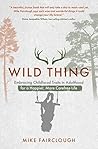
BOOKS: “Wild Thing” by Mike Fairclough

Wild Thing: Embracing Childhood Traits in Adulthood for a Happier, More Carefree LifeWild Thing: Embracing Childhood Traits in Adulthood for a Happier, More Carefree Life by Mike Fairclough
My rating: 4 of 5 stars

Publisher Site — Hay House

This short self-help guide aims to encourage adults to recapture some of the bliss-inducing traits of children. Over six chapters, it examines the virtues of play, rule-breaking behavior, imagination, resilience, gratitude, flow, daydreaming, discovery, exploration, and awe.

Each chapter, in true self-help fashion, ends with a bulleted set of practical tips and practices. The book has an Introduction and Afterward, but no other ancillary material.

I felt the book was at its strongest when the author was discussing his personal experiences. Otherwise, the book can dip into the “no-duh” plight common among self-help style books — where it seems to state the obvious without adding depth of insight.

I enjoyed reading this book. It’s a nice, short pep-talk — though it’s unlikely to leave readers with any burning revelations or new insights.

View all my reviews

“Sometimes with One I Love” by Walt Whitman

Sometimes with one I love I fill myself with
rage for fear I effuse unreturn'd love,
But now I think there is no unreturn'd love,
the pay is certain one way or another
(I loved a certain person ardently and my
love was not return'd,
Yet out of that I have written these songs).
FIVE WISE LINES [November 2024]

Inspiration enters at the border between hard work and laziness.

Lu juren in “Poets’ jade splinters” [Trans. by Barnstone and Ping in The ART Of Writing]

I will not own anything that will one day be a valuable antique.

Miyamoto musashi in “My way of walking alone” [Dokkōdō] (Trans. by Teruo machida)

A house full of gold and jade can’t be guarded.

Laozi in the DAo De jing [Ch. 9]

Writing is a struggle between presence and absence.

Lu ji in The ART of Writing [Trans. by Barnstone and ping]

The best leaders remain unknown; the next best are praised; the next best are feared, and the worst are mocked.

Laozi in dAo de Jing [Ch.17]
“Art” by Herman Melville [w/ Audio]

In placid hours well-pleased we dream
Of many a brave unbodied scheme.
But form to lend, pulsed life create,
What unlike things must meet and mate:
A flame to melt -- a wind to freeze;
Sad patience -- joyous energies;
Humility -- yet pride and scorn;
Instinct and study; love and hate;
Audacity -- reverence. These must mate,
And fuse with Jacob's mystic heart,
To wrestle with the angel -- Art.

PROMPT: Blog

Why do you blog?

A quick and easy fix of creative output.

That said, by the original definition of “blog,” it could be argued that I don’t blog and never did much of it, as my posts are not of a journaling / thoughts on “X” variety and rarely have been.

BOOKS: “Play” by Stuart Brown

Play: How It Shapes the Brain, Opens the Imagination, and Invigorates the SoulPlay: How It Shapes the Brain, Opens the Imagination, and Invigorates the Soul by Stuart M. Brown Jr.
My rating: 4 of 5 stars

Amazon.in Page

Why does biology encourage play? Why does it stop encouraging play at some point? Should play end, or should one maintain a dedication to play throughout life? These are principal questions addressed by this book.

Brown explores the advantages of leading a playful life, and he doesn’t restrict himself to childhood play. In fact, the book doesn’t restrict itself entirely to human play, but also presents insights derived from the study of other playful species. One of the most profound lessons from the book comes from a story about a sled dog that has repeated playful interactions with a polar bear — a hungry polar bear, at that.

The book is presented more like an essay or a collection of essays than the usual popular science or pop psychology book. That is to say, it is not annotated and lacks a bibliography. The author sites the occasional book or study in the text, but it’s in the manner one would see in journalism or essays. This approach has its advantages, but the flipside of those advantages are the disadvantages. On the positive side, the author is able to communicate more freely, including the ability to discuss more speculative possibilities than one would expect from scientific reporting (with its usual “just the facts” approach.) Of course, the extensive speculation will be frustrating to readers who want to know what evidence has been produced for the proposed benefits. Furthermore, it often feels like the speculation in question is of the “when you’re a hammer every problem is a nail” nature — i.e. when one is a play researcher, one may be inclined to see play as a panacea for all the ills facing humanity (it surely is for some, but probably not all.) [To be fair, the book is almost fifteen years old, and I suspect it was / is probably harder than pulling teeth to get academic funding for play research outside of early childhood development, and so part of what the book was probably trying to do was build enthusiasm for supporting this kind of research, which necessitated talking about possibilities that were outside the known.]

The book does have a chapter on “the dark side of play.” It deals with compulsive behaviors like gambling and video game playing addiction (i.e. not people who like playing video games once in a while, but those who go 48 hours without sleep and who live in cave-like darkness to limit screen glare.) Much of the chapter argues that, while those problems are real and of concern, the activities aren’t play, not as per the definition presented early in the book.

This book does make a sound case for a number of benefits of play and for not abandoning play in one’s youth. If you’re interested in how play can help one to cope in a world of uncertainty, to keep one’s mind and body healthy, and to maintain or grow one’s capacity for imagination, this book is well worth reading.

View all my reviews

BOOKS: “Imagination: A Very Short Introduction” by Jennifer Anna Gosetti-Ferencei

Imagination: A Very Short Introduction (Very Short Introductions)Imagination: A Very Short Introduction by Jennifer Anna Gosetti-Ferencei
My rating: 5 of 5 stars

Amazon.in Page

This is a concise guide to the subject of imagination, the capacity to conceptualize that which does not exist in reality. Philosophy is the primary dimension through which the subject is investigated, though the insights of poets (particularly Romantics,) authors, and artists are frequently presented — in several cases, in detail. Also, the author does discuss ideas from other disciplines as relevant (e.g. psychology, anthropology, science.) This is notable, for example, in Chapter 2, which looks at early signs of imagination in the human record and the evolution of this capacity.

Philosophical views on imagination have varied to the greatest possible extent, from Plato’s belief that imagination represents untruths and is therefore dangerous to various views suggesting that imagination is a good thing, is fundamental to what it means to be human (e.g. to empathy,) and is inescapable for humans. This Plato against the world dispute is revisited in several places throughout the book. Besides those of Plato, the views of Kant, Nietzsche, Wittgenstein, and Sartre are particularly extensively examined.

Creative types will find the final chapter (Ch.6 “Creativity from invention to wonder”) the most engaging part of the book as it deals with what makes for creativity. The chapter discusses topics such as whether constraints help or hinder creativity? Take, for example, poetry: does free verse poetry produce more imaginative material, or — on the contrary — is rhymed and metered verse more innovative and novel. If you think you know the answer, you might be surprised by the arguments that have been put forth.

I enjoyed reading this book and found it thought-provoking and worthy of the time.

View all my reviews

PROMPT: Creative

How are you creative?

By nudging letters into words, words into lines, and then dancing the mess into something that sings. By trying to tune into the Great Spontaneous.