PROMPT: Tattoo

What tattoo do you want and where would you put it?

I have no interest in tattoos. I’m with the Buddhists on “all is impermanence” and the idea that there is some message that would be poignant for the rest of my days seems silly and unlikely.

Plus I’ve seen so many bad ones: faces that look demented, Chinese characters that make no sense (and/or are upside-down or sideways.) So, no thanks.

PROMPT: Negative Feelings

Daily writing prompt
What strategies do you use to cope with negative feelings?

A practice of feeling gratitude is extremely beneficial in that regard. Simple meditative practices help one become aware of thoughts and feelings more quickly, before they are fed through rumination, making the down-spiral cycle easier to disrupt.

And, sometimes, I rant. This usually veers quickly into comedic territory and I’m reminded of the ridiculousness of taking human life too seriously, given the absurdity of being primates in pants who love shiny things. (It would be unimaginable if human life weren’t absurd.)

PROMPT: Learned

Daily writing prompt
What is the last thing you learned?

Heavy Indian Club movement patterns and the core tenets of Perennial Philosophy.

“The Builders” by Henry Wadsworth Longfellow [w/ Audio]

All are architects of Fate,
Working in these walls of Time,
Some with massive deeds and great,
Some with ornaments of rhyme.

Nothing useless is, or low;
Each thing in its place is best;
And what seems but idle show
Strengthens and supports the rest.

For the structure that we raise,
Time is with materials filled;
Our to-days and yesterdays
Are the blocks with which we build.

Truly shape and fashion these;
Leave no yawning gaps between;
Think not, because no man sees,
Such things will remain unseen.

In the elder days of Art,
Builders wrought with greatest care
Each minute and unseen part;
For the Gods see everywhere.

Let us do our work as well,
Both the unseen and the seen;
Make the house, where Gods may dwell,
Beautiful, entire, and clean.

Else our lives are incomplete,
Standing in these walls of Time,
Broken stairways, where the feet
Stumble as they seek to climb.

Build to-day, then, strong and sure,
With a firm and ample base;
And ascending and secure
Shall tomorrow find its place.

Thus alone can we attain
To those turrets where the eye
Sees the world as one vast plain,
And one boundless reach of sky.

PROMPT: Objects / Can’t Live Without

Daily writing prompt
What are three objects you couldn’t live without?

I’ll need some sort of container capable of holding water, some variety of pointy stick, and something sharp like knapped flint or a length of hard metal.

BOOKS: “Imagination: A Very Short Introduction” by Jennifer Anna Gosetti-Ferencei

Imagination: A Very Short Introduction (Very Short Introductions)Imagination: A Very Short Introduction by Jennifer Anna Gosetti-Ferencei
My rating: 5 of 5 stars

Amazon.in Page

This is a concise guide to the subject of imagination, the capacity to conceptualize that which does not exist in reality. Philosophy is the primary dimension through which the subject is investigated, though the insights of poets (particularly Romantics,) authors, and artists are frequently presented — in several cases, in detail. Also, the author does discuss ideas from other disciplines as relevant (e.g. psychology, anthropology, science.) This is notable, for example, in Chapter 2, which looks at early signs of imagination in the human record and the evolution of this capacity.

Philosophical views on imagination have varied to the greatest possible extent, from Plato’s belief that imagination represents untruths and is therefore dangerous to various views suggesting that imagination is a good thing, is fundamental to what it means to be human (e.g. to empathy,) and is inescapable for humans. This Plato against the world dispute is revisited in several places throughout the book. Besides those of Plato, the views of Kant, Nietzsche, Wittgenstein, and Sartre are particularly extensively examined.

Creative types will find the final chapter (Ch.6 “Creativity from invention to wonder”) the most engaging part of the book as it deals with what makes for creativity. The chapter discusses topics such as whether constraints help or hinder creativity? Take, for example, poetry: does free verse poetry produce more imaginative material, or — on the contrary — is rhymed and metered verse more innovative and novel. If you think you know the answer, you might be surprised by the arguments that have been put forth.

I enjoyed reading this book and found it thought-provoking and worthy of the time.

View all my reviews

PROMPT: Fate / Destiny

Do you believe in fate/destiny?

No. Life would be hard to bear if one believed one were just playing out a program, and was not a free agent.

That said, I can’t say I have enough information to have a strong belief in the opposite (i.e. free will.)

So, like a number of other big philosophical questions, it is one for which I prefer ignorance over delusion.

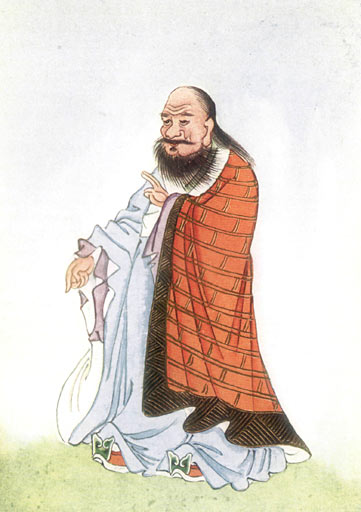
“On Laozi” by Bai Juyi [w/ Audio]

"The ignorant speak, while the wise keep silent."
I read the words of Laozi.
But if Laozi knew the Way,
Why did he write those five thousand characters?

PROMPT: Ban

If you could permanently ban a word from general usage, which one would it be? Why?

I would ban the word ban because banning is not a thing that should exist. It is not an impulse one should have.

PROMPT: Advice

Daily writing prompt
What advice would you give to your teenage self?

Eat more veggies, mind your joints, beauty is everywhere, all is impermanence, and very few things in life actually matter (see item 4.)