Without desire everything is sufficient.
 With seeking myriad things are impoverished.
 Plain vegetables can soothe hunger.
 A patched robe is enough to cover this bent old body.
 Alone I hike with a deer.
 Cheerfully I sing with village children.
 The stream under the cliff cleanses my ears.
 The pine on the mountain top fits my heart.
Translation by Kazuaki Tanahashi and Daniel Leighton in Essential Zen (1994) HarperSanFrancisco.
Passage O soul to India!
 Eclaircise the myths Asiatic, the primitive
   fables.

Not you alone, proud truths of the
   world,
 Nor you alone, ye facts of modern
   science,
 But myths and fables of eld, Asia's, Africa's
   fables,
 The far-darting beams of the spirit, the
   unloos'd dreams,
 The deep diving bibles and legends,
 The daring plots of the poets, the elder
   religions;
 O you temples fairer than lilies, pour'd over
   by the rising sun!
 O you fables, spurning the known, eluding
   the hold of the known, mounting to
   heaven!
You lofty and dazzling towers, pinnacled,
   red as roses, burnish'd with gold!
 Towers of fables immortal, fashion'd from
   mortal dreams!
 You too I welcome, and fully, the same as
    the rest!
 You too with joy I sing.

Passage to India!
 Lo, soul! seest thou not God's purpose from
   the first?
 The earth to be spann'd, connected by
   network,
 The races, neighbors, to marry and be given
   in marriage,
 The oceans to be cross'd, the distant
   brought near,
 The lands to be welded together.

A worship new I sing,
 You captains, voyagers, explorers,
   yours,
 You engineers, you architects, machinists,
   yours,
 You, not for trade or transportation only,
 But in God's name, and for thy sake, O
   soul.
Available in Traditional & Simplified Chinese [w/ multiple translations] at YellowBridge
Packed into the 81 brief chapters of this book is the core Taoist philosophy on life, human relationships, governance, and war. Most often, it offers a wisdom that turns conventional wisdom on its head, advocating for inaction over action, less over more, simplicity over complication, and for recognizing the usefulness of what isn’t.
Some of the book’s central ideas are captured in these quotes:
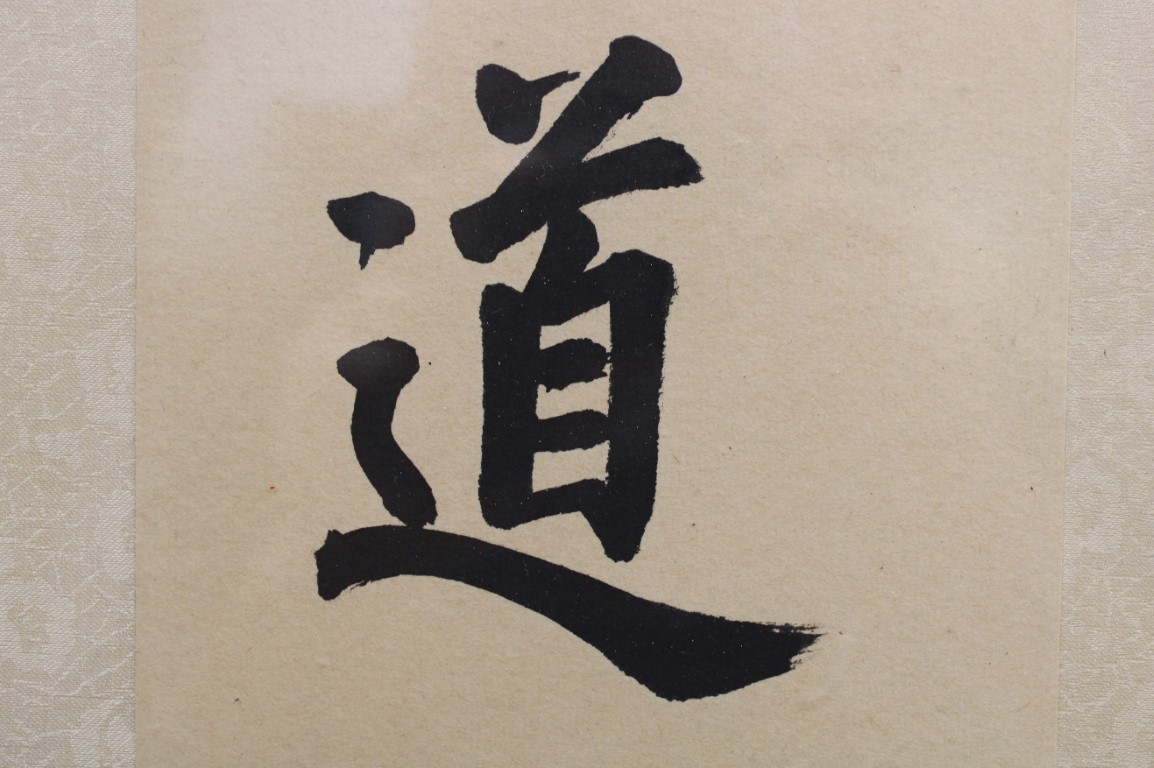
上善若水。水善利万物而不争. “The greatest good is like water. It benefits all without fighting.” [Ch. 8] 金玉满堂,莫之能守 “A house full of jade and gold cannot be guarded.” [Ch. 9] 知人者智,自知者明。胜人者有力,自胜者强。“He who knows others is smart; he who knows himself is enlightened. He who conquers others has power; he who conquers himself is mighty.” [Ch. 33] 柔胜刚,弱胜强。“Softness overcomes hardness; weakness overcomes strength.” [Ch. 36] 道常无为而无不为。“The Dao is constant inaction, yet nothing is left undone.” [Ch. 37] 善者,吾善之;不善者,吾亦善之;德善。“The good, I treat well; the bad, I also treat well. Yeah Virtue!” [Ch. 49] 知者不言,言者不知。“He who knows does not speak; he who speaks does not know.” [Ch. 56] 千里之行,始于足下。“The journey of a thousand li (“miles”) begins with a single step.” [Ch. 64] 天之道,不争而善胜 “The way of heaven is to win without fighting.” [Ch. 73] 信言不美,美言不信。“True words aren’t pleasing; pleasing words aren’t true.” [Ch. 81]
I think this is one of those works that should be read and reread. It may help rewire your brain in useful ways.
Nuns fret not at their convent's narrow room;
  And hermits are contented with their cells;
  And students with their pensive citadels;
  Maids at the wheel, the weaver at his loom,
 Sit blithe and happy; bees that soar for bloom,
  High as the highest Peak of Furness-fells,
  Will murmur by the hour in foxglove bells:
  In truth the prison, into which we doom
 Ourselves, no prison is: and hence for me,
  In sundry moods, 'twas pastime to be bound
  Within the Sonnet's scanty plot of ground;
  Pleased if some Souls (for such there needs must be)
 Who have felt the weight of too much liberty,
  Should find brief solace there, as I have found.
Google Books Page
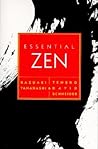
This is a collection of short writings (poems, koans, and prose excerpts) on Zen Buddhism arranged into loosely themed sections. The writings tend toward the artistic, creative, and metaphorical, with relatively few straightforward descriptions of technique or philosophy. The writings range from those of Chinese and Japanese monks who lived hundreds of years ago to present-day poets and Zen practitioners. Among the more frequently drawn from sources are: Hanshan, Ikkyu, Dogen, Ryokan, Hakuin, Gary Snyder, Robert Aitken, Seung Sahn, John Daido Loori, Thich Nhat Hanh, and Peter Levitt. But there are many others, including some who have only a single piece included.
There’s a substantial “Notes” section that gives source, translation, and — in some cases — background information. Most of the translations (both Japanese and Chinese) are by the editors, Kazuaki Tanahashi and David Schneider. There are illustrations, but they are all ensō (circular brush paintings) and related forms.
This is a highly readable and insightful collection of short writings, and I’d highly recommend it for individuals interested in Zen or Eastern Philosophy more generally.
[Note: I will assume this to be the colloquial usage of “pet peeves” as I have no peeves about pets whatsoever (in fact, compared to most human children I see running around, I find pets to be positively civilized.)]
With that in mind:
1.) Forcing a “favor” on another person in expectation of some kind of reciprocation (usually outsized in scale to the fake favor.)
2.) Using the Q & A section of a program to make one’s own speech (the subtext being that one — rather than the lunkhead who just presented — should have been the one invited to speak in the first place.)
3.) Acting as though one particular set of cultural norms is the only moral / ethical way to live.
Bonus response: As we are presently on a blogging platform, I should mention a blogger’s peeve: Using another’s comment section as an advertisement for one’s own content — particularly with no actual comment about the post to which one’s “comment” is attached. I realize blogging is inherently a self-centered activity, but let’s not fall full-Narcissus into it.