BOOK: “Masala Lab” by Krish Ashok

Masala Lab : The Science of Indian CookingMasala Lab : The Science of Indian Cooking by Krish Ashok
My rating: 4 of 5 stars

Publisher Site – Penguin

Many books have come out in recent years that explore the intersection of science and cooking, but this is one of the few that I’ve seen take on the sub-theme of science’s role in a particular cuisine — in this case Indian. Indian food, while broad and diverse itself, does present a unique palette of considerations. Few cuisines can make claims to the same level of complexity as Indian with all its spices and such. Also, Indian food tends to use heat to a different extent / in different ways than other cuisines, which is partly why, while Indian food is as tasty as food gets, aesthetically it tends toward a visually unappealing gloopy-gloppyness.

Ashok examines what applied heat does to food and why, how flavors are balanced and enhanced and why, what acids do and why they are essential, what value added is gained by pressure cookers and other specialty equipment, and how an experimental approach can be taken in lieu of a recipe book? The book takes a few controversial stances, such as in favor of sodium bicarbonate and MSG, but to a large extent is a straightforward discussion of how science informs culinary technique and ingredients.

The author maintains a light and readable tone throughout the book. I’d recommend this book for readers interested in the intersect of science and food, doubly so if one has a particular interest in Indian food.

View all my reviews

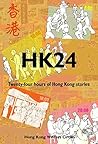
BOOKS: “HK24” by The Hong Kong Writers Circle

HK24: Twenty-Four Hours of Hong Kong Stories (Hong Kong Writers Circle Anthology Book 13)HK24: Twenty-Four Hours of Hong Kong Stories by Stewart McKay
My rating: 4 of 5 stars

Publisher Site – Hong Kong Writers Circle

This collection of twenty short stories is connected by the theme of events taking place in a single day in Hong Kong. Besides this commonality of setting, there is no other connective tissue between the stories. Tonally, the pieces range from hilarious to tragic. There are suspenseful genre fiction stories as well as realist literary fiction (i.e. telling the story of work-a-day characters engaged in events of everyday life.)

I found “Mummy, Daddy, Angry Birds” by Carsten John and “Rent” by Sharon Tang to be the best humor pieces, and “Egrets” (Paul Clinton Corrigan,) “Help Yourself” (Edmund Price,) and “Joss” (Dimple Shah) to be the most thrilling and intriguing dramatic pieces. All the stories were well-crafted, but some did stand out more than others. A few of those realist pieces that explored “mundane” expat life in Hong Kong made for engaging and distinctive reading. And Hong Kong is uniquely situated for tales of an urban shaman or a Triad shooting.

This is the thirteenth volume of a series put out by the Hong Kong Writers Circle. Each volume has a different theme (besides being Hong Kong connected.) Hong Kong is one of those places that is authentically itself, not to be confused with anywhere else, and that offers a great opportunity to build fascinating tales that could only take place there. [I found it interesting that “should I stay or should I go” was a repeated theme across multiple stories.]

I picked this book up as a piece of travel literature for an upcoming visit to Hong Kong (I make sure to read a work of literature from every country I visit — provided I can find anything translated.) I’d highly recommend this book for readers interested in short fiction with that distinctive Hong Kong flavor. I intend to look into other volumes in the series, myself.

View all my reviews

BOOK: “Kim Jiyoung, Born 1982” by Cho Nam-Joo

Kim Jiyoung, Born 1982Kim Jiyoung, Born 1982 by Cho Nam-Joo
My rating: 4 of 5 stars

Publisher Site – Simon & Schuster / Scribner

This fictitious biography explores the tribulations of being a woman in modern-day South Korea. It tells the tale of the titular lead from birth through a middle-aged motherhood. It discusses issues ranging from disappointment at having girl children to feelings of anxiety in a world laden with horny boys to the subtle sexism of the modern workplace.


The book blurb calls this book “riveting, original, and uncompromising.” I’ll give it “uncompromising,” and I have insufficient experience with the book’s “peers” to challenge the “original” claim, but I do have to call BS on the “riveting” bit. In fairness, the point of the book seems to be to offer a brutally typical life experience — not the novel-shaped extremes of a rollercoaster existence. The fact that the book is not riveting doesn’t make it unimportant or unworthy of reading. However, this is not the book one should pick up expecting to read on the edge of one’s seat. It’s well-crafted literary fiction with an important message, but “compelling” is not an appropriate descriptor. The book suffers from a progressive increase in drag as one reads onward.

Still, I’d recommend it for readers of literary fiction interested in varied cultural experiences. It’s a quick read with fine character development.

View all my reviews

PROMPT: Book from Childhood

Do you remember your favorite book from childhood?

Green Eggs and Ham is the earliest children’s book that made an impression — mostly for its catchy lyricism. Robinson Crusoe was the first story that resonated.

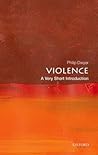
BOOKS: “Violence: A Very Short Introduction” by Philip Dwyer

Violence: A Very Short Introduction (Very Short Introductions)Violence: A Very Short Introduction by Philip Dwyer
My rating: 4 of 5 stars

Publisher Site – Oxford University Press

This is a brief overview of various types of violence, starting with the question of what counts as violence. The book explores violent acts carried out by individuals, mobs, movements, governments, and religions. It reflects upon how the nature of violence has changed over the centuries while hinting at potential reasons for said changes (along with counterarguments.)

This book raised some provocative questions, such as: Why would people go to watch executions? Does Steven Pinker’s hypothesis that humanity is becoming less violent hold water? [Pinker made this argument in his book The Better Angels of Our Nature, but it has been refuted on number of grounds — definitional, methodological, etc. Though Dwyer only briefly touches on Pinker’s book and its critics in this book and a detailed critique will require looking elsewhere.] How (and why) do violent tendencies vary across cultures. And, when and how did governments end up with a monopoly on legitimate use of force.

I found this book interesting and informative and would recommend it for those looking for answers as to why and how our species is so violent.

View all my reviews

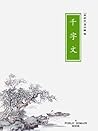
BOOKS: 千字文 [Thousand Character Essay] by 周兴嗣 [Zhou Xingsi]

千字文千字文 by 周兴嗣
My rating: 4 of 5 stars

A version with English commentary can be found at the IFA Gallery

This short work, consisting of just one-thousand characters, is first and foremost a teaching tool for children. While it presents a thousand of the most important Chinese characters, it also delivers lessons on history, ethics, philosophy, and culture by way of short sayings.

It’s arranged into 250 4-character phrases (125 sentences) and reads as a lyric poem, though because it dates to the Sixth Century, the degree to which the rhyme scheme holds varies depending upon the which spoken language one speaks (e.g. Mandarin, Cantonese, or Hakka.)

There have been different versions of this work over the centuries.

This is a much beloved work of literature among Chinese, though its sayings do not necessarily hold up as well as works like Sunzi’s Art of War or Laozi’s Daodejing. Some do, but most are much less relevant than when written.

As someone learning Chinese, I’d highly recommend this work as a way to expose oneself to language while gaining insight into Chinese culture.

View all my reviews

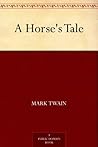
BOOKS: “A Horse’s Tale” by Mark Twain

A Horse's TaleA Horse’s Tale by Mark Twain
My rating: 4 of 5 stars

Project Gutenberg Page

Among the lesser-known works of Twain, A Horse’s Tale mixes an epistolary by a military officer at a remote outpost with dialogues between animals of the post (principally the protagonist, a horse called Soldier Boy.) The principal subject of the epistolary is a precocious girl who lives at the outpost and who is adored by all as the one soft, sweet creature in a world of warfighting men and their animals. The conversations between animals offer the most amusing portion of this book, largely for the fun being poked at humanity’s expense.

In its best moments, this novella is intensely touching or hilarious. However, it does suffer from inconsistency of pacing and tone.

If you enjoy Mark Twain’s humor and storytelling, this novella is well worth reading. If you’re primarily a reader of present-day genre / commercial fiction, it probably won’t be your thing.

View all my reviews

BOOKS: “Live Like a Philosopher” by Massimo Pigliucci, Gregory Lopez, and Meredith Alexander Kunz

Live Like A Philosopher: What the Ancient Greeks and Romans Can Teach Us About Living a Happy LifeLive Like A Philosopher: What the Ancient Greeks and Romans Can Teach Us About Living a Happy Life by Gregory Lopez
My rating: 4 of 5 stars

Publisher Site — Hachette / Headline Press

This book is for a person in the market for a philosophy of life, but who only knows that they want a system rooted in Ancient Greece. While the coauthors are all Stoics, the book explores twelve additional philosophies and gives each roughly equal consideration. In addition to the expected systems, such as Epicureanism, Stoicism, Platonism, and Skepticism, there are also several lesser known or defunct philosophies such as Cyrenaic hedonism, Cynicism, Pyrrhonism, and Megarianism.

The book is organized into four parts. The first examines schools that value pleasure (Cyrenaicism and Epicureanism,) the next investigates schools that focus on virtue and character (Aristotelian Peripatetics, Stoicism, Cynicism, and Political Platonism,) the penultimate focuses on systems encouraging doubt or caution in knowledge (Socratic philosophy, Academic Skepticism, Sophism, and Pyrrhonism,) and the last set are posed as questionable candidates for a life philosophy (i.e. those of the Pythagoreans, Megarians, and Neoplatonists.) The last three schools are questioned on various grounds, including: is enough known about what its practitioners believed, did they live their philosophy or just ruminate on it, and could the system be considered a full-fledged philosophy (as opposed to a stance on a specific issue or issues.)

The book is presented in self-help fashion, with each chapter ending in a set of exercises designed to help the reader build practical understanding of each school. The goal of these exercises (as comes together in an appendix) is to help the reader determine which philosophy is best suited to their disposition and inclinations.

I enjoyed this book. The authors use stories to convey ideas and the book’s readability is kept inviting to general readers. If you’re interested in better understanding Greek schools of philosophy, I’d recommend the book as quick and easy way to get a better grasp.

View all my reviews

BOOKS: “Swimming” by Roger Deakin

Swimming: Vintage MinisSwimming: Vintage Minis by Roger Deakin
My rating: 5 of 5 stars

Publisher Site – Vintage Minis

This book contains a collection of excerpts from the book Waterlog by Roger Deakin. It’s one volume from a series of short books that contain essays, stories, poems, or book excerpts that is put out by Penguin under the imprint “Vintage Minis.” The book describes the author’s experiences of wild swimming throughout Britain. The description of nature and of the exhilarating experience of wild swimming are beautifully composed, and it’s an all-around pleasant read.

If you’re interested in wild swimming, I’d recommend this book.

View all my reviews

BOOKS: “The Meaning of Travel” by Emily Thomas

The Meaning of Travel: Philosophers AbroadThe Meaning of Travel: Philosophers Abroad by Emily Thomas
My rating: 5 of 5 stars

Publisher Site – OUP

Of late, I’ve been reflecting upon the philosophical divides that exist between travelers and others (I call them “tribals,” but they are by far the majority of people — i.e. those who either don’t travel [unless required to] or who travel only in a tourist-like fashion.) As I’ve done so, I’ve been surprised to find how limited the literature is on the subject. I was, therefore, pleased to find this book. While Thomas confirmed my preliminary findings that there isn’t much of a travel-centric subdiscipline of philosophy, she also shows that it’s not for a lack of philosophers traveling and pondering travel.

While I’ve spent considerable time thinking about a philosophy of travel, I was pleasantly surprised to discover a number of topics in Thomas’s book to which I’d hardly given any thought. These were the most personally fascinating topics because they involved such uncharted territory. They include: maps as propaganda, the importance of travel to scientific discovery, the domination of male perspective in our collective understanding of travel, and the ethics of doom travel (going to vanishing places.)

The book also advanced my understanding of subjects that I’ve often contemplated — e.g. aesthetics and travel, innate / universal ideas v. culturally-tinted ones, and the connection between minimalism and travel.

If you’re interested in philosophy, travel, and the intersect of the two, this book is definitely for you. The author takes a light approach and the book’s readability is high — i.e. while it is thought-provoking, it’s aimed at a general readership rather than a scholarly one.

View all my reviews