BOOK: “Falling Up” by Shel Silverstein

Falling UpFalling Up by Shel Silverstein
My rating: 5 of 5 stars

Publisher – HarperCollins Children’s Books

This is the third and final (not inclusive of posthumous greatest hits collections) poetry collection of Shel Silverstein. The collection is considered children’s poetry and has the usual features of such (rhyming verse and doggerel, moral lessons, and occasional grossness.) The poems are generally written in a suspensive form with a twist, i.e. a punchline but aimed more at silly than humorous.

The collection bounces between whimsical and absurd and is highly entertaining to read.

The book has pencil drawings of matching tone for most of the poems.

If you like silliness and rhyming verse, this is fun read.

View all my reviews

PROMPT: Book from Childhood

Do you remember your favorite book from childhood?

Green Eggs and Ham is the earliest children’s book that made an impression — mostly for its catchy lyricism. Robinson Crusoe was the first story that resonated.

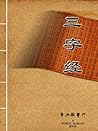
BOOKS: 三字经 by 王应麟 [“Three Character Classic” by Wang Yinglin]

三字经三字经 by 章炳麟
My rating: 5 of 5 stars

Available online — Project Gutenberg

This is a Confucian primer written in lines of three characters. It’s a children’s book in the sense that it’s aimed at children, but not necessarily with respect to being presented in a manner most conducive to childhood learning. (While it’s concise, the material isn’t presented in an interesting or memorable form. i.e. It’s intended for brute force rote memorization.)

The book consists of five sections, ranging between twenty-four and one hundred and six lines (72 to 318 characters per chapter.) The first introduces Confucian virtues. The second offers a broad overview of classics of Chinese philosophy. The third section lists the dynasties of China. The penultimate section describes ideal behavior from a Confucian perspective. The last, and briefest, section is largely a pep talk on studying hard.

As someone learning Mandarin Chinese, it’s interesting to see how sentences are formed in this sparse format, and this text offers insight into Chinese history and philosophy, in addition to providing a good early reader.

If you are interested in learning elementary Confucianism or you’re learning Chinese and looking for short and simple texts for reading, I’d recommend one look into the Three Character Classic.

View all my reviews

BOOKS: “The Story of Chinese Characters” by Fang Zeng

Languages - The Story Of Chinese Characters: 汉字的故事 (Bilingual Chinese with Pinyin and English - Simplified Chinese Version) - Preschool, Kindergarten (Educational ... Books For Smart Kids: 聪明宝宝益智成长绘本 Book 2)Languages – The Story Of Chinese Characters: 汉字的故事 (Bilingual Chinese with Pinyin and English – Simplified Chinese Version) – Preschool, Kindergarten by Elite Panda book
My rating: 5 of 5 stars

Publisher’s YouTube Channel

This story book is apparently perfect for preschoolers and definitely is for someone newly learning Chinese. It is the tale of a man who goes hunting and his mild trials and successes. It’s not a gripping tale, but that’s perfect for those new to the language as it allows simple language and concepts. The language is grammatically and semantically straightforward. This bilingual book presents Chinese characters, pinyin with tone markers, and the English translation all on the same page.

The story teaches a few rudimentary Chinese characters (person, mountain, boat, bird, etc.,) particularly ones that are either pictographic or lend themselves to pictographic memory tricks. (For those unfamiliar with Chinese, it is a common misconception that all the characters are pictographic. In fact, about eighty percent of characters appear as they do because of their spoken sound quality [i.e. they appear similar to another character with the same sound, but often with an entirely unrelated meaning.]) The illustrations not only tell the story but invokes the shape of the character that is under study.

I found this book useful for learning to read in Chinese. A little more separation of the pinyin and characters might be nice so one could cover it up to focus on reading characters, but I was clearly not the intended demographic. I don’t see any reason why the book couldn’t work either way, i.e. for English learning Chinese speakers as well as English speaking Chinese learners.

View all my reviews

BOOKS: “A Child’s Garden of Verses” by Robert Louis Stevenson

A Child's Garden Of VersesA Child’s Garden Of Verses by Robert Louis Stevenson
My rating: 5 of 5 stars

Amazon.in Page

Until recently, I was only acquainted with Stevenson as a novelist, but I had a powerful experience with his poem “The Hayloft” (included in this collection.) I was intrigued by how a poem written by a nineteenth century Scot could prove so nostalgia-inducing for me, having been a 20th century American farm-boy. So, I read the collection, and found that “The Hayloft” was only one of many examples that had such an effect. Others include: “Land of Counterpane,” “Block City,” and “Land of Nod.” The nostalgic power of the poems derives from the fact that Stevenson does a phenomenal job of capturing a child’s enthusiasm for play, and in that regard I’m sure the collection will resonate more broadly than just I, or even than just farm kids.

Afterall, there’s a lot of Stevenson’s experience that is dissimilar to mine. Besides his era and his nationality, his mentions of nurses, gardeners, and cooks is surely much different from my own upbringing, being devoid of household staff. But the book only needs to draw upon that love of play and imagination to take one back.

For a work from the nineteenth century, this collection of 50+ lyric poems has aged well. There is the occasional word like “gabies” or “whin” to send one to a dictionary, but those archaic or obsolete terms are rarities. Furthermore, the lyricism of the poems makes them easily read or sung.

I’d highly recommend this collection for poetry readers, particularly children or those looking to reexperience childhood.

View all my reviews

PLAYTHINGS by Rabindranath Tagore [w/ Audio]

CHILD, how happy you are sitting in the dust, playing with a broken twig all the morning.

 I smile at your play with that little bit of a broken twig.

 I am busy with my accounts, adding up figures by the hour.

 Perhaps you glance at me and think, "What a stupid game to spoil your morning with!"

 Child, I have forgotten the art of being absorbed in sticks and mud-pies.

 I seek out costly playthings, and gather lumps of gold and silver.
 
 With whatever you find you create your glad games, I spend both my time and my strength over things I never can obtain. 

 In my frail canoe I struggle to cross the sea of desire, and forget that I too am playing a game. 

BOOKS: The Crescent Moon by Rabindranath Tagore

The Crescent Moon : Poems and Stories [Paperback] [Jan 01, 2017] Rabindranath TagoreThe Crescent Moon : Poems and Stories [Paperback] [Jan 01, 2017] Rabindranath Tagore by Rabindranath Tagore
My rating: 5 of 5 stars

Available free at Project Gutenberg

Amazon.in Page

This is a collection of forty poems that are all connected by the theme of childhood. Many are in the voice of a child, but others are in a parent’s voice as he contemplates the nature of youth and how life has changed — or simply as he looks upon a sleeping infant. Some are brief stories or vignettes and others are scenes or philosophical reflections. Among the more well-known inclusions are: “Playthings,” “Paper Boats,” “The Gift,” and “My Song.”

This is Tagore at his most playful, but it retains his usual clever musing.

View all my reviews

PROMPT: Childhood Book

Daily writing prompt
Do you remember your favorite book from childhood?

I remember an adaptation or condensed version of Defoe’s Robinson Crusoe. The castaway theme probably resonated with my introverted nature.

BOOK REVIEW: Basho’s Haiku Journeys by Freeman Ng

Basho's Haiku JourneysBasho’s Haiku Journeys by Freeman Ng
My rating: 4 of 5 stars

Amazon.in Page

Out: October 19, 2021

The first thing a prospective reader should be clear about is that these aren’t Basho’s haiku. Basho wrote travelogues in haibun (a spare form of prose typically matched with one or more haiku,) and so one might expect the poems to be from them. On a related note, while all of the poetry is haiku in form, not all of it is haiku in substance. That is to say, it’s all presented in a three-line 5 – 7 – 5 syllable format, but some of it reads like a prose description of events chopped up into 5 – 7 – 5 syllable bit-sized pieces. That’s not to say that there aren’t many poems that do have the feel of true haiku, presenting spare natural imagery juxtaposed but not explained, analyzed, or judgement-laden. It seemed like the further into the book I got, the more of the poems felt like proper haiku.

It is a children’s book, so I don’t think it’s a major concern that it focuses on the most rudimentary elements of haiku (i.e. syllable count and nature imagery) at the expense of subtler elements. The Zen nature of Basho’s haiku might be challenging for a young reader. I addition to the colorful and whimsical artwork, showing prominent places from Basho’s travels, there is a single page explanation of haiku to help get kids writing their own.

If you’re looking for a book to get a child interested in nature, haiku, or travel, you should give this one a look.

View all my reviews

BOOK REVIEW: The Physics of Fun by Carla Mooney

The Physics of FunThe Physics of Fun by Carla Mooney
My rating: 4 of 5 stars

Amazon.in Page

Out: September 15, 2021

This book uses skateboarding, snowboarding, trampolining, music concerts, and video games as a vehicle to teach (middle school-aged) kids some basic physics concepts. I’m not sure why this isn’t the usual textbook approach, teaching lessons via what is of greatest interest to students, but it certainly wasn’t the mode when I was a kid.

While I’m no expert on middle school science curricula, I suspect this book wouldn’t work as a primary classroom text because it doesn’t systematically cover the subject. The chapters on skateboarding, snowboarding, and trampolining explain many terms and concepts of mechanics, but not necessarily everything taught in science class. The penultimate chapter is about waves, both sound and light, and uses the idea of music and laser light shows to elaborate on the topic. The final chapter uses video games as a way to introduce the fundamentals of electricity and circuits.

I think this book is at its best when it is breaking down the physics of tricks in the first few chapters. That’s where it separates itself from the usual dry textbook approach, and any improvement in the book would be seen following that line. Granted, some topics are more amenable than others.

The book has a glossary and each chapter ends with hands on exercises students can do to improve their understanding of the material considered. The graphics are widespread and include cartoons, diagrams, and photos.

If you’re looking for a book to get a child excited about science, give this one a look – particularly if the child is interested in extreme sports.


View all my reviews