
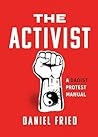
 The Activist: A Daoist Protest Manual by Daniel Fried
My rating: 4 of 5 stars
Publisher Page — Prometheus Books/
Release date: March 3, 2026
Taoist philosophy has been applied to many a subject over the centuries, from war to business to governance to relationships, but this is the first time I’ve seen it applied to activism in a substantive way. The book caught my eye because I’ve long recognized the central truth behind Fried’s work, which is that the tactics and mindsets of protesters often does them no favors and may even ensure failure (if one presumes the objective to be to change behavior and attitudes on a given topic into line with the protesters’ stance.) The problem is that protesters are often angry and combative, characteristics which may keep the choir (preaching to itself) warm and feeling self-righteous, but which seldom brings in new converts from among the undecided [let alone from the opposing side.] And if you didn’t need converts to your side, you wouldn’t have to protest in the first place. Given this tendency, Taoism could be argued to be an ideal source of strategy. Taoism proposes going with the grain, not leading with a fight, and avoiding useless activity.
This book provides interesting food-for-thought about how protesters might have more impact by adopting fewer belligerent and self-serving tactics. Unfortunately, the book also has stretches of stream-of-consciousness writing that — while perhaps consistent with the Taoist love of spontaneity — can be a bit of a strain on the reader’s ability to follow. This mostly takes place in the latter chapters.
I found this book to be intriguing. I can’t say that I came away from it having answered the question of whether Taoist philosophy is reconcilable with activism on a practical level. Taoism asks one to let the natural unfold, while protest movements want to guide a society in a particular direction (notably one by definition at odds which that which has fallen into place organically.) It’s not for lack of discussion that I haven’t reached a conclusion, but rather that questions remain for me on the pragmatic level (rather than the level of theory.) That said, I found the book well worth reading, despite a few points of low readability.
View all my reviews


















 Tiger Riding for Beginners