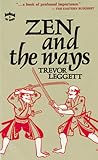
BOOKS: “Zen and the Ways” by Trevor Leggett

Zen and the WaysZen and the Ways by Trevor Leggett
My rating: 5 of 5 stars

Open Library Page

This book is the most densely populated with interesting insights that I’ve read in some time. It’s not new, being first published in 1978, but it takes a variety of approaches to give the reader a better understanding of Zen and the application of Zen mind to martial arts and other activities that found benefit in stillness and clarity. By “the Ways,” Leggett is referring to those arts and activities benefiting from Zen, which include: tea ceremony, flower arranging, painting, poetry writing, and all manner of martial arts. [Often represented by ending “do” in Japanese.] (The latter are dealt with most extensively, but not exclusively.)

The book is arranged in six parts, the first half of which focus mostly upon Zen Buddhism and, particularly, the Kamakura school that found a huge following among warriors and other artists. Those first three chapters take a big to small approach, examining Zen from ever finer levels of detail, starting with an introduction to Zen Buddhism broadly, moving on to the Kamakura developments, and then finally focusing on one particular practice — that of Koans (stories that present riddles which the student can only “solve” in a non-intellectual fashion.)

The second half of the book investigates the ways Zen has been applied to various arts. This is where one sees the varied approaches used to explore the confluence of Zen and artistry. Part Four consists of a series of essays explaining concepts such as ri (universal truth) and ji (formal technique,) ki (vital energy,) and isshin (single-heartedness) / zanshin (lingering awareness.) Part Five consists of historic martial arts scrolls and excerpts, including Yagyu Munenori’s Art of War and Chozan Shisai’s “Tengu’s Guide to the Martial Arts.” The final part consists of stories that illustrate crucial ideas in a readable and memorable fashion.

I was extremely pleased to stumble across a copy of this book in a second-hand bookshop. I’d long ago heard a fascinating story about murders in Edo era Japan of high-level martial artists, all killed in the same manner. They never found the killer, but they figured out how the murders were done easily enough. The killer exploited his knowledge of that school’s techniques to lay a fake that exploited their own technique to create an opening. It’s a cautionary tale that drilling muscle memory is not the end-all be-all of martial arts, and that it can create its own problems. At any rate, I’d never been able to find the source… until now. There is a detailed discussion of it in this book.

For readers interested in how state of mind influences artistic performance, I’d highly recommend this book.

View all my reviews

BOOKS: “The Zen Teaching of Bodhidharma” Translation by Red Pine

The Zen Teaching of Bodhidharma (English and Chinese Edition)The Zen Teaching of Bodhidharma by Bodhidharma
My rating: 5 of 5 stars

Publisher’s Site

Bodhidharma was a Buddhist Monk who is credited with bringing an approach to Buddhism to China that would become Zen. This book presents four of his surviving lectures in their entirety: “Outline of Practice,” “Bloodstream Sermon,” “Wake-up Sermon,” and “Breakthrough Sermon.” It is a bilingual edition, featuring Traditional Chinese script juxtaposed with the English translation.

Bodhidharma was an intriguing and important character in the history of Buddhism, so much so that a legend has grown up around him that is in all likelihood substantially false. The most well-known element of the legend is that he taught monks the martial art that became Shaolin Kung Fu. (Historians refute the likelihood of this because there was no evidence of it in the documentation in the centuries immediately after Bodhidharma’s death. The story came along much later and caught on like gangbusters, so much so that it is routinely repeated today as if established fact. For elaboration, see Meir Shahar’s “The Shaolin Monastery.”) There is simply not a lot known about Bodhidharma (or even the extent which there was a Bodhidharma,) and what is known is not without controversy. Popular accounts put his homeland in Tamil Nadu, India, but dissenting accounts put it as far away as Persia (Iran.)

The reason I mention all this is because some potential readers may expect a kind of fabled story, full of kung fu and magic, and — in point of fact — these teachings offer a clear and straightforward approach to the practice of Buddhism. I’d highly recommend the book for readers interested in Buddhism, Zen, and meditational practices – generally. It is a clear and thought-provoking work. But, if you’re expecting a thrilling recitation of legend and woo-woo, this isn’t it.

View all my reviews

“Meditation” by Amy Lowell [w/ Audio]

A wise man,
Watching the stars pass across the sky,
Remarked:
In the upper air the fireflies move more slowly.

PROMPT: Negative Feelings

Daily writing prompt
What strategies do you use to cope with negative feelings?

A practice of feeling gratitude is extremely beneficial in that regard. Simple meditative practices help one become aware of thoughts and feelings more quickly, before they are fed through rumination, making the down-spiral cycle easier to disrupt.

And, sometimes, I rant. This usually veers quickly into comedic territory and I’m reminded of the ridiculousness of taking human life too seriously, given the absurdity of being primates in pants who love shiny things. (It would be unimaginable if human life weren’t absurd.)

PROMPT: Clutter

Where can you reduce clutter in your life?

My mind. It’s a constant battle.

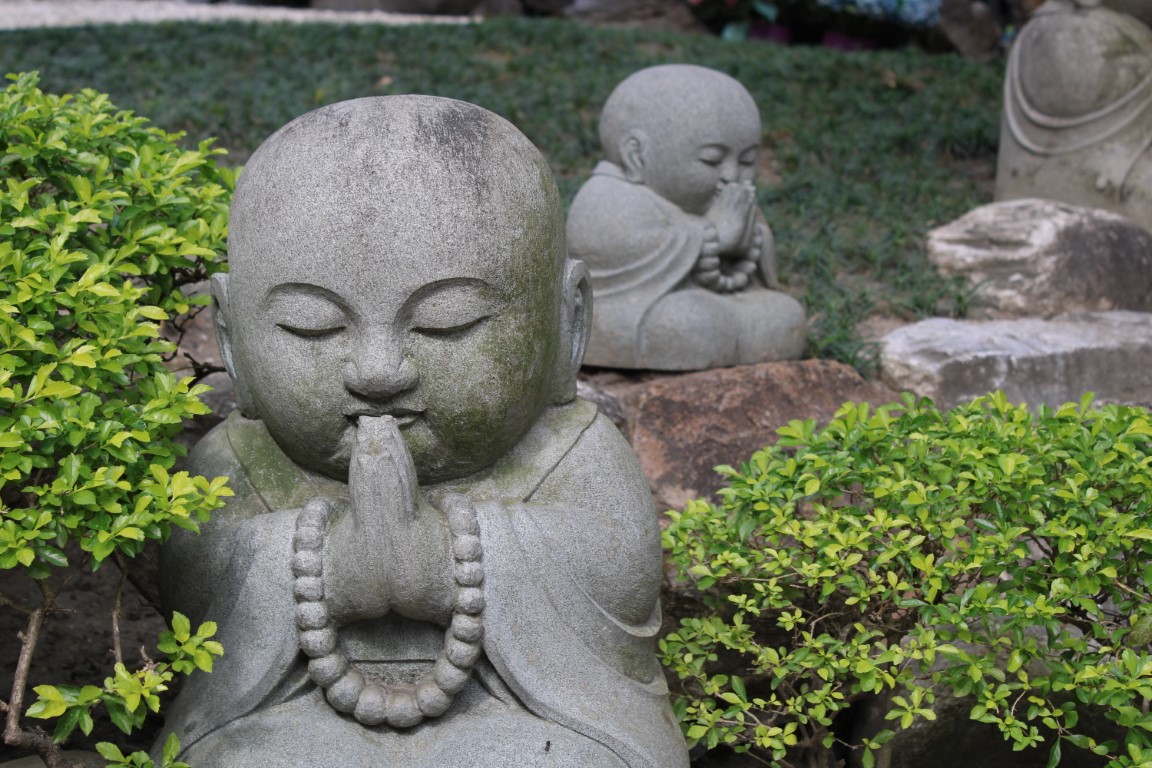
Zen Garden [Lyric Poem]

I see those serene figures sit
 amid Zen Garden evergreens.
Like Benkei, they don't move a whit,
 Their minds are free of thoughts & dreams.

The moss is growing on them, now,
 and birds have left their fecal splat.
Don't envy how they've found the Dao,
 but how they have no need of hats.

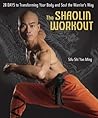
BOOKS: The Shaolin Workout by Shi Yan Ming

The Shaolin Workout: 28 Days to Transforming Your Body and Soul the Warrior's WayThe Shaolin Workout: 28 Days to Transforming Your Body and Soul the Warrior’s Way by Yan Ming
My rating: 4 of 5 stars

Amazon.in Page

This book presents an exercise regimen based on Shaolin Kung fu as taught by a prominent New York City martial arts teacher. The book moves from gentle joint articulations suitable for anyone through to movements that require some degree of flexibility and athleticism. The sequence is presented in such a way as to build on itself, adding a bit more each time until one is doing the entire sequence.

Interspersed with the descriptions of the physical exercises are meditations, mostly of a contemplative nature. The illustrations are color pictures and provide the sequences of movement, though the textual descriptions will be necessary in many cases to clarify the transitional movements. There are a number of full-page color plates that are very well shot, though mostly for aesthetic (versus educational) purposes.

The book is probably the most pep-talk laden book I’ve ever read. That said, there’s not much discussion of modifications or capacity building for individuals who are incapable of doing the full expression of the techniques.

The practices often reminded me more of yoga than of martial arts. There are many deep stretches and low positions, e.g. similar to Warrior I (Virabhadra I.) It’s true that there are punch and kick movements, but they are done in more of a range-of-motion building way than as one would in combative arts.

It is an interesting set of movements, and I’d recommend it for those who like to work with unconventional workouts and movement systems.

View all my reviews

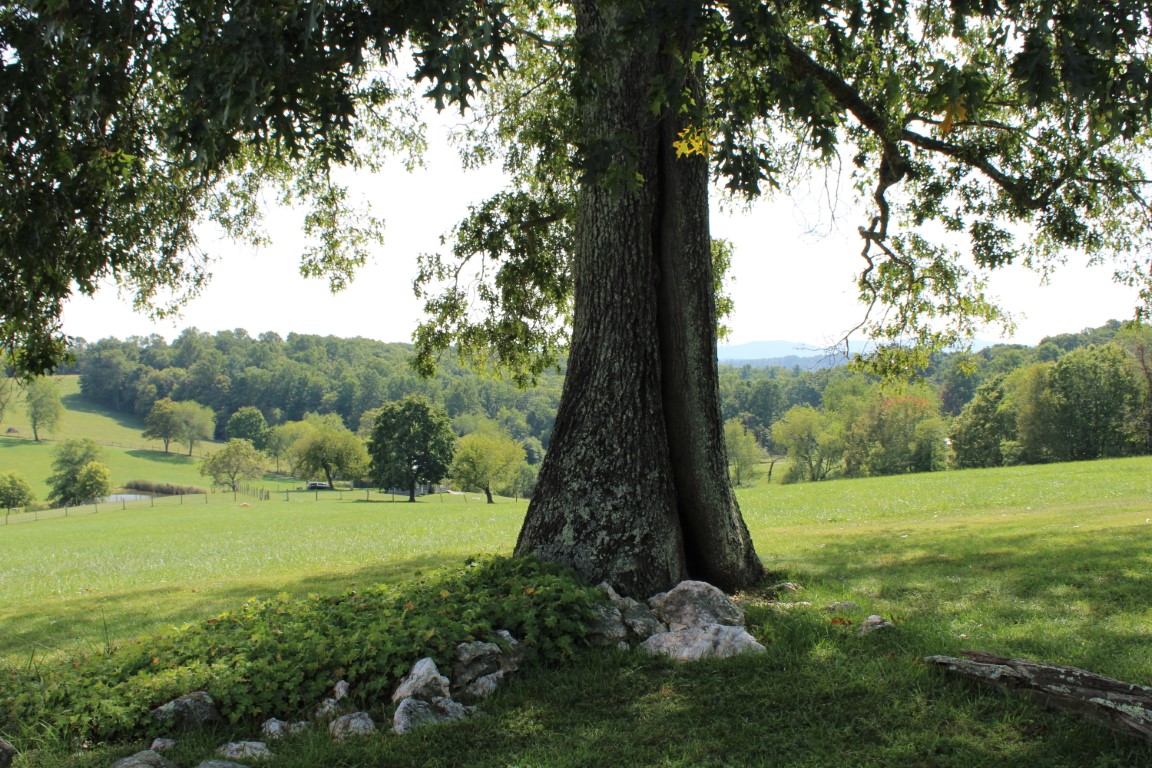
Bodhi Tree [Free Verse]

How to pick a tree
 that one can be resigned
  to sit under until
   Enlightenment?

If the choice is hard,
   you are not ready.

If the choice is easy,
   you are not ready.

If there is no choice,
    perhaps, you're ready.

BOOK REVIEW: Mindfulness in Wild Swimming by Tessa Wardley

Mindfulness in Wild Swimming: Meditations on Nature & Flow (Mindfulness series)Mindfulness in Wild Swimming: Meditations on Nature & Flow by Tessa Wardley
My rating: 4 of 5 stars

Amazon.in Page

Release Date: June 13, 2023

As the title suggests, this is a book about combining mindfulness and swimming in natural bodies of water. It’s part of a large series of “Mindfulness and …” books, and this particular volume is a re-release of a title that came out a couple years back.

While the book does provide an overview the basic methods and considerations for both mindfulness meditation and wild swimming, it’s largely a peptalk or enticement to take up wild swimming as a means to improve awareness (as well as to bolster physical health and mental well-being.) That said, some of this peptalk is artfully, almost poetically, written, and the book is a pleasure to read.

The book discusses solo swims versus those in a group, and it even explores using onshore experiences to bolster mindfulness — e.g. using the sensory experience of the water as a focal point for practicing awareness. The around- (v. in-) water discussions are probably in part because the book uses seasons as a secondary mode of organization, and long and leisurely winter swims in lakes and rivers aren’t an option for people in many parts of the world.

I picked up some interesting food-for-thought in the book, and — as I say — it made for enjoyable reading.

View all my reviews

Cave Days [Haiku]

in the cave,
 surrounded by stone,
  no sight; no sound.