Gust [Haiku]

gusting Spring winds:
can the hunkered crow
take to flight?

DAILY PHOTO: Busy River Sunset

Image

BOOKS: “Soseki Natsume’s Collected Haiku” trans. by Erik Lofgren

Soseki Natsume's Collected Haiku: 1,000 Verses from Japan's Most Popular Writer (Bilingual English & Japanese Texts with Free Online Audio Readings of Each Poem)Soseki Natsume’s Collected Haiku: 1,000 Verses from Japan’s Most Popular Writer by Natsume Sōseki
My rating: 5 of 5 stars

Publisher Site — Tuttle

Natsume Soseki is widely considered one of 2oth century Japan’s greatest writers. While he is best known for his novels, such as Kokoro and I Am a Cat, Soseki wrote broadly, including the one-thousand haiku collected in this volume.

The collection, as is common among haiku volumes, is organized seasonally. Season words being a common feature of classical haiku. That said, these poems are not all classical haiku (though most are.) With respect to form, they are all haiku, but – with respect to content – some are senryū (a style that is the same as haiku in form, but uses more humor and humanistic elements and is less strictly natural and imagist) and others are more idiosyncratic experiments.

One excellent feature of this collection is that it includes both the Japanese characters and Romanized phoneticizations for each poem. This is great for readers who know some level of Japanese, but having the pronunciations allows readers to take in the sound quality of the original — even if they don’t read Japanese.

The translations are optimized for readability by English readers. By this I mean that the translator, Erik Lofgren, doesn’t pare the lines down to maximize sparseness of sound. There are different strategies for translation, and I think Lofgren’s approach is best for a general readership because the translations don’t draw attention to themselves by reading in a fashion that is clunky or tone deaf in English. That said, I suspect some readers would prefer translations more stripped of articles, conjunctions, and other function words.

If you enjoy haiku and modern Japanese literature, I’d highly recommend this book.

View all my reviews

PROMPT: More Every Day

Daily writing prompt
What do you wish you could do more every day?

Have epiphanies. They are quite hard come by.

“Break, Break, Break” by Alfred Tennyson [w/ Audio]

Break, break, break,
On thy cold gray stones, O Sea!
And I would that my tongue could utter
The thoughts that arise in me.

O, well for the fisherman's boy,
That he shouts with his sister at play!
O, well for the sailor lad,
That he sings in his boat on the bay!

And the stately ships go on
To their haven under the hill;
But O for the touch of a vanish'd hand,
And the sound of a voice that is still!

Break, break, break
At the foot of thy crags, O Sea!
But the tender grace of a day that is dead
Will never come back to me.

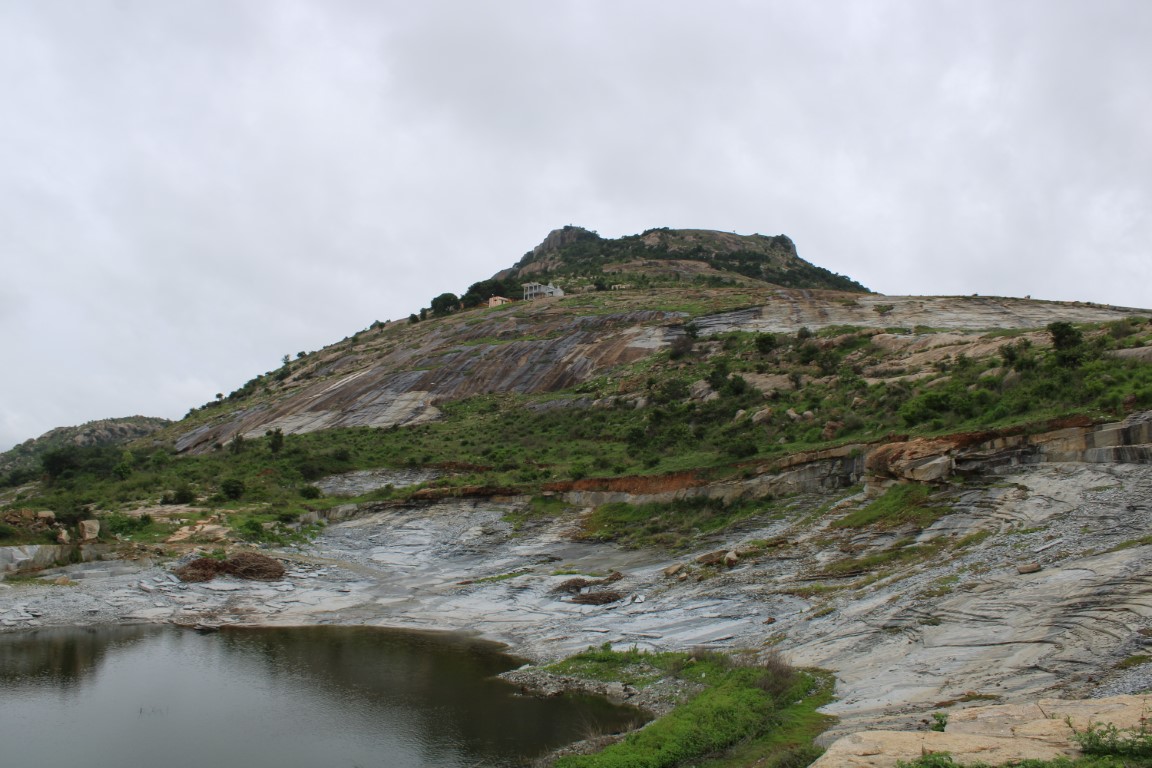
Cold Rain [Haiku]

cold rain
spatters on granite:
Spring enters.

DAILY PHOTO: Isha Foundation from Hari-Hara Betta

BOOKS: “The Life of Hiuen-Tsiang” by Hui-li [trans. by Samuel Beal]

The Life of Hiuen-TsiangThe Life of Hiuen-Tsiang by Hui-li
My rating: 4 of 5 stars

Available free online through the Indian Gov’t

Those familiar with Chinese Literature (or smash-hit video games) will be acquainted with the tale of Sun Wu Kong, the Monkey King. The central event of the novel Journey to the West is a Chinese Buddhist monk traveling to India to gather a complete set of the Buddhist canon. In the novel (and video game, Black Myth: WuKong,) the monk’s name is Tang Sanzang (in translations – and movie / television – he’s sometimes called Tripitaka, which is actually the name of the Pali Canon — the original Buddhist books, themselves.) In real life there was also such a monk, and his name was Xuanzang (玄奘, Romanized as Hiuen-Tsiang in an earlier system,) and this book describes his travels to, through, and back from India.

It turns out the monk was not escorted by a god-tier mythical creature and his two superpowered compatriots (i.e. Pigsy and Sandy.) For this reason, the actual Xuanzang occasionally got threatened, robbed, and was once almost killed by riverine pirates. This book is a travelogue of Xuanzang’s journeys through China, Central Asia, [present-day] Afghanistan and Pakistan, and throughout India.

Needless to say, this book isn’t as taut and thrilling as the fictional account with its gods and monsters, but – for those with historical and geographic interests – it’s not without appeal. It does have extensive description of Xuanzang’s visits with various monks and royalty that is dry reading as well as discussions of where Xuanzang’s collection stood at any given point, but there are a few intense events and harrowing moments.

If you’re interested in Buddhist history, you may want to give this book a look.

View all my reviews

“Illusion” by Amy Lowell [w/ Audio]

   Walking beside the tree-peonies,
I saw a beetle
Whose wings were of black lacquer spotted with milk.
I would have caught it,
But it ran from me swiftly
And hid under the stone lotus
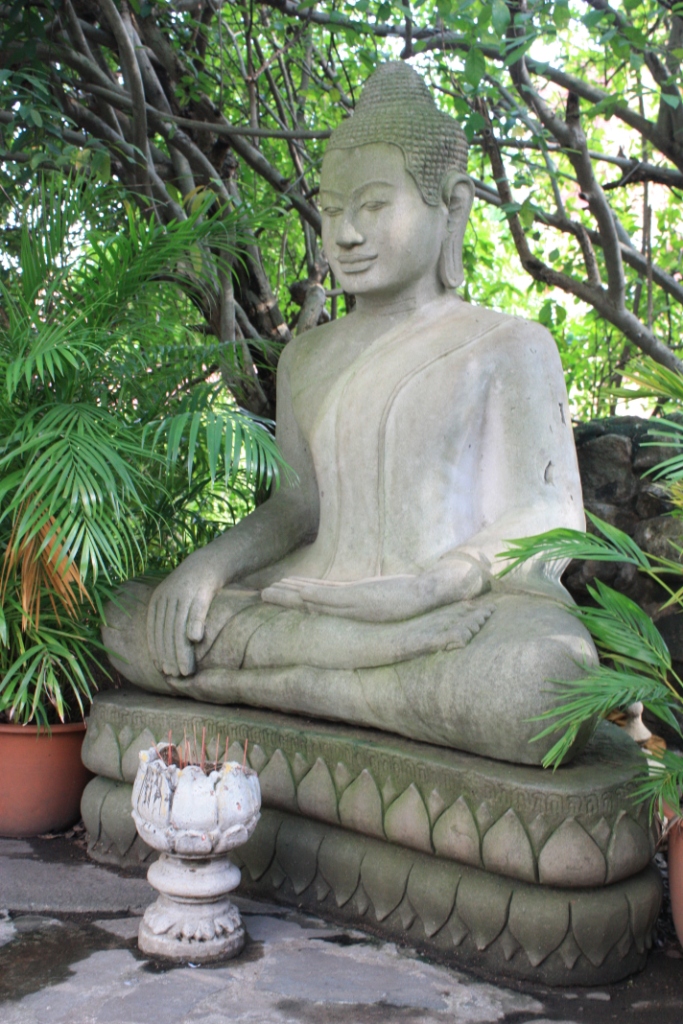
Which supports the Statue of Buddha.

PROMPT: Tattoo

Daily writing prompt
What tattoo do you want and where would you put it?

I have no use for any tattoo, anywhere, thank you very much.

I’ll leave it to the teens and twenty-somethings to believe there is some image or phrase that will always and forever capture their essence. I’ve been through too many versions of myself and came out accepting the Buddhist / Taoist notion that everything, everywhere [even the self — if there even is such a thing] is in constant flux.