BOOKS: “Troublesome Words” by Bill Bryson

Bryson's Dictionary of Troublesome Words: A Writer's Guide to Getting It RightBryson’s Dictionary of Troublesome Words: A Writer’s Guide to Getting It Right by Bill Bryson
My rating: 5 of 5 stars

Publisher Site – Penguin Books

This is a guide to English words (and loanwords) that challenge even professional writers. It’s organized as a dictionary, and – in fact – the earliest edition of the book was entitled The Penguin Dictionary of Troublesome Words. However, the entries are far from mere definitions, and typically include examples of grammatical, stylistic, or spelling offenses, examples that are sometimes humorous (as are Bryson’s explanations.)

The most common classes of troublesome words are those that are redundant (or otherwise fail to add information) and pairs or groups of words that are frequently confused because of similar spellings or close — but not identical — meanings. That said, there are many other varieties of linguistic challenges confronted by the book, such as spelling mistakes and migrating meanings.

The book is dated. For some readers, that will make the book obsolete, but students of language may find it’s even more useful in showing the evolution of the language. This can be seen with respect to migrating meanings, words whose meanings started out being one thing but against the efforts of grammarians and other linguistic guardians were dragged into an alternate meaning by the force of mass usage. There are some instances where Bryson advises one to honor the original meaning and other cases where he points out that the ship has sailed and to just go with the flow. I’m sure these positions would shift if this book were to be updated again. (Originally written in the 1980’s, the book was revised and update in the early 2000’s, but language has continued to shift in these 20+ years.) In several cases words for which he suggests we stick to the original meaning have now completed their slide. (And many of the words he tells us to accept the changed meaning of are now so far past that original meaning that few readers will be aware the word ever meant something different.)

That being said, the book isn’t completely obsolete. As mentioned above, one of the most common classes of offenses are redundant and meaningless words, and these are almost all still relevant to writers today.

Bill Bryson has a unique relationship to the language, being both British and American, and one nice feature of the book is that he points out differences in spelling and usage that exist between the two countries.

There is an appendix discussing proper punctuation, a bibliography, and a glossary of linguistic terms.

If you’re reading this out of an interest in language, I’d recommend it. It’s light and humorous. However, if you’re in the market for a reference guide, you can surely find a more up to date (if less humorous) guide.

View all my reviews

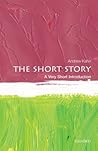
BOOK: “The Short Story: A Very Short Introduction” by Andrew Kahn

The Short Story: A Very Short Introduction (Very Short Introductions)The Short Story: A Very Short Introduction by Andrew Kahn
My rating: 4 of 5 stars

Publisher Site – OUP

This guide provides an overview of the short story, particularly literary short stories (though it’s not without mention of genre fiction.) The book is well organized and offers some fascinating food for thought, particularly regarding the psychology of character and the distinctions between short stories and novels. (The former are not to be thought of as pared down versions of the latter.)

I will say that, for a concise introduction, the book does occasionally get into the weeds on specific issues, potentially losing the non-specialist reader who this series is ostensibly geared toward.

I found the book’s organization to be logical and productive to its task. After an introduction that explores the advent and history of the short story, most of the chapters deal with structural or compositional aspects of story, including: openings, voice, setting, plot, irony / reversal, and endings. One chapter (Ch. 6) stands out as a bit different in that it zooms in on Chekhov and his influence on the short story as we’ve come to know it. While this could be said to demonstrate the author’s tendency to zoom in the specificity more than is usual for such a guide, I did find the chapter interesting and enlightening.

If one is interested in the short story (as a reader, writer, or both) one will find this guide worth one’s attention.

View all my reviews

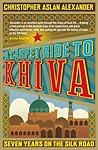
BOOKS: “A Carpet Ride to Khiva” by Christopher Aslan Alexander

A Carpet Ride to Khiva: Seven Years on the Silk RoadA Carpet Ride to Khiva: Seven Years on the Silk Road by Chris Aslan
My rating: 5 of 5 stars

Publisher Site – ICON Books

“Travel-centric memoir” is how I’d classify this book, but it’s one of those books that isn’t easily categorized. The author cleverly interweaves explorations of Uzbek history and culture with his own story of living in the Uzbek city of Khiva for seven years as an NGO worker and traditional crafts entrepreneur. The side voyages into history and culture not only support the readers’ contextual understanding of the author’s story but also make for a fascinating journey of understanding of the locale. Uzbekistan has had many lives, from beating heart of the Silk Road to forgotten backwater of the Soviet Union, and these many lives have shaped what Uzbekistan is, and what it’s becoming.

I should point out that Uzbekistan has apparently made a hard shift since the days described in this book (late 90’s early 2000’s, i.e. fairly early in the wake of independence from the Soviet Union.) I mention this to avoid discouraging travelers through discussion of the author’s experiences. [I, myself, am planning a trip in the near future.] I’m sure that Uzbekistan continues to have deep-seated problems, but it seems to be making great efforts to be tourist-friendly these days. Which is not to say that the individuals were ever unfriendly to travelers. The author describes an Uzbek people who are warm-hearted, welcoming, and helpful. But when the author was there it was also on the list of the biggest human rights violators, corruption was ubiquitous, and tourism was almost non-existent. In fact, the penultimate chapter of the book describes the author’s experience of a visa denied, ping-ponged deportations, and a life sharply diverted by corruption.

The final chapter is intensely compelling and describes the author’s (late 2000’s) visit to Afghanistan to help apply the lessons he learned in Uzbekistan to building a rug weaving operation in that war-torn country (allowing women to make some money, an activity disallowed by the Taliban before and since.)

This is a fascinating book, and I’d highly recommend it for travelers and those interested this lesser-known part of the world. Even the descriptions of silk production, rug weaving, and natural dyes (topics that I expected wouldn’t resonate with me) were interesting and engaging.

View all my reviews

BOOK: “Rocket Yoga” by David Kyle

Rocket® Yoga: Your Guide to Progressive Ashtanga VinyasaRocket® Yoga: Your Guide to Progressive Ashtanga Vinyasa by David Kyle
My rating: 5 of 5 stars

Publisher Site – Human Kinetics

This book provides an overview of Rocket Yoga, which is newcomer to yoga’s ranks that adapts from the Ashtanga Vinyasa school of Pattabhi Jois. The objective of Rocket is to make the practice more adaptable, both in terms of being suitable for a broad range of students and for individual students to adapt the practice in ways that would fit their objectives, strengths, and limitations. There are also adjustments made in the sequence to streamline the flow.

For those unfamiliar with Ashtanga Vinyasa, it is a fixed form flow style. Fixed form means that at a given level one is repeating the same sequence the same way every session until one bumps up to the next level. This offers great advantages for building fitness, muscle memory, and connection to the practice, but many find it tedious and the threat of burnout is ever-present. Rocket attempts to keep the benefits of fixed form practice but to mitigate the burnout factor by having three sequences that can be interspersed in one’s practice, as well as by allowing more room for individual variation. Ashtanga Vinyasa is also often perceived as daunting because as a flow form it involves a lot of vigorous transitional movement and also because even some of the preliminary series asana (postures) are challenging for your average practitioner. While Ashtanga Vinyasa generally allows for modification, Rocket leans into this a bit more. (That said, the Rocket system also has ways to step up the challenge as well.)

As with many system-centric yoga books, much of the book is description of the asana (postures) that make up the system as well as elaboration on how they are sequenced. However, the book does open with philosophical and historical background and ends with discussion of how the practice might be adapted (e.g. there is a section for pregnancy.)

The book has a lot of color photographs that are clear and well captured (if of limited perspective.)

If you are an Ashtanga Vinyasa practitioner (or perspective practitioner) and are curious about how the basic concept might be adjusted to mitigate potential burnout or make the system more flexible, I’d recommend giving this book a look.

View all my reviews

BOOKS: “The Habsburg Empire: A Very Short Introduction” by Martyn Rady

The Habsburg Empire: A Very Short IntroductionThe Habsburg Empire: A Very Short Introduction by Martyn Rady
My rating: 5 of 5 stars

Publisher Site – OUP

“Habsburg” is one of those names recognized as a big deal, but if one isn’t a history buff one might know nothing – or near nothing – about them. For many, the Habsburg Empire is synonymous with Austro-Hungary, but – in its heyday – the Empire controlled territory as far-flung as the Philippines and Mexico through marriages with the Iberian Peninsula royals. This guide hits the highlights of the Habsburgs from their 11th century beginnings to their demise in the wake of World War I.

Rady drops a lot of fun facts in this book in order to make it more than the dry retelling of war and marriage that often make up histories. Because this is a concise guide, these fun facts aren’t necessarily elegantly introduced, but sometimes appear to be tucked in willy-nilly, as with the sentence:

“Franz Ferdinand, besides being a maniacal huntsman who bagged an estimated 270,000 creatures (mostly partridges, but including two elephants), was convinced that the Habsburg Empire depended for survival on its comprehensive reorganization.”

What does the clause about being an avid hunter have to do with the discussion at hand? Absolutely nothing as far as I can tell, but it does capture one’s attention.

I feel I came away from this book with a better understanding of the Habsburgs, as well as with a few fascinating tidbits stuck in my brain — such as about the strangely long jaw bones of inbred royals. If you know nothing about the Habsburgs, but would like to, I’d highly recommend this book.

View all my reviews

BOOKS: “Literary Theory: A Very Short Introduction” by Jonathan Culler

Literary Theory: A Very Short IntroductionLiterary Theory: A Very Short Introduction by Jonathan D. Culler
My rating: 4 of 5 stars

Publisher site – OUP

This brief guide tries to bring some clarity to the question of what literary theory is, a question which is a great deal more convoluted that it is in science (or even the social sciences) where the scientific method shapes our understanding of the term. Often when one hears about literary theory it’s in the context of Marxists, Feminists, or Psychoanalysts, and one might be forgiven for wondering whether those scholars don’t have a discipline of their own (not to mention how much can a Marxist – for example – illuminate The Little Prince or the poetry of Li Bai.)

I thought the book was well-arranged to shed as much light on the topic as possible. Of its nine chapters, the first two explore competing ideas of what constitutes “theory” and “literature,” respectively. There is a chapter (Ch.3) that distinguishes the field from the overlapping discipline of cultural studies. The remaining six chapters cover topical components of the field, including: language / meaning, rhetoric / poetics, story, performative language, identity, ethics, and aesthetics.

This book does a good job of offering some clarity and has a sense of humor as it does so (notably through satirical cartoons that illustrate the book.) If you’re looking for a layman’s guide to the subject, this one is readable and insightful.

View all my reviews

BOOKS: “Practical Taoism” ed. / trans. by Thomas Cleary

Practical TaoismPractical Taoism by Thomas Cleary
My rating: 4 of 5 stars

Publisher Site – Shambhala

Like a number of Eastern systems, Taoism is thought of in many different ways by many different people, and a few of those ways are fairly “out there.” To some, it is a philosophy. To others, it is a religion. To still others, it is a style of magic. By “practical Taoism” Cleary is suggesting that the many varied sources from which he drew snippets, assembling them together to make a coherent whole, reflect some of the more down-to-earth philosophy of “inner alchemy.” [Not to be confused with the “alchemy” in which lead is turned to gold, but sharing the central idea that methods exist to convert a low-quality entity into a high-quality one, but in the case of inner alchemy these methods are breathwork, meditation, and movement techniques that improve one’s vitality as a human being.]

The good news is that Cleary does collect a group of ideas that seem less arcane and cryptic than the average Taoist inner alchemy manual content (or, at least, they are translated so as to seem so.) The bad news is that the average Taoist inner alchemy manual was apparently pretty darn arcane and cryptic, such that even this selection isn’t exactly clear as a limpid stream. Some parts of it are straightforward, but one still has some work to do to make sense of what the original authors were trying to get across. [Some readers will enjoy that more than others.]

Presumably owing to the attempt to simplify through selection and translation, the book isn’t annotated, nor does it feature much ancillary material besides a relatively lengthy introduction to setup the reader with a contextual backdrop. So, there is not a lot of help to clarify ideas that are murky. (I do recognize the translator’s challenge in that there is only so much he can do to try to clarify ideas without imposing upon the authors’ intensions.)

I enjoyed, and learned from, this book — even if I didn’t always feel I was reading a “practical” guide to self-betterment.

View all my reviews

BOOKS: “The Varieties of Religious Experience” by William James

The Varieties of Religious Experience: A Study in Human NatureThe Varieties of Religious Experience: A Study in Human Nature by Dr. William James
My rating: 5 of 5 stars

Project Gutenberg — Free Online

This book is now more than 120 years old and yet is still widely read and is still provoking thought about the nature of religious experiences and how they should be considered by academia. The book is a write-up of a series of twenty lectures that the famous American Philosopher-Psychologist, William James, delivered at the University of Edinburgh in 1901-02.

There are a few things that impressed me about this book. First, James was skilled with language and clever in conveying ideas, resulting in a good bit of quotable material and stimulating ideas.

Second, James’s writings about Eastern practices and philosophies were impressively clear and faithful. In those days, there wasn’t a lot translated from Sanskrit, Pali, etc. and what had been translated was frequently done by outside academicians with no firsthand experience with Eastern systems — e.g. Hinduism or Buddhism. This meant that the writings about Eastern Philosophy and practices from those days were often contorted by a Western / Abrahamic frame in a way that distorted the true nature of those traditions. James seems to have gained at least some of his understanding from someone with enough practical experience to produce accurate descriptions. Furthermore, James avoids spewing myths and misapprehensions by being humble in stating what is merely his understanding. It should be noted that James does write much more about Abrahamic traditions (as one would expect given his direct experience,) but it’s hard to plumb the depths of mysticism without looking to the East where such practices reached such advanced states.

Finally, I was impressed with James’s ability to walk the line of believer and scholar in a way that was fair both to religion and the religious but also to the scientifically-minded rational sceptic. So much of what I read on the subject takes a vitriolic tone of strict opposition and often unfairly depicts the positions of the other side (to be fair, usually this seems to be because the critic doesn’t understand the views of the other side and so produces an interpretation of the opposing ideas conforming to their own worldview, rather than just lying to win.) [As was attributed to James as well as others, “…people think they are thinking when they are merely rearranging their prejudices.”]

I’d highly recommend this book for readers interested in philosophy of religion and the psychology of religious experience.

View all my reviews

BOOKS: “Original Tao” by Harold D. Roth

Original Tao: Inward Training (Nei-yeh) and the Foundations of Taoist Mysticism (Translations from the Asian Classics)Original Tao: Inward Training (Nei-yeh) and the Foundations of Taoist Mysticism by Harold D. Roth
My rating: 5 of 5 stars

Publisher site – Columbia University Press

This book is built around a translation of an old Taoist manual called “Inward Training” (i.e. 内业,) and the book serves not only to elaborate the meaning of the twenty-six poems that make up the manual, but also to put this work in a context with respect to its place in early Taoist mysticism — which raises further questions as to what constitutes early Taoism and early Taoist mysticism. (Just as the earliest followers of Jesus didn’t think of themselves as “Christians” – at least not as we understand that term – it’s an open question as to when people started to think of themselves as Taoists and how that start relates to when people began holding a set of proto-beliefs that formed the basis of the school(s) of philosophy.)

“Inward Training” presents breathwork and meditational exercises that Roth calls “inner cultivation” — or what some have called “inner alchemy.” The book does contain the entire manual both in Traditional Chinese and an English translation, as well as a much more extensive elaboration of the teachings of the manual. The latter is necessary because, like many old manuals, sparse description, archaic language, and assumptions about common knowledge du jour make it difficult for the layman to get any depth of understanding from the manual, itself.

This is a scholarly work, which means that its readability isn’t the highest and it does dive into matters that will be arcana for non-expert readers. That said, particularly as works of academic philosophy go, its readability isn’t bad. The book is heavily annotated and offers and extensive bibliography.

If you are interested in Taoist practices of breath, meditation, and alignment, this book is well worth investigating.

View all my reviews

BOOKS: “Magic: A Very Short Introduction” by Owen Davies

Magic: A Very Short IntroductionMagic: A Very Short Introduction by Owen Davies
My rating: 5 of 5 stars

Publisher Site – OUP

The first thing that a potential reader should be aware of is that this book isn’t about stage magic or sleight of hand, and that form of magic — in which all parties are aware that techniques are being used to exploit perceptual limitations so as to create the illusion of a supernatural occurrence — doesn’t even really come up as an aside. This book is about magic that (at least some) people believe is a demonstration of actual supernatural happenings in the world.

The book looks at the topic largely from a historical viewpoint; though special emphasis is given to the relationship between religion and magic, in both its congruous and adversarial aspects. That said, for the most part, it’s not arranged historically but rather topically. It does have one chapter on historical perspectives (ch. 3) and one that addresses the ways and degrees to which magical thinking still exists in the modern world (ch. 6.) But it also has chapters on the anthropology of magic (ch.1,) the shifting landscape of thinking about what magic actually is (given that it’s clearly something to many people but isn’t likely the actual exploitation of loopholes in the laws governing the physical world that believers feel it to be — ch. 3,) the role of language in magic (ch. 4,) and the practices of magic (ch. 5.)

The book does focus heavily on the Abrahamic world (Judeo-Christian-Islamic) and its Janus-faced relation to magic over time, but not exclusively so. It brings in African, Chinese, Caribbean, and Native American traditions here and there as well.

I found this book interesting and thought-provoking and would highly recommend it for anyone looking to gain a better insight into how humanity has thought about magic over time and how those beliefs have aligned – or conflicted with – religious beliefs and practices.

View all my reviews