PROMPT: Cultural Heritage

What aspects of your cultural heritage are you most proud of or interested in?

I’m not sure whether this prompt is directed toward the culture of my ancestors (Irish) or the culture in which I was raised (American.) If it is the former, then the answer is certainly the great literary and poetic talent that was born of the culture (i.e. Yeats, Wilde, Shaw, Heaney, Beckett, Joyce, etc.) But if it is the latter, then it is certainly the great literary and poetic talent that was born of the culture (i.e. Whitman, Poe, Hemingway, Hughes, Twain, Dickinson, Faulkner, etc.)

“Chaucer” by Henry Wadsworth Longfellow [w/ Audio]

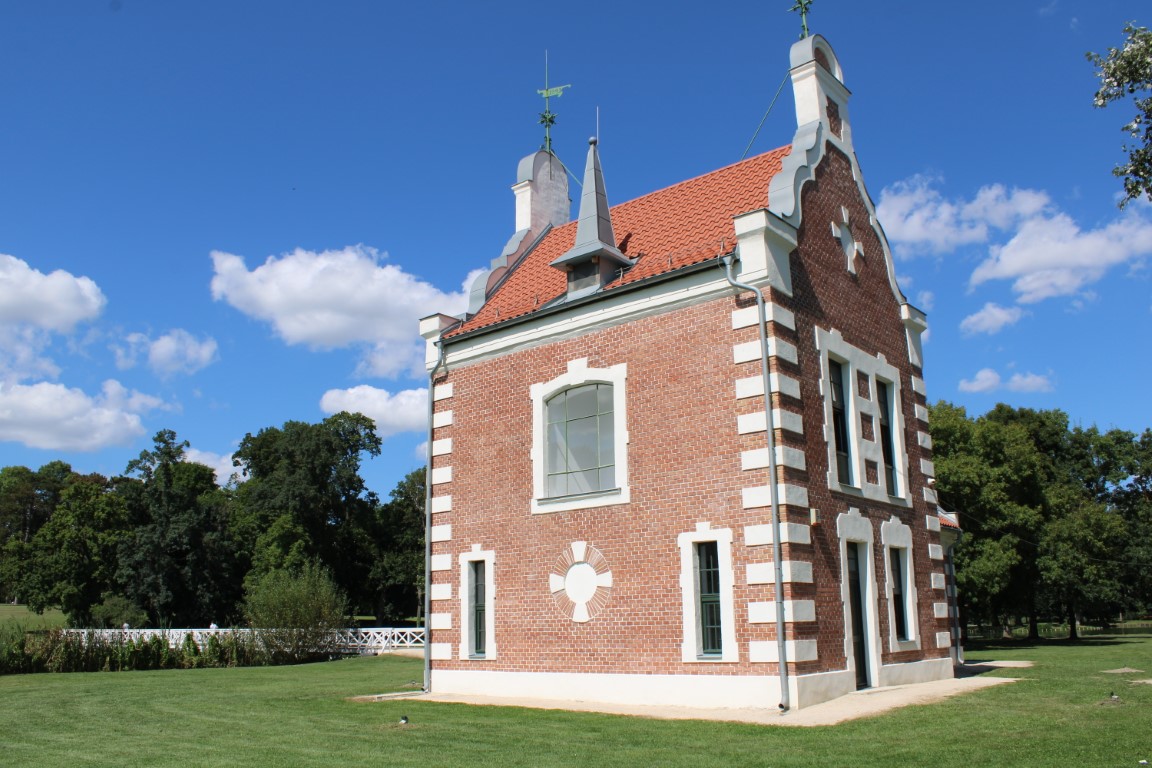
An old man in a lodge within a park;
The chamber walls depicted all around
With portraitures of huntsman, hawk,
and hound,
And the hurt deer. He listeneth to the
lark,
Whose song comes with the sunshine
through the dark
Of painted glass in leaden lattice bound;
He listeneth and he laugheth at the
sound,
Then writeth in a book like any clerk.
He is the poet of the dawn, who wrote
The Canterbury Tales, and his old age
Made beautiful with song; and as I read
I heard the crowing cock, I hear the note
Of lark and linnet, and from every page
Rise odors of ploughed field or flowery
mead.

BOOKS: “Writers’ Journeys That Shaped Our World” by Travis Elborough

The Writer's Journey: In the Footsteps of the Literary Greats (Journeys of Note, 1)The Writer’s Journey: In the Footsteps of the Literary Greats by Travis Elborough
My rating: 4 of 5 stars

Publisher Website

This book discusses important travel events in the lives of thirty-five prominent writers and poets. Some of these were long international travels and some entirely domestic, some aborted and others completed. All of these trips in some way influenced the subsequent works produced by these writers. In some cases, it was just for a scene, as with Sir Arthur Conan Doyle’s use of Reichenbach Falls to kill off his widely beloved (but personally soul-sucking) character, Sherlock Holmes. In others, the trip became the basis of a book, as with Joseph Conrad’s travels on the Congo River. And in yet others, the trip would become the basis of multiple works, such as Jack London’s travels in the Klondike. Of course, there were some travels that had more indirect influence on the writers’ works by way of shifts in worldview and life experience.

The graphics for this book are excellent and include a simple route map for each trip as well as photos from key locations, as well as a few relevant historic artworks. The maps and pictures help to give one a feel for the appeal of these places, and — in some cases — to better understand literary works once read.

If you are a traveler, are interested in literary history, or are both, this book is well worth investigating.

View all my reviews

“The Poets light but Lamps –” (930) by Emily Dickinson [w/ Audio]

The Poets light but Lamps --
Themselves -- go out --
The Wicks they stimulate
If vital Light

Inhere as do the Suns --
Each Age a Lens
Disseminating their
Circumference --

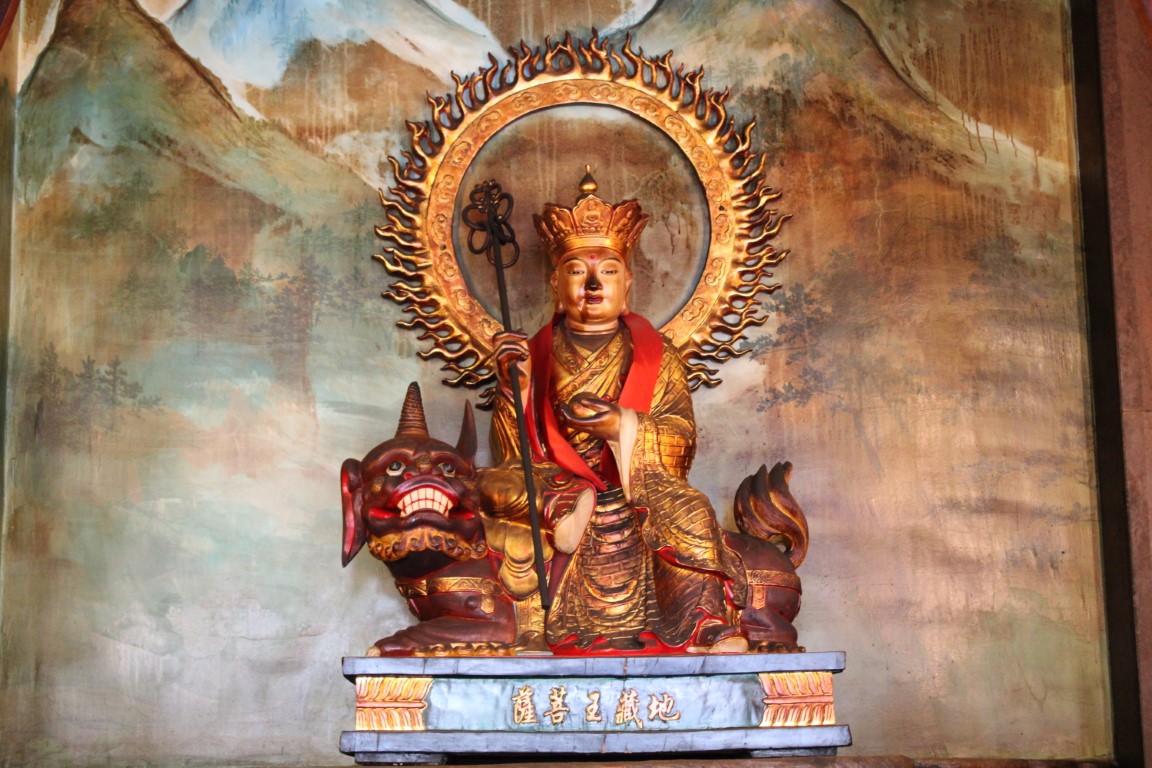
Fēnggān [Senryū]

the monk rode in
on a bright-eyed tiger, and
started hulling rice.

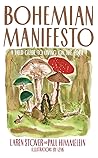
BOOKS: “Bohemian Manifesto” by Laren Stover, Paul Himmelein, and Patrisha Robertson

Bohemian Manifesto: A Field Guide to Living on the Edge (Kindle Edition)Bohemian Manifesto: A Field Guide to Living on the Edge by Laren Stover
My rating: 5 of 5 stars

Amazon.in Page

The central premise of this book is that not only does the Bohemian artist live on, but she does so in five distinct varieties: the Beat, the Zen Bohemian, the Dandy, the Folkloric Bohemian, and the Nouveau Bohemian. While the title calls this book a “manifesto,” the term used in the subtitle, i.e. “field guide,” is far more apropos. Like a field guide to birds or mushrooms, it lays out
characteristics and distinctions, the characteristics of Bohemians, generally, and the five flavors thereof, more specifically, and it does so in a way that separates them from the other varieties of human.

One might be wondering, why are these varied categories classed as Bohemian, as it seems they are their own distinct class. One way to understand this is to consider the “Zen Bohemian,” who often bears little resemblance to the “Zen Buddhist” for which one might mistake him. The Zen Buddhist has both a strong connection to and a depth of knowledge of Zen Buddhism, but the Zen Bohemian often rather has a strong connection to a broad hodge-podge of Eastern philosophies and spiritual traditions that he may or may not properly understand the distinctions between.

This book is quite readable, and informative in an easy-going way, but it’s also perplexing. It’s informative in that it clarifies the characteristics of Bohemians across many criteria (e.g. food, clothing, tastes in literature, art, movies, and music, interest in boxing, etc.) It’s perplexing in that it starts with the premise that Bohemians are, at their core, free spirits who refuse to be hemmed in by convention, but then the bulk of the book is about the various tribe-signaling boxes that the Bohemian puts himself within to conform to the norms of the group. It seems that the authors are aware of this and actually produce humor through oddly specific statements such as, “They [Bohemians] still adore Laurie Anderson even though their yuppie brother went to see her.” It feels like they are aware that, to the extent Bohemians are truly free spirits, any description the authors give will be wrong at some level of granularity, and so they lean into it with great (sometimes comedic) specificity.

I enjoyed reading this book and picked up a number of interesting references to other books and whatnot. (I’m currently reading Kliph Nesteroff’s “The Comedians” because of a reference to it in this book.) I did find bits on subjects like wardrobes and astrology to be a bit tedious, but just skimmed through them.

View all my reviews

BOOKS: Echo & Critique by Florian Gargaillo

Echo and Critique: Poetry and the Clichés of Public SpeechEcho and Critique: Poetry and the Clichés of Public Speech by Florian Gargaillo
My rating: 4 of 5 stars

Amazon.in Page

Out Now (May 10, 2023)

This book examines seven poets’ attempts to halt the proliferation of clichés, euphemisms, doublespeak, etc., words and phrases that not only corrupt the language but are often used to disguise bad behavior or to camouflage dismaying truths. It focuses on a technique, echo and critique, in which the poet employs one or more of these disconcerting words or phrases (or clever variants of them,) but does so in a way that reveals the chicanery within them.

The poets whose work is discussed are: Auden, Randall Jarrell, Langston Hughes, Claude McKay, Robert Lowell, Josephine Miles, and Seamus Heaney. These poets go head-to-head with cliché and doublespeak in the form of bureaucratese, propaganda, political speak, and business talk — with particular emphasis on war, race, and politics.

The book makes some interesting points. There are more readable discussions of the subject of corruption and manipulation of the English language, though none that I’m aware of on this particular approach to combating it. This volume is largely aimed at scholars, and not so much the popular readers. That said, I found it well worth reading.

View all my reviews

Poet’s World [Sonnet]

I exited through my old, mundane door,
 and heard a melody so blissful / sweet,
  and saw some colors never seen before.
   That song, those sights, danced me down the street.

A neon breeze both warmed and cooled my face.
 The pleasure wave that I'd once known as sin
  was flaring, with no feelings of disgrace,
   but up my spine a trill of violin. 

Euphoric, I ran 'til I felt lungs burn --
 so fired with energy that my bones hummed --
  But as I felt the wheels begin to turn,
   I realized the depths must remain unplumbed.

Before my druthers, I had to go back.
 To sustain this would give me a heart attack.

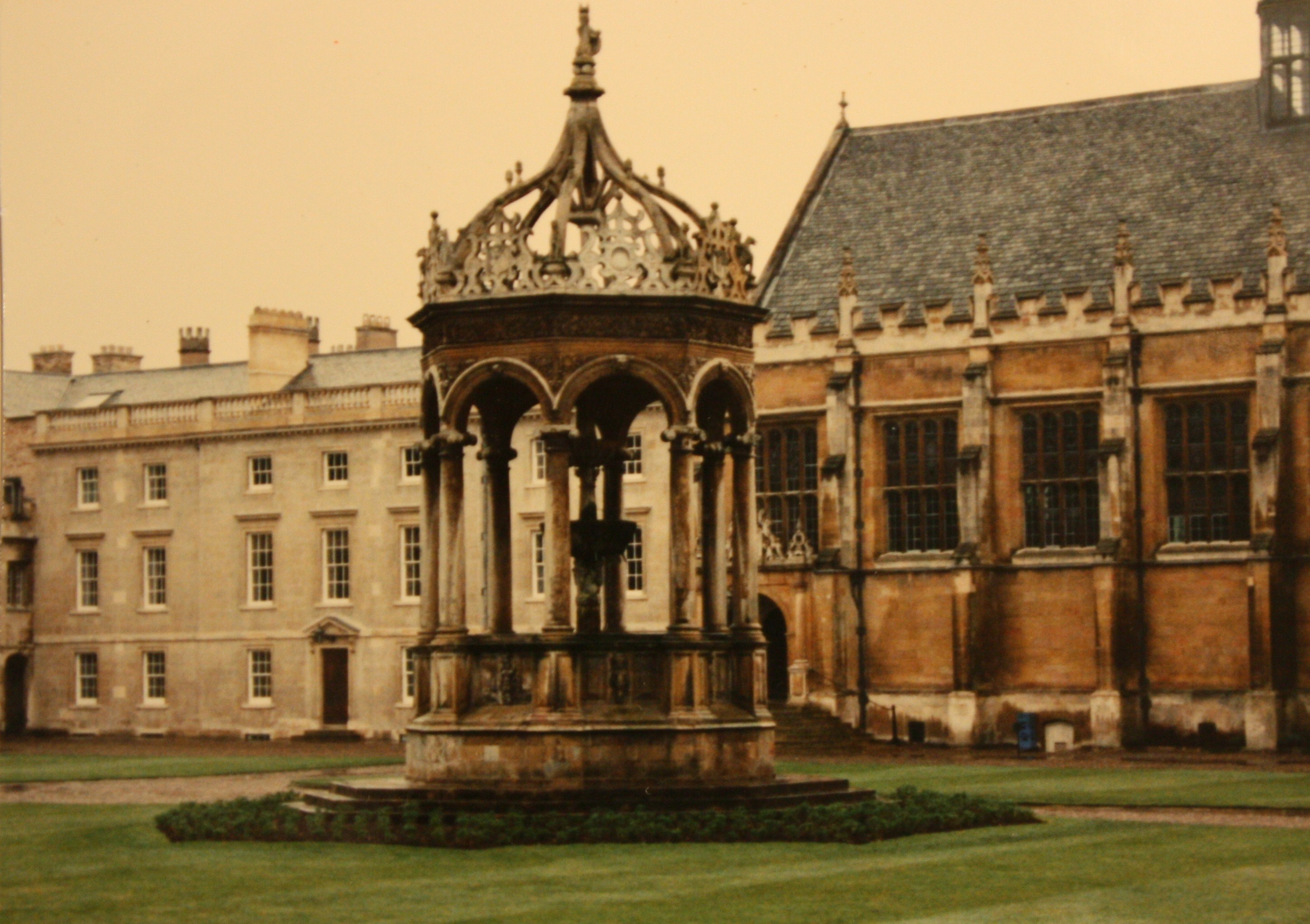
Cambridge U. Limerick

When Lord Byron lived at Cambridge University,
he greatly increased campus diversity.
He lived with a bear.
They were quite the pair.
For the poet, the dog ban was a perversity.

BOOK REVIEW: Genius: A Very Short Introduction by Andrew Robinson

Genius: A Very Short IntroductionGenius: A Very Short Introduction by Andrew Robinson
My rating: 4 of 5 stars

Amazon.in Page

This book examines the myths and realities of that state of capability we call genius. It’s not about “geniuses” as individuals who test well on IQ exams, or who are eligible for Mensa membership, but rather about those luminaries who’ve made breakthroughs that changed the course of their discipline. It considers artistic and literary type geniuses (Shakespeare and Picasso) as well as scientific geniuses (e.g. Einstein and Darwin,) as well as discussing the differences (perceived and real) between these groups and the intriguing rarity of crosscutting figures (e.g. Da Vinci.)

The bulk of the book evaluates characteristics that are (rightly or wrongly) commonly associated with genius, including: heredity, education, intelligence, creativity, madness, personality traits, and discipline. Don’t expect clear and straightforward connections. That’s not the author’s fault. There just aren’t any traits unambiguously linked to genius in an uncomplicated way. One might expect education would be an unequivocal boon to genius, but it can be a hindrance to genius in its training of conformity. There may be a disproportionate number of geniuses with mental health issues, but there are even more without them. Hard work maybe a necessary condition, but it’s clearly not a sufficient one.

The book addresses a few other related subjects, beyond the traits associated with geniuses. For example, the degree to which genius can be defined and what it means if we can (or can’t) do so. Few individuals would be unanimously judged geniuses, and to the degree some are, mightn’t that say more about the public’s role in bestowing genius rather than the individual’s earning the designation. There is also discussion about eureka moments versus slow-builds.

This book is thought-provoking and raises intriguing and counter-intuitive debates. If you’re interested in the perception, the reality, and the interplay between the two with regard to genius, check it out.

View all my reviews