O my body! I dare not desert the likes of
   you in other men and women, nor the
   likes of the parts of you,
 I believe the likes of you are to stand or fall
   with the likes of the soul, (and that they
   are the soul,)
 I believe the likes of you shall stand or fall
   with my poems, and that they are my
   poems,
 Man's, woman's, child's, youth's, wife's,
   husband's, mother's, father's, young
   man's, young woman's poems,
 Head, neck, hair, ears, drop and tympan of
   the ears,
 Eyes, eye-fringes, iris of the eye, eyebrows,
   and the waking or sleeping of the lids,
 Mouth, tongue, lips, teeth, roof of the
   mouth, jaws, and the jaw-hinges,
 Nose, nostrils of the nose, and the partition,
 Cheeks, temples, forehead, chin, throat,
   back of the neck, neck-slue,
 Strong shoulders, manly beard, scapula,
   hind-shoulders, and the ample side-
   round of the chest,
 Upper-arm, armpit, elbow-socket, lower-
   arm, arm-sinews, arm-bones,
 Wrist and wrist-joints, hand, palm,
   knuckles, thumb, forefinger, finger-joints,
   finger-nails,
 Broad breast-front, curling hair of the
   breast, breast-bone, breast-side,
 Ribs, belly, backbone, joints of the
   backbone,
 Hips, hip-sockets, hip-strength, inward and
   outward round, man-balls, man-root,
 Strong set of thighs, well carrying the trunk
   above,
 Leg fibres, knee, knee-pan, upper-leg,
   under-leg,
 Ankles, instep, foot-ball, toes, toe-joints, the
   heel;
 All attitudes, all the shapeliness, all the
   belongings of my or your body or of any
   one's body, male or female,
 The lung-sponges, the stomach-sac, the
   bowels sweet and clean,
 The brain in its folds inside the skull-frame,
 Sympathies, heart-valves, palate-valves,
   sexuality, maternity,
 Womanhood, and all that is a woman, and
   the man that comes from woman,
 The womb, the teats, nipples, breast-milk,
   tears, laughter, weeping, love-looks, love-
   perturbations and risings,
 The voice, articulation, language,
   whispering, shouting aloud,
 Food, drink, pulse, digestion, sweat, sleep,
   walking, swimming,
 Poise on the hips, leaping, reclining,
   embracing, arm-curving and tightening,
 The continual changes of the flex of the
   mouth, and around the eyes,
 The skin, the sunburnt shade, freckles, hair,
 The curious sympathy one feels when
    feeling with the hand the naked meat of
    the body,
 The circling rivers the breath, and breathing
    it in and out,
 The beauty of the waist, and thence of the
    hips, and thence downward toward the
    knees,
 The thin red jellies within you or within
    me, the bones and the morrow in the
    bones,
 The exquisite realization of health;
 O I say these are not the parts and poems of
    the body only, but of the soul,
 O I say now these are the soul!
The male is not less the soul nor more, he
   too is in his place,
 He too is all qualities, he is action and
   power,
 The flush of the known universe is in him,
 Scorn becomes him well, and appetite and
   defiance become him well,
 The wildest largest passions, bliss that is
   utmost, sorrow that is utmost become
   him well, pride is for him,
 The full-spread pride of man is calming and
   excellent to the soul,
 Knowledge becomes him, he likes it always,
   he brings every thing to the test of
   himself,
 Whatever the survey, whatever the sea and
   the sail he strikes soundings at last only
   here,
 (Where else does he strike soundings except
   here?)

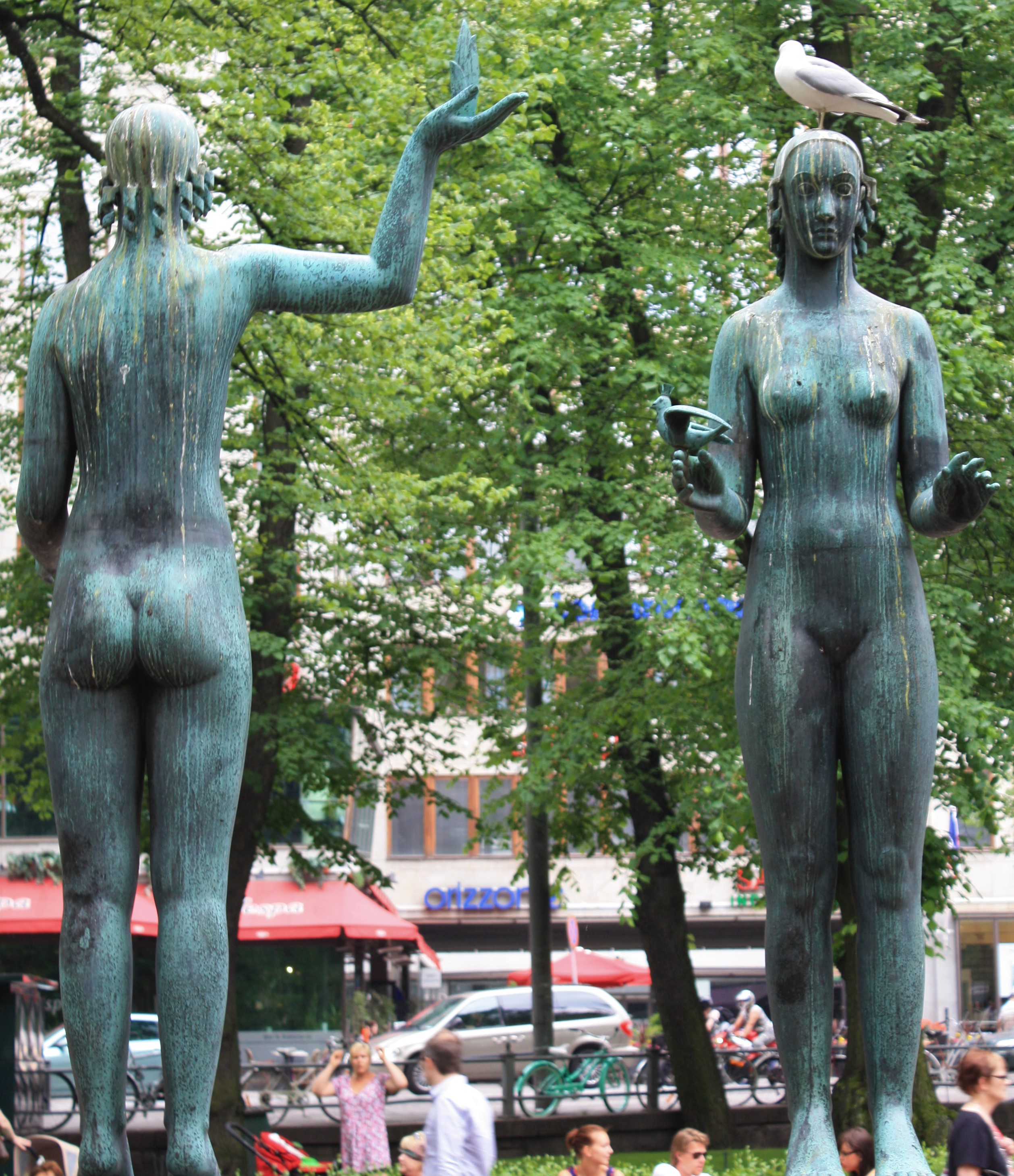
The man's body is sacred and the woman's
   body is sacred,
 No matter who it is, it is sacred -- is it the
   meanest one in the laborers' gang?
 Is it one of the dull-faced immigrants just
   landed on the wharf?
 Each belongs here or anywhere just as much
   as the well-off, just as much as you,
 Each has his or her place in the procession.

(All is a procession,
 The universe is a procession with measured
   and perfect motion.)

Do you know so much yourself that you call
   the meanest ignorant?
 Do you suppose you have a right to a good
   sight, and he or she has no right to a
   sight?
 Do you think matter has cohered together
   from its diffuse float, and the soil is on
   the surface, and water runs and
   vegetation sprouts,
 For you only, and not for him and her?
The love of the body of man or woman
   balks account, the body itself balks,
   account,
 That of the male is perfect, and that of
   the female is perfect.

The expression of the face balks account,
 But the expression of a well-made man
   appears not only in his face,
 It is in his limbs and joints also, it is
   curiously in the joints of his hips and
   wrists,
 It is in his walk, the carriage of his neck, the
   flex of his waist and knees, dress does not
   hide him,
 The strong sweet quality he has strikes
   through the cotton and broadcloth,
 To see him pass conveys as much as the best
   poem, perhaps more,
 You linger to see his back, and the back of
   his neck and shoulder-side.

The sprawl and fulness of babes, the bosoms
   and heads of women, the folds of their
   dress, their style as we pass in the street,
   the contour of their shape downwards,
 The swimmer naked in the swimming-bath,
   seen as he swims through the transparent
   green-shine, or lies with his face up and
   rolls silently to and fro in the heave of the
   water,
 The bending forward and backward of
   rowers in row-boats, the horseman in his
   saddle,
 Girls, mothers, house-keepers, in all their
   performances,
 The group of laborers seated at noon-time
   with their open dinner-kettles, and their
   wives waiting,
 The female soothing a child, the farmer's
   daughter in the garden or cow-yard,
 The young fellow hoeing corn, the sleigh-
   driver driving his six horses through the
   crowd,
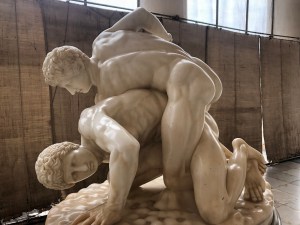
 The wrestle of wrestlers, two apprentice-
   boys, quite grown, lusty, good-natured,
   native-born, out on the vacant lot at sun-
   down after work,
 The coats and caps thrown down, the
   embrace of love and resistance,
 The upper-hold and the under-hold, the hair
   rumpled over and blinding their eyes;
 The march of firemen in their own
   costumes, the play of masculine muscle
   through clean-setting trowsers and waist-
   straps,
 The slow return from the fire, the pause
   when the bell strikes suddenly again, and
   the listening on the alert,
 The natural, perfect, varied attitudes, the
   bent head, the curv'd neck and the
   counting;
 Such-like I love -- I loosen myself, pass
   freely, am at the mother's breast with the
   little child,
 Swim with the swimmers, wrestle with
   wrestlers, march in line with the firemen,
   and pause, listen, count.
I take it you already know
  Of tough and bough and cough and dough.
 Others may stumble, but not you,
  On hiccough, thorough, lough and through.
 Well done! And now you wish, perhaps,
  To learn of less familiar traps.

Beware of heard, a dreadful word
  That looks like beard and sounds like bird.
 And dead -- it's said like bed, not bead.
  For goodness sake, don't call it deed!
 Watch out for meat and great and threat.
  They rhyme with suite and straight and debt.

A moth is not a moth in mother,
  Nor both in bother, broth in brother,
 And here is not a match for there,
  Nor dear and fear for pear and bear.
 And then there's dose and rose and lose
  Just look them up -- and goose and choose.

And cork and work and card and ward.
  And font and front and word and sword.
 And do and go, then thwart and cart.
  Come, come I've hardly made a start.

A dreadful language? Man alive,
 I'd mastered it when I was five!
* This poem has come to be attributed to a T.S. Watt with a date of 1954. However, the broad divergence of titles and lack of other publication information suggest the alternate possibility that attribution was invented after the fact and has just been mindlessly copied across the internet. I don’t wish to cheat T.S. Watt, if he or she was an actual person who wrote this clever poem, but I also don’t wish to contribute to the spread of false information that happens regularly across the internet. Hence, this note.
Amazon.in Page
Until recently, I was only acquainted with Stevenson as a novelist, but I had a powerful experience with his poem “The Hayloft” (included in this collection.) I was intrigued by how a poem written by a nineteenth century Scot could prove so nostalgia-inducing for me, having been a 20th century American farm-boy. So, I read the collection, and found that “The Hayloft” was only one of many examples that had such an effect. Others include: “Land of Counterpane,” “Block City,” and “Land of Nod.” The nostalgic power of the poems derives from the fact that Stevenson does a phenomenal job of capturing a child’s enthusiasm for play, and in that regard I’m sure the collection will resonate more broadly than just I, or even than just farm kids.
Afterall, there’s a lot of Stevenson’s experience that is dissimilar to mine. Besides his era and his nationality, his mentions of nurses, gardeners, and cooks is surely much different from my own upbringing, being devoid of household staff. But the book only needs to draw upon that love of play and imagination to take one back.
For a work from the nineteenth century, this collection of 50+ lyric poems has aged well. There is the occasional word like “gabies” or “whin” to send one to a dictionary, but those archaic or obsolete terms are rarities. Furthermore, the lyricism of the poems makes them easily read or sung.
I’d highly recommend this collection for poetry readers, particularly children or those looking to reexperience childhood.
Amazon.in Page
Release Date: May 28, 2024
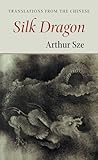
Let me begin with a note of clarification: The edition that I read was the “Silk Dragon II” collection, which is due out in May of 2024. I mention this because there is potential for confusion in that this book looks like a sequel (i.e. a completely new set of poems,) but really it is something between a new edition and a sequel. That is to say, while it has a substantial amount of new material, it is built on the original “Silk Dragon” volume. This edition adds eighteen new poem translations, most of which are from poets of the modern era (I mean that loosely, not technically, so 20th century onwards.) I’d recommend readers get this edition, but not both this and the original.
This collection includes a wide range of poems from ancient times through China’s various dynasties to the modern day. It includes translations that are extremely well-known, such as Li Bai’s “Drinking Alone with the Moon” and Liu Zongyuan’s “Snow on the River.” But it also includes many pieces that are likely to be new to most poetry readers, particularly given they will be reading translations (i.e. Non-specialists in Chinese poetry.) As mentioned, the bulk of the new poems are from recent decades and tend to be free verse. [Though there are four new classical poems, as well.]
I found the translations to be evocative and approachable. I am unable to comment on how well Sze captures the feel of the original, but I can say that the translations of poems I’m familiar with were at least on par with other translations that I’ve read. The translations don’t always display the sparseness one sees in classical Chinese poetry, but the challenge of conveying form and meaning and metaphor through translation is immense and, at some level, impossible.
I’d highly recommend this poetry collection for readers of poetry and translated literature.
Amazon.in Page
Release Date: March 12, 2024
This book presents sixteen of Frost’s poems, each with a commentary on the poem, how events in Frost’s life influenced said poem, and assorted background details. It includes the “greatest hits” (e.g. “Mending Wall,” “The Road Not Taken,” “Fire and Ice,” and “Stopping by Woods on a Snowy Evening,”) a few of Frost’s more obscure works, and a number that are in-between in status.
I found the commentaries to be interesting and readable, which is important as Frost’s poems are now in the public domain, and so the value of this volume hinges on Parini’s work. Parini includes some stories that offer insight into Frost’s mindset, as with the story of the lady who approached him after a reading to ask the meaning of “Fire and Ice.” Reading Frost isn’t like reading, say, Allen Ginsberg, the latter being one who put it all out there – unabashedly, Frost’s poetry is more guarded and deals more in nuanced metaphor. This makes a volume like this useful if it can offer any insight into the poet’s mindset, which I think Parini does.
I considered reading this book to be an opportunity to learn more about the poems and poet, and – therefore – did not heavily weight the stated theme of presenting poems that should be rote memorized. I mention this because I suspect Parini had other criteria in mind as well. While the book does include poems that are easily memorized (e.g. “Fire and Ice” and “Stopping by Woods on a Snowy Evening”) as well as poems that have messages worth learning by heart (e.g. “Mending Wall” and “The Road Not Taken,”) it also includes poems that aren’t so memorable because they are long, not especially lyrical, or not particularly filled with stand-out ideas or vivid imagery (e.g. “Directive,” “The Wood Pile,” and “Birches.”) This also begs the question, why one wouldn’t include a poem like “Nothing Gold Can Stay,” which is short, lyrical, and has an easily grasped message (i.e. easily memorized.)
As for ancillary matter, there is an appendix that offers tips for memorizing poems as well as a short “recommended reading” bibliography.
That said, I enjoyed reading this book; I got a lot out of Parini’s commentary, and I would recommend the book for poetry readers.
Amazon.in Page
Release Date: March 5, 2024
This is a clever collection of poems, lighthearted in places but raw and incensed in others. (A pacing that I appreciate in poetry collections.) The collection draws heavily on the author’s experience being of Vietnamese ethnicity while growing up in the West. It touches upon the tragedies lived by his elders, but, more so, how his life (and perception of him) has been shaped by war and the diaspora it caused. The collection playfully engages with language and cultural concepts in a way that is interesting and – at times – scintillating.
My main gripe with this collection would be its occasional swerves into the domain of huge, rare, and super-specialized terminology. I enjoy being sent to the dictionary as much as the next person, but in a poetry collection – where evoking emotion is the name of the game – I find it takes me out of the experience.
I enjoyed reading this collection and would recommend it for poetry readers.
Project Gutenberg Page The Madman is a collection of poems and short fiction (often micro-fiction) of a philosophical nature. The protagonist claims he became a madman when a thief broke into his house and stole his masks, the masks that people wear to fit into society and appear “normal.” Beyond the thread created by this mad character, the entries meander along, each with its own moral and with little discernible overarching plot.
There are many clever stories in this collection, offering food-for-thought on religion, philosophy, and psychology. I’ll discuss five of my favorites:
“The Sleepwalkers” A mother and daughter are both sleepwalkers. When they are somnambulating, they speak to each other in horribly cruel terms, but when they wake up, they display (at least a veneer of) love and affection. Besides demonstrating the nature of the aforementioned masks, the loss of which gets one designated “crazy,” this story encourages the reader to discern the differences between conscious and subconscious mental activity.
“War” This one presents an analogy for war in which a thief breaks into the wrong building, walks into a machine, pokes his own eye out, and then takes the building owner to court seeking “justice” for his lost eye. The craftsman / shop-owner says he can’t lose an eye because he won’t be able to do his work, but he knows a neighboring craftsman who could have his eye removed without great loss of productivity. This story builds upon the well-known “An eye for an eye…” Bible verse with the added absurdity of violence being doled out randomly and without concern for whether the victim had anything to do with the events in question.
“The Wise King” A disgruntled witch poisons a city well with a substance that makes drinkers insane. The King avoids the well water and is spared insanity. However, the townspeople begin to plot against the king because, in their insanity, they believe him (as one who acts differently) to be insane. The king eventually drinks the well water in order to come back into synch with his subjects. This entry speaks to the arbitrary nature of classification of sane and insane, an idea that has been discussed in modern times by mental health experts such as R.D. Laing.
“The Two Cages” A bird is caged next to a lion. The bird’s confidence provides the central lesson, knowing they’re both imprisoned separately, the bird refers to the lion as “fellow prisoner.” The power dynamic has changed from that of the jungle. Perhaps, the bird has even happily exchanged its freedom — either for safety or to tear the lion down a little.
“The Eye” In this story, the other sense organs mock the eye after it comments upon how grand a mountain is. The ear can’t hear the mountain and the skin can’t feel the mountain. Therefore, the other senses assume that the eye is either lying or is delusional. This tale speaks to the risk of denying something based on one’s own limited perception.
This book was originally published in 1918 and is in the public domain (most places.) It’s definitely worth the short time investment required to read it.
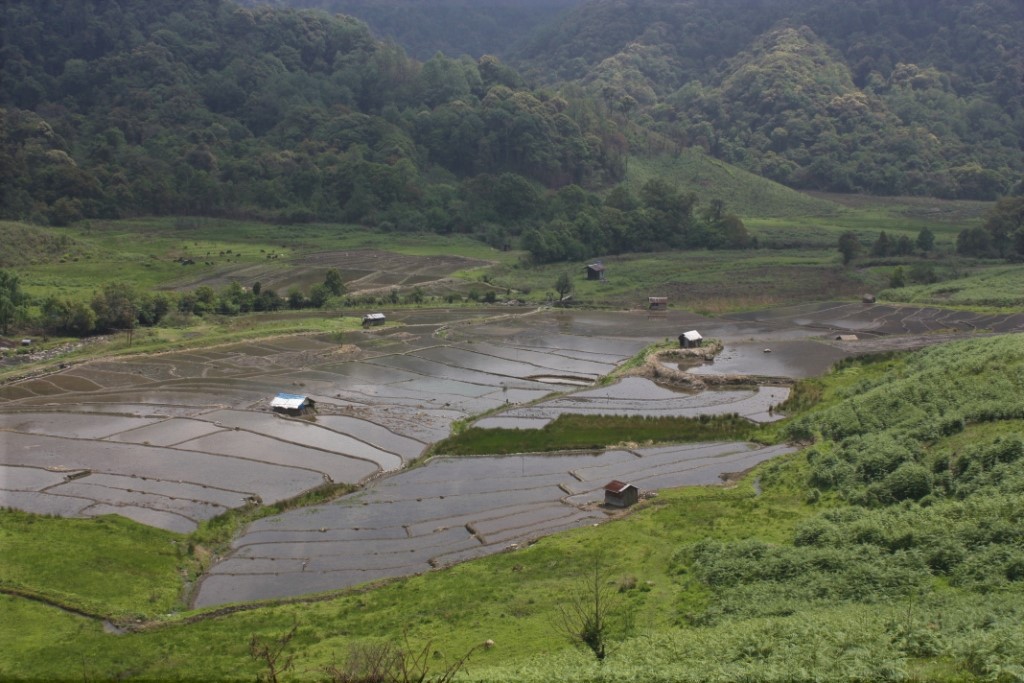
In a quiet valley, terraced rice paddies lie flooded but unsprouted, their glassy surfaces vaguely mirror the sky above. More than the narrow dykes, it's the mere inches of elevational difference that gives each irregular patch of water a distinct appearance. Each one is hit by light from the same distant source, and though they are as close to equidistant from that source as imaginable, each tells its own story in hue and glint. Amid the paddies, squat supply shacks pose as an inhospitable village -- all moat, no yard, and unneighborly distances between them. And yet there is something quaintly soothing about this fiction of a village.


squat shacks stand,
islands amid paddies --
a faux village











 Tiger Riding for Beginners