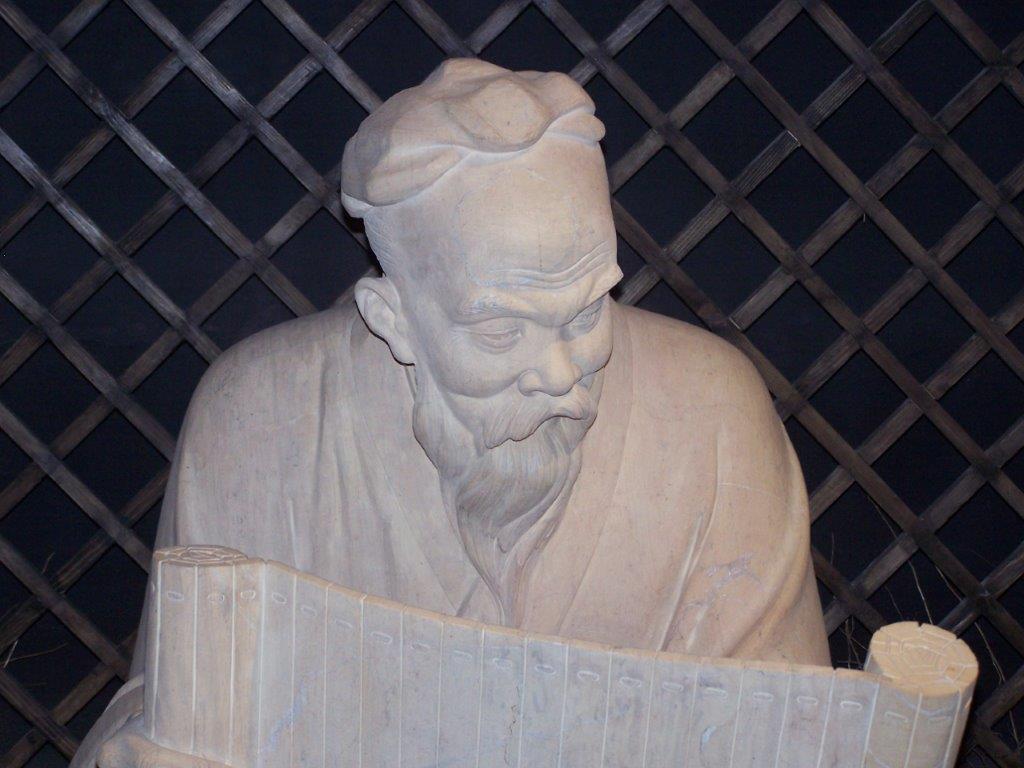
The great Chinese philosopher Confucius
 wrote in maxims to avoid being circumlocutious.
   [That's a word that absurdly
   describes being wordy.]
 Be like Confucius, not like this verbose doofus.

The great Chinese philosopher Confucius wrote in maxims to avoid being circumlocutious. [That's a word that absurdly describes being wordy.] Be like Confucius, not like this verbose doofus.

The philosopher Hannah Arendt
 said, don't define us by how we make rent.
   like Dopey and Sneezy
   and George's wife "Weezy"
 one should be known for how public time is spent.
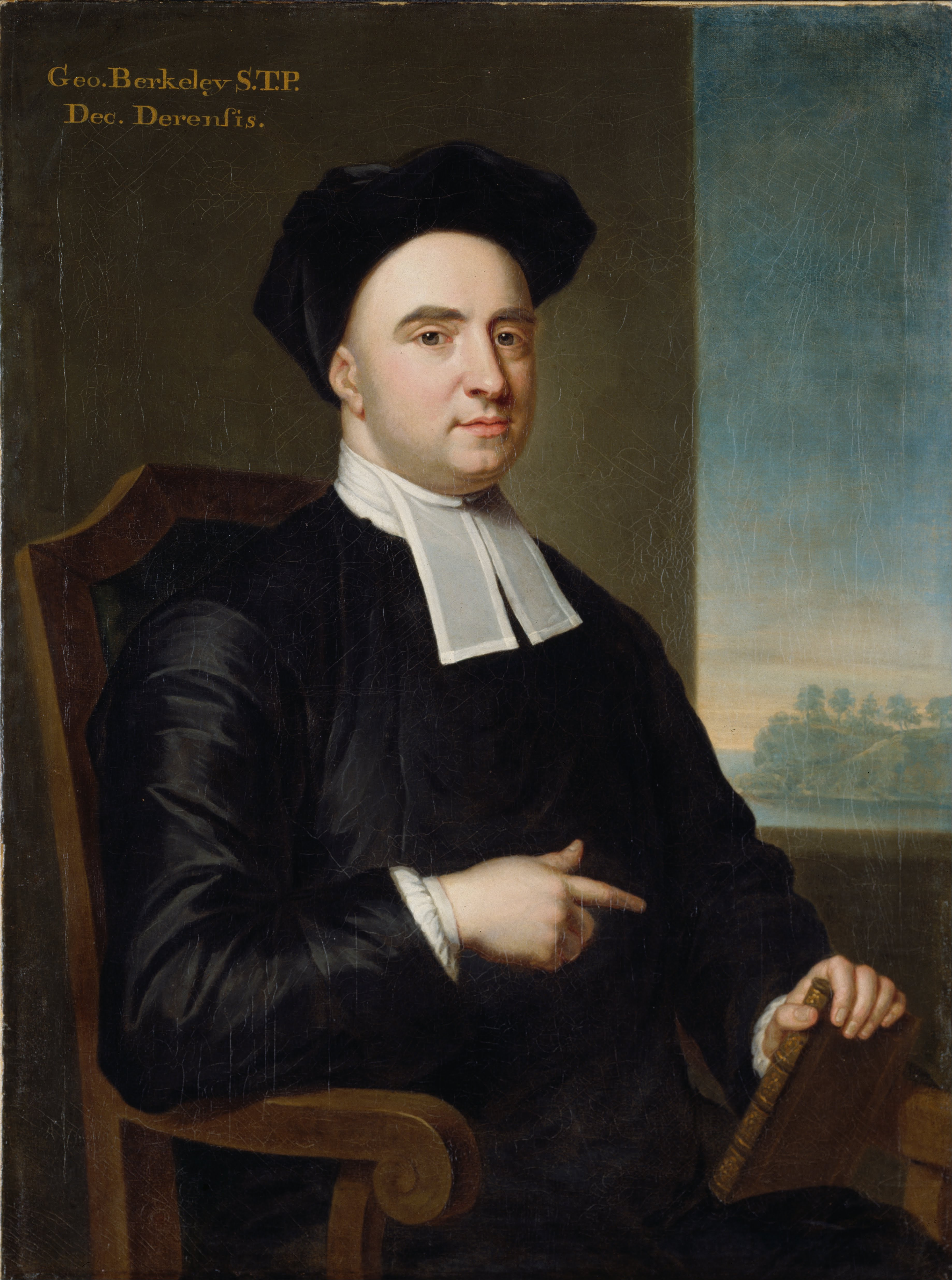
The philosopher known as George Berkeley
 denied the existence of all matter, curtly.
   Still, when he wanted pie,
   he wouldn't be denied,
  but made sure he ate it covertly.
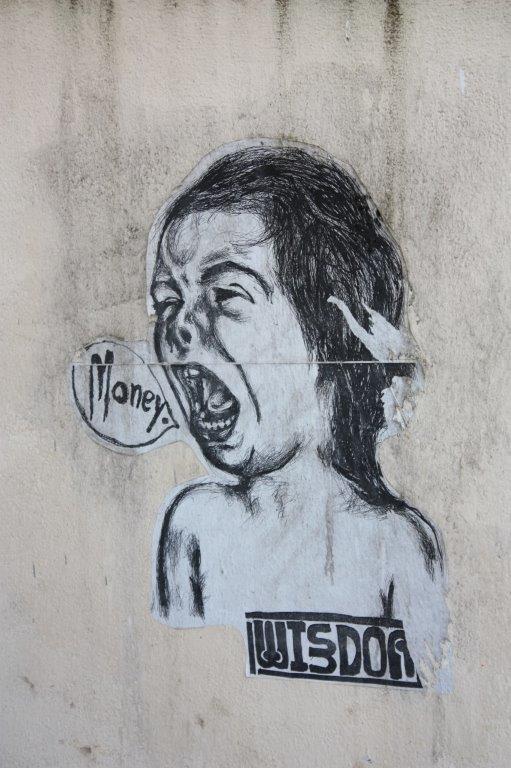
How is being hit by a hard word
 different from being hit by
  a brick or a bat?

To burn, the spark of a hard word
  must find some kindling inside
   the recipient, elsewise it can't ignite.

If someone points at me and screams:

"YOU ARE SUBPAR AT ALGEBRA!"

I remain unwounded.

[I'd like to say that it doesn't burn
  simply because it's true,
   but the truth or falsity of hard words
   is -- perhaps sadly -- not a major
   ignition factor.

 The kindling is a thing that sits inside one --
  something that makes one care,
   probably a complex mélange of factors.

 The truth of hard words?
   That is an outside factor.]

Even if I were to discover that,
  to the person who issued the insult,
   there is no greater disparagement
   than to cast aspersions upon a
   person's middle school-level
   mathematics competency,

I would remain unwounded.

If I were to feel any sort of way
  about uncovering that knowledge,
   it would be to feel sort of bad
   for the person who issued the taunt.

Now, how to burnproof one's soul,
  that is the question?
 The Madman by Kahlil Gibran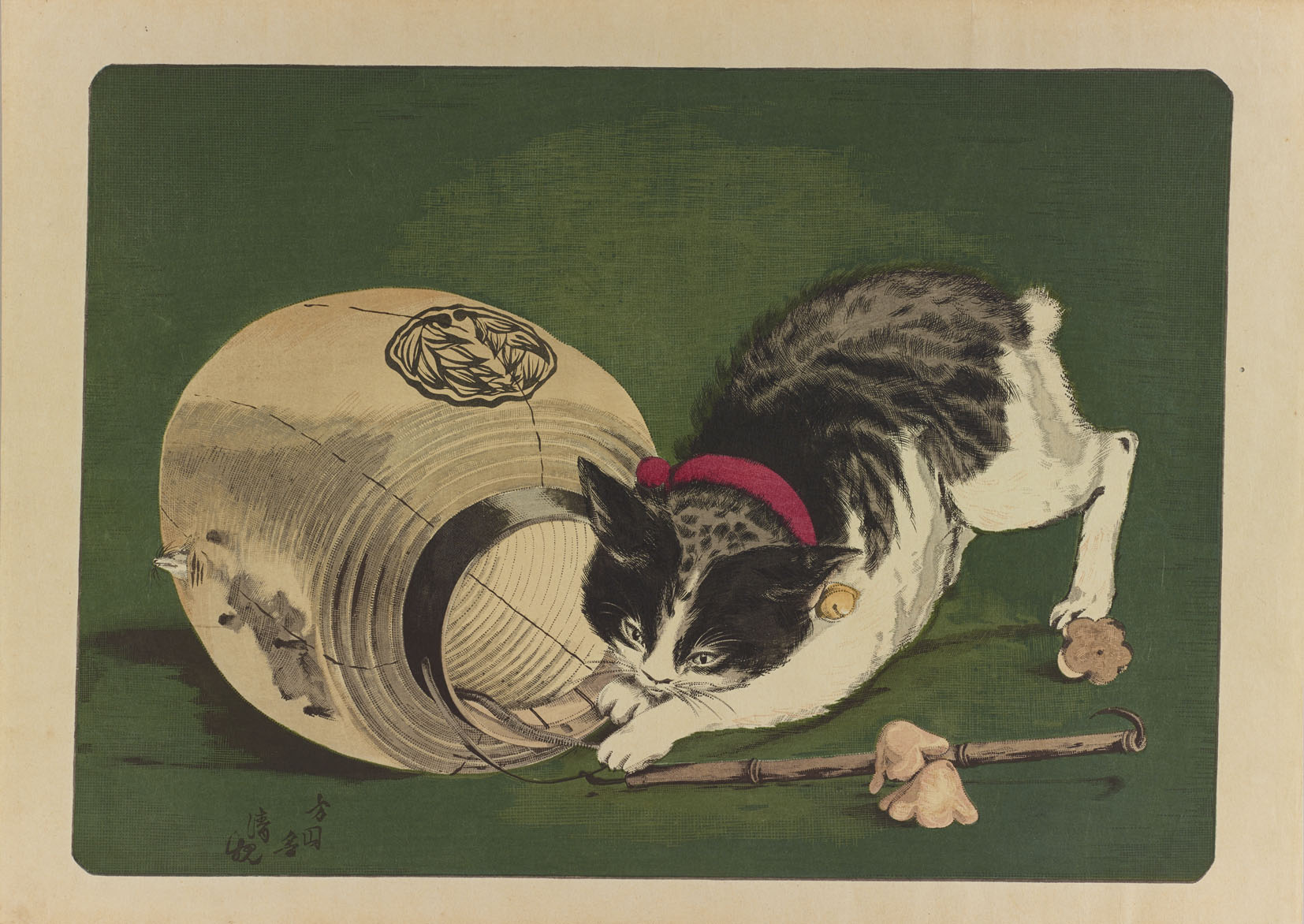
Cat & Lantern (1877) by Kiyochika Kobayashi
BACKGROUND: Issai Chozan’s Neko no Myōjutsu (“Eerie skills of the Cat”) was published in the book Inaka Sōji in 1727. It’s an example of dangibon, a light-hearted form of instructional short story, a form for which Issai Chozan is said to have been one of the originators. On the surface a story of rat-catching cats, in reality it’s a lesson in strategy and philosophy of combat.
SYNOPSIS: I’ll include citations and links below, so you can read the story in its entirety, should you choose to do so. But for now, a brief synopsis: A samurai, Shoken, has a rat in his house, and it’s driving him crazy. Shoken’s housecat is terrorized by the rat. The samurai brings in the best rat-catching cats from the neighborhood, and each is soundly defeated by the rat. Shoken decides to take matters into his own hands, chasing after the rat with a wooden sword (bokken,) but the rat evades each attempted strike and, ultimately, bites the samurai on the face. Finally, Shoken brings in a legendary elder cat from across the city, a cat who doesn’t look like much, but who effortlessly evicts the rat from Shoken’s house. The balance of the story is a conversation between the successful old cat and three of the skillful younger cats who’d failed to catch the rat (as well as with Shoken.) Each of the three explains its approach to achieving victory, and in turn the master cat explains the limitations of each one’s approach. The old master goes on to explain how when he was younger, he’d met a tomcat who slept all day, and yet no rat would come within miles of it. He asked how the tomcat achieved this, but the tomcat was unable to explain it.
THE LESSON: The first cat, a young black cat, explained that it was a master of technique. The black cat was agile and strong in movement of all kinds and practiced diligently to streamline and perfect all of its techniques. The old cat pointed out that focus on technique still left the black cat with too active a mind, thinking too much about how it would defeat its opponent. The master went on to say that there is value in technique, but it can’t be allowed to be the extent of one’s abilities. He emphasized that one’s clever actions must be in accord with the Way.
The second cat, a tabby, proudly proclaimed that all of its effort went into building its energy or spirit (ki, also called chi,) and that it could defeat most rats with a gaze (though not the one in question.) The old master explained that spirit is a fine thing but being too conscious of it hurt the second cat’s ability. The master went on to say that one can never be sure that the opponent won’t have more spirit than one, and so complete reliance on ki can lead one to a defeat.
The third cat, a gray one, said that its philosophy relied on yielding and never forcing a fight. The old master explained that this was a misunderstanding of the principle of harmony, and that this kind of yielding was a man-made contrivance that was not in accord with nature and often led to muddiness of the mind. While the old cat goes on to say that none of these elements (technique, ki energy, or yielding) is without value, it’s clear as he continues that the answer isn’t as simple as being a combination of them, but rather requires a completely new way of being, of experiencing and perceiving the world.
To Shoken, the old cat explained the importance of not thinking of swordsmanship as a means to defeat an enemy but, rather, a means of understanding life and death. The old cat went on to discuss mushin (i.e. “no mind,”) a serene state of mind that allows one to be flexible to whatever comes along. The old cat emphasized the importance of eliminating distinctions of object and subject through a process of self-realization and explained that the process of seeing into one’s being one can trigger satori (sudden enlightenment.)
CITATIONS:
Matheson Trust for Comparative Religion translation, available online at: https://terebess.hu/zen/neko.pdf
Ozawa, Hiroshi. 2005. The Cat’s Eerie Skill. Essence of Training in Japanese Culture: Technique Acquirement and Secret of Kendo. Online at: https://tenproxy.typepad.jp/recent_engagement/files/essence_of_training_in_japanese_culturee.pdf
Suzuki, D.T. 1959. The Swordsman and the Cat. Zen and Japanese Culture. New York: Pantheon Books. pp. 428-435
Wilson, William Scott. 2006. The Mysterious Technique of the Cat. The Demon’s Sermon on the Martial Arts. Tokyo: Kodansha International
Do you have a quote you live your life by or think of often?
Four, actually:
Be kind, for everyone you meet is fighting a hard battle.
Plato (attributions vary)
There is nothing either good or bad, but thinking makes it so.
William Shakespeare (in HamLet)
Contentment comes not so much from great wealth as from few wants.
Epictetus
If you reject the food, ignore the customs, fear the religion, and avoid the people, you might better stay home.
James a. Michener

Don't sell us benevolent kings,
  such creatures can't exist.
 An unchecked mind won't self-censor,
  and lame dogma persists.
Describe something you learned in high school.
A Psych teacher told us a story of what he called “a gestalt of expectations.” A man from a city in the East is driving out West, and he passes a gas station – despite being low on fuel. (He’s used to gas stations being everywhere.) Anyhow, he runs out of fuel. He can’t see anything around except desolate desert bisected by a line of asphalt. He decides to walk back to the gas station he passed ten miles back. There is no one traveling on this remote stretch of desert road. As he’s walking in the intense heat, it comes to his mind that the employee at the service station is really going to gouge him on the price of gas and a jerry can. As he walks and walks, skin prickling with the heat, he keeps thinking about how he’s going to get screwed by the gas station attendant and also how he’ll be chided and ridiculed for running out of gas in the middle of the desert. He imagines it in great detail. Finally, bedraggled and with heaving breaths, he arrives at the station. The gas station attendant rushes out to help this poor man, and the man punches the attendant square in the nose (for all the offenses taking place solely in the man’s mind.)
In a broader formulation, I think this is the most important lesson any human can learn. Our personal perception of what we experience is not equal to what it is that we experience (the exterior world.) This is why some people dealt a crappy hand can turn it into a wonderful life, and also why some people who seem to have it all commit suicide in the prime of life.
I could be angered or dismayed that the single most important lesson I learned in secondary school was via off-curriculum ramblings during an elective class, but I choose not to. Instead, I’ve been trying all my life to make that bit of knowledge into wisdom.

INTRODUCTION: The Republic is the most read and discussed of the Socratic dialogues written by Plato, and for good reason. It offers some intriguing ideas that have influenced philosophy, politics, religion, and even science fiction to this day. That said, the book isn’t without its stinkers, and many people have reasonably asked whether a state or nation employing all of Plato’s guidance wouldn’t be more dystopian than utopian. To avoid the error committed by many religious people regarding scriptures (and probably by a few scholars regarding Plato’s work,) we shouldn’t ignore the parts that are — let’s say…, complete lunacy, and also shouldn’t contort language and reason to make the questionable ideas palatable. With that in mind, we’ll start with a couple of The Republic‘s banana ideas before examining a few that have stood the test of time.
PLATO’S WAR AGAINST POETRY & THE ARTS: In The Republic, Plato goes on a tirade against the arts on the basis that they aren’t truthful and that they encourage readers and viewers to behave from the lesser elements of their “soul” – the emotional and desirous bits. Plato’s condemnation of art is informed by two of his major teachings. First, the “tripartite soul” in which reason is king and emotion and desire are lesser elements of humanity that should be checked by reason. Ergo, he doesn’t like that reading Homer makes people weepy or riled up. Second, in Plato’s conception of forms, for any given thing under the sun there’s an ideal form that was made once by god, then there are actual items made by craftspeople, and then there are the imitations made by artists. In Plato’s mind, this leads to a warped situation in which the craftsmen stray from the ideal by copying what artists presented, rather than seeking the divine ideal, and Plato is all about the pursuit of the ideal.
Plato would grant artists the opportunity to prove that their works are of service to the state, but barring their demonstration that the art advances reason and is truthful it would be outlawed. To me, it sounds a lot like the Soviet Union where art was mostly jingoistic pieces that encouraged a Stakhanovite effort. At any rate, I’ve got to give this one to Aristotle who saw the cathartic value of art and poetry. There is value in the existence of a wide variety of modes of expression and ways of thinking about the world. It allows us to break new ground. I was just reading a book by Yeats in which he wrote: “Everything exists, everything is true, and the earth is only a little dust under our feet.” This may not seem like sound thinking in our rational age, but I like that such a counterweight exists.
THE SHARING OF WIVES & CHILDREN BY THE RULING CLASS: Plato’s Republic would be ruled by a philosopher-king, and it requires the ruling class to be specially educated and controlled to avoid pursuit of wealth and comfort. One such control is that the aristocrats can only have kids (unaborted ones, at least) under certain conditions, but the children wouldn’t know who their biological parents were.
Plato is no fan of democracy. In fact, democracy is the stage right before tyranny in Plato’s model of political devolution. [It starts with Plato’s ideal, Aristocracy, which devolves into Timocracy with the declining character of leaders (because they’re not well-trained philosophers.) Timocracy devolves into Oligarchy as the lesser quality ruling class becomes obsessed with wealth. This leads to Democracy because people get fed up with the oligarchs having all the money and they revolt. But since anyone can become leader, a tyrannical type will eventually rise to the top and use an iron-hand to maintain power.]
There’s a reason why, to my knowledge, this approach has never been tried, despite the immense popularity of Plato and The Republic. It relates to a previously mentioned point as it pertains to Plato’s ineptitude with regards to human psychology. Plato [like several other philosophers of the ancient world] believes one can kill emotion and desire through the power of pure reason. Reason maybe our smartest mental activity, but it’s neither fastest nor particularly capable of steering the ship. At any rate, this joint parentage scheme makes me think of the Harry Harlow experiments in which baby monkeys were put either with a wire mesh or cloth-covered “mother surrogate.” We’ve learned a lot about how psychopaths are made since the days of Plato. I think Plato’s guardian class would be chock-full of lunatics.
THE SUPREME IMPORTANCE OF GEOMETRY: I love a triangle as much as the next fellow, but I think Plato may have gone a little overboard with his views about the transcendent value of geometry.
WHAT PLATO GOT RIGHT: There are definitely ideas in The Republic that continue to contribute to humanity’s understanding of itself and the world. Here are a few good reasons to read The Republic — despite all that junk mentioned above.
THE ALLEGORY OF THE CAVE: Because of sci-fi works such as The Matrix, this is probably the most widely cited bit of The Republic. However, it’s not just a fictional or hypothetical idea anymore. One will also see references to Plato’s cave in nonfiction works of neuroscience and physics that deal with how our perceived world doesn’t equate to the objectively real world. Plato offers a very clear thought experiment in Book VII.
PLATO’S GENDER PROGRESSIVISM: In The Republic, Plato argues that women can be guardians of the state as well as men, and that women must receive the same education in order to do so. Lest the feminist jump all-in on Plato, it should be noted that he maintained some pretty misogynist / patriarchal views (e.g. women being like children,) as well as some bizarre ones (e.g. the wandering womb hypothesis.) However, in at least that one regard, Plato was ahead of his time.
KNOWLEDGE ACQUIRED UNDER COMPULSION OBTAINS NO HOLD: Given that Plato’s Republic would feature some harsh limitations of individual freedom, from lack of artistic expression to inability to know one’s own mom, it’s nice to see that he held some freedom-loving views, as well.
COURAGE IS STAYING SPIRITED IN ONE’S DECISIONS IN THE FACE OF PLEASURE OR PAIN: Much of The Republic is an attempt to define and distinguish the cardinal virtue of justice. In fact, in many Socratic dialogues, the primary objective is to understand virtues, and they’re often discussed at length, not always resulting in a firm conclusion. I like the definition of courage provided in The Republic. One makes a decision based on the virtuous path, and sticks with it even when pleasure or pain might divert one.
THE TENDENCY TOWARD DIMINISHING EFFECTIVENESS IN POLITICS: While I share neither Plato’s enthusiasm for aristocracy nor his pessimism about democracy (there’s a reason the world has abandoned the former in preference for the latter,) I do think there’s a potential grain of truth in his model of political devolution that’s mentioned in Books VIII & IX. I think there can be a proclivity towards weaker and less effective leaders over time under certain systems of governance. One can see this in the Soviet Union, and arguably in North Korea. It seems possible that there are systemic causes for devolution of political effectiveness, at least under certain approaches to governance. (I’d argue this is one of the reasons that democracy is best, because it can fully overturn the apple cart of governance rather than struggling with whatever continuity issues contribute to declining effectiveness.)
READ THE REPUBLIC, both for its great and for its dystopian ideas, because even when it’s bad, it’s stimulating.


 Tiger Riding for Beginners