How do you manage screen time for yourself?
Many ways, really: e.g. Go for a walk or otherwise move. Forget it exists. When the WiFi goes down, take it as a sign from the universe. Juggle. Do something productive.

How do you manage screen time for yourself?
Many ways, really: e.g. Go for a walk or otherwise move. Forget it exists. When the WiFi goes down, take it as a sign from the universe. Juggle. Do something productive.

Men say they know many things;
 But lo! they have taken wings, --
 The arts and sciences,
 And a thousand appliances;
   The wind that blows
   Is all that any body knows.
 In Praise of Shadows by Jun’ichirō Tanizaki
 Mad World: War, Movies, Sex by Slavoj Žižek
Modern mankind traded a life of struggle with occasional moments of terror (e.g. saber-tooth tiger attack) for a life of comfort with constant nagging anxiety (e.g. 40-, 60-, 80-hour work weeks and constant deadlines,) and hasn’t adapted well in the process. As such there are more mental health problems, inability to deal with adversity (or even conflicting ideas,) and an inability to exploit the freedom available. (i.e. The Enlightenment and subsequent liberal movements ensured that government and employers can’t exert undue influence over individuals’ lives, but still most people remain heavily constrained in their pursuit of self-betterment / self-realization by their exhaustion, comfort-addictions, or anxieties.)
There are two interrelated changes that I think would make for a much healthier society. First, education needs to put back some Socratic learning in education — i.e. active engagement of students with thinking and questioning [versus memorizing and skill practicing.] Presently, we have people graduating from colleges who may or may not be prepared for a job of corporate minionship, but who – upon hearing an idea that they find disagreeable – are unable to do anything but be angry or scared or anxious [i.e. from an idea.] An education that challenged students to contend with ideas (be they ideas that seem uncomfortable or feel reprehensible) through dialogue and critique, would convey some of the emotional intelligence (the lack of which has hamstrung our species, a species that may have intellectual intelligence out the wha-zoo.)
Second, we should have some sort of true coming-of-age ceremony of the variety only a few indigenous / tribal societies still do. I don’t mean a Bar Mitzvah or Quinceañera where the child is thrown a party and then they collect envelopes of cash. I mean the kind in which one goes out in the woods for seven days and stays alive solely of one’s own abilities. It’s true that we would have fewer human children, but the ones who came back would not only be more capable but would also be more in command of their emotional and mental selves. [And, to be perfectly frank, the last thing this planet needs are more humans running around — especially ones who need a vast carbon footprint to merely stay alive.]
Finally, we all need an intervention for phone / computer addiction: maybe two weeks in which there is no internet availability, whatsoever.
 The Fall by Albert Camus
“What happened to the good ole days when I ate you people–not lived in your cages?”
Paleolithic dieting is all the rage these days. I’m no expert on the paleo-diet, but–as I understand it–this refers to the practice of eating the foods consumed by our pre-agrarian ancestors. The idea is that if one consumes the foods that our species is evolutionarily-optimized to eating, one will be healthier. Whether one believes in the merits of the paleo-diet or not on the whole, it’s hard to argue that one wouldn’t be better off eating less highly-processed and highly-refined foods and more things that look like food at a glance.
Our diet isn’t all that has changed since the days of our pre-agrarian ancestors. Modernity has brought with it an entirely new way of experiencing stress. Eliminating or reducing stress is a common topic of discussion, but not all stress is created equal. There’s a necessary form of stress, a stress that makes one better, stronger, faster, and smarter. We don’t want to willy-nilly eliminate stress; we want to reduce the wrong type of stress.
Our ancestors—like animals–experienced brief periods of intense stress (e.g. saber-tooth tiger attacks), followed by longer periods in which they were free of deadlines, carpools, and after-school activities. Now, no one likes to have a saber-tooth tiger stalking them. It’s unpleasant. Modern humanity has gone to great lengths to eliminate those short bursts of terror, but not without cost. (If you don’t believe me read Robert Sapolsky’s Why Zebras Don’t Get Ulcers.)
Whether or not you believe that eliminating acute instances of terrifying stress is bad for mankind, it’s hard to argue that modernity’s leveling process didn’t eliminate stress, but instead resulted in a chronic stress on a smaller scale. People today have impossibly long daily to-do lists, and they have to accept trade-offs between work, family, and personal development.
It’s true that you don’t get eaten by a giant cat when you drop the ball, but life is so packed diverse events that one may feel like one is dropping some ball constantly. If your boss thinks you’re a model employee, then your kids are probably going to need therapy. If you have a contented home life, your boss may have his or her eyes open for someone who can give the firm consistently 70+ hour work weeks. If you feel you’re doing alright on both the work and family front, your body and / or mind is probably a train wreck.
Chronic [mini] stress may feel better than acute [catastrophic] stress, but it takes its tolls in various ways. First, with our sympathetic nervous system (fight-or-flight reaction) constantly engaged our body’s power to heal itself is reduced. When the parasympathetic nervous system is engaged, the body devotes resources to long-term goals like getting healthier, but in stress mode activities not relevant to immediate survival shut down. This is a great system if you have periodic life and death stress, but is not so good if you’re under constant stress.
Second, chronic stress reduces sleep, and sleep is essential to one’s mental and physical well-being. There are a wide variety of symptoms associated with sleep deprivation such as forgetfulness, decreased concentration, decreased alertness, reduced reasoning ability, diminished problem-solving capacity, and depression—all of which can diminish our physical health through accidents, ailments, suicide attempts, and lack of energy for exercise.
Third, chronic stress can make one fat, with all the health issues that result. Some people use food as a coping mechanism. Other people eat too fast or choose their food poorly because of time constraints or because they are not mindful of eating as their monkey minds churn at a mile a minute. Then there is the more convoluted and complex issue of cortisol–a hormone released under stress that is linked to weight gain in at least some cases. Even if you don’t have a problem on the calorie intake side, the stressed individual may not do so well on the calorie burning side—either because of a lack of time to exercise or a lack of energy.
Modern humans are uniquely suited to chronic stress because we are the only species that achieves the same physiological stress response by remembering and obsessing about a stressful event as experiencing it. Abandoning the modern approach to living isn’t an option most are willing to entertain; but there are ways to combat chronic stress.
Move – Meditate – Mindfully Breath: The bad news is you’ve got to shoehorn these activities into your schedule daily (or at least several times a week.) The good news is that they don’t need to take up a lot of your day. There are a number of systems that address all three components in one handy package such as Qi Gong, Yoga, and some martial arts. I don’t think it matters so much which one chooses as how one goes about one’s practice.
Movement strengthens and strategically stresses the body, but it also increases one’s bodily awareness so that one becomes aware of how stress is manifesting itself in one’s body. Meditation teaches one how to live in the present moment, and it trains one to recognize the seeds of negative thought and emotion earlier so that one can counter-act them. Obviously, breathing is essential to life, but learning to be aware of one’s breathing patterns and to “manually override” the breath patterns associated with harmful emotional states is a beneficial skill.
Massage / Bodywork: Whether self-administered or other-administered (the latter allowing greater distressing–particularly if the masseuse is skilled) massage is an activity, like movement, that can help one become aware of where one is physically holding one’s stress. These physical manifestations of stress can exacerbate the whole experience of stress. One should take time periodically to have bodywork done. A day rarely goes by in which I don’t work on my own neck, shoulders, head, or face, and I occasionally get professional Thai Yoga Bodywork done.
The Places that Scare You: Force yourself to go someplace (not necessarily literally a “place”) that scares you once in a while. This needn’t be skydiving or hand-gliding—but it could be. It may be a martial arts class in which one has to put on the gloves occasionally and go at it. It may be joining Tostmasters and having to give a speech in front of a crowd. It may be traveling to some backwater where you don’t know the language, but you want to learn. This is a very personal issue. (i.e. A Type-A personality he-man may not find that skydiving is outside his comfort zone. If so, sorry, skydiving doesn’t count, he may need to learn ballroom dancing, or something else that truly takes him outside being comfortable.) KEY POINT: The problem with hiding from all stressors is that it doesn’t result in a stress-free life, what happens is that smaller and smaller stressors loom bigger and bigger in one’s mind. Which brings us to…
Perspective: One must put life’s challenges in perspective. Each person’s problems are important to them, and I don’t want to diminish anyone’s problems, but—come on—you’re not going to be eaten by a freaking saber-tooth tiger.
 One of my favorite professors (and I had a lot of them) was in the Religious Studies department of Indiana University in Indianapolis (IUPUI.) Among the lessons he taught us were the various forms of fallacious reasoning applicable to the discipline. He did so in a way that was both erudite and folksy, often in a humorous way.
While I don’t remember the formal names he gave these concepts or their technical definitions, I do remember the more colorful variations. One was the “firstist-is-bestist” fallacy in which it’s assumed that the old ways are inherently superior because bad ideas die out, and young ideas are at least as likely to be crap as not. This is sometimes called “appeal to tradition.” Over a sufficiently long time horizon this assumption may prove true (i.e. the time horizon beyond which Keynes warned we’d all be dead), but we know that wrong ideas can live on for centuries.
Another was the “outhouse” fallacy, which says that because pre-modern man didn’t have indoor plumbing they must have been complete idiots, and we should assume newer is better. This is sometimes called the “appeal to modernity.” While there is some advantage to having access to the compiled knowledge of history, this doesn’t keep people from coming up with idiotic ideas regularly.
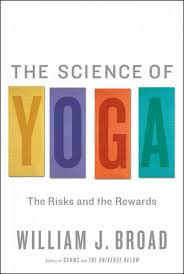
What made me think about these conflicting fallacies is that I’ve been reading a lot about the science of yoga–and other systems of movement–lately. Specifically, I was reading The Science of Yoga by William Broad. During the 20th century, yoga went from not giving a whit about science to trying to show that it wasn’t at all at odds with science–if not that it was grounded in science. (Note: this statement could be applied to many of the old ways—e.g. religions—which sought to prove themselves consistent with scientific evidence out of fear that–in the age of rationality–to be inconsistent with scientific observation would be death to old beliefs.) While the hucksters and con men seeking to bilk people out of money through shows of yoga “magic” have lost power (though some still exist and prey on the gullible regularly), this isn’t to say that science has yet won the day entirely.
Chapter two of Broad’s book discusses the findings of the scientific community on whether yoga has any merit as aerobic exercise. (The consensus is that it doesn’t.) Now, one would think that the whole yoga community would be pleased that academia has for the most part shown that yoga has a range of positive benefits that make it a worthwhile endeavor when practiced safely and conscientiously, but some have been unwilling to accept that yoga isn’t excellent cardio on top of all its unambiguous benefits. The established consensus is being ignored and a single seriously flawed study (small sample size, no control group, and—while peer-reviewed—the author was the journal editor) is cited, that one—of course—suggests that yoga meets all one’s cardio needs.
It’s easy to follow the incentives. For example, if one runs a yoga studio one would like to be able to say that yoga is a panacea for all of a person’s health needs. People are busy and lazy, and if someone else can sell them a silver bullet then they’ll lose business. If one gives the matter thought, it becomes hard to imagine an exercise panacea. Consider a list of health goals that includes reduced stress, improved balance, greater flexibility, more strength, and enhanced cardiovascular capacity. One should see that some of these goals are at odds with each other. The first three goals—at which yoga excels–require holding a static position for a time while engaging in deep and controlled breathing. The fourth goal, strength enhancement, (which yoga achieves only in a limited way) requires repeated alternation of stressing and relaxing a muscle. And cardio, the fifth goal,–for which yoga is less than helpful–requires rapid and sustained motion so as to cause the heart to be stressed.
Of course, individuals have tried to rectify yoga’s cardio deficit by creating yoga styles that add speed and repetition. If one does five sun salutations per minute for 45 minutes, then—congratulations–you are now getting cardio and strength building. Unfortunately, you are now losing out on the first three goals of stress reduction, balance enhancement, and flexibility improvement. Those three things requiring holding poses while engaging in relaxed and controlled breathing. So the question is whether one is happy having sacrificed the benefits yoga does better than everything else in a desire to have yoga gain benefits that other exercise systems probably still do better.
The old systems of movement and exercise, be it yoga or chi kung, have shown themselves to have merit. However, the mechanisms by which that merit is achieved (or the nature of the merit) are often not what the system’s mythology suggests. There’s no need to fear science, but one should be ready to embrace what is shown true and set aside what is shown to be false.
On the other hand, this modern idea that we can have our cake and eat it too by throwing together disparate systems, which often have conflicting goals and modes of operation, needs to be reevaluated. All of these fads have been created where someone crams together tai chi and yoga or yoga and jazz dance or Zen meditation and parkour and they think they have the ultimate system based on a more complete picture of modernity, and what they’ve got is a muddle.
What we need is the tested merit of tradition without its voodoo, and the compiled knowledge of modernity without its hubris.


 Tiger Riding for Beginners