BOOK: “Breath” by James Nestor

Breath: The New Science of a Lost ArtBreath: The New Science of a Lost Art by James Nestor
My rating: 5 of 5 stars

Author’s Book Site

In this book, James Nestor takes an immersion journalism approach to reporting on the art and science of better breathing. In addition to participating in trainings on particular breathwork (e.g. Tummo / Wim Hof, Buteyko breathing, Sudarshan Kriya, the DeRose method, etc.,) he participates in a scientific studying involving closing off his nostrils for a few weeks and then systematically nose breathing for a few more. (The first half of which he describes as torturous.) In between discussions of his own experiences, he explores both ancient breathwork teachings and the discoveries of modern science.

While there’s not really anything new in this book, it does a good job of presenting the information in a clear and readable form. In truth, it would be hard to say something both profound and new on the subject, given that yogis, tantrics, Daoists, and others have been systematically observing and altering breath for centuries to improve health, concentration, and emotional poise. Even the seemingly modern systems are by-and-large variants of the old ways (e.g. Wim Hof breathwork adapts the Tummo of Vajrayana Buddhism, DeRose worked from ancient yoga teachings, and Andrew Weil’s 4-7-8 breathing is pretty much the 1:2:2 vrtti pranayama that yogi’s have practiced for centuries.) Still, despite the basic information in the book being widely available, there remains a crisis of bad breathing and the cascade of ill-health that results, therefrom, and so it is a valuable book. (The key takeaways are: nose breathe, breathe slowly and deeply, hyperventilate only consciously and occasionally, and elongate exhalation to facilitate relaxation.)

The newest information to me, personally, was that of Chapter 7, which dealt with the role that shifting to softer, cooked foods played in humanity’s proclivity for breathing problems. Chapter 1, which deals with humankind’s unique breathing issues, also provides insight into why people have so many problems with something so fundamental to life as breathing. Nestor also presented some of the breath-relevant insights of Albert Szent-Györgyi, a Nobel-winning biochemist whose work offered some insight into the connection between electrons and both cancer and aging. So, in addition to some nice reminders and references, I did learn a thing or two as well.

This is a fine overview of breath and how to improve it for better living, and I’d recommend it for anyone looking to learn more on the subject.

View all my reviews

“Wonder—is not precisely Knowing” (1331) by Emily Dickinson [w/ Audio]

Wonder—is not precisely Knowing
And not precisely Knowing not—
A beautiful but bleak condition
He has not lived who has not felt—

Suspense—is his maturer Sister—
Whether Adult Delight is Pain
Or of itself a new misgiving—
This is the Gnat that mangles men—

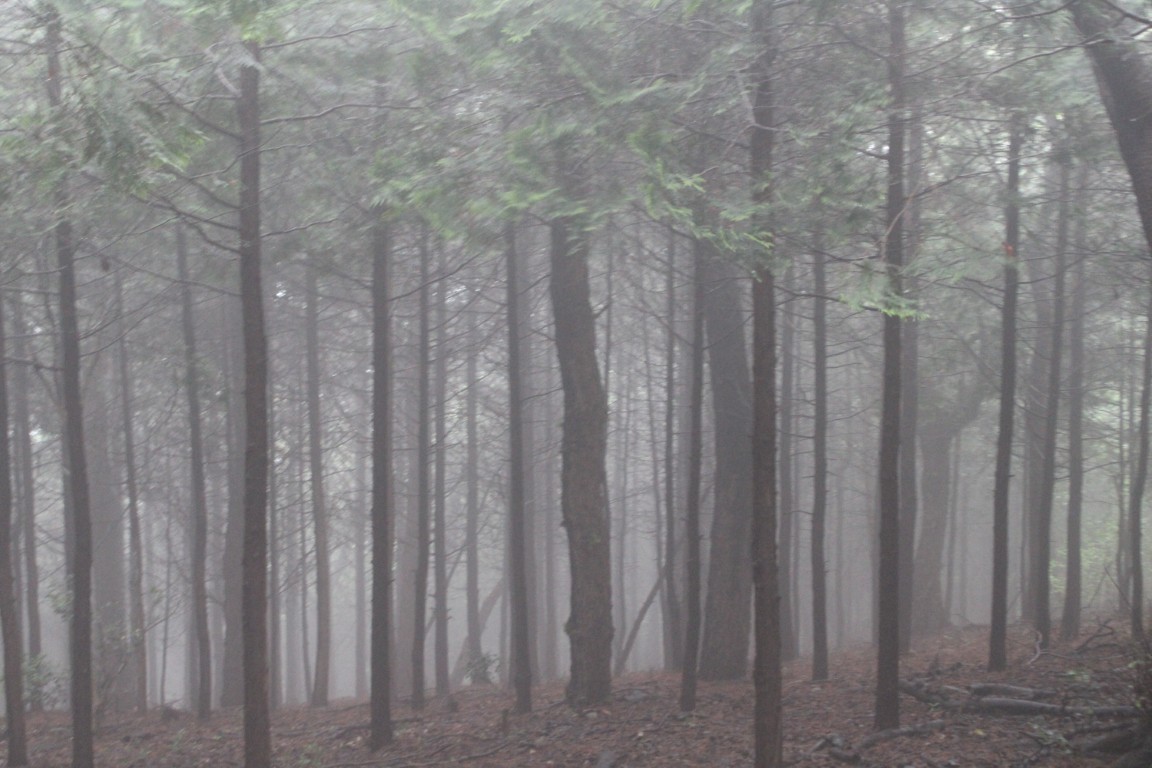
Lost in a Fog [Free Verse]

Lost
in a foggy wood.

all the trees alike,
no long view,
no hint of the sun's position...
(or existence.)

just the vertical stripes of
straight pinetree trunks --
like the bars
of the cell
of a giant --
laid against a fluffy white
backdrop.

I can scurry between
the bars, like a mouse,
but am still lost
and still caged.

PROMPT: Music

Daily writing prompt
What is your favorite genre of music?

I’m not one for favorites; I think it’s a form of experiential laziness. That said, there is music that has particular emotional resonance for me because it’s what was playing where I was when I was when I was younger — mostly rock and indie rock.

PROMPT: Good Life

Daily writing prompt
What are the most important things needed to live a good life?

Right mind, healthy body, and good company.

FIVE WISE LINES [June 2025]

…we should not be too confident in our belief of anything.

cicero; tusculan disputations

No matter what plans you make,
no matter what you acquire,
the thief will enter from the unguarded side.
Be occupied, then, with what you really value
and let the thief take something less.

Rumi; Mathnawi II

Very little is needed to make a happy life;
it is all within yourself, in your way of thinking.

Marcus aurelius; Meditations

I possess, but I am not possessed by her;
since the best thing is to possess pleasures
without being their slave,
not to be devoid of pleasures.

aristippus [according to Diogenes laertius in
lives of the eminent philosophers]

Do not fear the gods.
Do not fear death.
What is good is easy to attain.
What is painful is easy to endure
.

philodemus; Herculaneum papyrus
[Often referred to as the four cures of epicurus]

“Autumn Within” by Henry Wadsworth Longfellow [w/ Audio]

It is autumn; not without,
But within me is the cold.
Youth and spring are all about;
It is I that have grown old.

Birds are darting through the air,
Singing, building without rest;
Life is stirring everywhere,
Save within my lonely breast.

There is silence: the dead leaves
Fall and rustle and are still;
Beats no flail upon the sheaves
Comes no murmur from the mill.

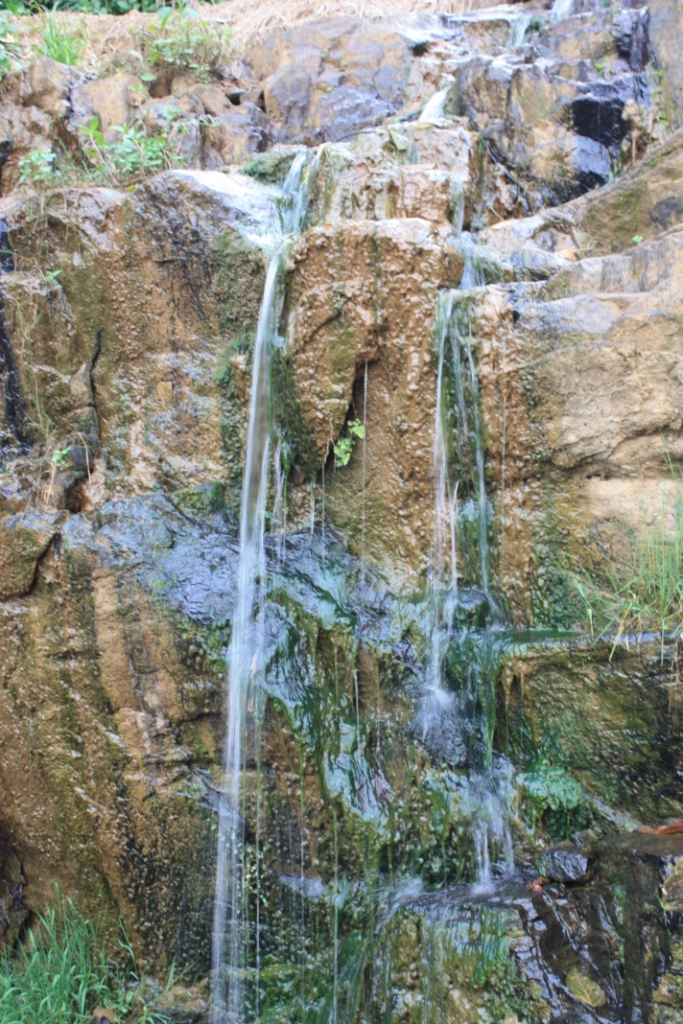
Mental Scaling [Haiku]

trickling water 
becomes a vast cascade;
grass tufts blur to trees.

PROMPT: Decision

Daily writing prompt
Describe a decision you made in the past that helped you learn or grow.

To surrender to my ignorance. If one can never know exactly what game one is playing, it becomes much easier to avoid getting worked up about whether one is playing it right or whether one will “win” or not.

PROMPT: Positive Thing

Daily writing prompt
Describe a positive thing a family member has done for you.

Be present.